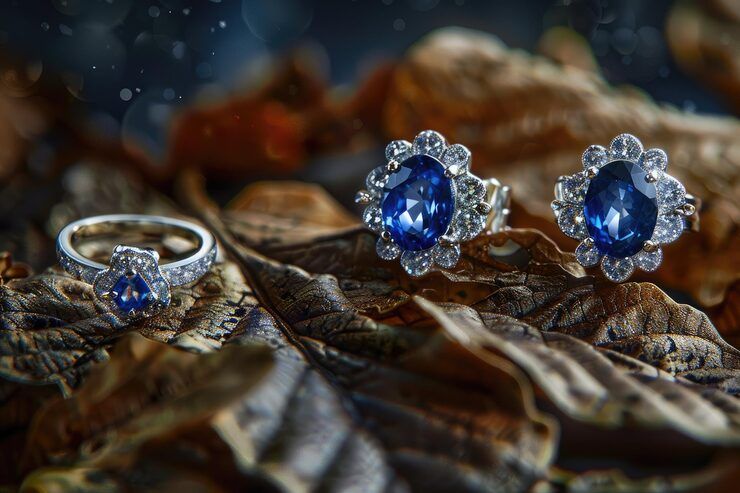
Blue sapphire jewellery combines the distinctive blue colour of sapphire gemstones with designs used in rings, necklaces, earrings, bracelets, and pendants. Sapphire belongs to the corundum mineral family, which also includes ruby. Its blue colour is commonly associated with trace amounts of iron and titanium within the crystal structure.
Sapphires have been used in jewellery across different cultures for centuries. Their hardness, range of blue shades, and compatibility with different precious metals make them suitable for many jewellery styles, from traditional ornaments to contemporary designs.
Blue sapphire jewellery can contain natural gemstones, laboratory-grown sapphires, or other materials designed to resemble sapphire. Understanding these differences helps people interpret gemstone descriptions, evaluate quality information, and make informed decisions about jewellery design and long-term care.
Understanding Blue Sapphire Gemstones
Sapphire is a crystalline form of aluminium oxide. On the Mohs mineral hardness scale, sapphire ranks 9 out of 10, making it one of the hardest commonly used gemstones in jewellery.
Its durability makes it suitable for everyday jewellery when the stone is properly set and maintained. However, hardness does not mean that a sapphire is impossible to damage. Strong impacts, unsuitable settings, and certain repair procedures can still cause problems.
Blue sapphires occur in a variety of shades, including pale blue, medium blue, deep blue, and blue with violet or green undertones. Their appearance depends on the gemstone's chemical composition, lighting, cutting proportions, and any treatments it has received.
Natural sapphires form through geological processes, while laboratory-grown sapphires are produced under controlled conditions. Both consist of corundum, but their origins and market classifications differ.
Common Blue Sapphire Jewellery Designs
Blue sapphire can be incorporated into many jewellery categories.
Engagement rings: A central sapphire may be surrounded by diamonds or other gemstones.
Pendant necklaces: A single sapphire can create a simple focal point.
Stud earrings: Matching stones provide a coordinated appearance.
Drop earrings: Elongated settings highlight the gemstone's colour and movement.
Bracelets: Sapphires may be arranged in repeating patterns or combined with other stones.
Statement rings: Larger sapphires can be used in decorative settings.
Vintage-inspired jewellery: Detailed metalwork and traditional cuts create a historical appearance.
Common metal settings include platinum, white gold, yellow gold, and rose gold. The choice influences the overall appearance, while the design of the setting affects how securely the gemstone is held.
Why Blue Sapphire Jewellery Matters
Blue sapphire jewellery is valued for its colour, durability, design versatility, and cultural associations. Understanding gemstone quality is important for jewellery makers, collectors, researchers, and people comparing different types of gemstone ornaments.
Gemstone Quality and Appearance
The appearance of a blue sapphire depends on several characteristics. Colour is often the most noticeable, but clarity, cut, carat weight, treatment, and origin can also influence how a stone is evaluated.
Important characteristics include:
Colour: The hue, saturation, and lightness of the blue.
Clarity: The presence and visibility of internal inclusions or surface characteristics.
Cut: The proportions and facets that influence brilliance and colour distribution.
Carat weight: The gemstone's weight, rather than its physical dimensions.
Treatment: Any process used to change or improve the gemstone's appearance.
Origin: Whether the stone is natural or laboratory-grown, and any geographic origin determination supported by evidence.
No single characteristic determines the overall quality of a sapphire. The combination of these factors, along with the intended design, is more informative.
Natural, Treated, and Laboratory-Grown Stones
Natural blue sapphires form in the Earth over geological periods. Some undergo heat treatment to improve colour or clarity, a practice established in the gemstone industry.
Laboratory-grown sapphires are created using controlled manufacturing processes. They have essentially the same chemical composition and crystal structure as natural sapphires, although their growth features can differ.
Imitation stones may use glass or other materials that resemble sapphire visually but have different physical properties.
Clear disclosure of these distinctions helps prevent confusion when comparing gemstone jewellery.
Recent Developments and Trends
During 2025 and 2026, gemstone jewellery discussions continued to emphasize transparency, traceability, laboratory-grown gemstones, and responsible sourcing.
Greater Attention to Gemstone Disclosure
Jewellery descriptions increasingly distinguish natural gemstones from laboratory-grown stones and disclose known treatments. These distinctions matter because origin, treatment, and manufacturing method can influence how a gemstone is classified and evaluated.
In practice, buyers and jewellery professionals should look for descriptions that identify the gemstone accurately instead of relying on terms such as premium, rare, or natural-looking without supporting information.
Laboratory-Grown Sapphire Technology
Laboratory-grown corundum remains an established part of the gemstone industry. Controlled production enables manufacturers to create sapphires with consistent characteristics for jewellery, technical applications, and research.
During 2025–2026, the broader jewellery market continued to discuss laboratory-grown gemstones in relation to design flexibility, manufacturing transparency, and consumer preferences. Their characteristics should be assessed separately from those of natural stones rather than assuming that the two have identical market histories.
Digital Gemstone Documentation
Digital records, laboratory reports, product databases, and supply-chain documentation can help jewellery professionals maintain information about gemstones as they move through different stages of production and distribution.
However, digital documentation does not automatically establish that a gemstone's claimed origin is correct. Its reliability depends on the evidence, verification methods, and organization responsible for the information.
Laws, Standards, and Jewellery Policies
Blue sapphire jewellery is affected by gemstone disclosure requirements, consumer protection laws, hallmarking rules where applicable, and regulations concerning precious-metal content and responsible sourcing. Specific requirements vary between countries.
Gemstone Description and Disclosure
The United States Federal Trade Commission's Jewelry Guides provide guidance on describing precious metals, gemstones, laboratory-created stones, and gemstone treatments.
The general principle is that jewellery descriptions should be accurate and should not mislead consumers about a stone's identity, origin, treatment, or characteristics.
Businesses operating in other jurisdictions should follow their local consumer protection and gemstone disclosure requirements.
Gemstone Laboratory Reports
Gemological laboratories examine gemstones using methods such as microscopy, spectroscopy, and other analytical techniques.
A report may describe a stone's identity, whether it is natural or laboratory-grown, detectable treatments, and other characteristics. Geographic origin opinions may also be provided when supported by the laboratory's methods and evidence.
A laboratory report is not necessarily an appraisal or a guarantee of future market value. These documents serve different purposes.
Precious-Metal Hallmarking
Hallmarking requirements vary by jurisdiction. Some countries regulate the use of fineness marks on gold, silver, and platinum jewellery, while others have different rules or voluntary systems.
A hallmark generally relates to the metal's composition, not the identity or quality of the sapphire mounted in the jewellery.
Responsible Sourcing
Gemstone supply chains can involve mining, cutting, processing, manufacturing, and international distribution. Responsible sourcing practices aim to improve transparency and reduce environmental and social risks.
Documentation can help establish a chain of custody, but claims about ethical or sustainable sourcing should be supported by credible evidence.
Tools and Resources for Blue Sapphire Jewellery
Several resources can help explain gemstone characteristics and jewellery specifications.
Gemological Reference Resources
Organizations such as the Gemological Institute of America and other recognized gemological laboratories publish educational material on sapphire identification, gemstone treatments, colour, clarity, and laboratory-grown stones.
These resources can help readers understand technical terminology and interpret gemstone reports.
Jewellery Design and Measurement Tools
Digital design software can help jewellery designers examine stone dimensions, ring settings, pendant proportions, and metal arrangements before manufacturing.
Useful measurements include:
Gemstone length and width in millimetres
Stone depth and cut proportions
Ring size
Setting dimensions
Metal type and fineness
Number and arrangement of gemstones
Gemstone Documentation Checklist
Information | What It Helps Explain |
|---|---|
Gemstone identity | Whether the stone is sapphire or another material |
Origin classification | Natural or laboratory-grown status |
Treatment disclosure | Known enhancements |
Weight and dimensions | Physical size and specifications |
Laboratory report | Findings from gemological examination |
Metal hallmark | Precious-metal fineness, where applicable |
Care instructions | Appropriate cleaning and maintenance |
These details provide a structured way to compare gemstone descriptions without relying on colour or appearance alone.
Frequently Asked Questions
What makes blue sapphire suitable for jewellery?
Sapphire has a Mohs hardness of 9, making it resistant to everyday scratching compared with many other gemstones. Nevertheless, impact damage and setting problems remain possible, so appropriate mounting and care are important.
Are natural and laboratory-grown blue sapphires the same?
Both are corundum and have essentially the same chemical composition and crystal structure. Their formation differs: natural sapphires form geologically, while laboratory-grown sapphires are manufactured under controlled conditions. Gemological examination can help distinguish them.
Does a darker blue sapphire always have better quality?
No. Very dark colour can reduce the amount of light visible through a stone, while very pale colour may not produce the desired appearance. Colour quality depends on hue, saturation, lightness, and the individual stone's characteristics.
Can blue sapphire jewellery be worn every day?
Many sapphire rings, pendants, and earrings can be suitable for regular wear when properly designed and maintained. Rings may experience more impacts than pendants or earrings, so secure settings and periodic inspection are particularly important.
How should blue sapphire jewellery be cleaned?
For many untreated or conventionally heat-treated sapphires, gentle cleaning with lukewarm water, mild soap, and a soft brush is suitable. Avoid harsh chemicals and consult a qualified jeweller before using ultrasonic or steam cleaners, especially when the stone has undergone fracture filling or other treatments.
Conclusion
Blue sapphire jewellery combines gemstone science, design, craftsmanship, and cultural history. Its distinctive colour and durability make it suitable for many jewellery styles, while differences in natural origin, laboratory growth, treatment, and clarity influence how individual stones are described.
Recent industry discussions have placed greater emphasis on transparent gemstone descriptions, reliable documentation, and responsible sourcing. Understanding these subjects helps readers interpret jewellery specifications and distinguish verified characteristics from unsupported claims.
Whether examining sapphire engagement rings, pendants, earrings, or bracelets, useful information includes gemstone identity, treatment history, dimensions, setting quality, and precious-metal composition. Accurate documentation and appropriate care help preserve the appearance and condition of blue sapphire jewellery over time.