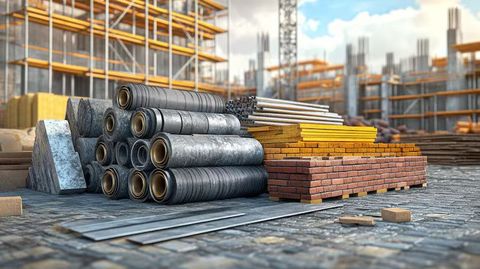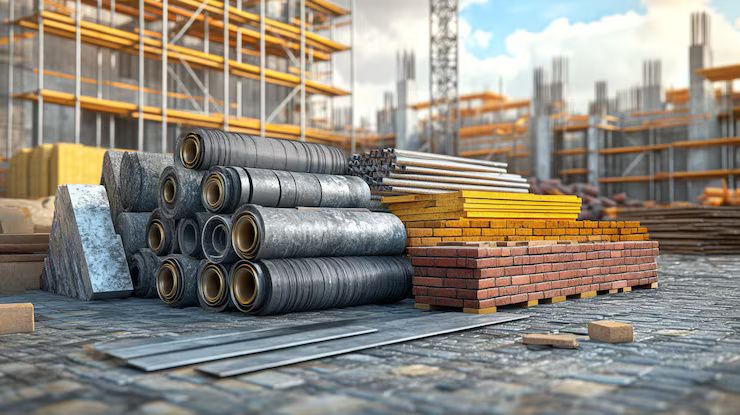
Building materials are the physical substances used to construct, protect, and finish buildings. They include familiar materials such as concrete, steel, wood, brick, glass, and stone, along with newer products designed for improved insulation, durability, energy efficiency, and environmental performance.
Understanding building materials basics helps homeowners, students, designers, contractors, and construction professionals understand how different materials contribute to a building. This introduction provides an overview of common materials, their properties, recent developments, regulations, and useful resources.
Context – Understanding Building Materials Basics
Building materials are selected according to the purpose and location of a building component. Foundations require materials that can withstand structural loads and ground conditions, while walls may need a combination of structural strength, insulation, moisture resistance, and fire protection.
Historically, buildings relied heavily on locally available materials such as stone, timber, earth, and brick. Industrial development introduced Portland cement, reinforced concrete, structural steel, manufactured glass, engineered wood, and many composite materials.
Modern construction often combines several materials rather than relying on one material throughout a building. For example, a wall assembly may contain structural framing, insulation, sheathing, a moisture-control layer, and an interior finish.
| Material | Common Uses | Important Properties |
|---|---|---|
| Concrete | Foundations, slabs, columns | Compressive strength, durability |
| Steel | Frames, beams, reinforcement | High strength, ductility |
| Brick | Walls, façades | Durability, fire resistance |
| Wood | Framing, floors, finishes | Low weight, workability |
| Glass | Windows, façades | Transparency, daylighting |
| Stone | Walls, façades, finishes | Durability, appearance |
| Insulation | Walls, roofs, floors | Thermal resistance |
| Gypsum | Interior walls and ceilings | Fire performance, easy finishing |
The selection process considers structural requirements, climate, building design, construction methods, maintenance requirements, and environmental factors.
Importance – Why Material Knowledge Matters
Building materials influence the safety, comfort, durability, energy performance, and appearance of a structure. A material that works well in one climate or application may not be appropriate in another.
Material knowledge matters to several groups:
- Architects and engineers use material properties during design.
- Contractors use specifications to determine appropriate construction methods.
- Building owners need to understand durability and maintenance considerations.
- Students and researchers study materials to understand construction technology.
- Occupants benefit from buildings designed with appropriate thermal, acoustic, and safety characteristics.
Material compatibility is also important. Concrete, steel, wood, insulation, membranes, and finishes interact as parts of larger building assemblies. Moisture movement, thermal expansion, corrosion, and chemical reactions can affect long-term performance.
Sustainability has also become an important consideration. Material selection can involve embodied carbon, recycled content, renewable resources, durability, transportation requirements, and the possibility of reuse or recycling at the end of a building's life.
Recent Updates – Trends in Modern Building Materials
Building materials continue to evolve as construction practices respond to energy efficiency, climate considerations, resource use, and changing building requirements.
One significant development is the increased use of engineered wood products. Cross-laminated timber, glued laminated timber, and laminated veneer lumber can provide structural applications that differ from traditional solid-sawn timber.
Low-carbon concrete is another area of development. Researchers and manufacturers are investigating cement-reduction techniques, supplementary cementitious materials, alternative binders, and improved production methods to reduce greenhouse-gas emissions associated with concrete.
Other developments include:
- High-performance insulation materials for improved thermal performance.
- Recycled and reclaimed materials for selected construction applications.
- Building-integrated photovoltaic materials.
- Advanced glazing systems for daylight and solar-control requirements.
- Prefabricated and modular building components.
- Materials containing recycled steel, glass, plastics, or mineral resources.
- Digital tools for evaluating material quantities and environmental impacts.
Material innovation does not automatically mean that a particular product is appropriate for every building. Performance data, applicable standards, installation requirements, climate, and project conditions remain important.
Laws or Policies – Building Material Requirements
Building materials are generally regulated through building codes, product standards, fire-safety requirements, structural provisions, energy codes, environmental regulations, and local planning rules. Requirements differ substantially between countries and jurisdictions.
In the United States, the International Building Code and International Residential Code are widely used model codes, although adoption and amendments are determined by individual jurisdictions. Energy requirements may also be addressed through codes such as the International Energy Conservation Code.
In India, construction requirements are addressed through the National Building Code of India and standards issued by the Bureau of Indian Standards, along with state and local requirements. Different building components can have specific requirements for structural performance, fire safety, accessibility, materials, and energy efficiency.
European countries operate within their own regulatory frameworks, while European standards provide technical requirements for many construction products and building applications.
Before selecting materials for an actual project, relevant local regulations and applicable technical standards should be checked. Product documentation may also need to demonstrate characteristics such as structural performance, fire resistance, thermal performance, or moisture resistance.
Tools and Resources – Building Materials Information
Several types of resources can help people learn about building materials and evaluate their characteristics.
Useful resources include:
- National and regional building-code publications.
- Bureau of Indian Standards resources for applicable Indian standards.
- International Code Council publications and code information.
- Government energy-efficiency guidance.
- Environmental product declarations for environmental-performance information.
- Manufacturer technical data sheets and installation documentation.
- Material safety documentation where applicable.
- Building energy calculators and thermal-performance tools.
- Construction estimating and quantity-calculation spreadsheets.
- Architectural and engineering specification libraries.
Material data should be interpreted carefully. A technical specification can describe laboratory performance, while actual building performance can depend on installation quality, environmental conditions, surrounding materials, and maintenance.
FAQs – Building Materials Basics
What are the most common building materials?
Concrete, steel, wood, brick, stone, glass, gypsum products, insulation, and cement-based materials are widely used. Their applications vary according to building design, climate, structural requirements, and local construction practices.
How are building materials selected?
Selection generally considers strength, durability, fire performance, thermal and acoustic properties, moisture behavior, compatibility, environmental factors, availability, construction methods, and applicable regulations.
What is the difference between structural and non-structural materials?
Structural materials contribute directly to carrying building loads. Examples include structural steel, reinforced concrete, structural timber, and masonry. Non-structural materials may provide insulation, finishes, partitions, weather protection, or other functions without forming the primary load-bearing system.
Why is insulation considered an important building material?
Insulation helps reduce heat transfer through walls, roofs, floors, and other building elements. Its effectiveness depends on material properties, thickness, installation, air movement, moisture conditions, and the overall building envelope.
Are sustainable building materials always better?
Not necessarily. Sustainability depends on factors such as material quantity, service life, embodied impacts, transportation, maintenance, reuse potential, and the specific application. A material should be assessed according to the requirements and conditions of the complete building system.
Conclusion – Building Materials Knowledge
Building materials form the foundation of modern construction, from concrete and steel used for structural systems to glass, insulation, wood, brick, and finishing materials used throughout the building envelope and interior.
A basic understanding of material properties helps people recognize why different materials are selected for different applications. Strength, durability, moisture behavior, thermal performance, fire resistance, environmental impact, and compatibility can all influence material decisions.
Modern construction is also introducing new approaches, including engineered wood, lower-carbon concrete, advanced insulation, prefabricated components, and materials containing recycled resources. These developments are expanding the range of options available to designers and construction professionals.
For anyone learning about construction, starting with material properties and common applications provides a useful foundation. Building codes, technical standards, government resources, and product documentation can then provide more detailed information for specific projects.