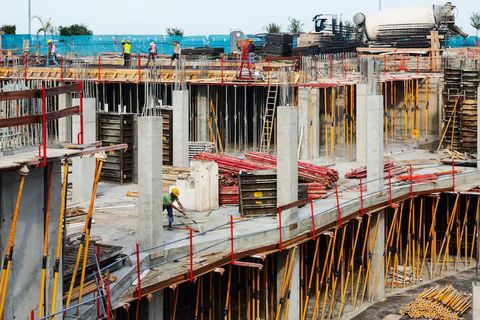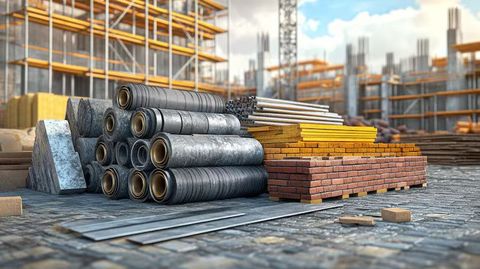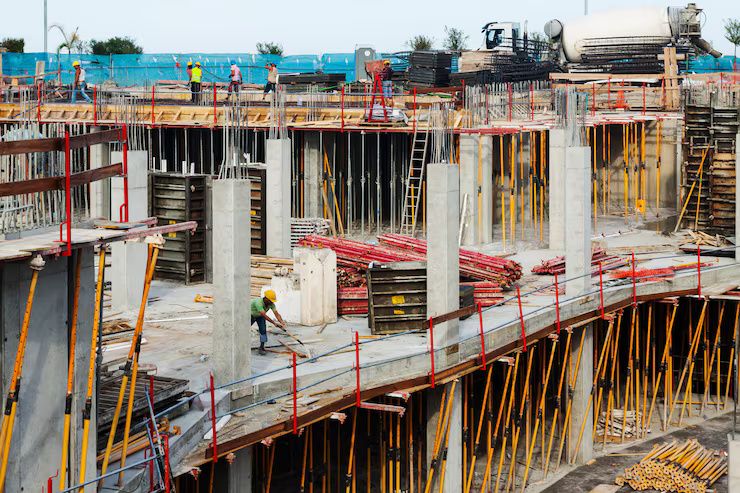
Construction materials form the physical foundation of buildings, roads, bridges, industrial facilities, and other infrastructure. Common materials include concrete, cement, steel, timber, masonry units, glass, insulation, aggregates, asphalt, and engineered products. Each material has different characteristics that affect strength, durability, thermal performance, fire resistance, and construction methods.
Modern construction increasingly considers material performance alongside environmental impact, resource efficiency, durability, and building regulations. Understanding the basics of construction materials can help students, homeowners, designers, engineers, contractors, and other readers understand how material selection influences a structure throughout its life cycle.
Context – Understanding Construction Materials
Construction materials are substances and manufactured products used to create structural and non-structural parts of buildings and infrastructure. Some have been used for thousands of years, while others have developed through advances in engineering, chemistry, manufacturing, and material science.
Traditional materials such as stone, timber, clay brick, and lime remain relevant. Modern construction also relies heavily on reinforced concrete, structural steel, engineered wood, glass, polymers, composites, insulation products, and recycled materials.
The purpose of selecting a construction material is not simply to provide physical structure. Materials can perform different functions, including:
- Carrying structural loads
- Protecting buildings from weather
- Controlling heat and moisture
- Providing fire resistance
- Improving acoustic performance
- Creating interior and exterior finishes
- Supporting energy-efficient building design
Material selection normally depends on the location, structural requirements, exposure conditions, design life, construction method, applicable standards, and environmental considerations.
| Material | Common applications | Important characteristics |
|---|---|---|
| Concrete | Foundations, slabs, columns, roads | Compressive strength, durability |
| Steel | Frames, reinforcement, bridges | High strength, ductility |
| Timber | Frames, roofs, interiors | Low weight, renewable resource |
| Brick | Walls and facades | Durability, fire resistance |
| Glass | Windows and facades | Light transmission, weather resistance |
| Asphalt | Roads and pavements | Flexibility, water resistance |
| Insulation | Walls, roofs, floors | Thermal resistance |
| Aggregates | Concrete, roads, drainage | Strength, grading, stability |
Importance – Why Material Selection Matters
Construction materials directly affect structural performance, maintenance requirements, occupant comfort, safety, and the expected life of a building or infrastructure project.
For structural components, engineers consider properties such as compressive strength, tensile strength, stiffness, density, fatigue resistance, and durability. Environmental exposure can also be important. A material used in a coastal area, for example, may need greater resistance to moisture and corrosion than a material used in a dry inland environment.
Material selection also affects energy performance. Insulation materials can reduce heat transfer through walls and roofs, while glazing systems can influence daylight, solar heat gain, and indoor temperatures.
The people affected by material decisions include:
- Architects and structural engineers
- Construction professionals
- Building owners and occupants
- Manufacturers and testing laboratories
- Government authorities
- Infrastructure planners
Good material selection therefore involves balancing technical requirements with local regulations, expected service life, construction practices, and environmental considerations.
Recent Updates – Trends in Modern Construction Materials
Construction materials are evolving as the industry examines resource efficiency, carbon emissions, building performance, and circularity.
One important development is the increasing use of lower-carbon concrete approaches. These can involve supplementary cementitious materials, optimized mix designs, alternative binders, and improved manufacturing processes. The exact environmental performance depends on the material composition and production method.
Engineered timber is another significant area of development. Products such as cross-laminated timber and glue-laminated timber can provide structural applications while using wood in carefully engineered forms. Their suitability depends on structural design, moisture control, fire requirements, and applicable building regulations.
Recycled and reclaimed materials are also being incorporated into construction. Recycled aggregates, reclaimed timber, recycled metals, and other recovered materials can contribute to resource efficiency when their technical characteristics meet project requirements.
Digital technologies are also changing material management. Building Information Modeling can connect material information with design and construction data. Product documentation and digital information systems are becoming more important for tracking material characteristics and environmental information.
In the European Union, the revised Construction Products Regulation introduces greater emphasis on environmental characteristics and digital product information. The European Commission states that the CPR-2024 framework includes environmental information and is intended to support the green and digital transition.
Laws or Policies – Construction Material Requirements
Construction material requirements vary considerably by country, region, building type, and project. Building codes generally establish requirements related to structural safety, fire protection, durability, energy performance, accessibility, and other aspects of construction.
In India, the Bureau of Indian Standards identifies the National Building Code of India 2016 as a comprehensive model code covering areas including materials, structural design and construction, fire safety, sustainability, and building requirements.
Indian standards also provide technical references for particular materials and structural systems. For example, a BIS document associated with the National Building Code references IS 456 for plain and reinforced concrete, IS 800 for general construction in steel, and IS 875 for design loads.
In the European Union, construction products are governed through the Construction Products Regulation framework. The revised Regulation (EU) 2024/3110 entered into force in January 2025, with the main part becoming applicable from January 8, 2026. The transition between the previous and revised frameworks will continue for several years.
Under the EU framework, applicable construction products can require performance documentation and CE marking where the relevant harmonised requirements apply. The European Commission explains that the revised framework also introduces environmental characteristics and digital product information requirements.
Because requirements differ between jurisdictions, project teams should always consult the current building code, applicable material standards, and local authority requirements for the specific location.
Tools and Resources – Useful Construction Material References
Several resources can help readers understand construction materials and their technical requirements.
Useful resources include:
- National building codes and regulations
- Standards organizations and technical standards databases
- Material technical data sheets
- Structural design references
- Laboratory testing reports
- Environmental product declarations
- Building Information Modeling databases
- Construction material calculators
- Government planning and building-control portals
For readers in India, the Bureau of Indian Standards is an important reference for national standards and the National Building Code.
For European projects, the European Commission provides information about the Construction Products Regulation, harmonised technical specifications, declarations of performance and conformity, and related requirements.
When comparing materials, it is useful to record measurable properties rather than relying only on general descriptions. Strength, density, thermal conductivity, moisture behavior, fire classification, durability, and environmental indicators can provide a more useful basis for technical evaluation.
FAQs – Construction Materials
What are the main types of construction materials?
Common categories include concrete, cement-based materials, steel, timber, masonry, glass, aggregates, asphalt, insulation, polymers, and composite materials. The appropriate material depends on the intended application and technical requirements.
Why is concrete widely used in construction?
Concrete can provide high compressive strength, durability, and versatility. Reinforced concrete combines concrete with reinforcement to improve its ability to resist tensile forces and other structural demands.
What makes steel useful for construction?
Steel has high strength relative to its weight and can be formed into many structural shapes. Engineers also consider corrosion protection, fire performance, connections, fatigue, and the specific grade of steel.
Are sustainable construction materials always better?
Environmental performance depends on the complete application and life cycle. Durability, transportation, production methods, maintenance, recyclability, and expected building life can all influence the overall environmental impact.
How can people check whether a material is appropriate?
The first step is to identify the project's location, intended use, structural requirements, environmental exposure, and applicable regulations. Technical documentation and relevant standards can then be reviewed to determine whether the material meets the required specifications.
Conclusion – Construction Materials Overview
Construction materials are central to the safety, durability, efficiency, and appearance of modern buildings and infrastructure. Concrete, steel, timber, masonry, glass, insulation, aggregates, and newer engineered materials each have different properties and applications.
Modern material selection increasingly considers technical performance together with resource efficiency, environmental characteristics, durability, and regulatory requirements. Understanding these factors provides a useful foundation for making informed decisions during construction planning and design.
The construction sector continues to develop materials and methods that respond to changing technical and environmental requirements. Readers should consult current local regulations and recognized technical standards before applying material information to a specific construction project.