Busbar systems are electrical power-distribution assemblies designed to conduct and distribute electrical current within industrial facilities, commercial buildings, data centers, switchboards, substations, and electrical equipment. They typically use conductive metal bars, commonly copper or aluminum, together with insulation, enclosures, joints, supports, and connection components.
Compared with conventional cable-based distribution, busbar systems can provide organized current distribution with modular connection points and compact installation configurations. System selection depends on voltage, current capacity, short-circuit requirements, environmental conditions, installation layout, and applicable electrical standards.
Why Busbar Systems Matter
Efficient electrical distribution is essential for industrial and commercial infrastructure. Busbars provide low-impedance conductive paths that can distribute substantial electrical currents between power sources and loads.
A complete system may include straight sections, feeder units, plug-in outlets, elbows, joints, tap-off units, supports, and protective enclosures. Modular construction can simplify changes to distribution layouts in facilities where electrical loads evolve over time.
Busbar design must account for thermal performance, mechanical strength, insulation, fault-current withstand capability, and electrical clearances.
Types of Busbar Systems
Busbar systems are available in several configurations based on conductor material, insulation, voltage, and application.
Copper Busbar Systems
Copper has high electrical conductivity and good mechanical and thermal characteristics. Copper busbars are commonly used where compact conductors and substantial current-carrying capacity are required.
Aluminum Busbar Systems
Aluminum offers lower density than copper and can be used where weight and material considerations are important. Appropriate conductor dimensions and connection methods are required to achieve the intended electrical performance.
Laminated Busbars
Laminated busbars consist of multiple conductive layers separated by insulating materials. They are used in power electronics, electric vehicles, converters, inverters, and other applications requiring compact electrical interconnections.
Insulated Busbar Systems
Insulated systems incorporate protective insulation around conductors to improve electrical safety and reduce the possibility of accidental contact or short circuits.
Busbar Trunking Systems
Busbar trunking, also called busway, uses enclosed conductors within a modular distribution system. It can provide flexible power distribution across manufacturing plants, commercial facilities, and large buildings.
Electrical Busbar Technologies
Modern busbar systems combine conductive materials with insulation, thermal management, connection technologies, and protection systems.
| Technology | Function |
|---|---|
| Copper conductors | High electrical conductivity |
| Aluminum conductors | Lightweight current conduction |
| Insulation systems | Electrical separation and protection |
| Joint systems | Connect busbar sections |
| Tap-off units | Provide load connection points |
| Enclosures | Protect conductors |
| Temperature monitoring | Tracks thermal conditions |
High-current applications require careful consideration of conductor dimensions, resistance, temperature rise, joint quality, and heat dissipation.
Busbar Manufacturing Process
The manufacturing process varies according to busbar design and application.
1. Material Preparation
Copper or aluminum stock is selected according to electrical, mechanical, and dimensional requirements.
2. Cutting
Conductive material is cut to specified dimensions using precision cutting equipment.
3. Bending and Forming
CNC or automated busbar bending equipment forms conductors into required geometries. Accurate bending is particularly important for complex electrical assemblies.
4. Punching and Drilling
Connection holes and mounting features are produced using punching, drilling, or CNC processing systems.
5. Surface Treatment
Conductors may undergo cleaning, polishing, plating, or other surface treatments depending on electrical and environmental requirements.
6. Insulation
Insulation can be applied through films, coatings, sleeves, molding, or other methods depending on the busbar design.
7. Assembly
Conductors, insulation, joints, supports, enclosures, and connection components are assembled into the finished system.
8. Testing
Electrical and mechanical testing can include resistance measurements, insulation testing, dimensional inspection, thermal evaluation, and other quality-control procedures.
Automation in Busbar Manufacturing
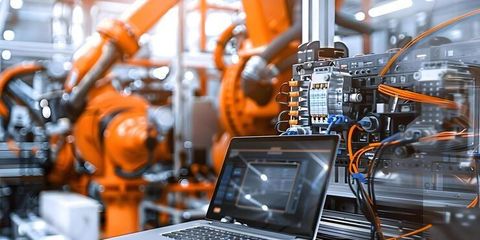
Automation is increasingly used in busbar production. CNC cutting, bending, punching, drilling, and automated handling equipment can improve dimensional consistency and production repeatability.
Machine-vision systems can inspect conductor geometry, holes, surface conditions, and assembly characteristics. Digital production systems can also track processing parameters and manufacturing data.
Automated busbar processing machines are particularly useful for production environments requiring repeated fabrication of complex conductor geometries.
Busbar System Comparison
| Busbar Type | Main Characteristic | Typical Applications |
|---|---|---|
| Copper busbar | High conductivity | Industrial distribution |
| Aluminum busbar | Lower material density | Power distribution |
| Laminated busbar | Compact layered construction | Power electronics |
| Insulated busbar | Enclosed/insulated conductor | Industrial facilities |
| Busbar trunking | Modular distribution | Buildings and factories |
| Flexible busbar | Flexible connection | Equipment interconnection |
Busbar System Cost Factors
The cost of a busbar system depends on conductor material, current rating, voltage level, dimensions, insulation, enclosure design, joint configuration, tap-off requirements, manufacturing complexity, and installation conditions.
Copper systems can have different material economics from aluminum systems, while laminated busbars may require specialized manufacturing processes and insulation structures.
Additional factors include engineering, custom fabrication, testing, transportation, installation hardware, protection equipment, and project-specific electrical requirements.
Global Manufacturers and Suppliers
The busbar market includes manufacturers, electrical equipment suppliers, distributors, engineering companies, system integrators, and specialized fabrication companies.
When evaluating a busbar system manufacturer or supplier, important technical factors include:
Conductor material
Rated current
Rated voltage
Short-circuit withstand capability
Insulation system
Temperature-rise characteristics
Enclosure configuration
Joint design
Tap-off configuration
Applicable standards
Testing documentation
For large projects, suppliers may provide individual conductors, complete busbar trunking systems, laminated busbars, custom assemblies, or turnkey distribution solutions.
Industrial Applications
Busbar systems are used across many electrical applications:
Manufacturing plants
Data centers
Commercial buildings
Power generation facilities
Electrical substations
Renewable-energy systems
Battery systems
Electric vehicles
Power electronics
Switchgear and switchboards
Mining facilities
Infrastructure projects
In data centers, busbar distribution can support modular electrical layouts and high-density power requirements. In manufacturing facilities, busbar trunking can distribute power to production equipment and allow connection points to be configured along distribution routes.
How to Select a Busbar System
Before selecting a busbar system, evaluate:
Rated voltage
Current capacity
Conductor material
Short-circuit withstand requirements
Temperature-rise limits
Insulation requirements
Environmental conditions
Installation configuration
Tap-off requirements
Applicable electrical standards
The complete electrical distribution design should be evaluated rather than selecting a busbar solely by current rating. Fault levels, ambient temperature, enclosure configuration, connection quality, and installation conditions can influence system performance.
Frequently Asked Questions
What is a busbar system?
A busbar system is an electrical distribution assembly that uses conductive bars to carry and distribute electrical power between sources and loads.
What materials are used for busbars?
Copper and aluminum are the primary conductive materials used in many busbar systems. Other materials may be used for insulation, coatings, supports, and specialized applications.
What is busbar trunking?
Busbar trunking is an enclosed electrical distribution system containing conductive busbars and connection points for distributing power throughout a facility.
What are laminated busbars used for?
Laminated busbars are commonly used in power electronics, converters, inverters, electric vehicles, battery systems, and other applications requiring compact electrical interconnections.
What affects busbar system cost?
Conductor material, current rating, voltage, dimensions, insulation, enclosure design, customization, manufacturing complexity, testing, and installation requirements can all affect system cost.
Conclusion
Busbar systems provide structured methods for distributing electrical power across industrial, commercial, infrastructure, and power-electronics applications. Copper, aluminum, laminated, insulated, flexible, and busbar trunking configurations address different electrical and mechanical requirements.
Advances in automated busbar fabrication, insulation technologies, digital inspection, thermal monitoring, and modular distribution systems are expanding the capabilities of modern electrical infrastructure. Proper selection requires consideration of electrical ratings, conductor materials, fault conditions, thermal performance, installation environment, and applicable standards.