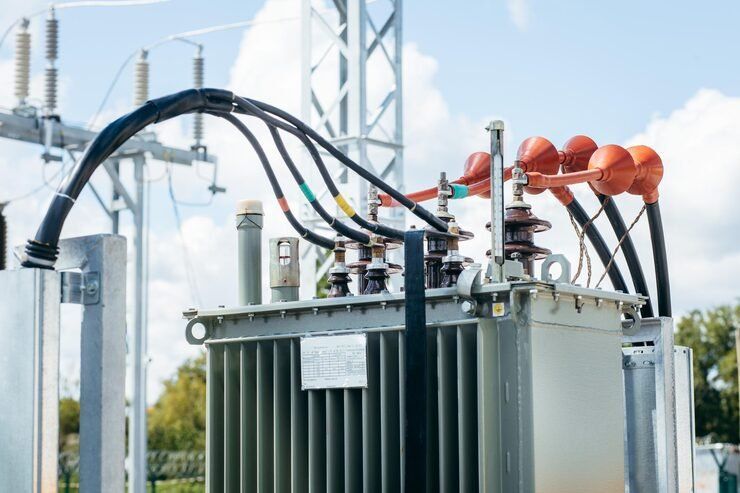
Industrial power supplies are electrical systems designed to convert, regulate, distribute, and condition electrical energy for industrial equipment and automation systems. They provide stable electrical power to control systems, sensors, PLCs, motors, instrumentation, communication equipment, robotics, and production machinery.
Unlike general-purpose power adapters, industrial power supplies are engineered for demanding operating environments that can involve temperature variations, electrical noise, vibration, continuous operation, and fluctuating loads. Their designs can include AC-DC converters, DC-DC converters, switching power supplies, DIN rail power supplies, redundant power systems, and specialized high-power units.
What Are Industrial Power Supplies?
Industrial power supplies are electrical devices or assemblies that convert an available electrical input into a controlled output suitable for industrial equipment.
For example, a factory may receive AC electrical power from its distribution system while its PLCs, sensors, relays, and control equipment require a regulated DC voltage. An industrial power supply performs the required conversion and regulation.
Common output voltages include:
5 V DC
12 V DC
24 V DC
48 V DC
110 V DC
Other application-specific voltages
Industrial power supplies can be installed inside control cabinets, machine panels, automation systems, electrical enclosures, instrumentation systems, and distributed power architectures.
How Do Industrial Power Supplies Work?
The operating principle depends on the power supply technology, but most systems perform several fundamental functions.
A typical AC-DC industrial power supply follows this sequence:
AC electrical power enters the input stage.
Protection components limit abnormal electrical conditions.
The input is filtered to reduce electrical interference.
A rectifier converts AC into DC.
Switching circuitry processes the electrical energy.
A transformer or conversion stage adjusts voltage levels where required.
The output is filtered and regulated.
Feedback circuitry maintains the desired output voltage.
The regulated DC power is delivered to connected industrial equipment.
Modern switching power supplies can perform these functions at high efficiency while maintaining compact dimensions.
Major Industrial Power Supply Technologies
Industrial power supplies use several different conversion and regulation technologies.
Linear Power Supplies
Linear power supplies use transformer and regulator technologies to provide controlled output voltage.
They are known for relatively simple electrical architecture and low output noise. However, they can generate more heat and may be less efficient than modern switching designs.
Linear supplies can still be used in specialized instrumentation and applications where electrical noise characteristics are important.
Switching Power Supplies
Switching power supplies use high-frequency switching circuits to convert electrical energy.
Their advantages can include:
High efficiency
Compact construction
Lower weight
Wide input ranges
High power density
Flexible output configurations
They are widely used in industrial automation and control systems.
AC-DC Power Supplies
AC-DC power supplies convert alternating-current input into regulated direct-current output.
They are commonly used for:
PLC systems
Sensors
Relays
Industrial controllers
HMI equipment
Instrumentation
Communication devices
DC-DC Power Supplies
DC-DC converters convert one DC voltage level into another.
For example, a system may convert 48 V DC into 24 V DC for control equipment or convert 24 V DC into a lower voltage for electronic components.
Programmable Power Supplies
Programmable power supplies allow output characteristics to be digitally controlled.
They can be integrated into testing systems, production equipment, laboratories, semiconductor equipment, and automated manufacturing systems.
Redundant Power Supply Systems
Redundant configurations use multiple power supply units or power paths to maintain operation if one supply becomes unavailable.
Redundancy is particularly relevant for critical industrial control systems where unexpected power interruptions can affect production processes.
Types of Industrial Power Supply Systems
Industrial power supplies can be classified according to installation method, output architecture, voltage, power rating, and application.
| System Type | Main Characteristics | Typical Applications |
|---|---|---|
| DIN Rail Power Supply | Compact cabinet-mounted design | PLCs, sensors, automation |
| Open-Frame Power Supply | Exposed chassis construction | Industrial equipment |
| Enclosed Power Supply | Integrated protective enclosure | Machinery and control systems |
| AC-DC Supply | Converts AC to DC | Automation systems |
| DC-DC Converter | Converts one DC level to another | Vehicle and control systems |
| Redundant Power System | Multiple power paths | Critical automation |
| Programmable Supply | Digitally controlled output | Testing and manufacturing |
| High-Power Supply | Designed for larger electrical loads | Industrial machinery |
| Battery Charger Supply | Regulated charging and DC output | Backup systems |
| Medical-Grade Industrial Supply | Specialized electrical characteristics | Selected medical equipment |
DIN Rail Industrial Power Supplies
DIN rail power supplies are among the most widely used formats in industrial control cabinets.
They are designed to mount directly onto standardized DIN rails, allowing efficient installation alongside:
PLCs
Circuit breakers
Terminal blocks
Relays
Signal conditioners
Communication modules
Safety equipment
DIN rail designs can range from compact single-output units to high-power systems with advanced monitoring and redundancy functions.
Industrial Power Supply Components
An industrial power supply contains multiple electrical and mechanical components.
Input Protection
Input protection can include fuses, circuit protection devices, surge protection components, and other protective elements.
Rectifier
The rectifier converts AC input into DC power in AC-DC architectures.
Capacitors
Capacitors provide filtering and energy storage within different stages of the power conversion circuit.
Transformers
Transformers can provide electrical isolation and voltage conversion.
High-frequency transformers are commonly used in switching power supply architectures.
Switching Devices
MOSFETs, IGBTs, and other semiconductor devices can rapidly switch electrical energy within the conversion stage.
Inductors
Inductors contribute to filtering and energy transfer within switching circuits.
Heat Sinks
Heat sinks dissipate heat generated by semiconductor devices and other components.
Cooling Systems
Depending on power level, cooling may rely on natural convection, forced-air fans, or other thermal management technologies.
Control and Feedback Circuits
Electronic control circuits continuously monitor output conditions and adjust switching behavior to maintain the required voltage and current.
Industrial Power Supply Manufacturing Process
Manufacturing industrial power supplies involves electronic design, component preparation, circuit-board assembly, mechanical fabrication, thermal engineering, testing, and quality inspection.
1. Electrical Design
Engineers establish:
Input voltage range
Output voltage
Output current
Power rating
Efficiency targets
Isolation requirements
Protection features
Environmental specifications
Communication requirements
2. Circuit Board Design
The electronic circuit is designed using appropriate semiconductor devices, passive components, transformers, inductors, protection circuits, and control components.
3. PCB Manufacturing
Printed circuit boards are fabricated and prepared for component assembly.
4. Component Assembly
Electronic components are mounted using automated surface-mount technology and, where required, through-hole assembly.
5. Transformer and Magnetic Component Assembly
Transformers, inductors, and other magnetic components are manufactured or assembled according to electrical and thermal specifications.
6. Mechanical Assembly
The completed electronics are installed into the selected enclosure or chassis.
This stage can include:
Heat sink installation
Fan installation
Terminal installation
Connector installation
Enclosure assembly
Labeling
7. Firmware and Configuration
Digitally controlled power supplies may require firmware programming, communication configuration, and parameter setup.
8. Electrical Testing
Testing can include:
Input voltage testing
Output voltage testing
Load testing
Overcurrent protection testing
Overvoltage protection testing
Short-circuit response testing
Insulation testing
Thermal testing
Efficiency measurement
Communication testing
Materials Used in Industrial Power Supply Manufacturing
Different materials are selected according to electrical, thermal, mechanical, and environmental requirements.
| Material | Typical Application |
|---|---|
| Copper | Conductors, transformers, inductors |
| Aluminum | Heat sinks and selected conductors |
| Steel | Enclosures and mounting structures |
| Stainless Steel | Corrosion-resistant enclosures |
| FR-4 | Printed circuit boards |
| Engineering Plastics | Insulation and housings |
| Ferrite Materials | High-frequency magnetic components |
| Thermal Interface Materials | Heat transfer |
Material selection affects thermal performance, electrical insulation, mechanical durability, and overall product design.
Protection Technologies in Industrial Power Supplies
Protection is a major consideration in industrial power supply design.
Overvoltage Protection
Overvoltage protection limits excessive output voltage that could damage connected equipment.
Overcurrent Protection
Overcurrent protection limits output current when connected loads exceed the specified operating range.
Short-Circuit Protection
Short-circuit protection allows the power supply to respond to abnormal output conditions while limiting potential damage.
Overtemperature Protection
Thermal monitoring can reduce output power or shut down the supply when internal temperatures exceed specified limits.
Surge Protection
Input surge protection helps protect electronic circuits from transient electrical disturbances.
Overload Protection
Overload protection manages sustained loads above the rated operating level.
Factors Affecting Industrial Power Supply Performance
Several factors influence power supply operation.
Input Voltage
Industrial environments can have different AC or DC input conditions. A supply with an appropriate input range can accommodate the specified electrical system.
Output Power
The power rating must correspond to the connected load and anticipated operating conditions.
Efficiency
Higher efficiency can reduce heat generation and electrical losses.
Ambient Temperature
Temperature affects component life, thermal performance, and output capacity.
Electrical Noise
Electromagnetic interference can affect sensitive industrial electronics. Appropriate filtering and circuit design help manage these effects.
Load Characteristics
Motors, solenoids, relays, and electronic devices can have different startup and transient characteristics.
Installation Environment
Dust, moisture, vibration, corrosive substances, and restricted ventilation can affect power supply selection and enclosure requirements.
Industrial Power Supplies and Automation
Industrial automation systems depend on stable electrical power for control and communication.
A typical automated production line may use power supplies for:
PLCs
Remote I/O
Sensors
Actuators
HMIs
Industrial Ethernet equipment
Safety controllers
Relays
Solenoid valves
Measurement systems
A reliable DC power architecture helps maintain consistent operation across interconnected automation equipment.
Intelligent and Digital Power Supplies
Modern industrial power supplies increasingly incorporate digital monitoring and communication functions.
Depending on the model, a digitally enabled power supply may monitor:
Input voltage
Output voltage
Output current
Temperature
Operating hours
Load conditions
Fault status
Remaining capacity
Maintenance indicators
Communication interfaces can allow the power supply to exchange information with PLCs, SCADA systems, industrial networks, or energy-management platforms.
Industrial Applications of Power Supplies
Industrial power supplies are used across a broad range of sectors.
Manufacturing
Production equipment uses power supplies for control systems, sensors, robotics, conveyors, instrumentation, and machine automation.
Industrial Automation
Automation systems commonly require regulated DC power for PLCs, I/O modules, sensors, controllers, and communication equipment.
Robotics
Robotic systems use power conversion equipment for controllers, sensors, communication systems, actuators, and auxiliary electronics.
Process Industries
Chemical, pharmaceutical, food-processing, and other process plants use industrial power supplies for instrumentation and control systems.
Energy and Utilities
Power supplies can support monitoring, control, communications, substations, and auxiliary equipment.
Telecommunications
Industrial-grade DC power systems can provide regulated energy to communication infrastructure and network equipment.
Transportation
Railway, traffic-control, charging infrastructure, and transportation automation systems can incorporate specialized power conversion equipment.
Renewable Energy Systems
Solar, battery storage, wind, and other energy systems use power conversion technologies to manage different voltage levels and electrical interfaces.
Data and Industrial Computing
Industrial computers, edge devices, networking equipment, and monitoring platforms require regulated electrical power.
Industrial Power Supplies vs General-Purpose Power Supplies
| Feature | Industrial Power Supply | General-Purpose Power Supply |
|---|---|---|
| Operating Environment | Industrial conditions | General environments |
| Temperature Range | Often application-specific | Typically narrower |
| Protection | Extensive protection options | Varies |
| Mounting | DIN rail, panel, chassis | Multiple formats |
| Monitoring | Often available | Varies |
| Automation Integration | Common | Limited in many designs |
| Continuous Operation | Frequently designed for it | Application dependent |
| Electrical Noise Management | Important design consideration | Varies |
How to Select an Industrial Power Supply
Selecting a power supply requires matching electrical specifications with the operating environment and connected equipment.
Important factors include:
Input voltage range
Output voltage
Output current
Total power rating
Efficiency
Operating temperature
Mounting configuration
Protection functions
Isolation requirements
Redundancy requirements
Communication capabilities
Environmental conditions
Load characteristics
Applicable electrical standards
Future expansion requirements
For automation cabinets, the power supply should also be evaluated alongside PLCs, sensors, relays, communication equipment, and other connected loads.
Global Industrial Power Supply Manufacturers and Suppliers
The global industrial power supply sector includes specialized power electronics manufacturers, automation companies, electrical equipment manufacturers, and industrial technology providers.
Examples include:
Siemens
Schneider Electric
Phoenix Contact
PULS
Mean Well
TDK
ABB
Eaton
Industrial suppliers and system integrators can provide different power supply configurations depending on voltage, power, enclosure, automation, environmental, and installation requirements.
Maintenance of Industrial Power Supplies
Maintenance requirements vary according to equipment design and operating conditions.
Common inspection activities include:
Checking input and output connections
Inspecting terminals
Monitoring operating temperature
Checking ventilation
Inspecting cooling fans
Reviewing fault indicators
Checking output voltage
Inspecting enclosure conditions
Cleaning accumulated dust where appropriate
Reviewing diagnostic information
Preventive maintenance intervals should follow manufacturer documentation, facility procedures, operating conditions, and applicable electrical safety practices.
Future Trends in Industrial Power Supplies
Industrial power supply technology continues to develop alongside automation and electrification.
Higher Power Density
New semiconductor technologies and improved thermal designs are enabling more compact power conversion systems.
Digital Monitoring
Digital interfaces can provide greater visibility into voltage, current, temperature, load, and fault conditions.
Wide-Bandgap Semiconductors
Silicon carbide and gallium nitride technologies are increasingly relevant to high-efficiency power conversion designs.
Redundant Architectures
Critical automation systems can use redundant power configurations to increase electrical availability.
Energy Efficiency
Power supply designs increasingly focus on reducing conversion losses and thermal output.
Smart Industrial Networks
Power supplies can become integrated components of connected industrial architectures, communicating operating data to control and monitoring systems.
Frequently Asked Questions
What is an industrial power supply?
An industrial power supply is an electrical device or system that converts and regulates electrical energy for industrial equipment such as PLCs, sensors, automation controllers, instrumentation, and machinery.
What voltage do industrial power supplies provide?
Common outputs include 5 V, 12 V, 24 V, and 48 V DC, although many other voltage levels are available for specialized industrial applications.
What is a DIN rail power supply?
A DIN rail power supply is designed to mount onto a standardized DIN rail inside an electrical or automation cabinet. It is commonly used to power PLCs, sensors, relays, communication devices, and other control equipment.
What is the difference between AC-DC and DC-DC power supplies?
An AC-DC power supply converts alternating current into direct current, while a DC-DC converter changes one DC voltage level into another.
Where are industrial power supplies used?
They are used in manufacturing, industrial automation, robotics, process industries, utilities, telecommunications, transportation, renewable energy, and industrial computing systems.
Conclusion
Industrial power supplies form an essential part of modern electrical and automation infrastructure. They convert, regulate, isolate, and protect electrical energy for equipment ranging from PLCs and sensors to robotics, instrumentation, communication systems, and industrial machinery.
Technologies such as switching power conversion, AC-DC conversion, DC-DC conversion, DIN rail mounting, programmable control, digital monitoring, and redundant architectures allow power supply systems to address different industrial requirements.
Manufacturing involves electrical design, PCB assembly, magnetic component production, thermal management, mechanical assembly, protection integration, and electrical testing. As industrial facilities adopt greater automation, connected equipment, electrification, and digital monitoring, intelligent and energy-efficient power supply technologies are becoming increasingly important.