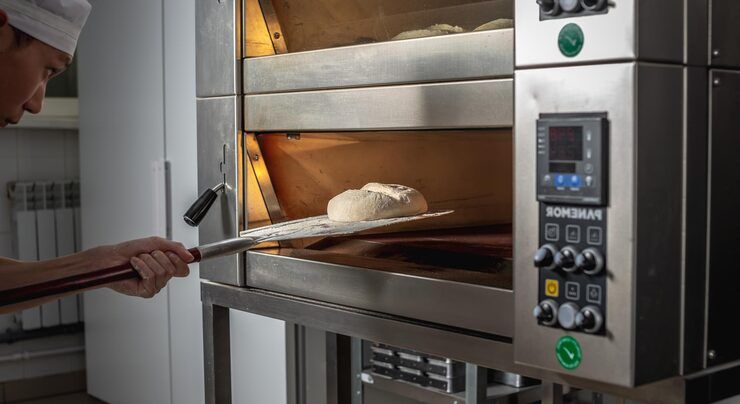
Core baking ovens are industrial heating systems used to dry, cure, or harden cores made from sand and binding materials. These cores are important in metal casting because they create internal cavities, channels, and complex shapes within cast components.
Foundries use core baking ovens to prepare cores that must maintain their shape and strength during mold assembly and metal pouring. Depending on the binder system and manufacturing process, cores may be hardened through heat, chemical reactions, or other curing methods. Baking ovens are particularly relevant to processes that require controlled thermal treatment.
Core baking ovens vary in size, temperature range, heating technology, airflow design, and automation. Some are designed for small batches, while others support continuous industrial production.
Understanding Core Baking Oven Technology
A core baking oven transfers heat to a core through a combination of convection, radiation, and conduction. The exact balance depends on the oven design, temperature, airflow, core geometry, and materials being processed.
The objective is to achieve the required core properties without causing excessive cracking, distortion, uneven curing, or unwanted changes in the binder.
Common types of industrial core baking ovens include:
Batch ovens: Process individual loads of cores in a stationary chamber.
Continuous ovens: Move cores through different heating zones using conveyors or other transport systems.
Cabinet ovens: Handle smaller batches and specialized core shapes.
Tunnel ovens: Support higher-volume production through a long, controlled heating chamber.
Gas-fired ovens: Use combustion systems to generate heat.
Electric ovens: Use electrical heating elements for controlled thermal processing.
The most appropriate design depends on production volume, core dimensions, binder chemistry, available energy sources, and the required heating cycle.
How Core Baking Works
The core baking process generally involves preparation, loading, controlled heating, cooling, and inspection.
Core preparation: Sand and binder are combined according to the specified manufacturing process, and the core is formed into the required shape.
Loading: Prepared cores are positioned on suitable racks, trays, or transport fixtures. Their arrangement should allow adequate airflow and prevent damage.
Heating: The oven raises the core temperature according to a defined heating profile. The required temperature and duration depend on the binder system and core specifications.
Curing or drying: Heat helps remove moisture or promotes the intended chemical and physical changes in the binder. Not all binders respond to heat in the same way.
Cooling and inspection: Cores are cooled under suitable conditions and inspected for dimensional accuracy, strength, surface condition, and other quality requirements.
Consistent temperature distribution is essential because uneven heating can produce differences in curing between the outside and the center of a core.
Importance of Core Baking Ovens in Manufacturing
Core baking ovens support the production of metal castings used in automotive components, pumps, industrial machinery, agricultural equipment, and other manufactured products.
Improving Casting Quality
The quality of a sand core affects the internal geometry and surface characteristics of the final casting. Inadequately cured cores may lose strength, crack, or fail during handling or metal pouring.
Controlled thermal processing helps manufacturers achieve the required core properties when the selected binder system depends on heat curing.
Supporting Production Efficiency
Industrial ovens must balance heating performance with production schedules. Poor temperature control or uneven airflow can increase rejected cores, reprocessing requirements, and production interruptions.
Factors that influence performance include:
Heating rate and temperature uniformity
Core loading density
Air circulation
Insulation quality
Cycle duration
Equipment availability
Maintenance requirements
Automation can help maintain repeatable heating profiles and record operating conditions for quality assurance.
Energy Efficiency and Operating Performance
Industrial heating can consume substantial energy, particularly in facilities that operate ovens for extended periods. Insulation, airflow management, burner efficiency, and appropriate loading can influence overall energy consumption.
Manufacturers may monitor energy use per production batch or per unit of processed material to identify opportunities for improvement.
Recent Developments in Industrial Oven Technology
Developments in industrial thermal processing during 2025 and 2026 have continued to emphasize energy efficiency, automation, emissions management, and digital monitoring. These trends apply broadly to industrial ovens, although the suitability of each technology depends on the foundry process.
Digital Temperature Monitoring
Modern industrial ovens can use programmable logic controllers, distributed temperature sensors, and data-recording systems to monitor heating cycles.
These systems help operators identify temperature deviations, compare batches, and maintain documented process conditions. Sensor placement and calibration remain important because a chamber reading does not necessarily represent the temperature inside every core.
Electrification of Industrial Heating
Industrial manufacturers are increasingly assessing electric heating as an alternative to combustion-based systems where infrastructure, operating requirements, and energy availability support the change.
Electric ovens can provide precise control in suitable applications, but their overall environmental performance depends on electricity generation, equipment efficiency, and production requirements.
Heat Recovery and Insulation
Improved insulation and heat recovery systems can reduce avoidable thermal losses. Some industrial facilities investigate recovering exhaust heat for incoming air or other compatible processes.
The practical results depend on oven operating temperatures, exhaust characteristics, process schedules, and maintenance.
Predictive Maintenance
Condition monitoring can help identify developing problems in fans, motors, burners, heating elements, and temperature-control components.
Maintenance teams may use operating records, vibration measurements, electrical measurements, and alarm histories to plan inspections before equipment failure disrupts production.
Laws, Regulations, and Industrial Safety
Core baking ovens must comply with applicable workplace safety, fire protection, environmental, and electrical requirements. The exact rules depend on the country, facility, fuel type, oven design, and manufacturing process.
Workplace Safety Requirements
Industrial ovens can expose workers to high temperatures, moving equipment, electrical hazards, combustion gases, and hot surfaces.
Safety measures commonly include:
Insulated external surfaces and suitable guarding
Emergency shutdown controls
Temperature-limit protection
Safe loading and unloading arrangements
Appropriate ventilation
Documented operating procedures
Regular inspections and maintenance
Worker training and protective equipment
Where combustion systems are used, appropriate burner controls, exhaust arrangements, and safeguards against fuel accumulation are particularly important.
Environmental Regulations
Foundries may be subject to air-emission requirements relating to combustion, particulate matter, and other pollutants generated by manufacturing processes.
In India, environmental permissions and applicable emission requirements may involve the Central Pollution Control Board and the relevant State Pollution Control Board. Facilities should verify requirements based on their location, fuel, production process, and applicable consent conditions.
Industrial Oven Standards
Depending on the jurisdiction, industrial ovens may be subject to recognized standards covering construction, thermal safety, electrical equipment, combustion safeguards, and operational controls.
For example, NFPA 86 is a widely recognized US standard addressing ovens and furnaces. Applicable editions, legal adoption, and requirements should be verified with the relevant authority.
Tools and Resources for Core Baking Operations
Several technical tools can help foundries plan oven operation and maintain consistent core quality.
Temperature Monitoring Equipment
Thermocouples, calibrated temperature sensors, data loggers, and thermal mapping instruments help evaluate oven performance.
Temperature mapping can identify cold spots, hot spots, and differences between locations within the heating chamber.
Process-Control Software
Industrial control systems can record heating profiles, manage programmed cycles, generate alarms, and maintain production records.
These records help operators compare batches and investigate defects when core properties fall outside the required specifications.
Energy Monitoring Tools
Electricity meters, fuel-flow meters, and energy-management software can help calculate energy consumption per batch or production unit.
A basic calculation is:
Energy intensity = Total energy consumed ÷ Units of production
For meaningful comparisons, measurements should use consistent production units and account for differences in core size, loading, and heating requirements.
Maintenance and Quality Records
Useful records include:
Oven temperature logs
Calibration records
Heating-cycle specifications
Core strength test results
Inspection reports
Maintenance schedules
Energy consumption data
Equipment downtime records
Together, these records support traceability and help identify recurring process problems.
Frequently Asked Questions
What is a core baking oven used for?
A core baking oven is used to heat, dry, or cure foundry cores according to the requirements of the selected binder system. The treatment helps the cores achieve the necessary properties for subsequent casting operations.
What temperature is required for core baking?
There is no universal temperature. The appropriate range depends on the binder chemistry, core material, geometry, and manufacturer specifications. Operators should follow a validated process rather than applying the same temperature to every core.
What is the difference between a batch oven and a continuous oven?
A batch oven processes a load during a defined heating cycle, while a continuous oven moves material through a sequence of heating zones. Batch systems can accommodate varied production requirements, whereas continuous systems may suit stable, higher-volume production.
How can energy consumption be reduced?
Potential measures include improving insulation, optimizing loading arrangements, maintaining burners and fans, controlling heating cycles, monitoring energy use, and evaluating heat recovery where technically appropriate.
What safety precautions are important when operating a core baking oven?
Important precautions include guarding hot surfaces, maintaining temperature controls, following loading procedures, ensuring appropriate ventilation, inspecting electrical and combustion systems, and training operators in emergency shutdown procedures.
Conclusion
Core baking ovens are important components of foundry manufacturing because they help prepare sand cores for the production of metal castings. Their performance influences core strength, dimensional accuracy, production consistency, and the reliability of downstream casting operations.
Developments in digital temperature monitoring, industrial electrification, insulation, heat recovery, and predictive maintenance provide opportunities to improve thermal processing. However, the appropriate technology depends on the binder system, production volume, required temperature profile, and facility conditions.
A well-managed core baking operation combines suitable equipment with validated heating cycles, reliable temperature measurement, preventive maintenance, energy monitoring, and compliance with applicable safety and environmental requirements. These practices help manufacturers maintain consistent core quality while managing resource use and operational risks.