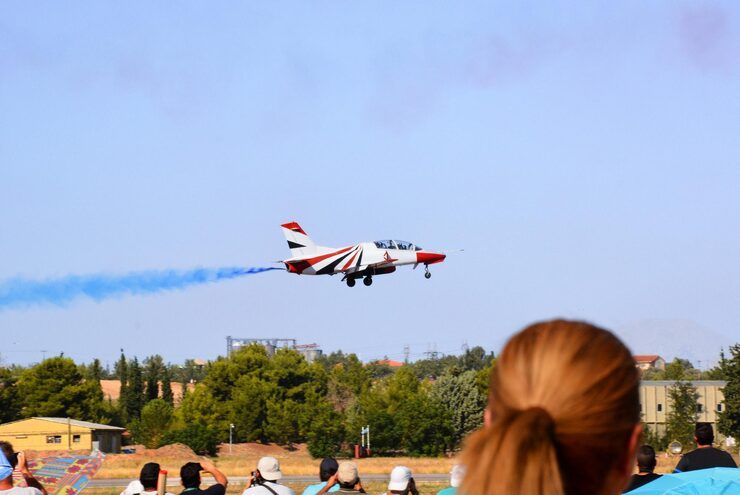
Aerobatic flight training is specialized pilot instruction focused on controlling an aircraft through deliberate maneuvers that involve unusual attitudes, rapid changes in direction, altitude, or acceleration. Training can introduce pilots to maneuvers such as loops, rolls, spins, steep turns, and combinations of controlled movements.
The purpose of aerobatic training is not simply to perform dramatic maneuvers. Structured instruction helps pilots understand aircraft energy, aerodynamic behavior, control inputs, recovery techniques, and the physiological effects of acceleration.
Aerobatics can be part of recreational aviation, advanced pilot development, competition flying, and preparation for certain demonstration activities. Because the maneuvers can place substantial loads on both aircraft and pilot, training requires appropriate aircraft, qualified instruction, careful weather assessment, and compliance with applicable aviation rules.
What Aerobatic Training Involves
Aerobatic training normally builds on basic aircraft-control skills. The exact syllabus depends on the pilot's experience, aircraft, instructor, and training objective.
Instruction can cover:
Energy management
Aircraft attitude control
Aerodynamic principles
G-force awareness
Stall and spin recognition
Recovery procedures
Vertical maneuvers
Rolling maneuvers
Emergency procedures
Aerobatic area planning
Aircraft limitations
The FAA describes aerobatic flight as involving an abrupt change in an aircraft's attitude, an abnormal attitude such as inverted flight, or abnormal acceleration.
Aircraft Selection Matters
Not every airplane is approved for aerobatic flight. The aircraft's flight manual, operating limitations, certification category, structural limitations, and approved maneuver envelope determine what can be performed.
A training airplane must be appropriate for the intended maneuver and maintained according to applicable requirements. Pilots should never assume that an aircraft capable of normal flight is automatically capable of aerobatics.
Understanding Aerodynamic Energy
Aerobatic training places particular emphasis on managing airspeed, altitude, attitude, and energy.
A pilot needs to understand how energy changes during climbs, descents, turns, rolls, and other maneuvers. Maintaining an appropriate margin from aircraft limitations is an essential part of structured training.
Why Aerobatic Flight Training Matters Today
Developing Advanced Aircraft Control
Aerobatic instruction can improve a pilot's understanding of aircraft response. Training exposes pilots to attitudes and energy states that are not normally encountered during routine straight-and-level flying.
This can make aerobatic training relevant to:
Advanced flight training
Upset prevention
Pilot proficiency
Competition aerobatics
Aviation safety education
Aircraft handling development
Demonstration flying
It should not be viewed as a substitute for fundamental pilot training. Strong basic skills remain the foundation for advanced maneuvering.
Understanding G-Forces
Acceleration is one of the defining characteristics of aerobatic flying. During certain maneuvers, pilots can experience significant positive or negative G-forces.
The FAA notes that accelerative forces can produce physiological effects including visual disturbances, discomfort, and, at sufficiently high levels, loss of consciousness. Individual tolerance varies with physiology, physical condition, experience, and recency of exposure.
This makes physiological awareness an important component of aerobatic flight training.
Improving Decision-Making
Aerobatic training also involves risk management. Pilots must continuously consider:
Available altitude
Airspeed
Aircraft limitations
Weather
Airspace
Traffic
Maneuver sequence
Recovery altitude
Personal readiness
Good decision-making can be as important as physical control of the aircraft.
| Training Area | Primary Learning Focus |
|---|---|
| Energy management | Airspeed and altitude control |
| Attitude control | Aircraft orientation |
| G-force awareness | Physiological effects |
| Recovery training | Returning to controlled flight |
| Aerodynamics | Understanding aircraft behavior |
| Weather | Identifying suitable conditions |
| Airspace | Maintaining legal separation |
| Risk management | Making conservative decisions |
Recent Developments in Aerobatic Flight Training
Updated FAA Training Materials
The FAA continues to maintain and update its pilot-training publications. The agency's current handbook catalog lists the Airplane Flying Handbook FAA-H-8083-3C Addendum with an October 2025 update. The handbook covers fundamental aircraft control, energy management, performance maneuvers, and emergency procedures.
The FAA also maintains the Pilot's Handbook of Aeronautical Knowledge, covering subjects including aerodynamics, aircraft performance, weather, airspace, navigation, and aeromedical factors.
These resources provide useful background for pilots progressing toward more advanced flight instruction.
Changes to Pilot Training Guidance
In November 2025, the FAA issued Advisory Circular AC 61-146, addressing sport-pilot certification, training, and operations following regulatory changes associated with the Modernization of Special Airworthiness Certification framework. The guidance is broader than aerobatics specifically, but it illustrates the continuing evolution of pilot-training requirements and aircraft categories.
Practical Test Standards in 2026
The FAA's testing standards were also updated during 2026. The agency lists new practical test standards for several sport-pilot categories, with some becoming effective September 14, 2026.
Aerobatic training itself is not equivalent to a separate standard pilot certificate. However, these broader developments demonstrate why pilots and instructors should use current FAA publications when planning advanced training.
Increasing Use of Structured Safety Training
Modern flight training increasingly emphasizes aeronautical decision-making, risk management, aircraft limitations, and upset prevention alongside physical maneuver skills.
Digital flight records, electronic navigation, weather applications, flight simulators, and structured briefing materials can also support training. These technologies are most useful when combined with qualified instruction and established aviation procedures.
Laws, Regulations and Aviation Policies
United States FAA Rules
In the United States, aerobatic flight is primarily governed by 14 CFR Part 91, including §91.303, which establishes limitations on aerobatic flight.
The regulation restricts aerobatic flight in specified areas, including certain congested locations, airspace associated with airports, and areas where particular restrictions apply.
Pilots must also comply with applicable altitude, airspace, visibility, aircraft, and operational requirements.
The FAA specifically distinguishes aerobatic flight from ordinary maneuvering. Its guidance explains that abrupt attitude changes, abnormal attitudes, and abnormal acceleration can qualify as aerobatic flight.
Aircraft Certification and Operating Limitations
Aircraft certification is another important consideration. An aircraft's approved operating limitations determine whether aerobatic maneuvers are permitted and which maneuvers may be conducted.
FAA certification guidance states that aircraft approved for aerobatic operation must comply with applicable limitations and that only appropriately approved maneuvers should be conducted.
Pilots should therefore consult the aircraft's approved flight manual and operating limitations before attempting any maneuver.
Airshows and Demonstration Flying
Aerobatic training is different from performing aerobatics at a public airshow.
The FAA has a dedicated National Aviation Events Program covering aviation-event approvals and demonstration activities. Civil pilots performing aerobatics at qualifying aviation events may need a Statement of Aerobatic Competency and must comply with applicable performance and practice requirements.
The requirements for an airshow should not be confused with those for ordinary aerobatic practice.
Medical and Physiological Considerations
Aerobatic pilots should understand how acceleration affects the human body. The FAA's Aeronautical Information Manual specifically discusses G-force effects during aerobatic flight and notes that pilots may experience visual changes or loss of consciousness under sufficiently strong acceleration.
Pilots with concerns about their ability to tolerate accelerative forces can discuss those concerns with an Aviation Medical Examiner.
Tools and Resources for Aerobatic Training
FAA Publications
Several FAA resources are useful for building aviation knowledge:
Airplane Flying Handbook
Pilot's Handbook of Aeronautical Knowledge
Aviation Instructor's Handbook
Aviation Weather Handbook
Aeronautical Information Manual
Risk Management Handbook
FAA advisory circulars
Current Federal Aviation Regulations
The FAA maintains a centralized aviation handbook and manual library and updates selected publications and addenda over time.
Weather and Airspace Tools
Weather and airspace awareness are particularly important before aerobatic flight.
Useful resources include:
Official aviation weather briefings
National meteorological information
Aeronautical charts
NOTAM information
Temporary flight restriction information
GPS navigation
Digital aviation maps
Local airport information
A general weather application can provide background information, but aerobatic pilots should use appropriate aviation weather sources and current local observations.
Flight Simulation
Flight simulators can provide a controlled environment for learning concepts such as aircraft attitude, instrument interpretation, energy management, and maneuver sequencing.
Simulation cannot fully reproduce the physical effects of G-forces or replace actual aircraft training. Its role is primarily educational and preparatory.
Training Preparation
A useful preparation checklist can include:
Review the aircraft's approved maneuver limitations.
Study the planned maneuvers.
Review current weather.
Confirm the aerobatic practice area.
Check applicable airspace.
Review emergency procedures.
Discuss G-force considerations with the instructor.
Confirm aircraft fuel and equipment status.
Complete a thorough preflight inspection.
Establish conservative personal limits.
Frequently Asked Questions
What is aerobatic flight training?
Aerobatic flight training teaches pilots to intentionally perform controlled aircraft maneuvers involving unusual attitudes, rapid changes in direction, or acceleration. Instruction normally progresses gradually according to the pilot's experience and aircraft capabilities.
Can any airplane perform aerobatics?
No. Aircraft have different structural, aerodynamic, and operating limitations. A pilot must verify that the aircraft is approved for the intended maneuvers and remain within its published limitations.
Does aerobatic training involve G-forces?
Yes. Depending on the maneuver, pilots can experience positive or negative acceleration. The FAA warns that significant G-forces can produce physiological effects, including visual disturbances and possible loss of consciousness.
Are aerobatics permitted everywhere?
No. U.S. regulations restrict aerobatic flight in specified locations and under particular conditions. Pilots must also comply with applicable airspace, altitude, visibility, airport, and aircraft requirements.
Is aerobatic training the same as airshow training?
No. General aerobatic instruction and public airshow performance have different requirements. Demonstration pilots may need additional authorization, competency documentation, and compliance with aviation-event procedures.
Conclusion
Aerobatic flight training is an advanced area of aviation that combines aircraft control, aerodynamics, energy management, meteorology, risk assessment, and human physiology. The objective is not simply to perform complex maneuvers but to develop disciplined control and decision-making within defined aircraft and environmental limits.
Recent FAA publications and updates through 2025 and 2026 demonstrate the continuing importance of current training material, testing standards, and regulatory awareness. The October 2025 update to the Airplane Flying Handbook materials and the 2026 changes to selected practical test standards are examples of why pilots should use current aviation references.
In the United States, aerobatic operations are subject to FAA regulations, including the limitations established under 14 CFR §91.303. Aircraft certification and operating limitations also determine which maneuvers are appropriate. Public airshow demonstrations can involve additional competency and authorization requirements.
For pilots considering advanced flight instruction, the most important foundations are qualified instruction, suitable aircraft, current weather information, knowledge of applicable regulations, awareness of G-forces, and conservative decision-making. These principles help place aerobatic flying within the broader framework of responsible aviation training.