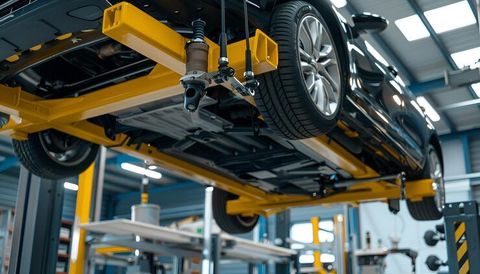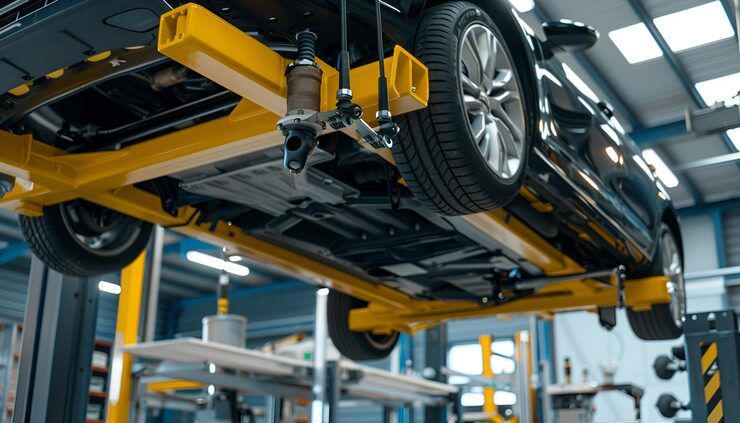
Vehicle lift systems are mechanical devices designed to raise vehicles above ground level for inspection, maintenance, storage, or specialized operations. They are widely used in automotive workshops, vehicle inspection facilities, manufacturing plants, parking structures, and commercial garages.
These systems help technicians reach the underside of a vehicle, support access to wheels and suspension components, and improve the use of available workspace. Depending on their design, vehicle lifts may use hydraulic cylinders, electric motors, mechanical screws, cables, or combinations of these technologies.
The appropriate system depends on the vehicle's weight, dimensions, lifting points, intended use, available floor space, and required lifting height. Understanding these factors is important for safe operation and efficient workshop planning.
Understanding Vehicle Lift Systems
Vehicle lifts are available in several configurations, each designed for specific applications.
Two-post lifts use two upright columns with adjustable arms positioned beneath approved vehicle lifting points. They are commonly found in automotive repair facilities because they provide access to the wheels and much of the vehicle's underside.
Four-post lifts support a vehicle on two pairs of runways. They are commonly used for vehicle storage, inspections, alignment work when appropriately equipped, and applications requiring stable platform support.
Scissor lifts use linked metal arms that expand and contract to raise a platform. They can be suitable for workshops with particular space requirements or for specific maintenance tasks.
In-ground lifts position major lifting components below floor level. Depending on the design, they can reduce above-floor obstructions and support specialized workshop layouts.
Portable vehicle lifts are designed to be moved or repositioned for selected applications. Their permitted capacity and use depend on the manufacturer's specifications and the surface on which they operate.
How Vehicle Lift Systems Work
Hydraulic vehicle lifts use pressurized fluid to generate the force needed to raise a load. An electric motor typically drives a hydraulic pump, which directs fluid into a cylinder and extends the lifting mechanism.
Mechanical systems may use screw drives, chains, cables, or other mechanisms to raise and support a vehicle. Some designs combine hydraulic movement with mechanical locking devices.
Most professional vehicle lifts incorporate safety features such as locking mechanisms, emergency stops, overload protection, or controlled lowering systems, depending on the model.
A vehicle should be positioned according to the manufacturer's instructions, with its weight distributed correctly across the designated lifting points or platforms. Before anyone works underneath a raised vehicle, the lift must be secured using its prescribed safety mechanisms.
Why Vehicle Lift Systems Matter
Vehicle lift systems support automotive maintenance, vehicle inspection, manufacturing, and space management. They also help reduce the need for technicians to work in confined positions beneath vehicles supported only by basic lifting equipment.
Automotive Maintenance and Inspection
Vehicle lifts make it easier to inspect components that are difficult to access at ground level.
Common applications include:
Brake and suspension inspections
Exhaust system examination
Undercarriage maintenance
Tire and wheel work
Transmission and drivetrain access
Structural inspections
Selected alignment procedures
The exact tasks supported depend on the lift configuration, vehicle design, and availability of suitable accessories.
Workshop Space and Productivity
Lifts can improve the organization of a workshop by raising vehicles to a practical working height. Four-post systems may also support vehicle storage in facilities designed for that purpose, subject to structural and operational requirements.
However, productivity depends on appropriate equipment selection, technician training, maintenance, and the layout of the workspace.
Vehicle Compatibility
Not every lift is suitable for every vehicle. Electric vehicles, heavy commercial vehicles, sports cars, and vehicles with unusual chassis configurations may require specific lifting arrangements.
Battery placement, ground clearance, wheelbase, weight distribution, and manufacturer-designated lifting points should all be considered before a vehicle is raised.
Recent Developments in Vehicle Lift Technology
During 2025 and 2026, vehicle lifting technology has continued to reflect wider developments in automotive workshop equipment, electric vehicle maintenance, and industrial safety.
Electric Vehicle Compatibility
The increasing presence of electric vehicles has made correct lifting-point identification particularly important. Electric vehicles may have large underfloor battery packs and designated lifting areas that must not be damaged during workshop operations.
Manufacturers of workshop equipment increasingly provide application-specific lifting accessories and compatibility information for different vehicle configurations. Technicians should consult vehicle-specific repair documentation before lifting an electric vehicle.
Connected Workshop Equipment
Digital controls, electronic diagnostics, and equipment monitoring are becoming more relevant in modern automotive facilities. Depending on the system, digital features can help operators monitor operating status, identify faults, or record maintenance activities.
These features do not eliminate the need for physical inspections, correct vehicle positioning, and mechanical safety locks.
Energy Efficiency and Workshop Design
Workshop planning increasingly considers electricity use, equipment durability, maintenance requirements, and efficient use of floor space.
The appropriate choice remains application-specific. A lift designed for frequent vehicle maintenance may have different operational requirements from one intended mainly for storage or heavy commercial vehicles.
Because product specifications and standards can change, facility operators should verify the latest documentation for the particular lift model under consideration.
Laws, Regulations, and Safety Standards
Vehicle lift requirements vary by country and jurisdiction. Regulations can cover equipment design, installation, structural capacity, workplace safety, inspection, and operator training.
United States Workplace Safety
In the United States, the Occupational Safety and Health Administration establishes workplace safety requirements relevant to vehicle lifting operations.
OSHA's general industry regulations include requirements addressing machine guarding, hazardous energy control, and safe working practices where applicable. Employers must assess the specific hazards associated with their equipment and workplace.
The Automotive Lift Institute also publishes safety information and guidance concerning automotive lift operation, inspection, and maintenance. Applicable requirements depend on the lift type, workplace, and relevant standards.
European Safety Requirements
In the European Union, machinery safety requirements apply to vehicle lifting equipment within the relevant scope. Machinery placed on the market must meet applicable conformity requirements.
Regulation (EU) 2023/1230 on machinery is scheduled to apply generally from January 20, 2027, replacing the Machinery Directive 2006/42/EC. During the transition, manufacturers and operators should verify which legal provisions apply to their particular equipment and activities.
Workplace Safety in India
In India, vehicle lift installations may be affected by applicable occupational safety legislation, state requirements, electrical safety rules, building requirements, and equipment-specific standards.
Facilities should check current requirements with the relevant authorities and qualified safety professionals. Installation must account for the floor's structural capacity, anchoring arrangements, electrical connections, and manufacturer specifications.
Essential Operating Precautions
Safe vehicle lifting involves more than selecting equipment with an adequate rated capacity.
Inspect the lift before use.
Check the vehicle's weight and lifting points.
Position the vehicle according to manufacturer instructions.
Keep people clear during raising and lowering.
Engage the designated mechanical safety locks.
Never exceed the rated capacity.
Avoid working beneath an unsupported raised vehicle.
Remove defective equipment from use until properly assessed.
Tools and Resources for Vehicle Lift Planning
Technical documentation and inspection records help facilities manage lifting equipment effectively.
Equipment Specifications
Manufacturers' technical manuals provide information about rated capacity, lifting height, required floor conditions, vehicle compatibility, installation, and maintenance.
Important specifications include:
Maximum rated load
Minimum and maximum lifting height
Column or platform dimensions
Required floor thickness and strength
Electrical requirements
Vehicle wheelbase compatibility
Safety-lock arrangements
Inspection and maintenance intervals
Load and Clearance Calculations
A workshop planning spreadsheet can record vehicle weights, dimensions, wheelbase, lifting-point locations, ceiling height, and required working clearance.
For example, the available vertical clearance can be estimated by subtracting the height of the raised vehicle and lift platform from the total usable ceiling height. The calculation should account for the vehicle's highest point and any overhead equipment.
Such calculations support preliminary planning but do not replace professional structural assessment or manufacturer installation requirements.
Inspection and Maintenance Records
A maintenance log can record inspection dates, hydraulic leaks, cable condition, locking-device operation, unusual noises, repairs, and component replacement.
Scheduled inspections should follow the manufacturer's instructions and applicable local requirements. Damaged cables, worn lifting arms, leaking cylinders, and malfunctioning safety locks require appropriate assessment before the equipment returns to operation.
Frequently Asked Questions
What are the main types of vehicle lift systems?
Common types include two-post lifts, four-post lifts, scissor lifts, in-ground lifts, and portable vehicle lifts. Their suitability depends on the vehicle, workspace, maintenance task, and rated capacity.
Are hydraulic vehicle lifts suitable for electric vehicles?
Some hydraulic lifts are suitable for electric vehicles, provided their capacity, configuration, and lifting points are compatible. Technicians must follow vehicle-specific guidance to avoid damaging underfloor battery components.
How often should a vehicle lift be inspected?
Inspection frequency depends on the equipment, operating environment, manufacturer instructions, and applicable regulations. Daily or pre-use checks may be necessary, alongside periodic professional inspections where required.
What determines the lifting capacity required?
The vehicle's weight, load distribution, lifting configuration, and intended application determine the capacity requirement. Equipment must be rated appropriately, and the load must be positioned according to the manufacturer's instructions.
What is the difference between a two-post and a four-post lift?
A two-post lift typically supports a vehicle through adjustable arms at designated lifting points, leaving the wheels accessible. A four-post lift supports the vehicle on runways and is often used for storage, inspections, and certain maintenance tasks.
Conclusion
Vehicle lift systems are important components of modern automotive workshops, inspection facilities, and vehicle storage environments. Hydraulic, mechanical, scissor, two-post, and four-post designs provide different ways to raise vehicles for specific tasks.
Recent developments involving electric vehicle compatibility, digital monitoring, and workshop efficiency highlight the importance of matching equipment to changing automotive requirements. However, technology alone cannot ensure safety. Correct installation, suitable load capacity, trained operators, routine inspections, and functioning safety mechanisms remain essential.
Before selecting or operating a vehicle lift, facilities should review manufacturer documentation, applicable regulations, structural requirements, and vehicle-specific lifting instructions. These measures support safe operation, effective maintenance, and responsible management of automotive equipment.