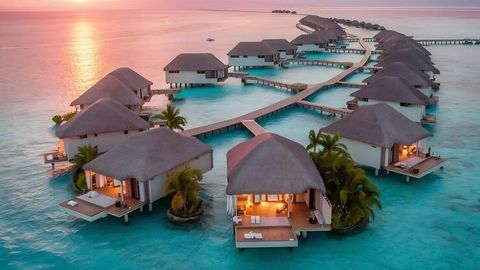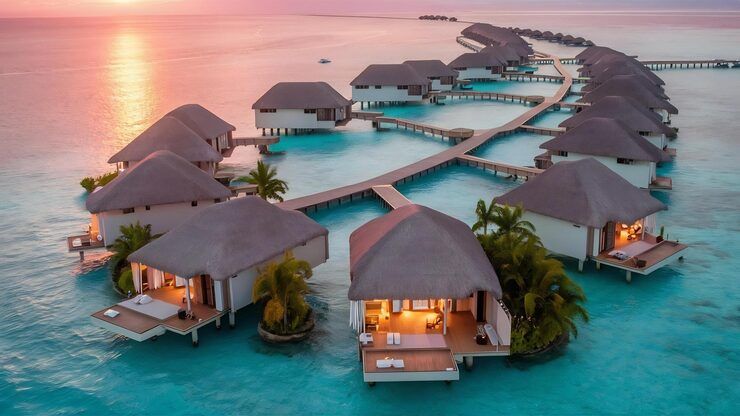
Island overwater bungalows are accommodation units built above shallow coastal waters, generally using elevated platforms or structural supports connected to an island or resort. They are strongly associated with tropical destinations such as the Maldives, French Polynesia, Bora Bora, Fiji, and selected locations across Southeast Asia.
The concept brings accommodation directly into the marine landscape. A typical bungalow may include an elevated deck, large windows, outdoor seating, direct water access, and views across a lagoon.
Overwater architecture became particularly well known through tourism development in French Polynesia during the 1960s. The idea later expanded across tropical destinations where shallow lagoons and sheltered coastal waters provided suitable conditions.
The Maldives has become one of the world's most recognizable destinations for this type of accommodation. Its atolls contain extensive lagoon environments, allowing resorts to develop villas over water while maintaining connections with their main islands.
How Overwater Bungalows Are Designed
Engineering an overwater structure requires consideration of both the building and the marine environment.
Important factors include:
Water depth
Seabed conditions
Tides
Wave action
Wind exposure
Corrosion
Storm conditions
Structural loads
Water and wastewater systems
Emergency access
Materials must withstand prolonged exposure to saltwater, humidity, sunlight, and changing weather.
| Component | Main purpose | Key consideration |
|---|---|---|
| Structural supports | Hold the bungalow above water | Seabed stability |
| Deck | Outdoor space | Weather and corrosion |
| Roof | Protection from sun and rain | Wind resistance |
| Windows | Views and daylight | Heat and storm exposure |
| Connecting walkway | Island-to-villa access | Safe movement |
| Utilities | Water and electricity | Marine protection |
| Wastewater system | Manage wastewater | Environmental protection |
Modern designs may incorporate energy-efficient lighting, solar technologies, rainwater collection, wastewater treatment, and materials selected for tropical marine environments.
Why Island Overwater Bungalows Matter Today
Overwater bungalows have become an important part of international luxury travel and tropical tourism. They connect architecture with beaches, lagoons, marine ecosystems, and island landscapes.
They are particularly relevant to travelers researching:
Luxury hotel accommodation
Tropical vacations
Island holidays
Honeymoon travel
Premium resort accommodation
Marine tourism
Destination travel
Sustainable tourism
Long-distance vacation planning
Supporting Island Tourism
Many island economies depend substantially on tourism. Distinctive accommodation can help destinations attract visitors while creating demand for transportation, restaurants, recreation, cultural activities, and other parts of the tourism economy.
For small islands with limited land area, elevated structures can also influence how resorts organize their available space.
However, construction over water introduces environmental considerations that do not apply in exactly the same way to buildings located entirely on land.
Connection With Marine Ecosystems
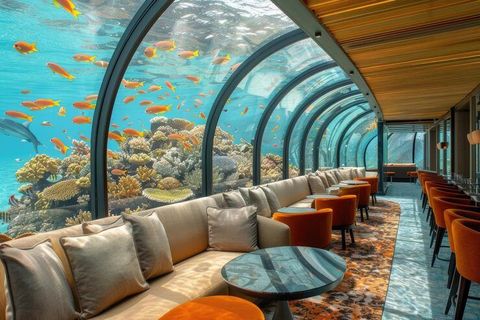
One of the defining features of an overwater bungalow is its close relationship with the sea. Guests may be able to observe fish, coral, tides, and changing marine conditions directly from the accommodation.
That connection also creates environmental responsibilities.
Poorly planned development can potentially affect:
Coral reefs
Seabed habitats
Water circulation
Marine organisms
Sediment movement
Water quality
Coastal processes
Responsible development therefore requires consideration of the marine environment before, during, and after construction.
Planning an Overwater Stay
Travelers should evaluate more than photographs when researching a tropical resort.
Useful factors include:
Island location
Airport transfer arrangements
Seasonal weather
Lagoon conditions
Room location
Accessibility
Emergency arrangements
Marine activities
Privacy considerations
Travel insurance coverage
Remote islands can require boat, seaplane, or domestic-air connections after an international flight, making transportation an important part of itinerary planning.
Recent Developments in Island Overwater Tourism
Overwater accommodation continues to evolve alongside changes in island tourism, climate resilience, environmental management, and resort development.
Maldives Tourism Development During 2025
The Maldives remained active in developing new tourism areas during 2025. On March 19, 2025, the President ratified the 15th Amendment to the Maldives Tourism Act. The amendment changed provisions relating to islands, land, and lagoons used for tourism development, redevelopment, lease extensions, and tourism planning.
In March 2025, the Ministry of Tourism and Environment also published invitations for proposals involving tourist resort development on lagoon plots, demonstrating continued government activity around lagoon-based tourism development.
Further Tourism-Law Changes in December 2025
On December 6, 2025, the Maldives ratified the 16th Amendment to the Tourism Act. The amendment established a legislative framework for leasing areas for tourist resort development and introduced provisions concerning resort construction periods and lagoon boundaries.
These developments are particularly relevant to overwater accommodation because lagoon areas, resort boundaries, construction periods, and tourism leases can directly influence how marine accommodation projects are planned.
New Development Activity in 2026
The Maldives Ministry of Tourism continues to publish new resort development opportunities and tourism-related announcements. Its 2026 announcements include invitations concerning the lease, development, operation, and management of integrated tourist resorts and tourist resorts.
The Ministry also maintains an online database of resorts and other registered tourism facilities, providing a useful reference for accommodation research.
Sustainability and Climate Resilience
Environmental resilience has become increasingly important for island tourism. Coral health, coastal erosion, freshwater availability, waste management, changing weather patterns, and marine biodiversity can all influence the long-term viability of tropical resort destinations.
For overwater accommodation, this means future design is likely to place greater emphasis on durable structures, efficient resource use, wastewater management, environmental monitoring, and protection of sensitive marine habitats.
Laws, Regulations and Policies in the Maldives
The Maldives provides an important regulatory example because tourism development is closely connected with islands, lagoons, coastal areas, and marine ecosystems.
Maldives Tourism Act
The Maldives Tourism Act provides the principal legal framework for tourism development. The Ministry of Tourism maintains the Act and its amendments through its official legislation portal.
The 2025 amendments expanded and revised provisions affecting tourism development on islands, land, and lagoons. For an overwater bungalow project, relevant considerations can therefore include:
Tourism development rights
Resort boundaries
Lagoon areas
Lease arrangements
Construction periods
Redevelopment
Tourism establishment standards
Lagoon and Coastal Development
The Ministry of Tourism publishes regulations and guidelines covering tourism development, including rules concerning the boundaries of tourist establishments, integrated resorts, private islands, environmental protection, and leasing of islands, lands, and lagoons.
The Ministry also publishes a guideline concerning the demarcation of boundaries for islands leased for tourist resorts, tourist hotels, tourist guesthouses, and yacht marinas.
These documents are relevant because overwater villas can extend the physical footprint of a resort beyond its dry land.
Environmental Protection
Marine development must also consider environmental protection. The Maldives maintains regulations specifically addressing protection and conservation of the environment within the tourism industry.
Depending on the project, environmental assessment can be relevant to issues such as:
Coral reefs
Seabed disturbance
Dredging
Wastewater
Coastal modification
Water quality
Marine biodiversity
Beach and lagoon management
Developers should consult the relevant Maldivian authorities before undertaking new marine construction or major alterations.
Construction and Safety
Overwater accommodation also requires attention to structural engineering, electrical systems, fire protection, emergency movement, water systems, wastewater management, and guest safety.
Requirements can change according to the type, location, scale, and design of a project. Local authorities and current regulations should therefore be checked before development decisions are made.
Tools and Resources for Island Overwater Travel
Several tools can help travelers and researchers evaluate tropical destinations and overwater accommodation.
Weather and Marine Planning
Useful resources include:
Tropical weather applications
Marine forecasts
Tide calculators
Wave forecasts
Satellite mapping tools
Sunrise and sunset applications
Diving and snorkeling condition information
These tools can help travelers understand seasonal weather and marine conditions before arranging activities.
Travel Planning Resources
Useful resources include:
Official tourism websites
Resort websites
Airport transfer information
Airline and seaplane schedules
Digital maps
Accommodation research platforms
Travel insurance documentation
Currency calculators
For remote island properties, transportation should be researched alongside accommodation because the final journey may involve a seaplane, domestic flight, or boat.
Sustainability Research
Travelers interested in environmentally responsible accommodation can examine:
Coral restoration programs
Marine conservation initiatives
Renewable-energy projects
Water conservation programs
Waste-management policies
Environmental monitoring programs
Specific evidence is more useful than relying only on general sustainability descriptions.
Comparing Overwater Accommodation
A simple research table can help organize choices:
| Factor | Property A | Property B | Property C |
|---|---|---|---|
| Island location | Lagoon | Atoll | Lagoon |
| Transfer | Boat | Seaplane | Boat |
| Overwater accommodation | Yes | Yes | Yes |
| Marine activities | Extensive | Moderate | Extensive |
| Environmental program | Verified | Verify | Verified |
| Accessibility details | Available | Verify | Available |
| Weather exposure | Moderate | High | Moderate |
This approach helps travelers focus on practical characteristics rather than broad promotional descriptions.
Frequently Asked Questions
Where are overwater bungalows most common?
They are especially associated with the Maldives and French Polynesia, including Bora Bora. Similar accommodation can also be found in Fiji and selected tropical destinations in Southeast Asia.
Are overwater bungalows built directly on coral reefs?
Not necessarily. Structures can be positioned above lagoons or coastal waters using engineered supports. Their exact relationship with coral and seabed habitats depends on local geography and construction methods.
Are overwater bungalows environmentally sustainable?
Not automatically. Their environmental performance depends on construction techniques, wastewater management, energy use, reef protection, waste management, lighting, and ongoing environmental monitoring.
What is the best season for an overwater bungalow stay?
There is no universal best season because tropical climates differ between destinations. Travelers should compare rainfall, wind, humidity, temperature, marine visibility, and transportation conditions for the specific island.
What should travelers check before planning an overwater stay?
Travelers should review the location, transportation arrangements, weather, accessibility, emergency information, room characteristics, marine conditions, accommodation details, cancellation terms, and travel insurance coverage.
Conclusion
Island overwater bungalows represent a distinctive form of tropical hospitality where architecture and marine landscapes become closely connected. Elevated structures provide a direct relationship with lagoons and coastal environments while creating specialized challenges involving engineering, utilities, environmental protection, and safety.
The Maldives provides one of the clearest examples of this tourism model. Changes to its Tourism Act during 2025 revised important provisions concerning tourism development on islands, land, and lagoons.
Government activity has continued into 2026, with the Ministry of Tourism publishing new tourism development opportunities and maintaining official information about tourism regulations, development guidelines, and registered facilities.
Environmental protection remains equally important. Coral reefs, lagoons, seabed habitats, freshwater resources, and coastal areas are fundamental to many island destinations, making careful planning essential for long-term tourism.
For travelers, an overwater bungalow can form part of a broader tropical itinerary involving marine activities, cultural experiences, relaxation, and nature tourism. Reviewing transportation, seasonal conditions, accessibility, environmental practices, and local regulations can create more realistic expectations.
As island destinations adapt to climate pressures and changing tourism patterns, the future of overwater accommodation will increasingly depend on resilient engineering, responsible lagoon development, efficient resource use, and protection of the marine ecosystems that make these destinations distinctive.