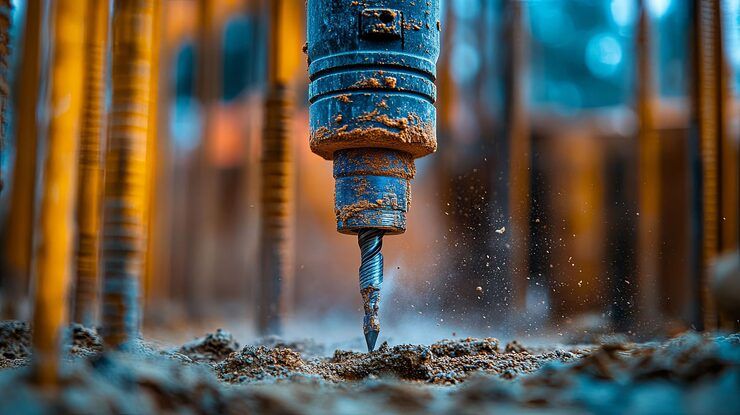
Drilling machines are mechanical tools used to create round holes in materials such as metal, wood, plastic, concrete, and composite materials. They are widely used in manufacturing, construction, automotive production, aerospace engineering, electronics, and general maintenance.
The main purpose of a drilling machine is to produce holes with the required diameter, depth, position, and surface quality. Depending on the application, drilling operations can range from simple holes in wooden components to highly accurate holes in metal parts used in industrial machinery.
Modern drilling equipment includes handheld drills, bench drilling machines, radial drilling machines, magnetic drills, and computer numerical control (CNC) drilling systems. Each type is designed for different materials, workpiece sizes, accuracy requirements, and production volumes.
Understanding Drilling Machine Technology
A conventional drilling machine operates by rotating a cutting tool, known as a drill bit, while applying controlled pressure to the workpiece. The cutting edges remove material and form a hole as the tool advances.
Most machines contain a motor, spindle, chuck or tool holder, feed mechanism, worktable, and supporting frame. Larger industrial systems may also include automatic tool changers, coolant systems, digital controls, and workpiece-positioning equipment.
The selection of a drilling machine depends on several factors:
Material hardness and thickness
Required hole diameter and depth
Production volume
Hole-position accuracy
Workpiece dimensions
Tool compatibility
Available floor space
Operator safety requirements
Choosing equipment based on these factors helps manufacturers achieve consistent results and reduce unnecessary material waste.
Common Types of Drilling Machines
Different drilling machines serve different industrial and workshop requirements.
Bench drilling machines: Compact machines mounted on a workbench, commonly used for small components and light-duty drilling.
Pillar drilling machines: Floor-mounted machines designed for more substantial workpieces and a wider range of drilling operations.
Radial drilling machines: Equipment with an adjustable radial arm that allows the drill head to move across large workpieces.
Magnetic drilling machines: Portable industrial machines that use a magnetic base to attach to suitable ferrous metal surfaces.
CNC drilling machines: Computer-controlled systems that position tools accurately and repeat drilling operations according to programmed instructions.
Deep-hole drilling machines: Specialized equipment designed to produce deep holes while controlling straightness, heat, chip removal, and dimensional accuracy.
Multi-spindle drilling machines: Systems with several drilling spindles that can create multiple holes during one operating cycle.
Each type offers different capabilities. A small workshop drill press, for example, is not designed to perform the same tasks as an automated CNC drilling center.
How a Drilling Operation Works
A typical drilling operation follows several stages.
Workpiece preparation: The material is inspected, measured, and secured in an appropriate fixture.
Tool selection: A drill bit is selected according to material type, hole diameter, and required depth.
Machine setup: The operator establishes spindle speed, feed rate, tool alignment, and workholding arrangements.
Drilling: The rotating tool advances into the material and removes chips.
Inspection: The completed hole is checked for diameter, depth, position, and surface quality.
Finishing: Depending on the component, additional operations such as deburring, reaming, or countersinking may be required.
Correct cutting parameters are important because excessive speed, unsuitable feed rates, or poor chip removal can damage tools and reduce hole quality.
Why Drilling Machines Matter in Modern Industry
Drilling machines support many manufacturing processes by enabling repeatable hole production across a broad range of materials.
Precision Manufacturing
Industrial components frequently require holes for fasteners, shafts, fluid passages, electrical connections, and assembly operations.
In automotive and aerospace manufacturing, hole position and diameter can affect alignment, structural performance, and the reliability of assembled parts. CNC drilling systems help control these dimensions when properly programmed and maintained.
Construction and Infrastructure
Drilling equipment is used in metal fabrication, structural assembly, electrical installation, plumbing, and concrete work.
Specialized drilling systems also support foundation engineering, geological investigation, and mineral exploration. These applications require different equipment designs from conventional workshop drilling machines.
Production Efficiency
Automated drilling systems can reduce repetitive manual operations and improve consistency when producing large batches of components.
However, productivity depends on the complete process, including workpiece loading, tool changes, machine setup, inspection, and maintenance. Automation does not eliminate the need for skilled planning and quality control.
Recent Developments in Drilling Machine Technology
Developments during 2025 and 2026 have continued to emphasize automation, digital monitoring, precision manufacturing, and improved energy efficiency.
CNC Automation and Smart Manufacturing
Manufacturers increasingly integrate CNC drilling equipment with digital production systems. These systems can monitor machine status, record production data, and support repeatable drilling programs.
Digital monitoring can help identify abnormal spindle loads, excessive vibration, tool wear, and interruptions in production. The usefulness of these features depends on sensor quality, data interpretation, and integration with existing manufacturing systems.
Artificial Intelligence and Predictive Maintenance
Artificial intelligence and machine-learning methods are being explored for detecting unusual machine behavior and estimating tool wear.
For drilling equipment, relevant measurements can include vibration, spindle temperature, motor current, acoustic signals, and drilling force. When interpreted correctly, these measurements can help maintenance teams identify potential problems before they lead to significant production interruptions.
These technologies are not equally available across all machines, and their accuracy depends on operating conditions and the quality of collected data.
Advanced Materials and Cutting Tools
Manufacturers continue to develop cutting tools and coatings for difficult-to-machine materials, including hardened alloys, stainless steel, and certain composite materials.
Improved tool geometry and coatings can help manage heat, wear, and chip formation. The appropriate tool still depends on the material, cutting parameters, cooling method, and required hole quality.
Energy and Resource Efficiency
Modern machine designs increasingly emphasize efficient motors, improved control systems, and reduced unnecessary machine operation.
Coolant management and longer tool life can also influence manufacturing efficiency. Actual energy savings vary according to machine design, operating conditions, workload, and maintenance practices.
Laws, Policies, and Industrial Safety Standards
Drilling machines must be operated in accordance with applicable workplace safety, electrical safety, environmental, and machinery requirements. The specific regulations depend on the country and the type of industrial activity.
Workplace Safety in India
In India, industrial workplaces must comply with applicable occupational safety and factory regulations, including relevant provisions of the Factories Act, 1948, and other laws or rules applicable to the establishment.
The Occupational Safety, Health and Working Conditions Code, 2020, is another important part of India's occupational safety framework. Its applicability and current implementation requirements should be checked against official government notifications.
Employers and machine operators should assess hazards associated with rotating tools, flying chips, entanglement, electrical equipment, noise, and workpiece movement.
Machine Guarding and Operator Protection
Common safety measures include:
Using appropriate guards and protective covers
Securing the workpiece before drilling
Removing the chuck key before starting the machine
Avoiding loose clothing and unsecured hair
Wearing suitable eye protection
Keeping hands away from rotating tools
Following lockout procedures during maintenance
Using the correct tool and operating parameters
Gloves should not be worn near exposed rotating spindles because they can become entangled. Any personal protective equipment should be selected according to the specific task and workplace risk assessment.
International Standards
International standards can provide guidance on machine-tool safety, risk assessment, electrical equipment, and manufacturing quality.
The International Organization for Standardization (ISO) publishes standards relevant to machine tools and industrial management. Applicable requirements depend on the equipment type, intended use, and jurisdiction.
Tools and Resources for Drilling Machine Selection
Several technical resources can help engineers, operators, and procurement teams evaluate drilling equipment.
Cutting Parameter Calculators
Machining calculators can estimate spindle speed, feed rate, and material removal rate.
For a rotating drill, spindle speed can be estimated using:
Spindle speed (RPM) = (Cutting speed × 1,000) ÷ (π × Drill diameter)
When cutting speed is expressed in metres per minute and drill diameter in millimetres, the result is revolutions per minute.
The recommended cutting speed must come from suitable tooling data and should account for material type, drill construction, coolant conditions, and machine rigidity.
Equipment Evaluation Checklist
| Factor | What to Evaluate |
|---|---|
| Material compatibility | Steel, aluminium, wood, plastic, or composites |
| Hole dimensions | Diameter, depth, and positional accuracy |
| Production volume | Individual components or repeated batches |
| Machine capacity | Spindle power, travel, and worktable dimensions |
| Tooling | Drill bits, holders, and tool-change arrangements |
| Automation | Manual, semi-automatic, or CNC operation |
| Safety | Guards, emergency stops, and operator protection |
| Maintenance | Inspection intervals, lubrication, and tool replacement |
Technical Documentation
Machine manuals, cutting-tool catalogs, engineering drawings, maintenance schedules, and quality-control records help establish consistent operating procedures.
Manufacturers should also maintain records of machine inspections, tool wear, dimensional checks, and corrective maintenance.
Frequently Asked Questions
What is a drilling machine used for?
A drilling machine creates round holes in materials such as metal, wood, plastic, and concrete. Depending on the machine type, it can support workshop tasks, construction activities, and precision manufacturing.
What is the difference between a conventional and a CNC drilling machine?
A conventional drilling machine generally relies on manual positioning and operator-controlled movement. A CNC drilling machine uses programmed instructions to control tool movement and drilling operations, supporting repeatability in suitable production environments.
Which drilling machine is suitable for industrial manufacturing?
The appropriate machine depends on workpiece dimensions, material, hole depth, required accuracy, production volume, and automation needs. Bench drills may suit small components, while radial, deep-hole, or CNC systems address more specialized requirements.
How can drilling accuracy be improved?
Accuracy can be improved through secure workholding, correct tool selection, suitable spindle speed and feed rate, proper alignment, regular maintenance, and dimensional inspection. Tool wear and machine vibration should also be monitored.
What safety precautions are important when operating drilling machines?
Operators should secure workpieces, use appropriate guards and eye protection, keep hands away from rotating tools, remove chuck keys before starting, and follow approved maintenance and isolation procedures.
Conclusion
Drilling machines are essential tools across manufacturing, construction, engineering, and industrial maintenance. Their capabilities range from basic workshop drilling to automated CNC operations and specialized deep-hole machining.
Developments in digital monitoring, predictive maintenance, cutting-tool technology, and automation are expanding the capabilities of modern drilling systems. Nevertheless, reliable performance still depends on correct machine selection, suitable operating parameters, effective workholding, and regular maintenance.
Understanding machine types, production requirements, safety obligations, and available technical resources helps organizations choose appropriate drilling technology and maintain consistent manufacturing quality.