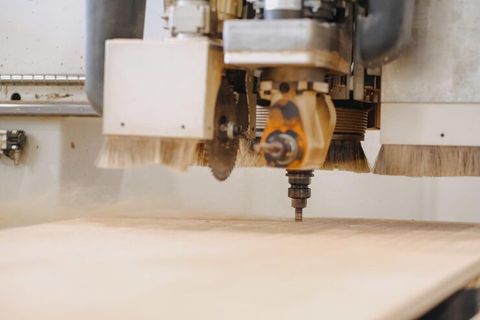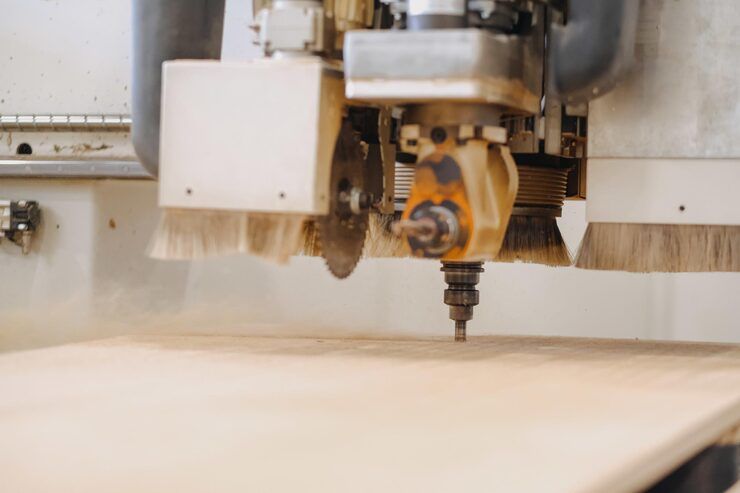
CNC wood carving machines use computer-controlled movements to cut, engrave, shape, and decorate wooden materials. CNC stands for Computer Numerical Control, a technology that translates digital instructions into precise machine movements. These machines are used in furniture manufacturing, cabinet production, decorative woodworking, sign making, architectural components, and custom woodcraft.
Traditional woodworking depends heavily on manual tools and operator skill. CNC technology introduces programmable movement, allowing manufacturers and craftspeople to reproduce intricate patterns and repeat production tasks with consistent dimensions.
A CNC wood carving system typically includes a machine frame, cutting spindle, motion-control system, workholding arrangement, and computer software. Depending on its design, the machine may operate across three, four, or five axes to create different shapes and levels of complexity.
How CNC Wood Carving Machines Work
The process generally begins with a digital design created in computer-aided design software, commonly known as CAD. The design is then prepared in computer-aided manufacturing software, or CAM, which converts the geometry into toolpaths and machine instructions.
The controller interprets these instructions and moves the cutting tool along programmed directions. The spindle rotates the cutting bit, removing material until the desired shape or surface detail is produced.
A typical workflow includes:
Creating or importing a digital design
Selecting the wood type and dimensions
Defining cutting depth and toolpaths
Choosing an appropriate cutting bit
Securing the material to the machine bed
Running a simulation or toolpath check
Executing the machining program
Inspecting and finishing the completed component
Material properties, cutting speed, tool geometry, feed rate, and machine rigidity all influence the final result.
Main Types of CNC Wood Carving Machines
Three-axis CNC routers move along the X, Y, and Z axes. They are widely used for engraving, lettering, decorative panels, cabinet components, and relatively flat woodworking projects.
Four-axis CNC routers add a rotary axis, allowing cylindrical or rotational workpieces to be machined. Applications include furniture legs, columns, carved posts, and decorative wooden objects.
Five-axis CNC machines can orient the cutting tool or workpiece in additional directions. They support more complex surfaces and angled machining operations, although they generally require more advanced programming and setup.
Desktop CNC machines are compact systems suited to workshops, educational environments, prototyping, and small decorative projects.
Industrial CNC routers are designed for larger workpieces, demanding production schedules, and more extensive automation. Some systems incorporate automatic tool changers, vacuum workholding, and material-handling equipment.
Common Applications
CNC wood carving technology is used across several industries:
Furniture and cabinet manufacturing
Decorative wall panels and doors
Wooden signs and lettering
Architectural mouldings
Musical instrument components
Sculptural woodwork
Prototypes and custom designs
Wooden packaging components
Educational woodworking projects
The machine type and configuration should match the material dimensions, design complexity, production volume, and required surface quality.
Why CNC Wood Carving Machines Matter
CNC woodworking combines digital design with controlled material removal. This can reduce variation between repeated components and make complex patterns easier to reproduce.
Precision and Repeatability
Manual carving can produce detailed work, but reproducing identical dimensions across many pieces may require substantial time and operator skill.
A properly configured CNC machine follows programmed toolpaths, supporting consistent dimensions across repeated production runs. Actual accuracy depends on calibration, machine construction, tool condition, material stability, and operating conditions.
Production Efficiency
Automation can reduce repetitive manual operations and support predictable manufacturing workflows. Automatic tool changers and vacuum workholding may reduce interruptions during suitable production tasks.
However, programming, setup, material preparation, tool changes, inspection, and finishing still require time and attention.
Design Flexibility
Digital workflows make it easier to modify patterns, adjust dimensions, and create variations from a shared design. This is useful in custom furniture, decorative architecture, and products that contain intricate surface details.
Material Utilization
CAM software can help arrange components on a sheet to reduce unused material. This process, often called nesting, can improve material utilization when combined with suitable cutting strategies.
Actual savings depend on the workpiece layout, cutting width, defects in the wood, grain direction, and the dimensions of the required components.
Comparing Machine Types
| Machine Type | Typical Application | Main Consideration |
|---|---|---|
| Three-axis router | Panels, lettering, engraving | Flat and accessible surfaces |
| Four-axis router | Cylindrical carving | Rotary-axis setup |
| Five-axis machine | Complex three-dimensional forms | Advanced programming |
| Desktop CNC | Small projects and prototypes | Limited working area |
| Industrial router | Repeated production and large panels | Space, power, and extraction requirements |
Recent Developments and Technology Trends
CNC woodworking continues to evolve through improvements in motion control, software, automation, and digital manufacturing. The following developments represent important industry trends during 2025 and 2026; individual capabilities vary by machine manufacturer and configuration.
Smarter CAM Programming
Modern CAM workflows increasingly incorporate simulation, automatic toolpath strategies, collision checking, and improved machining visualization. These features can help identify programming errors before a cutting operation begins.
Some software platforms also integrate design libraries and parametric modelling, making it easier to adjust dimensions without rebuilding an entire project.
Automation and Connected Manufacturing
Industrial woodworking systems increasingly combine CNC routers with automatic tool changers, barcode-based job identification, digital production planning, and material-handling equipment.
These technologies can improve workflow coordination in furniture and cabinet manufacturing. Their effectiveness depends on integration quality, operator training, and the consistency of production data.
Improved Dust Management
Wood dust remains an important workplace hazard. Machine enclosures, local exhaust ventilation, improved extraction connections, and automated cleaning arrangements are increasingly important considerations in CNC machine design and workshop planning.
Dust management is especially relevant when machining hardwoods, engineered wood products, and materials containing adhesives or surface coatings.
AI-Assisted Design and Monitoring
Artificial intelligence is beginning to support some manufacturing tasks, including design assistance, process monitoring, anomaly detection, and production planning.
These capabilities do not eliminate the need for experienced operators. CNC programs still require verification, and automated recommendations must be evaluated for material suitability, tool safety, and machining accuracy.
Laws, Safety Standards, and Workplace Policies
CNC wood carving machines involve rotating cutting tools, electrical equipment, moving machine components, and airborne wood dust. Applicable legal requirements depend on the country, workplace, machine type, and intended use.
Machine Safety
In the United States, workplace machinery is subject to applicable Occupational Safety and Health Administration requirements. Relevant provisions can address machine guarding, electrical safety, hazardous energy control, and employee training.
Machine guards and interlocks help reduce exposure to moving components. Emergency stops, appropriate workholding, and safe operating procedures are also important parts of a complete safety system.
Wood Dust and Ventilation
Wood dust can create respiratory risks and, under certain conditions, contribute to combustible-dust hazards.
Workplaces should evaluate suitable local exhaust ventilation, dust collection, housekeeping, and protective equipment according to applicable occupational safety requirements.
Compressed air should not be used indiscriminately to clean accumulated dust because it can disperse particles into the breathing zone.
International Standards
ISO 19085 is a series of standards addressing the safety of woodworking machines. Relevant parts apply to particular machine categories and configurations.
Standards are not automatically identical to legal requirements in every country. Manufacturers and operators should determine which editions, national adoptions, and regulations apply to their equipment.
Safe Operating Practices
Important practices include:
Inspecting cutting tools before operation
Securing the workpiece correctly
Checking toolpaths and machine settings
Using appropriate guarding and extraction
Keeping hands clear of moving components
Following lockout procedures during maintenance
Receiving training before operating unfamiliar equipment
Wearing appropriate protective equipment
Tools and Resources for CNC Woodworking
Several categories of software and equipment support CNC carving projects.
CAD and CAM Software
CAD software creates digital geometry, while CAM software converts the design into machine instructions.
Common examples include Autodesk Fusion, Vectric Aspire, VCarve, and CAD/CAM packages supplied with specific CNC systems. Compatibility, licensing arrangements, and available features vary.
Machine Simulation
Simulation tools display cutting paths and can help identify incorrect depths, tool movements, or potential collisions before machining begins.
A simulation does not replace physical inspection, machine-specific setup procedures, or safe operation.
Cutting Tools and Workholding
End mills, ball-nose bits, V-bits, and specialised carving cutters support different machining operations.
Vacuum tables, clamps, and suitable fixtures help prevent workpieces from shifting during cutting. Tool selection should account for wood species, grain direction, cutting depth, spindle capability, and the desired finish.
Maintenance and Quality Checks
Useful workshop resources include:
Machine calibration records
Tool-life logs
Dust extraction inspection schedules
Material specification sheets
Workpiece measurement tools
Preventive maintenance checklists
Digital project files and revision records
These resources support repeatability, troubleshooting, and safer workshop operations.
Frequently Asked Questions
What is a CNC wood carving machine?
It is a computer-controlled machine that uses a rotating cutting tool and programmed movements to carve, engrave, cut, or shape wood. It can produce decorative patterns and accurately dimensioned components.
Which CNC machine is suitable for beginners?
A compact three-axis CNC router is often suitable for learning basic carving and engraving. The appropriate choice depends on working-area requirements, software familiarity, material thickness, safety provisions, and the complexity of intended projects.
Can CNC machines carve three-dimensional designs?
Yes. Three-axis machines can produce many three-dimensional shapes through successive cutting operations. Rotary-axis and five-axis systems can support additional geometries and tool orientations.
What software is required for CNC wood carving?
Most workflows use CAD software for designing geometry and CAM software for generating toolpaths. Some applications combine both functions. The output must be compatible with the machine controller.
What safety precautions are important?
Operators should use suitable machine guarding, secure workpieces, inspect cutting tools, manage wood dust, follow electrical and maintenance procedures, and receive appropriate training. Specific precautions depend on the machine and workshop environment.
Conclusion
CNC wood carving machines combine computer-controlled motion, cutting tools, and digital design to produce wooden components with repeatable dimensions and detailed surface features. Their applications range from small decorative projects to furniture manufacturing and industrial woodworking.
Developments in CAM software, automated tool changing, digital production planning, and dust extraction continue to influence the industry. Selecting an appropriate machine requires consideration of material dimensions, design complexity, production requirements, software compatibility, maintenance, and workplace safety.
Understanding these factors helps manufacturers, craftspeople, and students evaluate CNC woodworking technology and integrate it into a reliable production process.