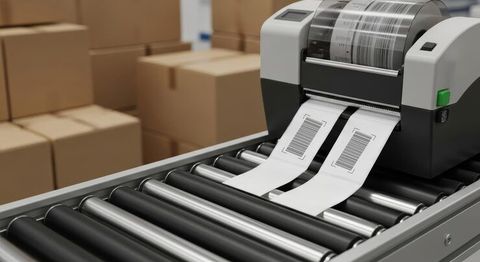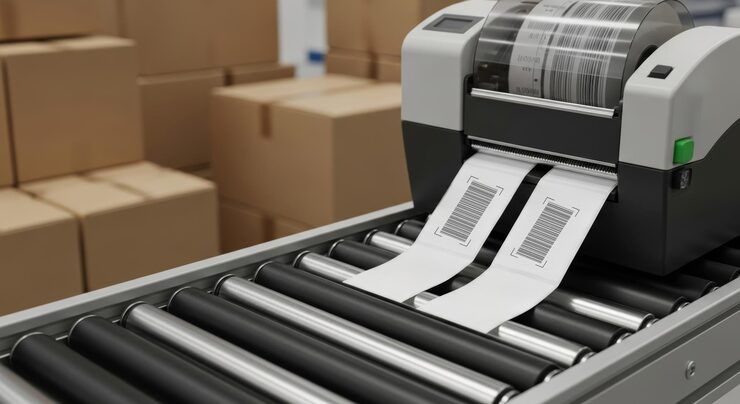
Barcode label printers are specialized devices that print machine-readable barcodes, product identification details, tracking numbers, and other information onto labels. These labels help businesses identify products, organize inventory, track shipments, and manage assets throughout their life cycles.
Barcode technology is widely used in retail, manufacturing, healthcare, warehousing, logistics, and e-commerce operations. Instead of entering product information manually, workers can scan a printed barcode to retrieve associated data from a compatible computer system.
A barcode label printer combines printing hardware, label materials, and software to create accurate identification labels. Depending on the application, labels may contain one-dimensional barcodes, two-dimensional codes such as QR codes, product descriptions, serial numbers, batch information, or expiration dates.
Types of Barcode Label Printers
Different printer technologies suit different labeling environments. Selecting the right type depends on label durability, printing volume, environmental conditions, and barcode requirements.
Direct thermal printers: Use heat-sensitive label material that darkens when exposed to a heated printhead. They are commonly used for shipping labels, receipts, and short-term identification.
Thermal transfer printers: Transfer ink from a ribbon onto label material using heat. They are suitable for applications requiring greater resistance to abrasion, moisture, or environmental exposure, depending on the materials selected.
Industrial barcode printers: Designed for demanding environments and sustained printing volumes in manufacturing facilities, distribution centers, and warehouses.
Desktop barcode printers: Compact devices used for lower-volume labeling in offices, laboratories, retail locations, and small work areas.
Mobile barcode printers: Portable devices that allow workers to print labels near shelves, packages, equipment, or inventory locations.
How Barcode Label Printing Works
The process begins with label information created in a compatible software application. The printer receives the data and converts it into printed text, barcode patterns, or graphics.
A typical workflow includes:
Entering or importing product and identification data.
Selecting the label dimensions and barcode format.
Configuring printer resolution, darkness, and print speed.
Printing the label on suitable material.
Scanning the finished label to verify readability.
Print resolution is commonly measured in dots per inch (DPI). A higher resolution can help reproduce small barcode elements and fine text, although the appropriate resolution depends on the barcode size, scanner capability, and label design.
Why Barcode Label Printers Matter Today
Barcode label printers support accurate identification, inventory control, and product traceability. As businesses manage larger product catalogs and faster distribution processes, machine-readable labels help reduce repetitive data entry and improve coordination between physical goods and digital records.
Key Industry Applications
Retail and e-commerce: Print product labels, shelf identification codes, and parcel tracking labels.
Warehousing and logistics: Identify storage locations, pallets, cartons, and shipments.
Manufacturing: Track components, production batches, work-in-progress items, and finished goods.
Healthcare: Print patient identification labels, laboratory specimen labels, and medical inventory identifiers.
Food and beverage: Identify batches, ingredients, production dates, and expiration dates where applicable.
Electronics: Label components and equipment with serial numbers and asset identification codes.
Benefits for Inventory Management
Barcode label printing can help organizations maintain consistent records and improve the accuracy of stock movements. When labels are connected to inventory management software, scanning can update product quantities, record locations, and support shipment verification.
Important operational benefits include:
Reduced manual data entry and transcription errors.
Faster inventory counting and order preparation.
Improved batch and serial number traceability.
More consistent product identification across departments.
Easier integration with warehouse management systems.
These benefits depend on accurate source data, suitable label materials, reliable scanners, and well-designed workflows. A printed barcode alone does not guarantee that inventory records are correct.
Recent Developments in Barcode Label Printing
Barcode label printing continues to evolve through two-dimensional barcode adoption, improved software integration, and growing interest in product traceability. Developments during 2025 and 2026 are particularly relevant to retail, manufacturing, and distribution operations.
The Move Toward Two-Dimensional Barcodes
A significant development is the global transition toward broader support for two-dimensional barcodes, including QR codes powered by GS1 standards and GS1 DataMatrix.
In January 2025, GS1 outlined its expectation that adoption of next-generation barcodes would increase substantially ahead of 2027. The industry initiative, commonly known as Sunrise 2027, aims for retail point-of-sale systems to support specified two-dimensional barcodes alongside traditional linear barcodes by the end of 2027.
Unlike conventional one-dimensional barcodes, two-dimensional codes can encode additional information in a compact area. Depending on the format and implementation, this may include batch numbers, expiration dates, product identifiers, or links to digital product information.
For printer users, this development creates several practical considerations:
Confirm that the printer can reproduce the required two-dimensional code.
Check whether the selected label dimensions support adequate code size.
Verify compatibility with scanners and point-of-sale systems.
Test barcode readability under actual operating conditions.
The transition is gradual, and traditional barcodes will continue to be used during the changeover.
Software Integration and Automated Labeling
Another trend is the integration of barcode printers with enterprise resource planning (ERP), warehouse management systems (WMS), and manufacturing execution systems (MES).
These connections allow labels to be generated from existing product records instead of being created manually for each item. Automated workflows can also help maintain consistency between production records, inventory data, and shipping documentation.
Cloud-connected printing and centralized label management are also becoming relevant to organizations operating across multiple locations. Appropriate access controls and data protection measures remain important when labels contain sensitive operational information.
Sustainable Label Materials
Some organizations are evaluating recyclable label materials, reduced liner waste, and printing methods that use fewer consumables. However, environmental performance depends on the adhesive, face material, ribbon, packaging, and available recycling infrastructure.
Labels must still remain readable and attached throughout their intended use. Material selection should therefore balance environmental considerations with durability and scanning reliability.
Laws and Policies Affecting Barcode Label Printers
Barcode printers themselves are generally governed by equipment, electrical safety, and applicable radio or electromagnetic compatibility requirements. The labels they produce may be subject to separate product identification, consumer information, traceability, and industry-specific regulations.
Requirements vary by country and product category. Organizations should distinguish between mandatory legal declarations and optional barcode formats.
Regulations in India
India's Legal Metrology Act, 2009, and the Legal Metrology (Packaged Commodities) Rules, 2011, establish requirements for specified prepackaged commodities. Depending on the product and applicable exemptions, packaging may need declarations such as the manufacturer's or importer's details, product identity, net quantity, manufacturing information, and maximum retail price.
A barcode or QR code may supplement these declarations, but it does not automatically replace mandatory information.
Food labeling is also governed by the Food Safety and Standards Authority of India (FSSAI) and the applicable Food Safety and Standards regulations. The specific information required depends on the product and the relevant rules.
In October 2025, India notified an amendment to the Legal Metrology (Packaged Commodities) Rules addressing the relationship between packaged medical devices and the Medical Devices Rules, 2017. Further labeling and display amendments were published by FSSAI in 2025 and March 2026.
Practical Compliance Considerations
Organizations using barcode label printers should:
Verify the latest labeling rules for their product category.
Ensure mandatory declarations remain legible and accurate.
Use appropriate product identifiers and barcode formats.
Maintain reliable batch, serial number, and expiration-date records when required.
Check that labels remain readable throughout storage and distribution.
Review export-market requirements when products cross national borders.
Regulatory obligations depend on the product, destination market, and business activity. A barcode should not be treated as evidence of regulatory compliance by itself.
Tools and Resources for Barcode Label Printing
Barcode printing requires compatible hardware, label design software, appropriate materials, and a method for validating printed codes.
Useful Tools and Software
Barcode label design software: Creates templates containing barcodes, text, logos, and variable data fields.
Barcode generators: Convert supported product identifiers or text into specific barcode formats.
Barcode verification equipment: Measures code quality against relevant technical standards.
Inventory management software: Connects barcode scanning and label printing with stock records.
ERP and WMS platforms: Support centralized product data, warehouse identification, and shipment workflows.
Label material selection guides: Help identify suitable paper, synthetic labels, adhesives, and thermal transfer ribbons.
Printer calibration utilities: Assist with print alignment, darkness, speed, and media detection.
Barcode Technology Comparison
| Feature | One-dimensional barcode | Two-dimensional barcode |
|---|---|---|
| Typical formats | UPC, EAN, Code 128 | QR Code, GS1 DataMatrix |
| Data capacity | Generally limited | Generally greater |
| Scanning method | Linear pattern reading | Two-dimensional pattern reading |
| Common applications | Retail products and logistics | Product traceability and compact data encoding |
| Main consideration | Width and line clarity | Module size, contrast, and code quality |
Label Quality Checklist
Before large-scale printing, check the following:
The barcode matches the correct product record.
Printed characters and barcode elements are clear.
The label dimensions match the application.
The printer uses the correct media and ribbon combination.
Scanners can read the label at the intended distance.
Labels remain legible after exposure to expected handling conditions.
Testing sample labels before routine production can help identify problems early and reduce scanning interruptions.
Frequently Asked Questions
What is a barcode label printer used for?
A barcode label printer creates labels containing machine-readable identification codes and related information. Common applications include inventory management, product identification, shipping, manufacturing traceability, and asset tracking.
What is the difference between direct thermal and thermal transfer printing?
Direct thermal printing uses heat-sensitive label material and does not require a ribbon. Thermal transfer printing uses a heated ribbon to transfer ink onto the label. Direct thermal labels are often suitable for shorter-term applications, while thermal transfer labels can provide greater durability when the right ribbon and material are selected.
What printer resolution is suitable for barcode labels?
The appropriate resolution depends on barcode dimensions, label layout, scanner capability, and printing conditions. Common resolutions include 203, 300, and 600 DPI. Smaller barcodes or detailed labels may require higher resolution, but correct sizing and print quality are equally important.
Can barcode label printers print QR codes?
Yes. Many compatible barcode label printers can print QR codes and other two-dimensional formats through suitable label design software. Readability depends on the printer's resolution, the code's dimensions, print contrast, and the capabilities of the scanning device.
Are barcode labels mandatory for every product in India?
No. Barcode requirements depend on the product category, applicable regulations, and trading or distribution arrangements. Some products may require specific declarations without requiring a barcode under general packaging rules. Organizations should verify the requirements that apply to their products and markets.
Conclusion
Barcode label printers are important tools for product identification, inventory management, logistics, and manufacturing traceability. Different printing technologies support different operating conditions, from short-term shipping labels to durable industrial identification.
Developments in two-dimensional barcodes, connected software, and label materials are expanding the role of barcode printing in modern supply chains. Businesses can prepare by evaluating printer compatibility, selecting suitable label materials, testing barcode readability, and reviewing relevant labeling regulations.
Reliable barcode labeling depends on more than printing equipment. Accurate data, appropriate software, consistent maintenance, and regular quality checks all contribute to effective identification and traceability.