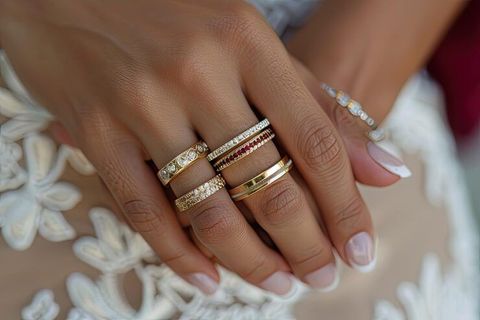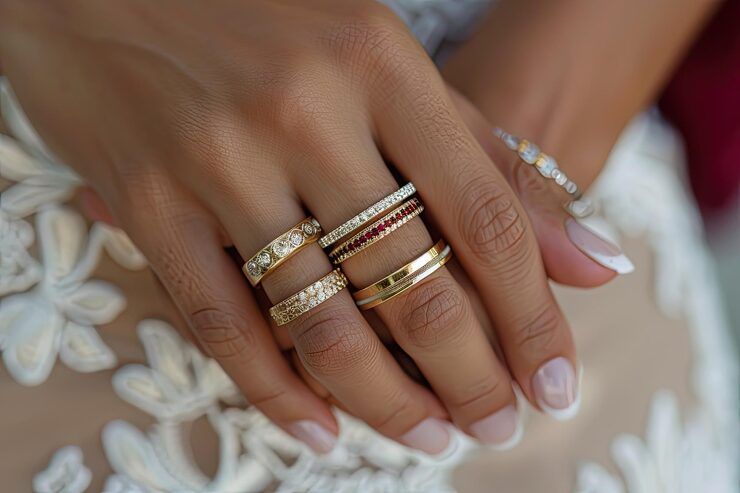
Everyday stack rings are individual rings designed to be worn together on one finger or distributed across several fingers. They can include plain metal bands, textured designs, gemstone settings, diamond bands, and rings with different shapes or finishes. Their appeal comes from the flexibility to create different combinations without relying on one large or complicated piece of jewelry.
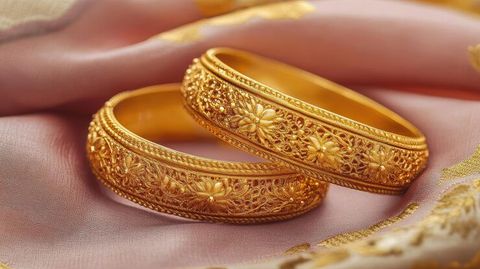
Stackable rings are available in a wide range of materials, including yellow gold, white gold, rose gold, platinum, sterling silver, and alternative metals. Some designs emphasize simplicity, while others incorporate colored gemstones, engraved patterns, or small diamonds.
The concept is based on combining individual pieces to create a coordinated appearance. A person might wear two narrow bands for a simple look or combine several rings with contrasting textures and colors for a more detailed arrangement.
Understanding Everyday Stack Ring Designs
Stack rings are generally designed with proportions that allow multiple bands to sit comfortably together. Their width, curvature, setting height, and surface finish influence how the rings look and feel when worn as a group.
Common styles include:
Plain bands: Simple rings with smooth surfaces and minimal decoration.
Textured rings: Bands featuring hammered, brushed, twisted, or engraved finishes.
Gemstone rings: Designs incorporating stones such as sapphires, emeralds, or birthstones.
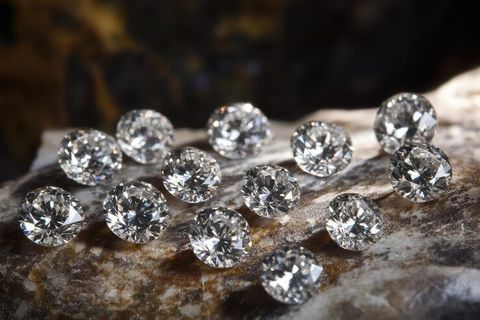
Diamond bands: Rings featuring small diamonds set along part or all of the band.
Contoured rings: Curved designs intended to sit alongside another ring.
Open rings: Designs with a small gap between the ends, subject to specific sizing and durability considerations.
Mixed-metal rings: Combinations of different metal colors within one stack.
The final arrangement depends on the relationship between band widths, shapes, colors, and decorative details. A consistent metal color can create a unified appearance, while different finishes can introduce visual contrast.
Materials Used in Stackable Rings
The material affects durability, appearance, maintenance, and suitability for everyday wear.
| Material | General Characteristics | Care Considerations |
|---|---|---|
| Yellow gold | Warm color and familiar jewelry finish | Clean gently and inspect settings |
| White gold | Light-colored appearance | Rhodium plating may require maintenance |
| Rose gold | Pinkish tone created by its alloy composition | Follow metal-specific care guidance |
| Platinum | Dense precious metal with a naturally white appearance | May develop surface wear over time |
| Sterling silver | Typically 92.5% silver with other metals | Can tarnish and may require polishing |
| Titanium | Lightweight and generally corrosion-resistant | Check resizing limitations |
| Stainless steel | Durable and resistant to many forms of corrosion | Check alloy composition and skin sensitivity |
Gold jewelry is commonly described by karat, which indicates the proportion of gold in the alloy. For example, 14-karat gold contains 14 parts gold out of 24, while 18-karat gold contains 18 parts gold out of 24.
A higher gold content does not automatically make a ring more suitable for every situation. Alloy composition, band thickness, construction, and intended use also influence durability.
Choosing Gemstones and Settings
Gemstone stacking rings can add color and personal meaning to an arrangement. Diamonds are often used in narrow bands, while sapphires, rubies, emeralds, and other gemstones can introduce different colors.
The setting is an important consideration for daily wear. Prong settings hold stones with small metal projections, while bezel settings surround a stone with a rim of metal. Channel settings place stones within a metal channel, and pavé settings use multiple small stones held close together.
Each setting has different maintenance requirements. Raised prongs may catch on clothing, while exposed stones can be vulnerable to impacts. A professional inspection can help identify loose stones or worn components before they become more serious problems.
Why Everyday Stack Rings Matter
Stackable rings combine personal style with flexibility. Because each ring is a separate piece, wearers can change the arrangement to suit different activities, clothing, occasions, or preferences.
Flexible Jewelry Styling
A small collection of coordinated bands can create several combinations. Two plain rings may suit a simple daily arrangement, while a gemstone band can introduce a more decorative element.
Common styling approaches include:
Combining narrow and medium-width bands
Pairing polished and textured finishes
Mixing complementary metal colors
Placing a gemstone ring between plain bands
Using a contoured band beside a larger ring
Distributing rings across different fingers
The aim is not to follow one universal rule but to find a combination that remains comfortable and balanced.
Personal and Symbolic Meaning
Stack rings can represent milestones, personal interests, family connections, or important dates. Some people use birthstones or engraved bands to represent individual events, while others select rings entirely for their appearance.
These meanings are personal rather than universal. The same design can have different significance for different people and cultures.
Practical Considerations for Daily Wear
Wearing several rings together changes how they interact with one another. Repeated contact can cause scratches, surface wear, or movement between bands. Rings with protruding settings may also catch on fabrics or equipment.
For everyday use, it is useful to consider:
Whether the combined stack feels comfortable
Whether neighboring rings rub against one another
Whether gemstone settings are protected
Whether the rings move excessively during activity
Whether the arrangement interferes with hand movements
Recent Trends and Developments
Jewelry trends change over time, and individual preferences vary across markets. During 2025 and 2026, several design themes have remained relevant to discussions of stackable rings, including personalization, mixed metals, textured surfaces, and combinations of minimalist bands with gemstone designs.
Mixed-Metal Styling
Combining yellow gold, white gold, rose gold, and silver-colored metals allows different pieces to be worn together. This approach can connect rings from different collections or create contrast within one arrangement.
However, metals differ in hardness and surface characteristics. Rings that rub together frequently can develop scratches or wear at different rates.
Personalization and Birthstones
Personalized jewelry remains an established design category. Engraved bands, birthstones, initials, and symbolic motifs can make a stack more specific to an individual's preferences.
The meaning of a gemstone should be distinguished from its measurable characteristics. Color and symbolism may influence personal choice, while durability depends on properties such as hardness, toughness, cleavage, and the way the stone is set.
Textured and Sculptural Bands
Hammered surfaces, twisted metal, irregular profiles, and organic shapes introduce visual detail without necessarily using gemstones.
These styles can be combined with smooth bands to create contrast. Wider or unusually shaped rings, however, may require additional attention to fit and the spacing between neighboring rings.
Sustainability and Material Transparency
Interest in jewelry provenance has encouraged attention to recycled metals, documented gemstone origins, and responsible sourcing. Claims about recycled content or ethical sourcing should be supported by credible documentation rather than assumed from a product description.
For shoppers researching jewelry materials, independent documentation and recognized certification systems can help clarify what a particular claim means.
Jewelry Regulations and Consumer Protection
Jewelry regulations differ between countries. Rules may address precious-metal descriptions, gemstone disclosure, product labeling, advertising claims, and consumer rights.
Precious-Metal Hallmarks
Some jurisdictions operate hallmarking systems that identify the metal content of qualifying precious-metal items. Requirements vary according to the country, product category, exemptions, and applicable thresholds.
A hallmark or fineness mark can provide information about metal purity, but its meaning depends on the relevant national system. Buyers should understand the difference between a manufacturer's mark, a fineness mark, and an official hallmark.
Gemstone Disclosure
Descriptions of diamonds and colored gemstones should accurately identify the material. Natural gemstones, laboratory-grown stones, imitations, and treated stones are not interchangeable categories.
For example, a laboratory-grown diamond has essentially the same principal chemical composition and crystal structure as a natural diamond, but it differs in origin. Clear disclosure helps consumers understand what a gemstone description represents.
Advertising and Consumer Information
Jewelry advertising should accurately describe materials, gemstone characteristics, and any claims about sourcing or certification. Statements about durability, rarity, environmental benefits, or origin should not imply guarantees that cannot be substantiated.
In the United States, the Federal Trade Commission's Jewelry Guides address marketing claims involving precious metals, gemstones, pearls, and related products. Other countries have their own consumer-protection and product-description requirements.
Skin Sensitivity and Metal Alloys
Some people experience skin irritation from particular metal alloys, including certain nickel-containing jewelry. Reactions depend on the individual and the composition of the item.
Checking material information can help people make informed choices. A metal's color alone does not establish its composition or suitability for sensitive skin.
Tools and Resources for Choosing Stack Rings
Several practical resources can help with ring selection, fit, material research, and maintenance.
Ring Size Measurement
A ring-size chart or sizing tool can provide an initial estimate. Measurements should be interpreted carefully because sizing systems differ by country and ring width can affect the fit.
For a stack, each ring may fit differently depending on its width, profile, and position on the finger. Multiple wide bands worn together can feel tighter than one narrow band of the same nominal size.
Jewelry Material Guides
Material guides can explain gold karats, platinum alloys, sterling silver, gemstone properties, and the differences between natural and laboratory-grown diamonds.
These resources are particularly useful when comparing jewelry descriptions that use different technical terms.
Gemstone Identification and Certification
Gemological reports can provide information about specified gemstones, including identity and selected quality characteristics. A report's scope depends on the issuing laboratory and the type of stone examined.
A report should not be assumed to guarantee every claim about a ring's origin, durability, or environmental impact.
Jewelry Care Checklist
For routine care:
Clean rings according to the metal and gemstone manufacturer's guidance.
Avoid harsh chemicals unless the material is known to tolerate them.
Remove rings when activities create a risk of impact, abrasion, or chemical exposure.
Store pieces separately when possible to reduce scratching.
Inspect gemstone settings periodically.
Seek professional assessment if a stone moves or a prong appears damaged.
Ultrasonic cleaners are not appropriate for every gemstone or setting. Porous, fractured, treated, or delicate stones may require different cleaning methods.
Frequently Asked Questions
What are everyday stack rings?
Everyday stack rings are individual rings designed to be worn together on one finger or across several fingers. They can include plain bands, textured designs, gemstones, and diamond settings.
Can different metals be worn together?
Yes. Different metal colors can be combined for contrast or coordination. However, rings that repeatedly rub against each other may develop surface wear, depending on their materials and construction.
How many rings should be worn in a stack?
There is no fixed number. Comfort depends on finger size, ring width, setting height, and the activities performed while wearing the rings. A smaller arrangement may be more practical for frequent hand movement.
Are gemstone stack rings suitable for daily wear?
They can be, depending on the gemstone, setting, and activity. Hardness alone does not determine durability; toughness, cleavage, exposure to impact, and setting protection also matter.
How should stack rings be cleaned?
Cleaning methods depend on the metal, gemstone, and setting. Gentle cleaning with a suitable solution and a soft cloth is appropriate for many rings, but delicate or treated stones may need specialist care.
Conclusion
Everyday stack rings combine flexible styling with a wide range of metals, gemstones, shapes, and finishes. Their separate-band design allows people to create different arrangements while expressing personal preferences or marking meaningful occasions.
Choosing suitable rings involves more than appearance. Material composition, gemstone properties, band width, comfort, setting durability, and maintenance all influence how well a stack performs during everyday use.
Recent design themes such as mixed metals, personalization, textured bands, and greater attention to material provenance provide additional ways to understand this jewelry category. Clear product descriptions, reliable material information, and appropriate care practices help consumers make informed decisions.
Ultimately, a practical stack is one that fits comfortably, suits the intended activities, and can be maintained according to the requirements of its materials and construction.