Event backdrops are decorative or functional structures placed behind stages, presentation areas, photography spaces, registration desks, and other focal points at events. They help establish a visual theme, identify an organization, create a suitable background for photographs, and organize the appearance of an event space.
Event backdrop rentals involve using temporary backdrop structures and related equipment for a defined event period rather than maintaining permanent installations. Common examples include wedding backgrounds, corporate conference displays, exhibition walls, birthday decorations, award ceremony backdrops, and branded photography areas.
These arrangements can range from simple fabric panels to modular frames, printed graphics, illuminated structures, and large scenic installations. The appropriate design depends on the venue, audience, event purpose, available space, installation requirements, and expected duration.
Understanding Event Backdrop Types
Different backdrop systems serve different purposes. Selecting an appropriate structure requires understanding its appearance, materials, installation method, and practical limitations.
Fabric backdrops use materials such as polyester, stretch fabric, or other textiles. They are often used for photography, wedding ceremonies, stage decoration, and temporary event backgrounds.
Step-and-repeat backdrops feature repeating logos or visual elements. They are commonly associated with conferences, press events, award ceremonies, and corporate photography.
Modular backdrop systems use connected panels or frame sections to create different widths and layouts. They are useful for exhibition spaces, conference stages, and temporary presentation areas.
Printed graphic backdrops display photographs, illustrations, event themes, or corporate information. The design can be adapted to the dimensions and viewing distance of the venue.
LED and illuminated backdrops use lighting or digital displays to create changing visual effects. These systems require suitable electrical arrangements, equipment support, and careful management of cables.
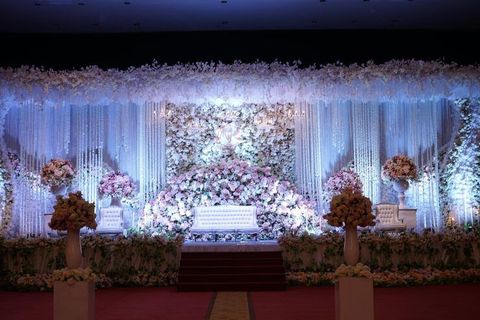
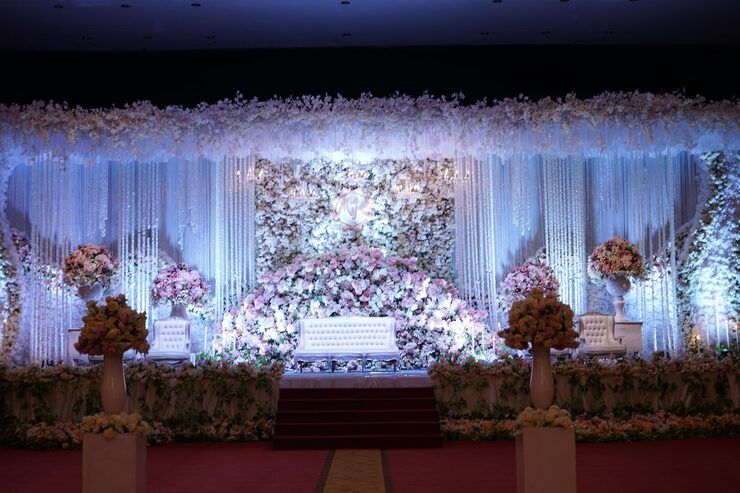
Floral and decorative backdrops incorporate artificial flowers, greenery, decorative panels, or other visual elements. They are frequently used at weddings, celebrations, and formal gatherings.
Materials and Installation Considerations
Backdrop materials influence appearance, durability, transport, cleaning, and installation requirements.
| Material or System | Common Application | Main Consideration |
|---|---|---|
| Polyester fabric | Photography and stage backgrounds | Wrinkles and lighting reflections |
| Stretch fabric | Fitted display frames | Correct dimensions and tension |
| Printed panels | Conferences and exhibitions | Image resolution and alignment |
| Modular frame systems | Large event spaces | Stability and assembly |
| Acrylic or rigid panels | Decorative installations | Weight and safe support |
| LED display panels | Presentations and performances | Power, heat, and cable management |
| Floral arrangements | Weddings and celebrations | Weight, attachment, and maintenance |
Material selection should consider indoor or outdoor use, venue restrictions, lighting conditions, expected visitor movement, and the time available for setup and dismantling.
Why Event Backdrops Matter
Event backdrops influence how an event looks, how people interact with the space, and how photographs and video recordings appear.
Visual Identity and Communication
At corporate conferences, exhibitions, and product presentations, a backdrop can communicate the event's identity through logos, colors, titles, and supporting graphics.
A consistent design can help attendees identify the main stage, presentation area, registration point, or designated photography location.
For weddings and private celebrations, backdrops can establish a visual theme without requiring changes to the permanent structure of the venue.
Photography and Digital Content
Photography areas are often designed around a backdrop because it provides a controlled background for portraits, interviews, group photographs, and social media content.
The final result depends on more than the backdrop itself. Lighting, camera position, viewing distance, background reflections, and the placement of people all affect image quality.
Designers should ensure that printed text and logos remain legible at the expected camera distance and that lighting does not create unwanted glare.
Space Organization
Backdrops can also help divide large event spaces into recognizable zones. A conference may use separate backgrounds for a main stage, speaker interviews, sponsor displays, and registration areas.
However, backdrop placement should not obstruct exits, accessible routes, emergency equipment, or necessary circulation space.
Recent Developments and Trends
During 2025 and 2026, event design continued to emphasize reusable display systems, modular construction, digital graphics, and more deliberate approaches to material use.
Modular and Reusable Designs
Modular frames allow organizers to adapt a display to different venues by changing the number or arrangement of panels. Reusable components can also reduce the need to manufacture a completely new structure for every event.
The environmental benefits depend on how frequently components are reused, how far they are transported, and how materials are maintained and eventually recycled.
Digital and Interactive Backdrops
LED walls and digital displays allow organizers to change visual content during an event. A single installation can present different graphics for speakers, sessions, ceremonies, or audience activities.
These systems introduce additional planning requirements involving electricity, screen brightness, ventilation, structural support, and technical supervision.
Sustainable Event Materials
Event planners have increasingly considered fabric reuse, recyclable materials, low-waste printing, and modular display components.
A sustainability assessment should examine the entire system, including printing, packaging, transportation, cleaning, replacement parts, and end-of-life disposal. A reusable backdrop is not automatically environmentally preferable in every situation, but repeated use can improve material efficiency.
Accessibility and Inclusive Design
Event layouts increasingly consider clear sightlines, accessible movement, appropriate text contrast, and safe cable placement. Backdrop design should complement these considerations rather than creating obstacles or reducing the usable space available to attendees.
Laws, Regulations, and Safety Policies
Requirements for temporary event structures vary by country, state, municipality, building type, and event size. Organizers should confirm the rules that apply to their particular venue and installation.
Fire Safety and Fabric Materials
Fabric backdrops, curtains, scenic panels, and decorative materials may be subject to fire-safety requirements. Some venues require documentation showing that specified materials meet applicable flame-resistance standards.
In the United States, applicable requirements may be based on local fire codes, adopted building codes, and standards referenced by the authority having jurisdiction. The National Fire Protection Association publishes codes and standards used in fire prevention and life safety, although the requirements adopted by a particular venue depend on local rules.
Organizers should verify whether the venue requires flame-retardant materials, testing documentation, or approval before installation.
Structural Stability
Backdrop frames must be suitable for their height, width, weight, and environment. Outdoor installations require particular attention to wind exposure, anchoring, weather conditions, and the possibility of overturning.
Large or suspended structures may require professional installation, engineering review, or venue approval.
Electrical Safety
Illuminated backdrops and LED displays require appropriate power distribution and cable management. Electrical equipment should be installed and operated according to applicable electrical codes and manufacturer instructions.
Cables should not create trip hazards or obstruct accessible routes and emergency exits.
Venue and Public-Safety Requirements
Event organizers may need to consider:
Venue installation and dismantling rules
Fire exits and evacuation routes
Occupancy limits
Accessibility requirements
Temporary structure approvals
Electrical connections
Public liability and insurance requirements
Restrictions on drilling or attaching items to venue surfaces
Requirements should be confirmed before the backdrop is designed and assembled.
Tools and Resources for Event Backdrop Planning
Several digital tools and planning documents can help organizers coordinate backdrop design, dimensions, installation, and compliance.
Graphic Design Applications
Graphic design applications can be used to prepare printed backgrounds, sponsor panels, event titles, and branded displays. Templates help maintain consistent typography, color, spacing, and logo placement.
Design files should match the printer's required dimensions, resolution, bleed, and color specifications.
Venue Measurement Tools
Laser distance meters and measuring tapes can help determine the available width, height, ceiling clearance, and installation footprint.
A simple venue plan should record:
Backdrop width and height
Distance from the audience
Camera and lighting positions
Power outlets
Emergency exits
Accessible routes
Assembly and storage areas
Budget and Quantity Calculators
A spreadsheet can help estimate the quantity of panels, fabric, frame sections, fasteners, lighting equipment, and transport containers required.
It can also compare different layout options and track installation time, maintenance requirements, and material reuse.
Event Planning Checklist
Before confirming a backdrop design, review the following:
Event theme and visual identity
Venue dimensions
Material and printing specifications
Structural support
Fire-safety requirements
Lighting and electrical needs
Accessibility and emergency access
Setup and dismantling schedule
Storage and transportation arrangements
Frequently Asked Questions
What are event backdrop rentals used for?
They provide temporary backgrounds for weddings, corporate conferences, exhibitions, award ceremonies, photography areas, private celebrations, and other organized events. The design can be adapted to the event's theme and venue.
Which backdrop material is most suitable for an event?
The appropriate material depends on the application. Fabric is common for photography and stage backgrounds, printed panels are useful for graphic displays, and modular frames can support larger installations. Fire safety, lighting, durability, and installation requirements should also be considered.
How do organizers choose the correct backdrop size?
They measure the available wall or stage area, ceiling height, audience viewing distance, camera positions, and the space needed for safe movement. The backdrop should be large enough for its intended purpose without obstructing exits or accessible routes.
Are backdrop structures suitable for outdoor events?
Some systems are designed for outdoor use, but suitability depends on their structural rating, anchoring, materials, and weather conditions. Wind can make large temporary structures hazardous, so outdoor installations require appropriate precautions and monitoring.
What safety rules apply to event backdrops?
Requirements may cover flame resistance, structural stability, electrical safety, emergency exits, accessibility, and venue approval. Organizers should confirm local regulations and venue requirements before installation.
Conclusion
Event backdrop rentals are part of the broader field of temporary event design, combining visual communication, photography, spatial planning, materials, and installation safety. Fabric backgrounds, printed panels, modular frames, floral structures, and digital displays each serve different purposes.
Recent trends highlight reusable construction, digital presentation technology, sustainable material choices, and more careful attention to accessibility. Choosing an appropriate system requires evaluating the event's purpose, venue dimensions, expected audience, material specifications, and installation conditions.
By planning the design, checking applicable safety requirements, coordinating equipment, and documenting installation procedures, organizers can create functional event backgrounds while maintaining a clear and safe environment for attendees.