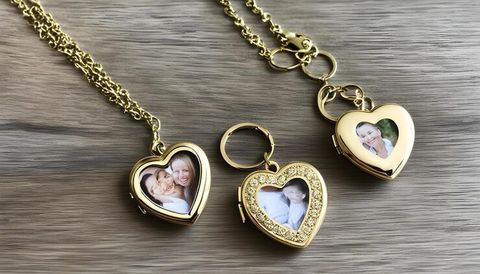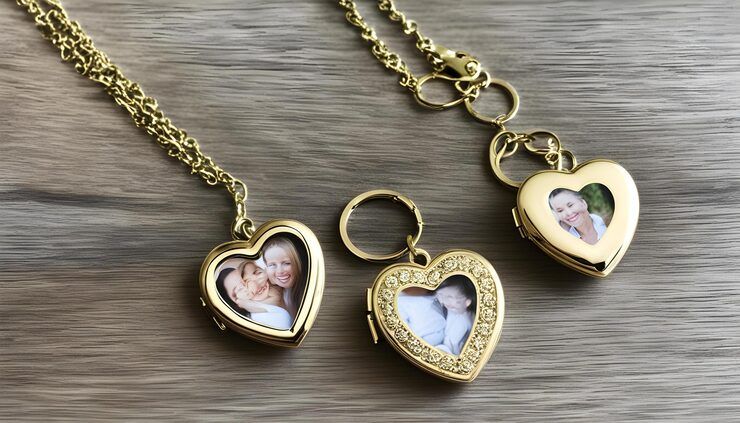
Photo lockets are small pieces of jewelry designed to hold a photograph, portrait, or other meaningful keepsake inside a pendant or decorative case. They are commonly worn on necklaces, although some designs can be attached to bracelets, chains, or other accessories.
The main feature of a photo locket is its opening compartment. Depending on the design, the interior may accommodate one or two photographs, a miniature drawing, a short written message, or another small personal item.
Photo lockets have a long history in personal adornment and commemorative jewelry. Traditional examples were often associated with family relationships, remembrance, and important life events. Modern versions combine these traditional features with contemporary materials, miniature printing methods, and different styles of jewelry construction.
Understanding Photo Locket Designs
Photo lockets are available in several shapes and construction styles. Their appearance depends on the metal, surface decoration, opening mechanism, and arrangement of the interior compartments.
Common designs include:
Heart-shaped lockets: Often associated with family memories and personal relationships.
Oval lockets: A traditional shape that accommodates portrait photographs.
Round lockets: Compact designs with a balanced, symmetrical appearance.
Rectangular lockets: Suitable for elongated photographs or minimalist styling.
Engraved lockets: Feature names, dates, initials, or decorative patterns.
Vintage-inspired lockets: Use ornamental details associated with earlier jewelry styles.
Modern minimalist lockets: Emphasize clean lines and simple surfaces.
Some lockets have transparent protective covers over the photographs, while others use small interior frames or adhesive photo inserts.
Materials Used in Photo Lockets
The material influences a locket's appearance, durability, weight, maintenance requirements, and suitability for different uses.
Gold, sterling silver, stainless steel, and plated metals are common choices. Some designs also incorporate gemstones, enamel, glass, or decorative engraving.
Gold purity can vary, with higher-karat gold generally containing a greater proportion of pure gold. Sterling silver typically contains 92.5% silver, with the remaining portion consisting of other metals that improve its physical properties.
Material markings, manufacturer documentation, and professional testing can help establish what a particular piece contains.
How Photo Lockets Are Made
Manufacturing methods depend on the design and intended level of detail. Metal components may be cast, stamped, machined, or formed from sheet metal.
The hinge, clasp, and internal frame require particular attention because they determine how securely the locket opens, closes, and holds its contents.
The main production stages can include:
Designing the pendant shape and internal compartments.
Forming or casting the metal components.
Attaching the hinge and closing mechanism.
Finishing the surface through polishing, engraving, or decorative treatment.
Preparing the interior for photograph placement.
Inspecting the finished piece for alignment, closure, and surface quality.
Smaller lockets often require precise measurements because the available space for photographs and internal components is limited.
Why Photo Lockets Remain Meaningful
Photo lockets combine personal expression with a physical object that can be kept for many years. Their appeal is not limited to a particular age group or fashion style.
Personal and Family Memories
A photograph inside a locket can represent a family member, partner, friend, or important personal event. Unlike a digital image stored on a device, the photograph is contained within a physical keepsake that can accompany the wearer.
Some people use lockets to remember relatives, while others select images connected with weddings, anniversaries, family milestones, or travel experiences.
Personalization and Design
Photo lockets can be personalized through different elements, including:
Initials or names
Important dates
Short inscriptions
Decorative symbols
Engraved patterns
Different photograph arrangements
Metal finishes and chain styles
Personalization should be balanced with the available surface area. Detailed inscriptions may be difficult to read on small pendants.
Jewelry as a Keepsake
Lockets can have both decorative and sentimental purposes. They may be incorporated into everyday outfits or reserved for special occasions.
Their compact construction also makes them suitable for people who prefer jewelry with a private meaning rather than a prominent decorative appearance.
Recent Trends in Photo Lockets
During 2025 and 2026, jewelry design has continued to combine traditional craftsmanship with personal customization and digital image preparation.
Personalized Jewelry Design
Initials, engraved dates, miniature portraits, and family photographs remain common themes in personalized jewelry. Digital design tools make it easier to preview text placement, compare shapes, and prepare images for small compartments.
These tools can improve the planning process, although the final appearance still depends on the locket's dimensions, materials, and manufacturing quality.
Vintage-Inspired Jewelry
Vintage-inspired jewelry continues to draw attention to ornamental details such as engraved borders, floral patterns, antique-style finishes, and oval or heart-shaped forms.
Photo lockets are particularly suited to this design approach because their opening compartments preserve a traditional feature while allowing variations in contemporary styling.
Digital Photograph Preparation
High-resolution smartphone photography and image-editing applications have made it easier to prepare miniature photographs. Cropping, brightness adjustment, and background correction can help a portrait remain recognizable when reduced to a very small size.
However, an image that looks clear on a large screen may lose detail when printed at miniature dimensions. Testing the image at its intended size is therefore useful.
Laws, Consumer Protection, and Jewelry Standards
Photo lockets are affected by consumer protection requirements, metal-marking rules, product safety standards, and intellectual property laws. Specific requirements depend on the country where the jewelry is manufactured, marketed, or sold.
Precious Metal Identification
Some jurisdictions regulate claims about gold, silver, and other precious metals. Hallmarks or purity markings can help identify metal composition, although marking requirements differ by country and product category.
In India, the Bureau of Indian Standards operates the hallmarking framework for applicable gold and silver articles. Consumers should check current requirements and applicable exemptions when evaluating precious-metal jewelry.
Accurate Product Descriptions
Consumer protection rules generally prohibit misleading representations about product materials, purity, dimensions, or characteristics.
For example, a plated-metal locket should not be described as solid gold. Descriptions of gemstones, metal content, and decorative finishes should accurately reflect the item.
Photograph Privacy and Copyright
Photographs placed inside lockets may contain personal or copyrighted images. A person should consider permission and privacy when using another individual's photograph, particularly when reproducing or distributing images publicly.
Using a photograph for a private keepsake does not automatically grant permission to reproduce it commercially or publish it elsewhere.
Tools and Resources for Photo Locket Planning
Several practical tools can help with photograph preparation, sizing, material research, and jewelry maintenance.
Photo Editing Applications
Image-editing applications can help crop photographs, adjust contrast, remove distracting backgrounds, and prepare portraits for miniature printing.
Useful functions include:
Square, oval, or circular cropping
Brightness and contrast adjustment
Image sharpening
Background correction
Print-size previews
High-resolution export
Keep an original copy of the photograph before making edits.
Measurement and Printing Tools
A ruler or digital caliper can help measure the interior compartment. Image-printing software can then be used to prepare a photograph that matches the required dimensions.
| Planning Factor | What to Check |
|---|---|
| Interior width | Available horizontal space |
| Interior height | Available vertical space |
| Photograph shape | Oval, round, rectangular, or heart-shaped |
| Image resolution | Clarity at miniature size |
| Paper thickness | Fit inside the compartment |
| Protective cover | Available clearance |
| Closure mechanism | Secure opening and closing |
Measure the usable photograph area rather than the outside dimensions of the pendant.
Jewelry Care Resources
Jewelry manufacturers and recognized gemological organizations publish guidance about metal identification, cleaning, storage, and gemstone care.
Cleaning methods should match the material. Harsh chemicals, abrasive cloths, and excessive moisture may damage plated finishes, delicate hinges, or photographs inside the compartment.
Frequently Asked Questions
What is a photo locket?
A photo locket is a pendant or small jewelry case that opens to hold one or more miniature photographs or personal keepsakes. It is commonly worn on a necklace.
Which materials are commonly used for photo lockets?
Common materials include gold, sterling silver, stainless steel, and plated metals. Some designs incorporate gemstones, enamel, or glass. Material composition should be checked through appropriate markings and documentation.
How do you choose the correct photograph size?
Measure the internal compartment and prepare the image to fit its usable dimensions. Check the shape, image clarity, and protective cover clearance before printing the final photograph.
How should a photo locket be maintained?
Store the locket in a dry place, avoid harsh chemicals, and clean its exterior according to the metal and finish. Remove or protect the photograph before cleaning whenever the design permits.
Can photo lockets be personalized?
Yes. Common personalization methods include engraving initials, names, dates, or short messages. Some designs also accommodate two photographs or other small keepsakes, depending on the internal construction.
Conclusion
Photo lockets combine jewelry design with personal photographs and meaningful keepsakes. Their shapes, materials, decorative finishes, and internal compartments allow them to suit different preferences, from traditional engraved pendants to contemporary minimalist designs.
Recent design trends continue to combine vintage-inspired styling with digital photograph preparation and personalized details. At the same time, accurate material descriptions, appropriate metal identification, photograph privacy, and proper maintenance remain important considerations.
Understanding the locket's dimensions, construction, material, and intended use can help individuals select a design that suits their preferences and preserves its contents. With careful handling and suitable storage, a photo locket can remain a meaningful personal accessory for many years.