Plastic recycling machines are industrial systems designed to process discarded plastic into usable recycled material. Depending on the plastic type and intended application, these machines can sort, shred, wash, separate, dry, melt, filter, extrude, pelletize, or otherwise prepare plastic for another manufacturing cycle.
The technology exists because plastic is used extensively in packaging, automotive components, electronics, construction products, textiles, household products, and industrial applications. Without effective recovery systems, large quantities of plastic can enter landfills, incineration systems, waterways, and the wider environment.
Understanding Plastic Recycling Machines
What Plastic Recycling Machines Do
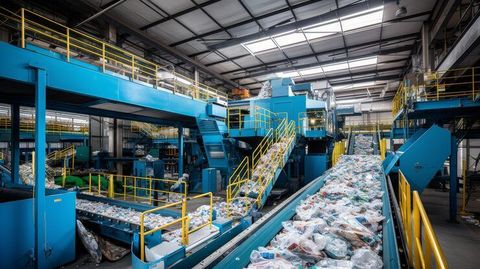
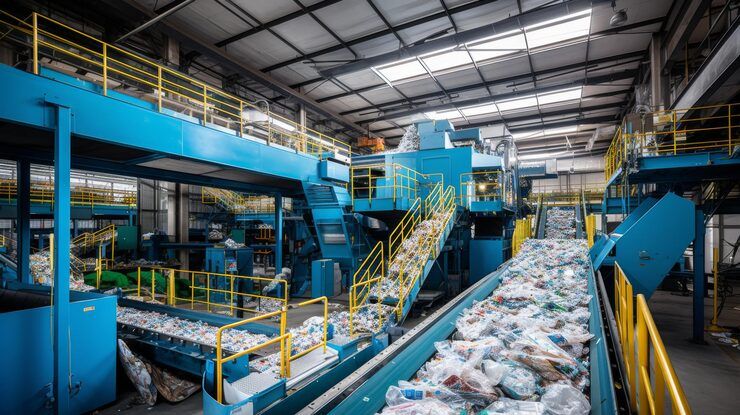
A recycling line normally contains several stages rather than one machine. The configuration depends on whether the incoming material consists of PET bottles, HDPE containers, PP products, flexible films, industrial scrap, or mixed plastic waste.
A typical mechanical recycling line can include:
Conveyor systems for material movement
Optical sorting equipment
Magnetic and metal separation
Plastic shredders
Granulators
Washing systems
Friction washers
Float-sink separation tanks
Centrifugal dryers
Thermal drying equipment
Extruders
Melt filtration systems
Pelletizers
Material storage and handling systems
The objective is to convert collected plastic into flakes, regrind, pellets, or other controlled feedstock that can be incorporated into subsequent manufacturing processes.
Common Plastic Types
Different polymers require different processing conditions.
| Plastic | Common Uses | Typical Recycling Approach |
|---|---|---|
| PET | Bottles, containers, textiles | Sorting, washing, flaking, extrusion |
| HDPE | Containers, pipes, household products | Shredding, washing, extrusion |
| PP | Automotive parts, packaging, caps | Sorting, grinding, extrusion |
| LDPE | Films, bags, flexible packaging | Washing, drying, extrusion |
| PVC | Pipes, profiles, construction products | Controlled separation and grinding |
| PS | Packaging and molded products | Sorting, grinding or specialized processing |
Correct polymer identification is important because mixing incompatible materials can reduce the quality and consistency of recycled output.
Why Plastic Recycling Machines Matter Today
Plastic recycling has become an important part of circular-material strategies because governments, manufacturers, waste-management organizations, and consumers are increasingly focused on reducing plastic leakage and improving material recovery.
Reducing Plastic Waste
Modern recycling equipment can process large volumes of discarded plastic that might otherwise require disposal or lower-value treatment.
Mechanical recycling is particularly established for relatively clean and well-separated materials such as PET bottles, HDPE containers, and industrial production scrap.
Supporting Circular Manufacturing
Recycled plastic can become feedstock for products such as containers, sheets, pipes, automotive components, packaging materials, fibers, and molded products.
This creates a circular pathway in which material already present in the economy can be processed and used again.
Improving Material Quality
Advanced sorting and processing equipment can improve the consistency of recycled material.
Important quality factors include:
Polymer purity
Moisture level
Contamination
Color separation
Melt-flow characteristics
Particle size
Additive content
Odor
Thermal stability
Higher-quality feedstock generally requires better sorting, washing, drying, filtration, and process control.
Recent Developments in Plastic Recycling
European Union Packaging Rules
The European Union has continued strengthening its packaging framework. New packaging rules began applying from 12 August 2026, with requirements focused on recyclability, recycled content, reuse, labeling, and reduction of unnecessary packaging. The European Commission states that plastic packaging must contain increasing amounts of recycled content and that packaging should be recyclable by 2030.
These changes are relevant to recycling-machine technology because higher recycling targets can increase the need for reliable collection, sorting, washing, and processing capacity.
Developments in the United States
The U.S. Environmental Protection Agency has continued examining mechanical and advanced recycling approaches. Its current information on advanced plastic recycling notes that chemical and thermal approaches are being developed alongside conventional recycling and that stronger collection and sorting infrastructure is important for obtaining consistent plastic feedstock.
The EPA's National Strategy to Prevent Plastic Pollution also focuses on reducing plastic pollution and improving recovery throughout the material lifecycle. The strategy remains under review as of June 2026.
UK Recycling and Packaging Changes
The United Kingdom has continued expanding Extended Producer Responsibility requirements for packaging. For 2026, the UK packaging recycling target for plastic is 57%, increasing to 59% in 2027 under the applicable framework.
The UK also introduced registration requirements for organizations that recycle or export UK-sourced packaging waste, with changes taking effect during 2025.
Australia and Recycled Content
Australia has continued developing national approaches to packaging recovery and recycled-content traceability. Its 2026 national framework provides guidance for collecting, sharing, and verifying information about recycled materials.
Australia's latest national waste data also shows the continuing scale of the challenge. During 2024–25, approximately 3.0 million tonnes of plastic waste were generated, while about 13% was recycled.
Canada
Canada continues developing measures related to recycled content and recyclability labeling. Federal planning documents identify recycled-content requirements and rules addressing potentially misleading recyclability claims as continuing regulatory priorities.
Laws, Regulations and Global Policies
Plastic recycling machines are affected by environmental, waste-management, workplace, emissions, product-quality, and packaging rules. Requirements differ substantially between jurisdictions.
European Union
The EU Packaging and Packaging Waste Regulation, Regulation (EU) 2025/40, establishes requirements related to packaging recyclability, recycled content, reuse, labeling, and hazardous substances. The framework is particularly important for organizations processing packaging waste or producing recycled plastic for packaging applications.
For recycled plastic intended for food-contact applications, additional EU rules apply. Regulation (EU) 2022/1616 establishes specific requirements for recycled plastic materials and articles intended to come into contact with food.
United States
U.S. recycling facilities can be affected by federal, state, and local environmental requirements. Facilities may need to consider waste handling, air emissions, wastewater, fire prevention, occupational safety, and material transportation requirements.
Advanced recycling facilities can face additional regulatory considerations depending on the technology and jurisdiction. The EPA notes that facilities need to meet applicable regulatory requirements at federal and state levels.
United Kingdom
The UK packaging EPR framework establishes recycling obligations and reporting requirements for qualifying organizations. Plastic recycling targets are defined annually, while reprocessors handling UK-sourced packaging waste have registration and accreditation requirements.
Australia
Australia's national packaging framework is supported by federal, state, and territory arrangements. The government states that businesses have responsibilities relating to packaging design and environmental performance.
Canada
Canadian policy development includes recycled-content requirements and recyclability labeling considerations. The federal framework also recognizes the roles of provincial and territorial systems in managing plastic recycling.
For any recycling facility, local environmental permits, waste classifications, occupational safety requirements, fire codes, and emissions rules should be checked before equipment installation or operation.
Plastic Recycling Technologies and Equipment
Shredders and Granulators
Shredders reduce large plastic items into smaller pieces. Granulators then create more uniform particles suitable for washing or further processing.
Washing Systems
Washing equipment removes dirt, labels, adhesives, oils, and other contaminants. Hot and cold washing methods may be used depending on the incoming material.
Sorting Systems
Optical sorters use cameras and sensors to identify polymers and colors. Near-infrared technology can distinguish several plastic types based on their material characteristics.
Extrusion and Pelletizing
Extruders melt processed plastic under controlled conditions. Melt filtration can remove remaining solid contamination before the material is converted into pellets.
Advanced Recycling
Chemical and thermal recycling approaches can process selected plastic feedstocks differently from conventional mechanical recycling. Technologies may include pyrolysis, depolymerization, and other conversion processes.
These methods have different feedstock requirements, energy demands, environmental considerations, and output characteristics, so they should not be treated as interchangeable with mechanical recycling.
Tools and Resources for Plastic Recycling
Useful resources and technologies include:
Plastic identification guides: Help distinguish PET, HDPE, PP, LDPE, PVC, and other polymers.
Material-flow calculators: Estimate incoming plastic quantities and recovery rates.
Moisture analyzers: Measure residual moisture after washing and drying.
Melt-flow testers: Help evaluate processed thermoplastic material.
Optical sorting systems: Improve polymer and color separation.
Plastic recycling line calculators: Assist with throughput and equipment-capacity planning.
Energy-monitoring systems: Track electricity consumption across processing stages.
Laboratory extruders: Support small-scale material testing.
Quality-control software: Records batches, test results, contamination levels, and production data.
Government recycling databases: Provide information about waste policy, targets, reporting, and regulatory requirements.
When evaluating a plastic recycling machine, important specifications include polymer compatibility, throughput, particle size, washing capacity, moisture removal, filtration level, energy consumption, automation, contamination tolerance, and traceability.
Frequently Asked Questions
What are plastic recycling machines?
Plastic recycling machines are industrial systems that process discarded or recovered plastic into flakes, regrind, pellets, or other forms of recycled feedstock.
Which plastics can be recycled using these machines?
Commonly processed materials include PET, HDPE, PP, and LDPE. The appropriate equipment depends on polymer type, contamination level, moisture, additives, color, and the intended recycled output.
What is the difference between mechanical and chemical recycling?
Mechanical recycling generally processes plastic through physical operations such as sorting, shredding, washing, melting, and extrusion. Chemical or advanced recycling uses processes that can alter or break down polymer structures to create chemical feedstocks or other outputs.
Why is sorting important in plastic recycling?
Sorting helps separate different polymers, colors, and contaminants. Better separation can improve the consistency and quality of recycled material and reduce processing problems.
Are plastic recycling regulations the same worldwide?
No. Requirements vary between countries and sometimes between states, provinces, or local jurisdictions. The EU, U.S., UK, Canada, Australia, Japan, and other markets have different frameworks covering packaging, waste handling, recycled content, environmental controls, and product applications.
Conclusion
Plastic recycling machines form an important part of modern material-recovery infrastructure. They combine mechanical processing, sorting, washing, drying, extrusion, filtration, testing, and automated controls to convert recovered plastic into useful feedstock.
Recent developments show that recycling requirements are becoming more closely connected with packaging design, recycled-content targets, traceability, and producer responsibility. The EU's 2026 packaging rules, UK recycling targets, U.S. developments in advanced recycling, Australian traceability initiatives, and Canadian regulatory planning demonstrate the international direction toward stronger material recovery systems.
For organizations researching plastic recycling equipment, plastic recycling machines, PET recycling equipment, HDPE recycling systems, plastic shredders, or plastic pelletizing systems, the most important factors include material type, contamination, throughput, sorting accuracy, washing requirements, energy consumption, output quality, automation, safety, and applicable regulations.
As recycling systems develop, greater integration between advanced sorting, digital monitoring, mechanical processing, chemical recycling, recycled-content verification, and circular manufacturing is likely to shape the next generation of plastic-recovery infrastructure.