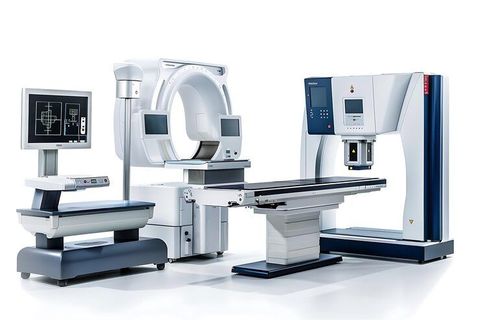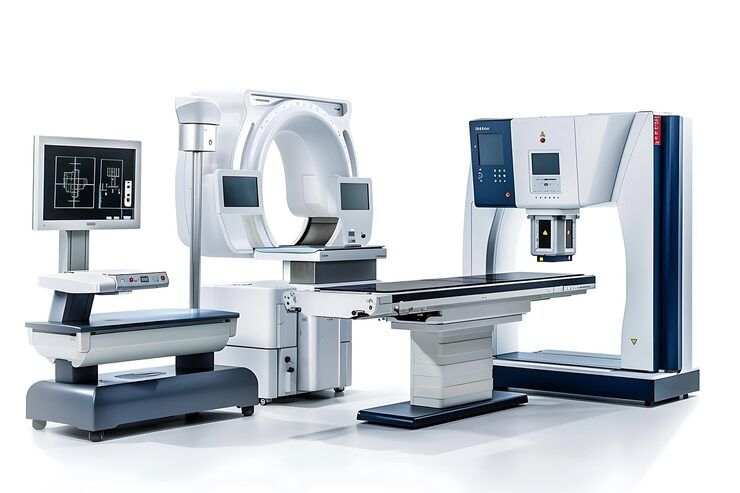
X-ray inspection machines are non-destructive inspection systems that use X-rays to examine the internal structure of products, packages, components, or materials. Unlike visual inspection, X-ray technology can identify certain internal defects and foreign materials without opening or damaging the inspected item.
The technology works because different materials absorb and attenuate X-rays at different rates. A detector captures the resulting radiation pattern and converts it into an image or measurement that can be analyzed by an operator or software.
X-ray inspection is used across manufacturing, food processing, pharmaceuticals, electronics, automotive production, aerospace, logistics, security, and other industries.
How X-Ray Inspection Works
A typical industrial X-ray inspection system contains several major components:
X-ray generator or tube
High-voltage power supply
Inspection chamber
Conveyor or component fixture
X-ray detector
Image-processing software
Operator interface
Shielding enclosure
Safety interlocks
Reject or alarm mechanism
The product passes through the inspection area while the X-ray source produces radiation. The detector records differences in attenuation and creates an image representing internal structures.
Advanced systems can analyze these images automatically using image-processing algorithms and machine learning.
Common Types of X-Ray Inspection
Different applications require different configurations:
Food X-ray inspection: Detects selected foreign materials and physical defects in packaged food.
Pharmaceutical inspection: Examines packaged products and verifies certain physical characteristics.
Electronics inspection: Identifies solder, assembly, and internal component problems.
Automotive inspection: Examines castings, welds, and other components.
Aerospace inspection: Supports non-destructive examination of critical components.
Security X-ray systems: Examine baggage, parcels, and cargo.
Industrial radiography: Produces images of welds and components for defect evaluation.
Why X-Ray Inspection Matters Today
Modern manufacturing increasingly depends on inspection systems that can identify defects without destroying finished products. X-ray technology is valuable because it can examine internal structures that may not be visible from the outside.
Non-Destructive Testing
Traditional destructive testing may require a component to be cut, opened, or damaged to examine its interior. X-ray inspection can provide internal information while allowing the inspected item to remain intact.
This is particularly important for expensive components, sealed packages, electronic assemblies, and products where internal geometry is difficult to access.
Food and Packaging Applications
Food manufacturers can use X-ray inspection to identify certain foreign materials, missing components, packaging defects, and density variations.
The exact detection capability depends on the product, packaging material, contaminant characteristics, machine configuration, and image-processing system.
Common inspection targets can include:
Glass fragments
Metal fragments
Dense mineral material
Certain bone fragments
Missing or damaged components
Packaging abnormalities
Product density variations
X-ray inspection should be understood as one part of a broader food-safety and quality-control system rather than a replacement for all other inspection methods.
Industrial Applications
In industrial manufacturing, X-ray inspection can reveal:
Internal voids
Porosity
Cracks
Inclusions
Incomplete weld penetration
Assembly problems
Soldering defects
Internal geometry variations
| Application | Typical Inspection Objective |
|---|---|
| Food packaging | Foreign-material detection |
| Pharmaceuticals | Package and product inspection |
| Electronics | Solder and assembly examination |
| Automotive | Casting and component analysis |
| Aerospace | Internal structural inspection |
| Welding | Defect and penetration assessment |
| Logistics | Parcel and cargo examination |
Recent X-Ray Inspection Developments
X-ray inspection technology continued to develop during 2025 and 2026 through improvements in detectors, automation, image processing, artificial intelligence, and regulatory guidance.
New Indian Radiation-Safety Frameworks
A major development in India was the publication of updated AERB radiation-safety documents in 2025.
The Atomic Energy Regulatory Board's 2025 codes and guides include AERB/RF/SC — Radiation Sources, Equipment and Installations and AERB/RF/SG/XGE — X-Ray Generating Equipment for Research, Education, Inspection and Analysis. The latter specifically addresses X-ray-generating equipment used for inspection and analysis.
AERB's 2025 safety framework also distinguishes X-ray inspection applications from industrial radiography guidance. Its industrial-radiography guide specifically states that X-ray equipment used for baggage, mail, cargo, vehicles, food items, and similar detection applications falls under the X-ray-generating-equipment guidance rather than that industrial-radiography guide.
Artificial Intelligence and Automated Inspection
Automated image analysis is becoming increasingly important. Machine-learning systems can help identify recurring patterns in X-ray images and support operators in detecting anomalies.
AI-based inspection does not eliminate the need for suitable calibration, validation, operator oversight, and radiation-safety controls. Its performance depends heavily on training data, product variation, image quality, and inspection conditions.
Higher-Resolution Digital Detectors
Digital detector technology continues to improve image quality and processing speed. Better detector performance can support more detailed examination of small components and complex products.
For industrial users, the relevant question is not simply detector resolution. Detection capability depends on the complete system, including source characteristics, detector performance, geometry, product thickness, material density, software, and image-processing methods.
Connected Inspection Systems
Modern inspection equipment can increasingly connect with manufacturing-control systems. Production data can be recorded alongside inspection results, allowing manufacturers to identify recurring quality patterns and monitor process performance.
This supports wider Industry 4.0 initiatives involving machine connectivity, automated quality control, traceability, and production analytics.
Laws, Regulations and Policies in India
India provides a significant regulatory example because X-ray equipment generates ionizing radiation and is therefore subject to radiation-safety oversight.
The applicable requirements depend on the type of equipment and its intended application.
AERB Regulation
The Atomic Energy Regulatory Board oversees the safe use of ionizing radiation in India. AERB explains that radiation-generating equipment is regulated under the Atomic Energy (Radiation Protection) Rules, 2004, together with applicable safety codes and regulatory requirements.
AERB's 2025 safety documentation specifically includes X-ray-generating equipment used for inspection and analysis.
Equipment Approval and Authorization
AERB maintains regulatory processes covering radiation-generating devices, including type approval, installation-related approvals, licensing or authorization, inspections, and decommissioning requirements where applicable. The e-LORA electronic system is used for radiation-related regulatory applications.
Organizations using X-ray inspection equipment should therefore identify the applicable AERB category before installation or operation.
Radiation Protection
An X-ray inspection system should be designed and operated with appropriate radiation shielding and safety controls.
Important considerations can include:
Shielded inspection enclosure
Safety interlocks
Warning indicators
Radiation surveys
Equipment maintenance
Appropriate operator training
Quality assurance
Controlled access
Emergency procedures
Regulatory documentation
AERB emphasizes that radiation-generating equipment must be used under appropriate safety controls because improper use can result in radiation exposure.
Food-Inspection Context
For food applications, X-ray inspection operates alongside India's food-safety framework. FSSAI maintains regulations covering food products, contaminants, packaging, labeling, and related food-safety requirements.
FSSAI's 2026 notification archive also records amendments involving contaminants, toxins, residues, packaging, laboratory analysis, and other food-safety matters.
The inspection machine itself does not replace the underlying food-safety requirements. Instead, it can form part of a manufacturer's hazard-control and quality-management system.
Tools and Resources for X-Ray Inspection
Selecting and operating an X-ray inspection system requires technical evaluation, radiation-safety planning, inspection validation, and ongoing quality monitoring.
Useful Tools
X-ray image-analysis software: Helps examine and interpret inspection images.
Image-processing systems: Improve visualization of density differences and internal structures.
Calibration tools: Help verify system performance.
Radiation survey meters: Used by qualified personnel to assess radiation levels.
Test pieces: Used to validate detection performance.
Inspection sensitivity charts: Help establish appropriate detection parameters.
CAD software: Useful when evaluating internal component geometry.
Statistical process-control software: Helps monitor recurring inspection results.
Machine-vision systems: Can complement X-ray inspection for external defects.
AERB e-LORA: Provides India's electronic regulatory process for radiation facilities.
FSSAI standards and notifications: Useful for food-sector compliance research.
Specifications Worth Comparing
When evaluating industrial X-ray inspection machines, useful parameters include:
X-ray tube voltage
Tube current
Detector type
Detector resolution
Conveyor dimensions
Maximum product size
Maximum product density
Inspection speed
Image-processing capability
Automatic defect detection
Reject mechanism
Shielding configuration
Safety interlocks
Data-recording capability
Regulatory approvals
Detection capability should always be evaluated using the actual product and packaging rather than relying only on a manufacturer's general specification.
Frequently Asked Questions
What is an X-ray inspection machine?
An X-ray inspection machine is a non-destructive inspection system that uses X-rays and digital detectors to examine internal structures, defects, foreign materials, or density differences within a product or component.
What can X-ray inspection detect?
Depending on the application, X-ray systems can detect certain dense foreign materials, voids, cracks, inclusions, porosity, missing components, assembly problems, and other internal abnormalities. Detection capability depends on the material, geometry, equipment configuration, and inspection conditions.
Are industrial X-ray inspection machines safe?
When properly designed, shielded, installed, maintained, and operated according to applicable radiation-safety requirements, X-ray inspection systems can be used in controlled industrial environments. Radiation safety depends on the complete installation and operating procedures, not simply on the machine itself.
What is the difference between X-ray inspection and metal detection?
Metal detectors respond primarily to electromagnetic characteristics associated with conductive or ferrous materials, while X-ray systems create images based on differences in X-ray attenuation. X-ray systems can therefore identify some non-metallic dense materials that a metal detector cannot detect.
Are X-ray inspection systems regulated in India?
Yes. X-ray-generating equipment is subject to radiation-safety regulation in India. AERB maintains requirements covering applicable equipment, approvals, authorization, radiation protection, and regulatory oversight. The exact requirements depend on the equipment category and application.
Conclusion
X-ray inspection machines provide a powerful non-destructive method for examining the internal characteristics of products and components. Their applications range from food and pharmaceutical packaging to electronics, automotive components, aerospace structures, welding, logistics, and security inspection.
The technology is evolving beyond basic X-ray imaging. Digital detectors, automated image analysis, machine learning, connected production systems, and improved data management are making inspection workflows increasingly integrated with modern manufacturing.
India's regulatory environment also continues to develop. AERB published important 2025 safety documents covering radiation sources and X-ray-generating equipment used for inspection and analysis, creating updated guidance for organizations working with regulated X-ray systems.
For organizations researching industrial X-ray inspection machines, the most important considerations include detection requirements, product characteristics, detector performance, inspection speed, image quality, automated analysis, shielding, safety controls, regulatory authorization, and validation procedures.
X-ray inspection is most effective when treated as part of a broader quality and safety program. Correct equipment selection, appropriate test procedures, trained personnel, reliable calibration, and regulatory compliance all contribute to dependable inspection results.