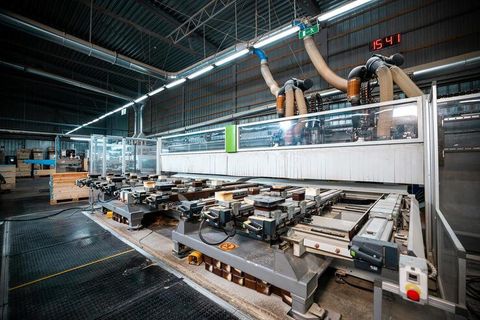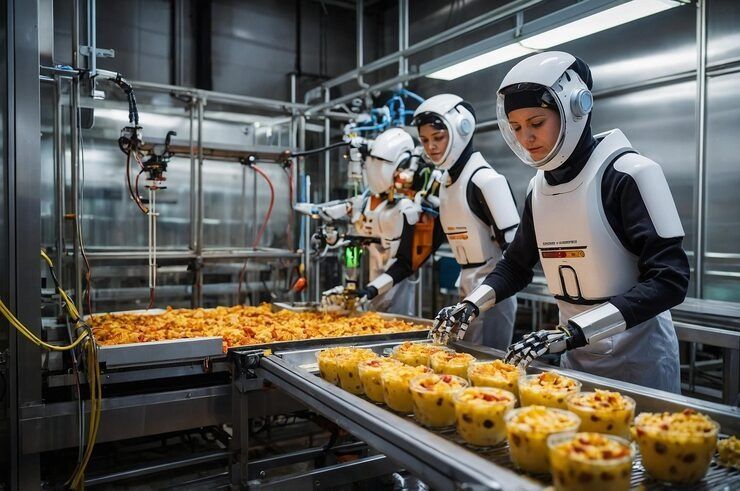
Food manufacturing refers to the large-scale processing, preparation, and packaging of food products using industrial methods. It exists to transform raw agricultural ingredients into safe, consistent, and accessible food that can be distributed to wide populations. As societies grew and urbanized, home-based food preparation alone could no longer meet demand. This led to the development of organized manufacturing systems that focus on efficiency, hygiene, and reliability.
Modern food manufacturing combines multiple disciplines, including engineering, chemistry, microbiology, and digital technology. Automated equipment, controlled environments, and data-driven monitoring systems are widely used to produce safe and consistent food products.
From an educational perspective, food manufacturing is often explained as a system that connects science, public health, and supply chains. It helps illustrate how everyday food items are processed, preserved, and distributed efficiently.
Importance: Why Food Manufacturing Matters Today
Food manufacturing plays a central role in ensuring a stable and accessible food supply. It affects producers, distributors, regulators, and consumers across the entire food system.
Key Reasons This Topic Matters
Food manufacturing is important because it:
- Improves food safety by reducing contamination risks
- Enhances accessibility by enabling storage and transportation
- Maintains consistency in taste, texture, and nutrition
- Increases efficiency and reduces waste in production systems
It also helps address global challenges such as population growth and changing dietary preferences. As demand increases, efficient manufacturing systems become more essential.
Recent Developments and Trends
Food manufacturing has evolved significantly during 2024 and 2025, driven by technology and sustainability concerns.
Digital Monitoring Systems
Sensors and software platforms are increasingly used to monitor temperature, humidity, and production conditions in real time.
Alternative Protein Processing
Throughout 2024, there has been growth in plant-based and fermentation-derived protein production, diversifying food sources.
Sustainability Reporting
Late 2024 saw increased focus on environmental impact, including energy use and packaging materials.
Traceability Systems
Manufacturers are adopting tools that track ingredients and products throughout the supply chain for better transparency.
Trends Overview
| Trend Area | Description | Timeframe |
|---|---|---|
| Digital monitoring | Real-time tracking of production conditions | 2023–2024 |
| Alternative proteins | Expansion of plant-based and new protein methods | 2024 |
| Sustainability | Focus on environmental impact | 2024 |
| Traceability | Ingredient and product tracking systems | 2023–2024 |
Laws and Policies: Regulatory Environment
Food manufacturing is closely regulated due to its direct impact on public health. Regulations ensure that food is safe, properly labeled, and traceable.
Key Regulatory Frameworks
- Preventive safety controls and hazard analysis
- Hygiene and sanitation requirements
- Accurate labeling and allergen disclosure
- Documentation and traceability systems
International standards from organizations like the Codex Alimentarius Commission help harmonize safety practices across countries.
Regulations continue to evolve with advancements in technology and global trade.
Tools and Resources for Food Manufacturing
Various tools help understand and manage food manufacturing systems. These resources are commonly used in education and industry.
Useful Tools and References
- Food safety management software
- Ingredient and nutrition databases
- Process flow diagrams
- Regulatory guidance websites
- Data visualization tools
Typical Food Production Stages
| Production Stage | Main Focus |
|---|---|
| Raw material handling | Inspection and storage |
| Processing | Mixing, heating, or forming |
| Quality checks | Sampling and testing |
| Packaging | Protection and labeling |
| Distribution | Temperature-controlled transport |
Frequently Asked Questions
How is food safety maintained?
Through hygiene practices, controlled environments, regular testing, and documented procedures.
Does processing affect nutrition?
Yes, but modern methods aim to preserve essential nutrients while ensuring safety and shelf life.
What is the role of automation?
Automation improves consistency, monitors conditions, and reduces human error in production.
Are manufactured foods regulated?
Yes, they must comply with strict processing, labeling, and safety standards.
Why is traceability important?
It allows tracking of ingredients and products, supporting recalls and safety investigations.
Conclusion: Food Manufacturing in Modern Life
Food manufacturing is a key part of global food systems, ensuring safety, accessibility, and consistency. It combines scientific knowledge with industrial processes to meet growing demand.
Recent trends highlight the role of digital monitoring, sustainability, and alternative food sources. Understanding these systems helps explain how food moves from raw materials to finished products in a structured and reliable way.