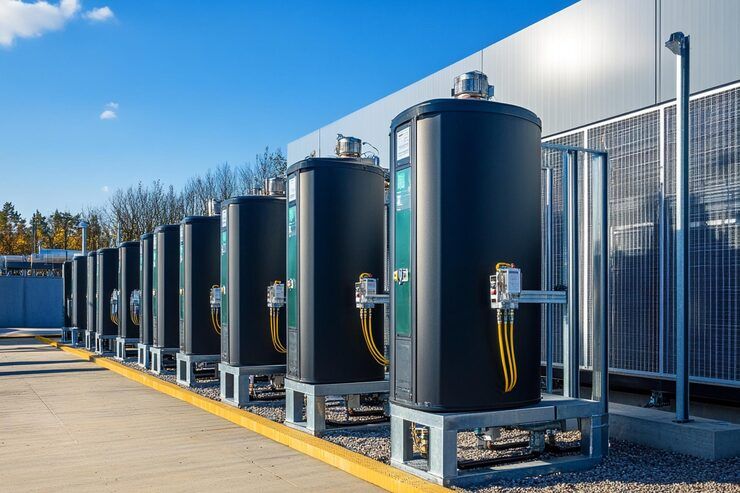
Gas dehydration units are industrial systems designed to remove water vapor from natural gas and other gas streams. Water is naturally present in many gas reservoirs, and the amount of moisture varies according to the source, pressure, temperature, and composition of the gas. Before natural gas can move through pipelines or enter certain processing operations, its water content often needs to be reduced to a specified level.
Moisture control is important because water can combine with hydrocarbons under suitable pressure and temperature conditions to form gas hydrates. These solid, ice-like compounds can obstruct pipelines, valves, and processing equipment. Water can also contribute to corrosion, particularly when certain acidic gases are present.
Gas dehydration is therefore a key stage in natural gas processing, gas transmission, and some industrial gas applications. The equipment selected depends on the required moisture level, gas composition, operating conditions, and intended use of the treated gas.
How Gas Dehydration Works
A gas dehydration unit separates water vapor from a gas stream through absorption, adsorption, or another suitable separation process.
Two commonly used technologies are glycol dehydration and molecular sieve dehydration.
Glycol dehydration units: Use a liquid desiccant, commonly triethylene glycol (TEG), to absorb water vapor from natural gas.
Molecular sieve dehydration systems: Use porous solid materials that selectively capture water molecules.
Other desiccant systems: Use materials such as activated alumina or silica gel in applications where their performance suits the process requirements.
In a typical glycol system, wet gas enters a contactor, where it flows against a circulating glycol stream. The glycol absorbs moisture, and the dried gas leaves the contactor. The water-rich glycol then passes through regeneration equipment, where heat removes the absorbed water so the glycol can be reused.
Molecular sieve systems generally use adsorption vessels. One vessel removes moisture while another may undergo regeneration, allowing the process to continue with suitable equipment sequencing.
Importance of Gas Dehydration in Natural Gas Processing
Gas dehydration plays a significant role in maintaining pipeline reliability, protecting equipment, and preparing gas for downstream processing. Moisture requirements vary depending on the transportation network, processing facility, and final application.
Problems Caused by Excess Moisture
Water vapor in natural gas can create several operational challenges.
Hydrate formation: Water and certain gas components can form solid hydrates under suitable pressure and temperature conditions, potentially restricting gas flow.
Pipeline corrosion: Water can contribute to corrosion when combined with carbon dioxide, hydrogen sulfide, or other corrosive substances.
Equipment damage: Moisture can affect valves, compressors, instruments, and other components in systems designed for dry gas.
Processing difficulties: Water can interfere with some separation processes and downstream operations.
Gas quality concerns: Gas that does not meet the required water dew point may fail to meet pipeline or processing specifications.
Industries That Use Gas Dehydration Units
Gas dehydration equipment is used throughout the energy and industrial sectors.
Natural gas production: Removes water vapor from gas recovered from underground reservoirs.
Gas transmission: Helps maintain gas quality during transportation through pipelines.
Liquefied natural gas (LNG): Reduces moisture before cryogenic cooling, where ice formation could obstruct equipment.
Petrochemical processing: Helps prepare gas streams for processes that require controlled moisture levels.
Compressed natural gas (CNG): Supports moisture control where required by fuel specifications and operating conditions.
Biomethane processing: Reduces moisture in upgraded biogas when necessary to meet pipeline injection or end-use specifications.
The required degree of dehydration differs across applications. LNG production generally requires particularly deep drying because of its extremely low operating temperatures, while other applications may use different moisture specifications.
Recent Developments and Technology Trends
During 2025 and 2026, natural gas infrastructure, biomethane production, process automation, and energy efficiency continued to influence gas processing technology. Developments in these areas affect how operators evaluate dehydration systems, although individual projects and regulatory requirements differ.
Automation and Digital Process Monitoring
Modern gas dehydration plants can integrate sensors, programmable logic controllers, distributed control systems, and supervisory control and data acquisition platforms.
These technologies can help operators monitor:
Gas flow rate, pressure, and temperature.
Glycol circulation rate and regeneration temperature.
Water dew point at the outlet.
Filter condition and differential pressure.
Energy consumption and equipment operating status.
Digital monitoring can help identify changing operating conditions before they lead to major disruptions. However, measurement accuracy, sensor maintenance, and appropriate alarm settings remain important.
Energy Efficiency and Emissions Management
Glycol regeneration requires heat to separate absorbed water from the circulating liquid. Depending on the system design, fuel consumption and emissions from the regeneration process can be important considerations.
Current engineering approaches include improving heat recovery, optimizing regeneration conditions, reducing unnecessary glycol circulation, and evaluating lower-emission configurations. The suitability of each approach depends on process requirements and the existing facility.
Biomethane and Renewable Gas Applications
Biomethane production has increased interest in gas conditioning equipment that prepares upgraded biogas for pipeline injection or other uses. Water removal is one part of this process, alongside controlling carbon dioxide, hydrogen sulfide, and other impurities where required.
In India, the Bureau of Indian Standards' IS 16087:2025 addresses compressed biogas quality. The published specification includes a maximum moisture content of 5 mg/m³ for the relevant biomethane application. This illustrates the importance of checking the precise gas specification before selecting dehydration equipment.
Laws, Standards, and Regulatory Requirements
Gas dehydration units are affected by pipeline gas-quality specifications, industrial safety requirements, environmental rules, and technical standards. These requirements vary by jurisdiction and application.
Natural Gas Regulations in India
India regulates natural gas pipeline infrastructure and gas quality through the Petroleum and Natural Gas Regulatory Board (PNGRB), alongside other relevant authorities.
Important regulatory frameworks include:
Petroleum and Natural Gas Regulatory Board Act, 2006: Establishes the regulatory framework for specified petroleum and natural gas activities.
PNGRB natural gas pipeline regulations: Address pipeline authorization, technical requirements, and safety standards.
Gas quality specifications: Establish limits for parameters such as water dew point, hydrocarbon dew point, hydrogen sulfide, and other gas constituents.
Environmental regulations: May apply to regeneration emissions, wastewater, waste handling, and other environmental aspects of processing facilities.
Industrial safety requirements: Address pressure equipment, hazardous areas, fire protection, and safe operation where applicable.
PNGRB's pipeline technical standards were amended in July 2025. The regulator also maintains requirements relating to natural gas distribution networks and pipeline gas quality. Operators should consult the latest applicable provisions rather than relying on older specifications.
Why Water Dew Point Matters
Water dew point is the temperature at which water vapor begins to condense at a specified pressure. Gas quality specifications may define the maximum permitted water dew point at the relevant pipeline operating pressure.
A dehydration unit must be designed to achieve the required outlet condition under the expected operating range. Meeting a dew-point target does not automatically demonstrate compliance with every gas-quality or safety requirement.
Tools and Resources for Gas Dehydration
Engineers and plant operators use several tools to design, operate, and maintain gas dehydration equipment. The most suitable resources depend on the process technology, gas composition, and operating requirements.
Engineering Tools and Monitoring Equipment
Water dew-point analyzers: Measure the moisture condition of treated gas to help verify dehydration performance.
Gas composition analyzers: Determine the composition of a gas stream, supporting process calculations and equipment selection.
Process simulation software: Models gas processing operations, glycol circulation, heat requirements, and related process conditions.
Heat exchanger calculators: Help estimate heat-transfer requirements for glycol regeneration and heat recovery.
Pressure-drop calculators: Estimate pressure losses across contactors, filters, piping, and other equipment.
Maintenance tracking templates: Record inspections, filter changes, calibration activities, and equipment performance.
Process control systems: Monitor operating parameters and provide alarms when conditions move outside configured limits.
Technical Reference Materials
Useful technical references include natural gas processing engineering manuals, applicable American Petroleum Institute (API) standards, International Organization for Standardization (ISO) standards, and national pipeline regulations. Engineers should confirm the current edition and applicability of each standard before using it for a project.
The following table compares common dehydration technologies.
Technology | Typical application | Main consideration |
|---|---|---|
Triethylene glycol (TEG) | Pipeline natural gas drying | Glycol circulation and regeneration |
Molecular sieves | Deep dehydration and LNG preparation | Regeneration cycle and adsorption capacity |
Silica gel | Selected gas and vapor drying applications | Moisture loading and regeneration needs |
Activated alumina | Industrial gas drying | Operating conditions and adsorbent performance |
Technology selection should consider required outlet moisture, inlet gas conditions, throughput, energy use, operating complexity, and maintenance requirements.
Frequently Asked Questions
What is the main purpose of a gas dehydration unit?
Its primary purpose is to remove water vapor from natural gas or another gas stream. This helps reduce hydrate formation risks, limit moisture-related corrosion, and meet the moisture specifications required for transportation or downstream processing.
What is the difference between glycol dehydration and molecular sieve dehydration?
Glycol dehydration uses a liquid desiccant to absorb water vapor, while molecular sieve dehydration uses a solid adsorbent to capture water molecules. Glycol systems are widely used for pipeline gas drying, whereas molecular sieves are often selected when very low moisture levels are necessary.
What is triethylene glycol used for in gas processing?
Triethylene glycol, commonly called TEG, is a liquid desiccant that absorbs water vapor from natural gas. It is circulated through a contactor and regenerated by heating so that the recovered glycol can be reused.
How is gas dehydration performance measured?
Performance is commonly evaluated through outlet water content or water dew-point measurements. Operators may also monitor gas flow, pressure, temperature, glycol circulation, regeneration conditions, and differential pressure across filters.
What factors determine the selection of a gas dehydration unit?
Key factors include inlet moisture, gas composition, operating pressure and temperature, gas throughput, required outlet dew point, available utilities, energy requirements, and applicable regulations. The intended application, such as pipeline transmission or LNG production, is also important.
Conclusion
Gas dehydration units are an essential part of natural gas processing because they reduce water vapor and help protect pipelines, processing equipment, and downstream operations. Glycol dehydration and molecular sieve systems are two widely used approaches, each suited to different moisture requirements and operating conditions.
Developments in process automation, energy efficiency, and biomethane infrastructure continue to influence gas conditioning technology. At the same time, pipeline specifications and industrial safety requirements remain central to system design and operation.
A reliable dehydration strategy combines appropriate technology selection, accurate moisture measurement, preventive maintenance, and compliance with applicable standards. Understanding these principles helps engineers and operators maintain gas quality and support safe, efficient natural gas processing.