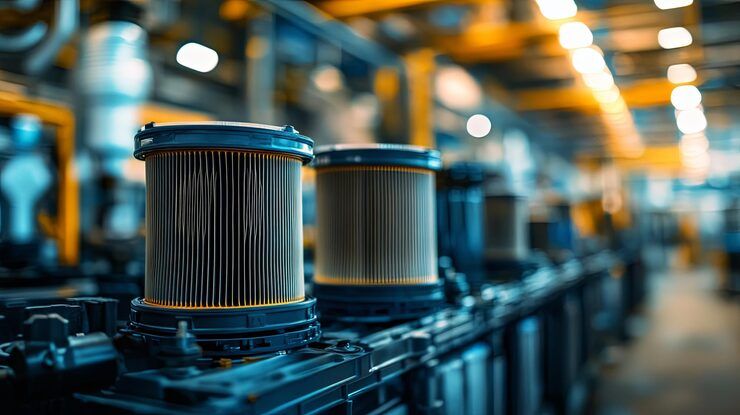
Oil filter recycling machines are industrial systems designed to process used oil filters from vehicles, machinery, generators, and industrial equipment. These filters collect contaminants from lubricating oil, hydraulic systems, and other mechanical applications. After use, they may contain residual oil, metal components, paper elements, rubber seals, and accumulated impurities.
Recycling technology helps separate these materials so that suitable metal fractions can enter established metal recovery channels, while recovered oil and other residues can be managed according to their properties and applicable environmental requirements.
How Oil Filter Recycling Works
A typical recycling process begins with the collection and sorting of used filters. The filters are then drained, crushed, cut, or mechanically separated, depending on the equipment design and the material being processed.
Common processing stages include:
Collection and inspection: Used filters are checked for their type, condition, and potential contamination.
Oil drainage: Residual lubricating oil is removed using controlled draining or specialized extraction equipment.
Mechanical separation: Cutting, crushing, or shredding separates metal casings from internal filter materials.
Material recovery: Steel and other recoverable metals are separated from paper, rubber, sludge, and remaining residues.
Waste management: Non-recyclable or contaminated fractions are sent for appropriate treatment or disposal.
The precise sequence varies by machine design. Some systems integrate several operations into one processing line, while others rely on separate equipment for draining, crushing, separation, and storage.
Main Types of Recycling Equipment
Different oil filter recycling machines serve different operating requirements.
| Equipment type | Main function | Typical application |
|---|---|---|
| Oil filter crusher | Compresses filters and releases residual oil | Automotive workshops and maintenance facilities |
| Industrial filter cutter | Opens filter casings for material separation | Specialized recycling operations |
| Shredder and separator | Reduces filter components into smaller fractions | Industrial material recovery |
| Oil recovery unit | Collects and separates residual oil | Facilities handling used filters |
| Integrated recycling line | Combines multiple processing stages | Larger-scale industrial operations |
A filter crusher is not necessarily a complete recycling system. Crushing reduces volume and may release oil, but additional processing is often required to separate materials and prepare them for appropriate recovery.
Why Oil Filter Recycling Matters
Used oil filters present environmental and operational challenges because they combine recyclable materials with potentially hazardous residues. Improper handling can allow oil to reach soil, drains, or surface water. Contaminated storage areas may also expose workers to slippery surfaces and unwanted contact with used lubricants.
Recycling equipment supports more controlled handling by reducing the volume of waste, recovering suitable materials, and improving the consistency of processing operations.
Environmental and Industrial Benefits
The principal benefits depend on the waste composition, machine performance, and the quality of downstream material recovery.
Reduced waste volume: Crushing and mechanical processing can reduce the space required to store used filters.
Metal recovery: Steel casings and other suitable metal components can be separated for further processing.
Residual oil management: Captured oil can be collected for evaluation and appropriate handling rather than being released into the environment.
Improved workplace organization: Enclosed equipment and designated collection areas can help reduce spills and unnecessary manual handling.
Resource conservation: Recovering reusable metal supports the broader recycling system and reduces demand for some virgin materials.
These benefits are not automatic. Poorly maintained machinery, inadequate drainage, or unsuitable handling practices can create spills, contaminated residues, and additional waste.
Industries That Generate Used Oil Filters
Oil filter recycling is relevant to a wide range of sectors.
Automotive repair workshops and vehicle maintenance centers
Commercial vehicle fleets and transportation operators
Construction and mining equipment facilities
Agricultural machinery maintenance operations
Marine engine maintenance facilities
Manufacturing plants and industrial equipment operators
Power generation facilities using lubricated engines
The quantity and type of filters differ between these industries. Heavy equipment may generate large filters with substantial metal casings, while passenger vehicles generally produce smaller units. Industrial filtration systems may also contain different materials and require separate handling procedures.
Recent Developments and Technology Trends
Oil filter recycling technology continues to develop alongside wider improvements in industrial waste management, automation, and resource recovery. During 2025 and 2026, relevant developments include greater attention to traceable waste handling, safer equipment operation, energy efficiency, and the recovery of materials from complex waste streams. These are broad industry directions rather than evidence that every manufacturer has introduced a specific new machine.
Automation and Process Monitoring
Modern industrial equipment can incorporate automatic feeding, hydraulic controls, guarded cutting mechanisms, sensors, and emergency-stop systems. Depending on the design, these features can improve process consistency and reduce direct worker contact with moving components.
Digital monitoring can also help operators record throughput, machine downtime, maintenance activities, and material output. Such records support operational planning and can identify recurring equipment problems.
Improved Oil and Material Separation
Equipment designers focus on separating steel, residual oil, and internal filter media more effectively. The objective is to reduce contamination between recovered fractions and make downstream handling more predictable.
However, separation efficiency depends on filter construction, moisture, residual oil content, processing settings, and the capabilities of the receiving recycling facility. Manufacturers' performance figures should therefore be assessed against documented test conditions.
Safety and Resource Efficiency
Industrial operators increasingly consider energy consumption, noise, dust, spill prevention, and worker safety when assessing recycling equipment. Enclosed processing areas, accessible maintenance points, suitable ventilation, and secondary containment can contribute to safer operation.
For current procurement or compliance decisions, operators should verify the latest equipment specifications, environmental guidance, and regulatory changes with the relevant authorities rather than relying on general industry trends alone.
Laws, Regulations, and Environmental Responsibilities
The legal requirements for used oil filters depend on the country, the type of waste, its contamination, and the activities performed at the facility. A machine's ability to crush or separate filters does not, by itself, establish that the entire recycling operation complies with environmental law.
United States
In the United States, used oil management is addressed by the Environmental Protection Agency under federal regulations in 40 CFR Part 279. These rules establish requirements for used oil management, including applicable handling, storage, and recycling activities.
Used oil filters may be subject to additional federal, state, or local requirements. Their classification can depend on factors such as the type of oil, the materials present, and whether hazardous contaminants are involved. States may apply requirements that differ from or are stricter than the federal framework.
Facilities should verify the applicable rules for filter storage, oil collection, transportation, processing, and residual disposal before establishing a recycling operation.
European Union
The European Union's Waste Framework Directive establishes a general framework for waste management, including waste prevention, recovery, and environmentally sound treatment. Used oil and contaminated components must be assessed under the applicable waste classification and national implementation rules.
Industrial operators may also need to consider permits, waste transfer documentation, worker protection, and rules governing the treatment of industrial waste. Requirements vary according to the activity and jurisdiction.
India
In India, used oil and related waste handling may fall under the Hazardous and Other Wastes (Management and Transboundary Movement) Rules, 2016, as amended, alongside applicable environmental legislation and state-level requirements.
The Central Pollution Control Board and State Pollution Control Boards provide regulatory information and oversee relevant environmental responsibilities. Depending on the activity, operators may need to verify requirements relating to authorization, storage, transportation, recycling, and disposal.
A facility should confirm whether its particular used filters, extracted oil, and processing residues fall under specific regulatory provisions. Compliance should be assessed for the entire operation, not just the machinery.
General Compliance Checklist
Before processing used oil filters, operators should establish procedures for:
Identifying and segregating incoming waste.
Using suitable, labelled and protected storage containers.
Preventing oil leakage and uncontrolled discharge.
Maintaining records of waste quantities and transfers.
Training employees in equipment safety and spill response.
Arranging appropriate treatment of contaminated residues.
Checking required permits, registrations, and reporting obligations.
Inspecting machinery, hydraulic systems, guards, and emergency controls.
Tools and Resources for Planning a Recycling Operation
Selecting and operating an oil filter recycling system requires more than comparing machine capacity. The following resources help facilities evaluate operational requirements and environmental responsibilities.
Equipment Evaluation Tools
Throughput calculator: Estimate daily processing requirements by multiplying the expected number of filters by the average processing time per filter. Include time for loading, cleaning, maintenance, and material handling.
Material balance worksheet: Record the incoming weight of used filters and the measured outputs of recovered metal, collected oil, and remaining residues. This helps identify unexplained losses and inconsistencies.
Maintenance log: Document inspections, hydraulic fluid condition, blade wear, lubrication, breakdowns, and scheduled servicing.
Spill inspection checklist: Record container condition, drainage arrangements, secondary containment, housekeeping, and spill-response equipment.
Environmental and Technical Resources
Useful sources include:
Environmental protection agency guidance on used oil and industrial waste management.
National and regional waste classification regulations.
Occupational safety guidance on machinery guarding and hazardous material handling.
Equipment technical manuals and verified manufacturer specifications.
Local recycling facility requirements for acceptable metal and oil fractions.
Applicable industry standards for electrical safety, machine guarding, and workplace risk assessment.
Comparing Machine Performance
A structured comparison helps operators assess different equipment configurations.
| Evaluation factor | What to examine |
|---|---|
| Processing capacity | Filters or kilograms processed per hour |
| Filter compatibility | Accepted sizes, designs, and materials |
| Oil collection | Drainage method and spill containment |
| Separation quality | Contamination levels in recovered fractions |
| Energy requirements | Electrical supply and operating demand |
| Worker safety | Guards, interlocks, emergency stops, and maintenance access |
| Residue handling | Storage and downstream treatment requirements |
| Documentation | Technical data, maintenance guidance, and safety instructions |
Capacity figures should be compared using similar filter types and operating conditions. A higher stated throughput does not necessarily mean better recovery or lower environmental impact.
Frequently Asked Questions
What is an oil filter recycling machine?
It is equipment designed to drain, crush, cut, or separate used oil filters so that residual oil and suitable materials can be recovered or managed appropriately. The exact function depends on the machine type.
Can all used oil filters be recycled in the same machine?
No. Filters differ in size, construction, filter media, casing material, and contamination. Some designs may require different processing methods, and certain contaminated filters need specialized handling. Operators should confirm compatibility before processing mixed loads.
What materials can be recovered from used oil filters?
Depending on the filter design and processing method, recovery may include steel or other metals and residual lubricating oil. Paper, synthetic media, rubber, sludge, and other contaminated fractions may require additional treatment or controlled disposal.
Are oil filter crushers and recycling machines the same?
Not necessarily. A crusher generally compresses a filter and may release residual oil. A complete recycling system may also include cutting, separation, collection, and residue-handling equipment. The distinction matters when evaluating material recovery and regulatory requirements.
What safety precautions are necessary?
Operators should follow the machine's instructions, use appropriate personal protective equipment, maintain guards and emergency stops, prevent spills, and inspect hydraulic or electrical components. Used filters should be handled according to their contamination and the applicable waste regulations.
Conclusion
Oil filter recycling machines support the controlled processing of used filters by reducing waste volume, recovering suitable metals, and collecting residual oil for appropriate management. Their role extends beyond mechanical crushing to include safe material separation, pollution prevention, residue handling, and regulatory compliance.
Choosing an appropriate system requires an understanding of filter types, expected processing volumes, recovery objectives, operating conditions, and local environmental requirements. Careful equipment assessment, documented maintenance, and responsible waste management help facilities integrate oil filter recycling into broader industrial resource-recovery practices.