A properly fitted door does more than provide access between spaces. It contributes to security, privacy, weather protection, energy efficiency, and everyday convenience. Whether installing a new interior door, replacing an exterior entrance, or upgrading an existing doorway, careful fitting is important because small alignment problems can affect how the door opens, closes, locks, and performs over time.
Safe door fitting begins with accurate measurements and continues through frame preparation, hardware installation, alignment, and final inspection. Understanding these steps can help homeowners, property managers, and DIY enthusiasts approach a door installation with greater confidence and recognize when professional assistance may be appropriate.
Understanding What Safe Door Fitting Involves
Door fitting is the process of positioning a door within its frame and installing the associated hardware so that the complete assembly operates correctly. The work can involve the door slab, frame, hinges, latch, lock, handles, seals, and threshold.
Safety is not limited to making sure the door stays attached to the frame. A correctly fitted door should move smoothly without excessive force, remain securely supported, close properly, and allow its locking hardware to function as intended.
Exterior doors require additional attention because they may need to resist wind, moisture, temperature changes, and repeated daily use. Fire-rated, security-rated, or specialized doors can also have specific installation requirements that differ from ordinary residential doors.
Start With Accurate Measurements
Measurement is one of the most important stages of door installation. Before purchasing or preparing a door, measure the opening at several points rather than relying on a single measurement.
Check the width at the top, middle, and bottom of the opening. Measure the height on both sides and in the center. The depth of the frame should also be considered, particularly when replacing an existing door.
The condition of the opening matters as much as its dimensions. Look for damaged framing, uneven surfaces, moisture problems, or signs that the existing frame is not square.
A useful check is to compare the two diagonal measurements of the opening. If they differ substantially, the opening may not be square and could require adjustment before the door is installed.
Prepare the Door Frame Carefully
The frame provides the foundation for the entire door assembly. If it is loose, distorted, or poorly aligned, adjusting the door itself may not solve the underlying problem.
Before fitting the door, inspect the frame for movement and damage. Remove debris and make sure the surfaces where the frame or hinges will sit are clean and suitable for installation.
The frame should be checked for level, plumb, and square. A frame that leans or twists can cause the door to rub against one side, leave uneven gaps, or place unnecessary stress on the hinges and locking mechanism.
For exterior installations, the surrounding structure should also be examined for moisture intrusion and deterioration. Correcting these problems before installation can help prevent future performance issues.
Position and Align the Door
Once the frame is prepared, the door needs to be positioned carefully. The door should have appropriate clearance around its edges so it can open and close without rubbing.
Hinge alignment is particularly important. Hinges that are incorrectly positioned or tightened unevenly can cause the door to sag or become difficult to operate.
Install or adjust hinges according to the door and hardware manufacturer's specifications. Avoid forcing the door into position with excessive pressure. If the door requires significant force to align, the problem may be with the frame, hinge position, or opening rather than the door itself.
After positioning, open and close the door several times. Check whether it moves smoothly through its complete range of movement and whether the gaps around the door remain reasonably consistent.
Install Locks and Other Hardware Correctly
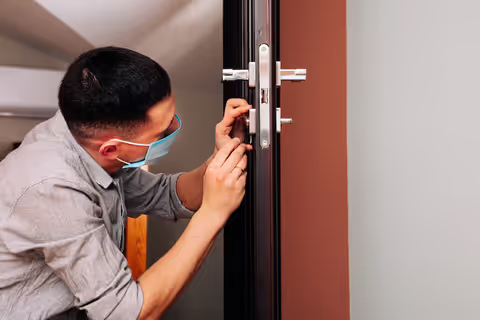
Door hardware plays an important role in both usability and security. Handles, latches, locks, hinges, closers, and other components should be appropriate for the type and weight of the door.
The latch should engage cleanly with the strike plate without requiring the door to be pushed, pulled, or lifted excessively. If the latch does not line up correctly, adjust the alignment rather than repeatedly forcing the hardware.
For an exterior entrance, the locking system should be securely attached to the door and frame. Fasteners should be appropriate for the materials being joined, and the hardware should remain firmly seated after repeated operation.
When installing specialized security, fire, or access-control hardware, follow the relevant manufacturer's installation requirements. Modifying a certified door or frame incorrectly can affect its intended performance.
Check Door Clearance and Movement
A safe door should not create unnecessary hazards during normal use. Check the space around the door, particularly where it swings.
Make sure furniture, walls, steps, and other obstacles do not prevent the door from opening or closing properly. In frequently used areas, consider how the door's movement affects people walking through the space.
Pay attention to pinch points around hinges and closing edges, especially in homes with children or older occupants. Door closers should be adjusted so the door closes reliably without creating excessive closing force.
For exterior doors, inspect the bottom edge and threshold. Uneven thresholds can create tripping hazards, while excessive gaps can allow drafts, moisture, or insects to enter.
Pay Attention to Weather Sealing
Exterior doors benefit from appropriate weather sealing around the frame and threshold. Properly installed seals can reduce unwanted air movement and help protect the interior from rain and moisture.
Weatherstripping should make appropriate contact with the closed door without preventing normal operation. If the seal is compressed too tightly, the door may become difficult to close. If there are large gaps, the seal may not provide effective protection.
After installation, inspect the perimeter of the closed door for visible gaps. During wet weather, also check for signs of water entering around the frame or threshold.
Perform a Final Safety Inspection
A final inspection should be completed before considering the installation finished. Start by opening and closing the door repeatedly. It should operate consistently without unusual scraping, sticking, or excessive movement.
Check that the hinges remain secure and that the handle, latch, and lock operate smoothly. When the door is closed, confirm that the latch engages properly and that the locking mechanism functions without unusual resistance.
Inspect the frame and surrounding wall for movement. If the frame shifts when the door is operated, the installation may need further attention.
Also check the floor and threshold for trip hazards and make sure any temporary supports, debris, or installation materials have been removed.
Common Door Fitting Problems to Avoid
Several common problems can reduce door performance. Installing a door into an uneven frame can lead to inconsistent gaps and difficult operation. Incorrect hinge placement can cause sagging, while poorly aligned strike plates can prevent the latch from engaging properly.
Another common issue is relying on excessive force to make a poorly aligned door close. This can place additional stress on hinges, locks, and the frame.
Using unsuitable fasteners or hardware can also compromise the installation. Hardware should match the door's construction, weight, intended use, and frame materials.
Finally, rushing the measurement stage can create problems that are difficult to correct later. Taking time to measure and inspect the opening before installation can prevent many avoidable adjustments.
When Professional Assistance May Be Appropriate
Some door installations are relatively straightforward, while others involve structural changes, specialized security systems, fire-rated assemblies, heavy doors, or damaged framing.
Professional assistance can be appropriate when the opening requires substantial modification, the frame is structurally damaged, or the door has specific certification or performance requirements. Specialist knowledge may also be important when installation affects building safety systems or regulated fire protection.
The goal is not simply to make the door fit. It is to ensure that the complete door assembly performs as intended without introducing new safety problems.
Conclusion
Safe door fitting depends on several connected factors: accurate measurements, a sound and properly aligned frame, correctly positioned hinges, suitable hardware, appropriate clearance, and thorough final testing. Treating each stage as part of one complete system can produce a door that is easier to operate and more reliable in everyday use.
Before installation, inspect the opening and determine the door's requirements. During fitting, focus on alignment rather than forcing components into place. After installation, test the complete assembly several times and correct any movement, rubbing, locking, or clearance problems.
A careful approach to door fitting can improve everyday safety, security, durability, and usability while reducing the likelihood of problems developing later.