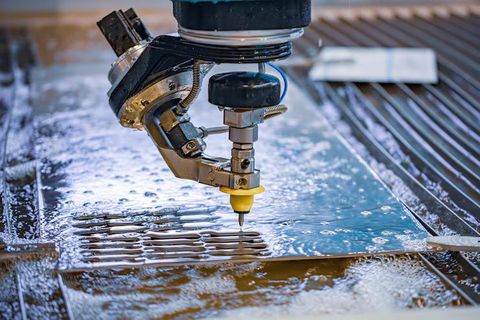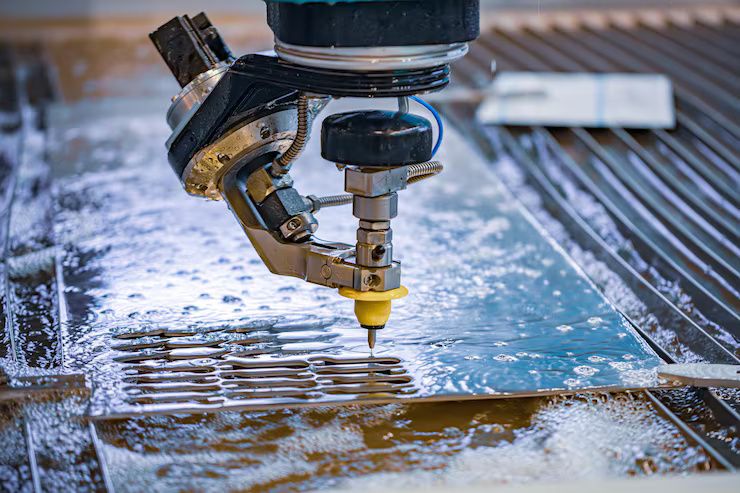
High pressure water jet cutting machines have become an important part of modern manufacturing where materials need to be shaped accurately without relying on conventional heat-based cutting. The process uses a highly pressurized stream of water, sometimes combined with abrasive particles, to cut a wide range of materials.
The technology is relevant across metal fabrication, aerospace, automotive production, stone processing, architectural work, and industrial manufacturing. Its ability to process different materials with limited thermal influence makes it particularly useful when heat could affect the material or finished geometry.
Understanding how water jet cutting works requires looking beyond the pressure rating of a machine. Pump technology, cutting heads, abrasive delivery, motion control, material characteristics, and operating conditions all influence the final result. These factors determine where the technology fits within a modern production environment.
How High Pressure Water Jet Cutting Works
At its core, water jet cutting converts hydraulic pressure into a concentrated cutting stream. A high-pressure pump forces water through a small orifice, producing a narrow, high-velocity jet capable of removing material.
There are two primary configurations. Pure water jet cutting uses water alone and is generally associated with softer materials. Abrasive water jet cutting introduces abrasive particles into the water stream, allowing the process to cut harder materials such as steel, aluminum, stone, glass, and composites.
The cutting head is mounted on a computer-controlled motion system. The machine follows programmed toolpaths to move the nozzle across the workpiece and create the required geometry.
Unlike processes such as plasma or oxy-fuel cutting, water jet cutting does not depend on melting the material through a thermal arc or flame. Instead, material is removed through the mechanical action of the high-speed jet and, in abrasive systems, the cutting action of abrasive particles.
Key Components Inside a Water Jet Cutting System
A water jet machine combines several systems that must operate together precisely. The pump generates the pressure, while the cutting head converts that pressure into a usable cutting stream.
The high-pressure pump is one of the central components. It raises ordinary water pressure to the level required for cutting and maintains a consistent flow during operation. Pump design influences efficiency, reliability, and the machine's operating characteristics.
The orifice creates the initial water jet. Because it has a very small opening, its material and manufacturing precision are important to consistent jet formation.
In abrasive systems, a mixing chamber introduces abrasive material into the water stream. The resulting mixture passes through a focusing tube, producing the concentrated abrasive jet that performs the cutting operation.
The system also includes a CNC motion platform, which controls movement along the cutting path. Modern machines can coordinate multiple axes, allowing complex profiles and, in advanced configurations, angled cuts.
Why Cold Cutting Matters in Manufacturing
One of the major characteristics of water jet technology is its minimal heat-affected zone. Conventional thermal cutting can introduce localized heating that changes material properties, creates discoloration, or produces thermal distortion.
Water jet cutting approaches the problem differently because the process is primarily mechanical rather than thermal. This can be valuable when working with materials that are sensitive to heat or when the finished component requires a clean edge without significant thermal alteration.
However, "cold cutting" does not mean every water jet application automatically produces a perfect edge. Cutting speed, abrasive selection, material thickness, nozzle condition, and machine calibration can all influence surface quality and dimensional accuracy.
For critical components, manufacturers therefore evaluate the entire cutting process rather than assuming that the technology alone guarantees a particular finish.
Materials Suitable for Water Jet Cutting
The versatility of water jet systems comes from their ability to process many material categories. The appropriate configuration depends on material hardness, thickness, geometry, and the required edge characteristics.
Pure water systems are commonly associated with materials such as rubber, foam, textiles, insulation, and certain food-processing applications. Abrasive systems extend the process to harder materials.
Common applications include:
- Stainless steel and carbon steel
- Aluminum and other nonferrous metals
- Titanium and specialty alloys
- Stone and ceramic materials
- Glass
- Composites and laminates
- Certain engineered plastics
Material response still varies considerably. A thick, hard alloy may require different cutting parameters from a thinner sheet of aluminum. Operators typically adjust pressure, traverse speed, abrasive flow, and nozzle configuration according to the workpiece.
Precision, Edge Quality, and Cutting Speed
The performance of a water jet cutting machine is determined by more than its maximum pressure. Precision depends on the interaction between the cutting stream, machine mechanics, software, and workpiece.
The narrow jet allows manufacturers to produce intricate profiles and relatively small internal features. CNC control also makes it possible to reproduce complex shapes consistently across multiple components.
Cutting speed presents a practical trade-off. Moving the cutting head faster can improve throughput, but excessive speed may reduce edge quality or dimensional accuracy. Slower movement generally gives the jet more time to remove material and can improve the resulting cut.
Advanced systems may use cutting-head compensation to account for the natural characteristics of the jet. This helps reduce taper, where the cut is slightly wider at the top than at the bottom, particularly in thicker materials.
Choosing Cutting Parameters for Different Materials
There is no single setting that works across every water jet application. Machine operators typically consider material type, thickness, required tolerance, edge quality, and geometry before selecting process parameters.
Water pressure is only one variable. Abrasive particle size and flow rate can influence material removal, while nozzle diameter affects the characteristics of the cutting stream.
Cutting speed is also closely connected to quality requirements. A simple external profile may tolerate a faster setting, whereas a precision component with small features may require slower cutting and additional process control.
Piercing is another consideration. Before cutting a programmed path, the jet must penetrate the workpiece. Different materials and thicknesses may require different piercing strategies to prevent damage around the starting point.
Automation and Modern CNC Control
Modern water jet cutting machines increasingly rely on software-driven workflows. CAD files can be converted into machine toolpaths, allowing digital designs to move directly into production planning.
CNC control coordinates the movement of the cutting head and can manage parameters throughout the cutting process. More sophisticated systems may support multi-axis cutting, automatic height sensing, nesting, and process monitoring.
Material nesting is particularly useful when several components must be produced from a single sheet. Software can arrange parts to make efficient use of the available workpiece area while maintaining the required cutting paths and separation distances.
Automation can also reduce manual setup and improve repeatability. Nevertheless, experienced operators remain important because material behavior, abrasive conditions, nozzle wear, and unusual geometries can require practical adjustments.
Operational Considerations and Maintenance
Water jet equipment operates under demanding hydraulic and abrasive conditions. Regular maintenance is therefore essential for consistent performance.
Pump components, seals, valves, orifices, focusing tubes, and mixing components can experience wear over time. Abrasive particles can accelerate wear in components exposed directly to the cutting stream.
Water quality also matters. Poor water quality can contribute to deposits or affect high-pressure system components. Filtration and appropriate water treatment can help maintain reliable operation.
Operators should monitor changes in cut quality rather than waiting for obvious equipment failure. A gradual increase in edge taper, inconsistent cutting, or changes in jet behavior can indicate wear or process instability.
Where Water Jet Technology Fits in Modern Manufacturing
Water jet cutting is particularly useful when manufacturers need material flexibility, complex geometries, and minimal thermal influence. It can complement other cutting technologies rather than replacing every conventional process.
For example, a production environment may use laser cutting for certain thin-sheet applications while relying on abrasive water jet cutting for thicker, heat-sensitive, reflective, or difficult-to-machine materials. The appropriate process depends on the material and production requirements.
The technology is also valuable for prototyping because digital toolpaths can be modified relatively quickly. Engineers can test different geometries without creating specialized thermal cutting tooling for each design iteration.
Frequently Asked Questions
What is a high pressure water jet cutting machine?
It is a CNC-controlled cutting system that uses highly pressurized water to remove material. Abrasive particles may be added when cutting harder materials.
Can water jet machines cut metal?
Yes. Abrasive water jet systems can cut many metals, including steel, stainless steel, aluminum, titanium, and various alloys.
Does water jet cutting create a heat-affected zone?
Water jet cutting is primarily a mechanical process and does not create the conventional heat-affected zone associated with thermal cutting processes such as plasma or oxy-fuel cutting.
What determines water jet cutting accuracy?
Accuracy depends on machine mechanics, nozzle condition, cutting parameters, software, material characteristics, workholding, and the required geometry.
Why is abrasive added to the water?
Abrasive particles increase the cutting action of the water stream, allowing the system to process harder materials that pure water alone generally cannot cut effectively.
Conclusion
High pressure water jet cutting machines combine hydraulic pressure, precision nozzles, abrasive technology, and CNC motion control to create a versatile modern cutting process. Their ability to process diverse materials without conventional thermal cutting makes them useful across many manufacturing environments.
Effective results depend on selecting appropriate equipment and process parameters for the material, thickness, geometry, and required edge quality. Understanding these factors provides a clearer picture of where water jet technology can contribute to precise and adaptable industrial production.