Selecting packaging equipment for pharmaceutical production is rarely a matter of choosing a machine with the highest output.
A pharmaceutical packaging machinery manufacturer must account for product characteristics, dosage forms, container formats, production volumes, quality controls, and regulatory expectations before a suitable system can be identified.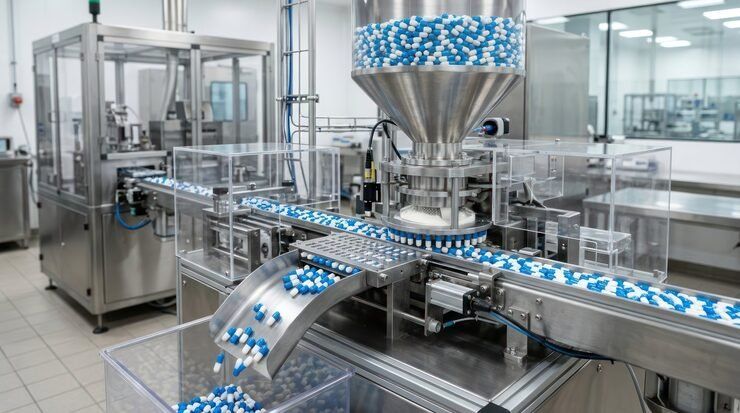
Modern pharmaceutical packaging lines may include equipment for blistering, bottle filling, liquid dosing, labeling, cartoning, serialization, inspection, and secondary packaging. Each stage can influence product protection, traceability, production consistency, and line efficiency.
For manufacturers evaluating equipment, the real challenge is understanding how these requirements fit together. Looking beyond individual machine specifications helps teams assess compatibility, validation needs, integration requirements, and long-term operational suitability before selecting a packaging system.
Start With the Product and Packaging Format
The product itself should determine much of the equipment architecture. Tablets, capsules, powders, liquids, creams, sterile products, and medical devices can require very different handling methods because their physical properties and packaging requirements are not interchangeable.
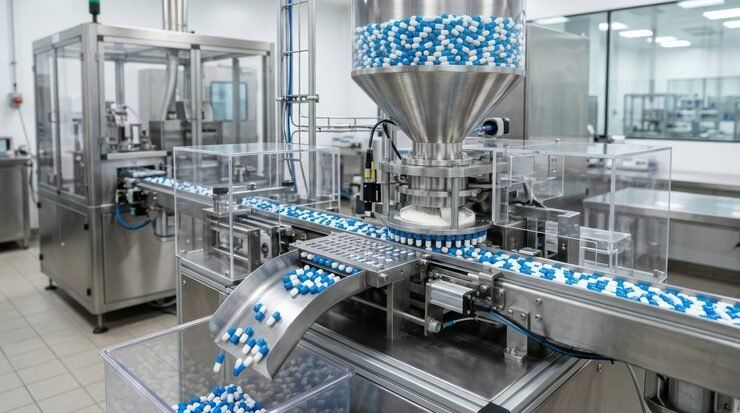
For solid oral dosage forms, common packaging formats include blister packs and bottles. A blister line may require forming, product feeding, sealing, coding, inspection, and cutting capabilities, while bottle packaging can involve counting, filling, capping, labeling, and inspection.
Liquid pharmaceuticals introduce additional considerations. Filling accuracy, viscosity, foaming behavior, container geometry, closure compatibility, and cleaning requirements can influence the machine configuration.
Packaging materials matter as well. Aluminum foil, PVC-based films, glass, plastic containers, cartons, labels, and specialty barrier materials can each place different demands on forming, sealing, feeding, or inspection equipment.
The first selection question should therefore be straightforward: What product is being packaged, in what format, and under what environmental and quality conditions?
Production Requirements Shape Machine Configuration
Once the product and packaging format are established, production requirements become the next major consideration.
A pharmaceutical packaging machinery manufacturer may configure equipment around a target batch size, packaging speed, number of packaging formats, and expected operating schedule. However, maximum machine speed should not automatically become the primary selection criterion.
A machine operating at high theoretical speed may provide little practical advantage if frequent format changes, manual interventions, material interruptions, or downstream bottlenecks reduce its actual output.
Instead, manufacturers should examine realistic operating performance. Important considerations include:
- Expected production volume and batch frequency
- Number of product and package formats
- Changeover frequency
- Available production-floor space
- Integration with upstream and downstream equipment
- Inspection and rejection requirements
- Cleaning and maintenance procedures
The objective is to establish a packaging process that performs consistently under real production conditions rather than simply achieving a high rated speed.
Consider Flexibility Before Committing to a Fixed Design
Pharmaceutical portfolios can change over time. New dosage strengths, container sizes, package configurations, or market-specific labeling requirements may create additional demands on packaging equipment.
Machine flexibility can therefore become an important selection factor, particularly for facilities handling multiple products.
A flexible system may incorporate adjustable tooling, recipe management, modular stations, quick-change components, or automated format adjustments. These features can reduce disruption when production moves between different configurations.
However, flexibility should be evaluated carefully. Adding every available feature can make equipment unnecessarily complex. The appropriate level of flexibility depends on the actual number of formats and the frequency with which they are changed.
A useful evaluation approach is to map current and anticipated packaging formats first, then determine which machine capabilities are genuinely required.
Evaluate Material Handling and Product Protection
Packaging machinery must move products reliably without compromising their physical or chemical characteristics.
Tablets can be vulnerable to chipping or breakage during feeding. Capsules can require controlled handling to maintain orientation and prevent damage. Liquids may require filling systems designed around viscosity and flow characteristics.
Packaging materials also need controlled handling. Film tension, sealing temperature, forming conditions, container positioning, and closure application can influence package integrity.
For products sensitive to moisture, oxygen, light, or contamination, packaging equipment must support the intended protective barrier. The machine itself does not create product stability, but its process conditions can affect whether the packaging system consistently achieves its intended function.
Inspection mechanisms are another important component. Depending on the line, automated inspection may identify missing products, incorrect labels, damaged packages, poor seals, incorrect codes, or other defects before products move further through the packaging process.
Validation and Compliance Should Be Considered Early
Pharmaceutical packaging equipment operates within a regulated manufacturing environment, so technical performance alone is not sufficient.
Equipment selection can affect qualification, validation, documentation, data integrity, cleaning procedures, and operational controls. These considerations should be addressed during specification rather than after installation.
A well-defined user requirement specification can establish expectations for machine functionality, controls, materials of construction, documentation, safety, data handling, and integration.
Computerized systems deserve particular attention. Modern packaging machines can include programmable logic controllers, human-machine interfaces, recipe databases, electronic records, audit trails, and production data interfaces.
Depending on the application and jurisdiction, computerized systems may need to support applicable data-integrity and electronic-record requirements.
Qualification activities can also include installation qualification, operational qualification, and performance qualification. The exact approach depends on the facility, equipment, quality system, and applicable regulatory framework.
Automation Should Solve Real Production Problems
Automation is increasingly integrated into pharmaceutical packaging lines, but the most useful automation is usually connected to a clearly defined operational requirement.
Automated product feeding, vision inspection, reject handling, serialization, robotic loading, and line control can reduce manual intervention and improve process consistency.
For example, automated vision systems can inspect package characteristics at high throughput, while serialization systems can associate individual packages with unique identification data where required.
Line-level automation can also coordinate multiple machines. Instead of treating a filler, labeler, cartoner, and inspection system as completely independent units, integrated controls can help coordinate their operation and manage production information.
However, automation also introduces additional software, sensors, controls, and maintenance requirements. Selection should therefore consider not only what the system can automate but also how easily technicians can diagnose faults and maintain the equipment.
Changeover, Cleaning, and Maintenance Matter to Daily Performance
Packaging equipment spends part of its working life producing packages and another part being cleaned, inspected, adjusted, or converted between formats.
For facilities running multiple products, changeover time can have a significant effect on practical throughput.
Machine design should make routine access straightforward. Tooling changes, product-contact components, guards, inspection areas, and cleaning points should be accessible according to the facility's established procedures.
Maintenance requirements should also be understood before equipment selection. Teams should identify routine inspection points, consumable components, lubrication requirements where applicable, critical spare parts, and expected service intervals.
A machine that is technically capable but difficult to maintain can create operational challenges that are not obvious during an initial demonstration.
Integration With the Complete Packaging Line
A packaging machine should rarely be evaluated as an isolated piece of equipment.
The upstream process determines what enters the packaging machine, while downstream systems determine how quickly packaged products can leave it. If one machine operates significantly faster than another, the overall line may still be constrained by the slowest or most interruption-prone stage.
Integration can involve mechanical interfaces, conveyors, electrical controls, communication protocols, product-transfer systems, and data exchange.
Line integration should therefore be considered during equipment specification. Clear interface requirements can reduce problems during installation and commissioning.
Floor layout is equally relevant. Operators need sufficient access for loading materials, monitoring equipment, performing changeovers, cleaning, and maintenance. Material movement and personnel movement should also be considered when positioning equipment.
How to Compare Pharmaceutical Packaging Machinery Manufacturers
When evaluating a pharmaceutical packaging machinery manufacturer, technical specifications are only one part of the assessment.
The evaluation should consider the manufacturer's ability to understand the intended application, document machine requirements, support qualification activities, and provide appropriate technical documentation.
Relevant areas to examine include:
- Experience with the required dosage and packaging format
- Machine configuration and customization capabilities
- Documentation and qualification support
- Controls and automation architecture
- Inspection and serialization compatibility
- Changeover and cleaning considerations
- Maintenance and spare-parts planning
- Training and technical support
- Integration with existing production systems
A structured comparison can help separate genuinely relevant capabilities from specifications that look impressive but have limited practical significance for the intended application.
Common Selection Mistakes to Avoid
One frequent mistake is choosing equipment primarily on maximum speed. Theoretical output does not necessarily represent sustained production performance.
Another mistake is specifying equipment without considering future format requirements. Excessive flexibility can be unnecessary, but insufficient flexibility may create constraints as the product portfolio changes.
Ignoring downstream integration can create another problem. A high-output packaging machine cannot compensate for an undersized cartoner, inspection system, conveyor arrangement, or material-handling process.
Finally, qualification and documentation should not be treated as administrative tasks that begin after installation. They influence equipment design, control architecture, records, and acceptance criteria from the beginning.
Conclusion
Selecting pharmaceutical packaging machinery requires a systems-level view of the production process. Product characteristics, package formats, throughput, flexibility, material handling, inspection, automation, validation, maintenance, and line integration all influence whether a machine is appropriate.
A capable pharmaceutical packaging machinery manufacturer should be evaluated not simply on individual machine specifications, but on how effectively the proposed equipment fits the complete manufacturing environment. Careful requirements definition at the beginning can make equipment qualification, commissioning, operation, and future adaptation considerably more manageable.