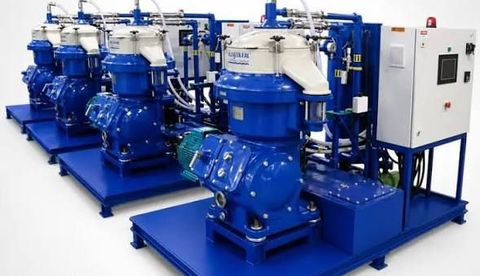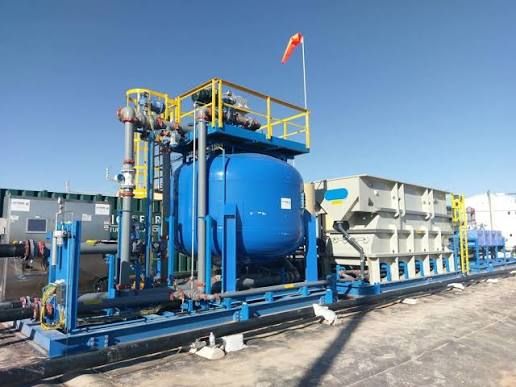
Industrial filtration systems are engineered to separate unwanted particles, solids, contaminants.
They are widely used in manufacturing, chemical processing, food production, pharmaceuticals, water treatment, oil and gas, and many other industrial environments.
The appropriate filtration system depends on the material being filtered, particle characteristics, flow rate, pressure, temperature, required filtration level, and operating conditions. Understanding these factors helps engineers select an appropriate filtration configuration for a particular process.
What Are Industrial Filtration Systems?
Industrial filtration systems use a physical or mechanical separation process to remove suspended particles and contaminants from a fluid or gas stream.
Depending on the application, filtration can address:
- Suspended solids
- Dust particles
- Process contaminants
- Sediment
- Oil droplets
- Chemical precipitates
- Microorganisms
- Fine particulates
- Product residues
A filtration system may operate as a standalone unit or as part of a larger processing line.
How Do Industrial Filtration Systems Work?
The basic filtration process involves passing a fluid or gas through a filter medium that retains unwanted particles while allowing the desired phase to pass through.
1. Feed Entry
The contaminated liquid or gas enters the filtration system through an inlet.
2. Filtration
The process stream passes through a filter medium. Particles are retained through mechanisms such as surface filtration, depth filtration, adsorption, or membrane separation.
3. Filtrate Collection
The filtered fluid or gas exits through the outlet and moves to the next processing stage.
4. Contaminant Removal
Depending on the system design, retained material may be removed manually, mechanically, hydraulically, or through an automated cleaning cycle.
Types of Industrial Filtration Systems
Different filtration technologies address different materials and process requirements.
Cartridge Filtration Systems
Cartridge filters use replaceable cylindrical filter elements.
They are commonly used for liquid filtration and can be configured for different particle-retention levels.
Typical applications include:
- Process water
- Chemicals
- Food ingredients
- Pharmaceutical fluids
- Industrial liquids
Bag Filtration Systems
Bag filters use flexible filter bags that capture particles as fluid passes through the housing.
They are frequently used for applications involving relatively high particulate loading.
Advantages can include straightforward filter replacement and flexible housing configurations.
Cartridge vs Bag Filtration
| Feature | Cartridge Filter | Bag Filter |
|---|---|---|
| Filter Format | Cylindrical cartridge | Flexible bag |
| Typical Use | Fine filtration | General particulate removal |
| Replacement | Element replacement | Bag replacement |
| Configuration | Single or multiple cartridges | Single or multiple bags |
| Particle Loading | Depends on media | Often suitable for higher loading |
| Applications | Water, chemicals, process fluids | Industrial liquids and process streams |
The appropriate option depends on particle concentration, required filtration level, flow rate, and process conditions.
Sand and Multimedia Filtration Systems
These systems use layers of granular media to remove suspended solids from water.
Common media can include:
- Sand
- Anthracite
- Gravel
- Specialized filter media
They are commonly incorporated into industrial water-treatment processes.
Baghouse Filtration Systems
Baghouse systems are designed primarily for industrial dust and particulate collection.
Dust-laden air enters the housing, passes through filter bags, and exits after particulate removal.
Cleaning systems may use:
- Pulse-jet cleaning
- Shaking
- Reverse-air cleaning
HEPA Filtration Systems
High-efficiency particulate air filters are designed for applications requiring high particulate removal efficiency.
They can be used in controlled industrial environments, pharmaceutical facilities, laboratories, clean areas, and specialized air-handling applications.
Membrane Filtration Systems
Membrane systems use semi-permeable membranes to separate substances according to size and other physical or chemical characteristics.
Common membrane processes include:
- Microfiltration
- Ultrafiltration
- Nanofiltration
- Reverse osmosis
Each technology has a different separation range and application profile.
Filter Press Systems
Filter presses use pressure to separate solids from liquids.
A typical system consists of multiple filter plates and filter cloths. Slurry is introduced into the press, liquid passes through the filtration medium, and solids accumulate to form a filter cake.
Applications include:
- Chemical processing
- Mineral processing
- Wastewater treatment
- Food processing
- Pharmaceutical processing
Automatic Self-Cleaning Filters
Self-cleaning filters remove accumulated particles from the filter element through an automated cleaning cycle.
Cleaning mechanisms may include:
- Backwashing
- Mechanical scraping
- Suction scanning
- Air-assisted cleaning
These systems can reduce manual intervention in continuous processes.
Key Components of Industrial Filtration Systems
| Component | Function |
|---|---|
| Filter Housing | Holds the filtration element |
| Filter Media | Captures or separates contaminants |
| Inlet | Introduces process fluid or gas |
| Outlet | Discharges filtered material |
| Pressure Gauge | Monitors pressure conditions |
| Differential Pressure Sensor | Detects pressure drop |
| Valves | Controls process flow |
| Pump | Maintains required liquid flow |
| Cleaning System | Removes accumulated contaminants |
| Control Panel | Manages automated functions |
The exact configuration varies according to the filtration technology.
Industrial Filter Media
Filter media determine how contaminants are captured.
Common materials include:
- Polypropylene
- Polyester
- Cellulose
- Nylon
- Stainless steel
- Ceramic
- Activated carbon
- Membrane materials
- Fiberglass
Material selection should consider chemical compatibility, temperature, pressure, particle characteristics, and required filtration performance.
Surface Filtration vs Depth Filtration
Surface Filtration
Surface filters primarily retain particles on or near the filter surface.
They can provide controlled particle retention and are commonly used where defined filtration levels are required.
Depth Filtration
Depth filters capture particles throughout the thickness of the filter medium.
They can accommodate different particle sizes and may be suitable for applications with varying particulate loads.
Applications of Industrial Filtration Systems
Industrial filtration systems are used across a wide range of industries.
Manufacturing
Filtration can help remove contaminants from:
- Process water
- Coolants
- Hydraulic fluids
- Lubricants
- Chemical solutions
- Compressed air
Chemical Processing
Chemical plants may use filtration for:
- Catalyst recovery
- Precipitate removal
- Chemical clarification
- Solvent filtration
- Process-liquid purification
Chemical compatibility is particularly important when selecting filtration materials.
Pharmaceutical Manufacturing
Pharmaceutical processes can require controlled filtration of liquids, gases, and process materials.
Applications can include:
- Process-water filtration
- Sterile filtration
- Air filtration
- Ingredient filtration
- Product clarification
Filtration equipment should be designed around applicable hygiene and process-control requirements.
Food and Beverage Processing
Filtration can be used for:
- Beverage clarification
- Process-water treatment
- Syrup filtration
- Edible-oil processing
- Ingredient processing
Sanitary design and appropriate filter materials are important for food-processing applications.
Water Treatment
Industrial water filtration systems can remove suspended solids and other contaminants from process water and wastewater streams.
Depending on water chemistry and treatment objectives, systems may incorporate multimedia filters, cartridge filters, membranes, activated carbon, or other technologies.
Oil and Gas Processing
Filtration can support the treatment of:
- Hydraulic fluids
- Lubricants
- Process liquids
- Produced water
- Gas streams
Filter selection depends heavily on pressure, temperature, fluid properties, and contaminant characteristics.
Important Filtration Specifications
Several technical specifications should be evaluated when selecting industrial filtration systems.
Flow Rate
Flow rate indicates how much fluid or gas can pass through the filtration system over a defined period.
The system should accommodate the required process flow without creating excessive pressure loss.
Filtration Rating
Filter ratings indicate the approximate particle size or separation requirement addressed by the filtration medium.
Depending on the technology, ratings may be expressed in microns or through other performance metrics.
Pressure Rating
The housing, filter elements, valves, and connections must be compatible with the operating and design pressures.
Temperature Rating
Filter media and housing materials must withstand the process temperature.
Contaminant Loading
The expected amount and type of contaminants influence filter capacity and cleaning or replacement intervals.
Differential Pressure and Filter Performance
Differential pressure is the pressure difference between the upstream and downstream sides of a filter.
As contaminants accumulate, pressure drop can increase.
Monitoring differential pressure can help identify:
- Filter loading
- Flow restrictions
- Cleaning requirements
- Element replacement requirements
- Abnormal operating conditions
Pressure monitoring can therefore be an important part of filtration system management.
Automation in Industrial Filtration Systems
Modern filtration systems can incorporate automated controls for continuous operation.
Automation can manage:
- Valve operation
- Backwashing
- Cleaning cycles
- Differential pressure monitoring
- Flow control
- Pump operation
- Alarm conditions
- Filter-change notifications
PLC-Based Control
Programmable logic controllers can coordinate filtration equipment and integrate it with wider plant control systems.
Sensor Integration
Sensors can monitor:
- Pressure
- Differential pressure
- Flow
- Temperature
- Liquid level
- Turbidity
This data can help operators identify changes in filtration performance.
Common Industrial Filtration Problems
Rapid Filter Clogging
High contaminant loading, unsuitable filter selection, or inadequate pre-filtration can cause rapid blockage.
Excessive Pressure Drop
A large pressure differential can restrict flow and indicate filter loading or an operating problem.
Filter Media Damage
Excessive pressure, incompatible chemicals, high temperatures, or mechanical stress can damage filter elements.
Poor Filtration Performance
Inadequate particle retention may result from inappropriate media selection, incorrect flow conditions, damaged seals, or unsuitable filter ratings.
Uneven Flow Distribution
Poorly designed housings or flow paths can cause some filter elements to carry more load than others.
Maintenance of Industrial Filtration Systems
Routine maintenance helps preserve filtration performance and equipment reliability.
Typical activities include:
- Inspecting filter housings
- Checking pressure gauges
- Monitoring differential pressure
- Replacing filter elements
- Cleaning reusable media
- Inspecting valves
- Checking pumps
- Inspecting seals and gaskets
- Testing automated cleaning systems
- Checking control sensors
Maintenance frequency should be based on operating conditions, contaminant loading, manufacturer documentation, and process requirements.
How to Select Industrial Filtration Systems
Selecting a filtration system requires an understanding of the process stream and separation objective.
Consider:
- Fluid or gas type
- Contaminant type
- Particle size
- Particle concentration
- Required filtration level
- Flow rate
- Operating pressure
- Temperature
- Chemical compatibility
- Filter-media material
- Cleaning requirements
- Filter replacement frequency
- Automation requirements
- Available installation space
- Regulatory requirements
Pilot testing can be useful for applications where filtration performance is difficult to predict from process data alone.
How to Evaluate Industrial Filtration Equipment Manufacturers
When evaluating industrial filtration equipment manufacturers, examine their technical capabilities and system configurations.
Important factors include:
- Filtration technology
- Filter-media options
- Housing materials
- Flow capacity
- Pressure ratings
- Automation capabilities
- Cleaning systems
- Instrumentation
- System integration
- Testing procedures
- Technical documentation
- Maintenance requirements
The manufacturer should be able to match the filtration system with the process fluid or gas, contaminant characteristics, required flow rate, and operating conditions.
Filtration System Selection by Application
| Application | Common Filtration Technology |
|---|---|
| Process Water | Multimedia, cartridge, membrane |
| Industrial Dust | Baghouse, cartridge dust collector |
| Chemical Liquids | Cartridge, bag, filter press |
| Pharmaceutical Fluids | Membrane, cartridge |
| Food Processing | Cartridge, bag, membrane |
| Wastewater | Multimedia, filter press, membrane |
| Hydraulic Fluids | Cartridge, depth filtration |
| High-Solids Slurry | Filter press, specialized filters |
The actual technology should be selected according to the specific process conditions rather than application category alone.
Frequently Asked Questions
What are industrial filtration systems used for?
Industrial filtration systems separate unwanted particles and contaminants from liquids, gases, process fluids, air, and other industrial streams.
What are the main types of industrial filtration systems?
Common types include cartridge filters, bag filters, multimedia filters, baghouse systems, membrane filtration, filter presses, and automatic self-cleaning filters.
How does differential pressure affect filtration?
Differential pressure represents the pressure difference across a filter. Increasing pressure drop can indicate contaminant accumulation, flow restriction, or the need for cleaning or element replacement.
How do I select industrial filtration equipment?
Consider the process material, contaminant type, particle size, flow rate, filtration level, pressure, temperature, chemical compatibility, filter media, cleaning method, and automation requirements.
Why is filter-media selection important?
Filter media determine how contaminants are captured and must be compatible with the process conditions. Media selection can influence filtration efficiency, pressure drop, durability, and maintenance requirements.
Conclusion
Industrial filtration systems provide controlled methods for removing particles and contaminants from liquid, gas, air, and process streams. Technologies such as cartridge filtration, bag filtration, multimedia filtration, membrane separation, filter presses, and baghouse systems address different industrial requirements.
Effective filtration depends on matching the filter technology and media with the contaminant characteristics, flow rate, pressure, temperature, and required separation level. Differential-pressure monitoring and appropriate maintenance can also help maintain consistent filtration performance.
For complex applications, process testing and careful equipment evaluation can help determine the appropriate configuration. A well-designed filtration system can then be integrated with pumps, valves, sensors, cleaning systems, and automated controls as required by the industrial process.