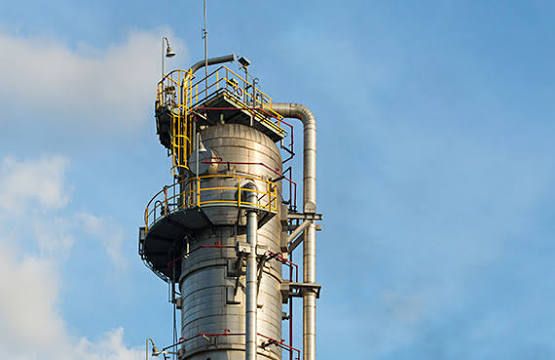
Industrial fractionation systems are separation systems designed to divide mixtures into different fractions based on differences.
They are widely used in chemical processing, petrochemical production, pharmaceutical manufacturing, food processing, biotechnology, and other process industries.
Fractionation systems can operate continuously or in batches and may use columns, trays, packing materials, reboilers, condensers, pumps, and automated controls. The appropriate configuration depends on feed composition, separation requirements, throughput, operating pressure, temperature, and desired product purity.
What Are Industrial Fractionation Systems?
An industrial fractionation system separates a mixture into multiple fractions with different compositions.
Fractionation commonly relies on differences in volatility. During fractional distillation, components repeatedly vaporize and condense inside a separation column, allowing more volatile components to move toward the top while less volatile components concentrate toward the bottom.
Industrial fractionation systems may be used for:
- Chemical separation
- Solvent recovery
- Hydrocarbon processing
- Purification
- Product concentration
- Feedstock separation
- Recycling process streams
- Recovery of valuable components
How Do Industrial Fractionation Systems Work?
A typical fractionation system includes several interconnected process stages.
1. Feed Introduction
The feed mixture enters the fractionation column at a controlled location.
2. Heating
A reboiler supplies thermal energy to generate vapor from the liquid mixture.
3. Vapor Movement
Vapor rises through the column and contacts descending liquid.
4. Mass Transfer
Repeated vapor-liquid contact allows components to redistribute according to their relative volatility.
5. Condensation
Vapor reaching the upper section is condensed through a condenser.
6. Reflux
A portion of the condensed liquid can be returned to the column as reflux.
7. Product Withdrawal
Different fractions are removed from appropriate locations according to the separation process.
Types of Industrial Fractionation Systems
Different configurations are used according to the process and separation requirements.
Fractionation Columns
Fractionation columns provide the main contact area for vapor and liquid phases.
They may contain trays or structured/random packing to promote mass transfer.
Tray Columns
Tray columns use horizontal plates or trays arranged at different levels.
Liquid flows across the trays while vapor rises through openings, creating repeated contact between the phases.
Common tray designs include:
- Sieve trays
- Valve trays
- Bubble-cap trays
Packed Columns
Packed columns contain packing materials that create a large surface area for vapor-liquid contact.
Packing can be:
- Structured packing
- Random packing
- Specialized high-performance packing
Packed columns are often considered when pressure drop and mass-transfer efficiency are important.
Batch Fractionation Systems
Batch fractionation processes a defined quantity of feed.
The operating conditions can be adjusted during the batch according to changing composition.
Continuous Fractionation Systems
Continuous systems receive feed and continuously remove one or more product fractions.
They are commonly used for stable, high-throughput industrial processes.
Vacuum Fractionation Systems
Vacuum fractionation operates at reduced pressure.
Lower pressure reduces boiling temperatures, which can be useful for heat-sensitive materials or high-boiling mixtures.
Atmospheric Fractionation Systems
Atmospheric systems operate near normal atmospheric pressure.
They are appropriate for mixtures that can be separated under those operating conditions.
Key Components of Industrial Fractionation Systems
| Component | Main Function |
|---|---|
| Fractionation Column | Provides vapor-liquid contact |
| Reboiler | Generates process vapor |
| Condenser | Condenses overhead vapor |
| Reflux System | Returns condensed liquid to the column |
| Feed System | Introduces the process mixture |
| Product Draw-Off | Removes separated fractions |
| Pumps | Transfer process liquids |
| Valves | Control process flow |
| Sensors | Monitor operating conditions |
| Control System | Manages process parameters |
Additional equipment may include accumulators, heat exchangers, receivers, vacuum systems, separators, and storage vessels.
Trays and Packing
The internal configuration of a fractionation column strongly influences separation performance.
Tray Systems
Trays create discrete vapor-liquid contact stages.
They can provide robust operation across a range of industrial applications.
Packed Systems
Packing creates continuous contact between liquid and vapor over a large surface area.
Packed columns can provide efficient mass transfer with relatively low pressure drop in appropriate applications.
Tray vs Packed Columns
| Factor | Tray Column | Packed Column |
|---|---|---|
| Contact Type | Stage-based | Continuous |
| Pressure Drop | Generally higher | Often lower |
| Maintenance | Accessible internals | Packing inspection required |
| Liquid Handling | Broad range | Depends on packing |
| Application | Many large-scale processes | Suitable for selected applications |
The appropriate design depends on flow rates, pressure, material properties, separation requirements, and column dimensions.
Reflux in Fractionation
Reflux is the portion of condensed overhead liquid returned to the column.
It improves vapor-liquid contact and can increase separation performance.
The reflux ratio influences:
- Product purity
- Energy consumption
- Column size
- Processing capacity
- Separation efficiency
Higher reflux generally increases separation capability but also increases internal liquid and vapor traffic and thermal requirements.
Industrial Fractionation Applications
Industrial fractionation systems are used in numerous sectors.
Petrochemical Processing
Fractionation is fundamental to the separation of hydrocarbon mixtures into different boiling-range fractions.
Applications can include the processing of:
- Hydrocarbon streams
- Petroleum fractions
- Solvents
- Feedstock components
Chemical Manufacturing
Fractionation systems can separate and purify:
- Solvents
- Chemical intermediates
- Organic compounds
- Reaction products
- Process streams
Pharmaceutical Manufacturing
Fractionation and distillation systems can be used for suitable solvent recovery and purification processes.
Equipment configuration must account for product sensitivity, cleanliness, and process requirements.
Food and Beverage Processing
Selected fractionation processes can separate or concentrate components in food and beverage production.
Examples can include suitable alcohol, flavor, aroma, and solvent-related processes.
Biofuel Processing
Fractionation can be used in selected biofuel and renewable-feedstock processing operations to separate components according to volatility and composition.
Important Industrial Fractionation Specifications
Feed Capacity
Capacity may be expressed as:
- Kilograms per hour
- Tons per hour
- Liters per hour
- Cubic meters per hour
The required capacity should account for feed composition and operating conditions.
Column Diameter
Column diameter is influenced by vapor and liquid flow rates.
An appropriately sized diameter helps avoid flooding, excessive entrainment, and poor contact.
Column Height
Column height depends on the number of theoretical stages, packing characteristics, separation difficulty, and required product purity.
Operating Pressure
Pressure influences boiling temperatures, relative volatility, energy requirements, and equipment design.
Reflux Ratio
Reflux affects separation performance and energy consumption.
Condenser and Reboiler Duty
The condenser and reboiler must be sized to handle the required thermal loads.
Factors Affecting Fractionation Performance
Several process parameters influence separation quality.
Important factors include:
- Feed composition
- Relative volatility
- Operating pressure
- Reflux ratio
- Feed temperature
- Feed location
- Column height
- Column diameter
- Tray or packing design
- Vapor and liquid flow rates
- Product withdrawal rates
- Heat-transfer performance
The separation becomes more challenging when components have similar volatilities.
Flooding, Weeping, and Entrainment
Proper column operation requires maintaining suitable vapor and liquid flow rates.
Flooding
Flooding occurs when excessive vapor or liquid flow prevents proper movement through the column.
It can cause increased pressure drop and reduced separation performance.
Weeping
Weeping occurs when vapor flow through a tray becomes insufficient to support proper liquid movement.
Entrainment
Entrainment occurs when liquid droplets are carried upward with the vapor.
Column design and operating conditions should be optimized to avoid these conditions.
Energy Efficiency in Fractionation
Fractionation can require significant thermal energy because of repeated vaporization and condensation.
Potential energy-management approaches include:
- Heat integration
- Feed preheating
- Efficient reboilers
- Condenser heat recovery
- Optimized reflux
- Multiple-column heat integration
- Improved insulation
- Vapor recompression in suitable systems
Heat integration can transfer energy from hot process streams to colder streams, reducing overall utility requirements.
Automation in Industrial Fractionation Systems
Modern fractionation systems can incorporate automated process controls.
Automation may regulate:
- Column pressure
- Temperature
- Reflux flow
- Feed flow
- Reboiler duty
- Condenser duty
- Liquid level
- Product withdrawal
- Vacuum pressure
PLC and Distributed Control Systems
PLC or distributed control systems can coordinate valves, pumps, heaters, condensers, sensors, and alarms.
Process Monitoring
Sensors can continuously monitor:
- Temperature
- Pressure
- Flow
- Level
- Composition
- Differential pressure
Advanced process-control strategies can adjust operating parameters in response to changing feed conditions.
Industrial Fractionation Safety
Fractionation systems can involve high temperatures, pressure, flammable materials, corrosive chemicals, and volatile compounds.
Safety systems may include:
- Pressure-relief devices
- Emergency shutdown systems
- Temperature alarms
- Pressure alarms
- Level protection
- Fire and gas detection
- Appropriate ventilation
- Process interlocks
- Containment systems
The safety design should be based on the specific process hazards, materials, operating conditions, and applicable regulations.
Common Industrial Fractionation Problems
Poor Product Purity
Insufficient theoretical stages, unsuitable reflux, changing feed composition, or improper operating conditions can affect product purity.
Column Flooding
Excessive vapor or liquid flow can cause flooding and increased pressure drop.
Pressure Fluctuations
Changes in condenser performance, feed conditions, vapor generation, or control-valve operation can affect column pressure.
Fouling
Deposits can accumulate on trays, packing, heat-transfer surfaces, and piping.
Excessive Energy Consumption
Poor heat integration, inefficient reboiler operation, excessive reflux, or heat losses can increase energy requirements.
Maintenance of Industrial Fractionation Systems
Routine maintenance helps maintain process performance and equipment integrity.
Typical activities include:
- Inspecting trays
- Checking packing condition
- Cleaning heat-transfer surfaces
- Inspecting reboilers
- Checking condensers
- Inspecting pumps
- Testing valves
- Checking pressure sensors
- Verifying temperature instruments
- Inspecting seals and gaskets
- Checking insulation
- Testing safety systems
Inspection intervals should be based on operating conditions, process materials, equipment documentation, and applicable inspection requirements.
How to Select Industrial Fractionation Systems
Selection should begin with the feed composition and required separation.
Consider:
- Feed composition
- Boiling points
- Relative volatility
- Required product purity
- Feed flow rate
- Operating pressure
- Reflux ratio
- Column diameter
- Column height
- Tray or packing type
- Reboiler duty
- Condenser duty
- Heat sensitivity
- Corrosion potential
- Energy requirements
- Automation
- Cleaning requirements
- Available installation space
Process simulation can be useful for estimating theoretical stages, reflux requirements, heat duties, and column dimensions before equipment design.
How to Evaluate Industrial Fractionation System Manufacturers
When evaluating manufacturers, consider their process-engineering expertise and equipment capabilities.
Important factors include:
- Column technology
- Tray and packing options
- Capacity range
- Pressure and temperature ratings
- Materials of construction
- Reboiler design
- Condenser design
- Heat integration
- Vacuum capability
- Automation
- Instrumentation
- Safety systems
- Testing and inspection
- Technical documentation
- Maintenance requirements
A manufacturer should be able to match the fractionation system to the feed characteristics, separation objectives, throughput, and operating conditions.
Frequently Asked Questions
What are industrial fractionation systems used for?
Industrial fractionation systems separate mixtures into fractions based on differences in volatility and other physical properties. They are widely used in chemical, petrochemical, pharmaceutical, food, and renewable-fuel processing.
What are the main types of fractionation systems?
Common configurations include tray columns, packed columns, batch fractionation systems, continuous fractionation systems, atmospheric systems, and vacuum fractionation systems.
What is the purpose of reflux in fractionation?
Reflux returns part of the condensed overhead liquid to the column. It improves vapor-liquid contact and can increase separation performance.
What is the difference between tray and packed fractionation columns?
Tray columns use discrete contact stages, while packed columns provide continuous vapor-liquid contact through packing material. The appropriate configuration depends on flow rates, pressure drop, material properties, and separation requirements.
How do I select an industrial fractionation system?
Consider feed composition, relative volatility, desired product purity, throughput, pressure, reflux ratio, column dimensions, tray or packing design, thermal duties, material compatibility, automation, and energy-management requirements.
Conclusion
Industrial fractionation systems provide controlled methods for separating complex liquid mixtures into useful fractions. Tray columns, packed columns, batch systems, continuous systems, atmospheric systems, and vacuum systems can address different separation requirements.
Fractionation performance depends on relative volatility, feed composition, pressure, reflux, column dimensions, vapor-liquid contact, heat-transfer performance, and operating stability. Proper design helps manage issues such as flooding, weeping, entrainment, fouling, and inconsistent product purity.
Modern fractionation systems can incorporate automated pressure and temperature control, process monitoring, advanced instrumentation, heat integration, and energy-management technologies. Careful process analysis and equipment selection are important for achieving the required separation performance and maintaining reliable industrial operation.