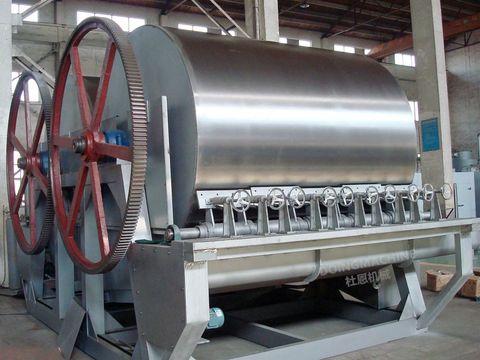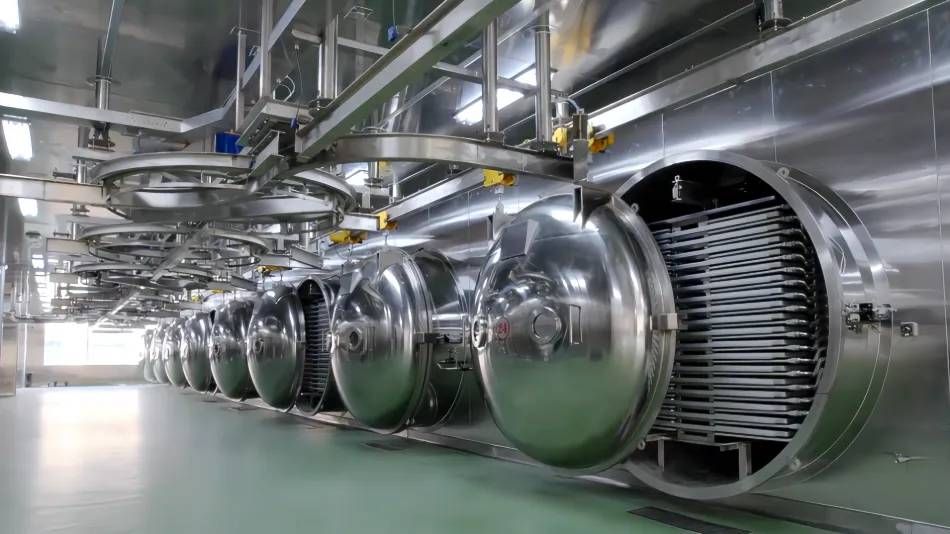
Industrial freeze dryers are systems designed to remove moisture from products while helping preserve their physical structure, composition, and storage characteristics.
The process is commonly known as lyophilization or freeze drying. It involves freezing a product, reducing the surrounding pressure, and removing ice through sublimation rather than conventional evaporation.
The underlying concept has been used for decades in food processing, biotechnology, laboratory applications, and other manufacturing environments. Industrial freeze dryers extend this principle to larger production volumes, where controlled temperature, pressure, chamber conditions, and drying time are important.
How Industrial Freeze Drying Works
The process generally takes place in three main stages: freezing, primary drying, and secondary drying. During freezing, water inside the product becomes ice. In primary drying, reduced pressure allows the ice to change directly from a solid into vapor. Secondary drying removes additional moisture that remains after most of the ice has been removed.
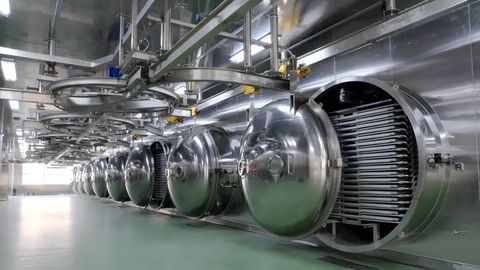
A typical industrial freeze dryer contains a drying chamber, refrigeration equipment, vacuum pumps, condenser systems, shelves or trays, and control systems. These components work together to maintain carefully controlled conditions throughout the drying cycle.
| Process Stage | Main Purpose | Typical Control Factor |
|---|---|---|
| Freezing | Convert water into ice | Temperature |
| Primary drying | Remove frozen water | Pressure and shelf temperature |
| Secondary drying | Reduce remaining moisture | Temperature and time |
| Storage | Maintain product stability | Packaging and environment |
Importance
Industrial freeze dryers matter because moisture can influence the stability, texture, weight, and storage characteristics of many products. Removing moisture under controlled conditions can help reduce reactions associated with water while retaining characteristics that may be affected by conventional heat-based drying.
Applications Across Industries
Freeze drying is used in several areas, including food and beverage production, biotechnology, laboratory materials, specialty ingredients, and certain pharmaceutical manufacturing processes. The specific equipment configuration depends on the material, production volume, required moisture level, and sensitivity of the product.
For food applications, freeze drying can be used for products such as fruits, vegetables, coffee-related ingredients, and prepared foods. In other industrial environments, the process may be applied to temperature-sensitive materials where conventional drying conditions could cause unwanted physical or chemical changes.
Factors That Influence Performance
Several variables affect the drying cycle. Product thickness, initial moisture content, freezing rate, shelf temperature, chamber pressure, condenser capacity, and cycle duration can all influence the final result.
Operators also need to consider energy consumption and equipment capacity. Larger systems may require greater refrigeration and vacuum capacity, while different products can require significantly different drying cycles.
Common considerations include:
- Product characteristics and moisture content
- Freezing temperature and rate
- Vacuum pressure stability
- Condenser temperature and capacity
- Shelf temperature control
- Chamber loading patterns
- Packaging and moisture protection after drying
Tools and Resources
Understanding freeze-drying performance can involve several technical resources. Equipment manuals and process documentation can help explain chamber operation, refrigeration systems, vacuum controls, and maintenance requirements.
Moisture analyzers can be used to evaluate residual moisture, while temperature sensors and pressure monitoring systems can provide information during individual drying stages. Data-logging platforms can also record cycle conditions for later analysis.
Useful Reference Tools
Process engineers and production teams may work with:
- Moisture-content calculation tools
- Temperature and pressure data loggers
- Vacuum measurement instruments
- Heat-transfer calculation worksheets
- Product loading templates
- Equipment capacity calculators
- Process monitoring dashboards
These resources can help organize operating information and compare drying cycles. The appropriate measurement approach depends on the product and the equipment configuration.
FAQs
What are industrial freeze dryers used for?
Industrial freeze dryers are used to remove moisture from products under controlled low-temperature and reduced-pressure conditions. Applications include food processing, biotechnology, laboratory materials, specialty ingredients, and other temperature-sensitive products.
How do industrial freeze dryers improve product stability?
Industrial freeze dryers reduce moisture while limiting exposure to prolonged high temperatures. Lower residual moisture can help control physical and chemical changes during storage, although the final stability also depends on packaging and storage conditions.
What is primary drying in industrial freeze dryers?
Primary drying is the stage where frozen water is removed through sublimation. Vacuum conditions lower the pressure around the product, allowing ice to transition directly into vapor.
How long does industrial freeze drying take?
Drying time varies according to product thickness, moisture content, freezing conditions, equipment capacity, shelf temperature, pressure, and the required final moisture level. There is no single cycle duration that applies to every product.
What equipment is needed for freeze drying?
An industrial system generally includes a drying chamber, refrigeration system, vacuum pumps, condenser, temperature controls, pressure sensors, and a control system. Additional monitoring equipment may be used depending on the application.
Conclusion
Industrial freeze dryers use controlled freezing, vacuum conditions, and sublimation to remove moisture from products. Their operation depends on coordinated control of temperature, pressure, condenser performance, and drying time. Product characteristics and packaging also influence the final stability of dried materials. Understanding these factors provides useful context for evaluating how industrial freeze drying fits different manufacturing processes.