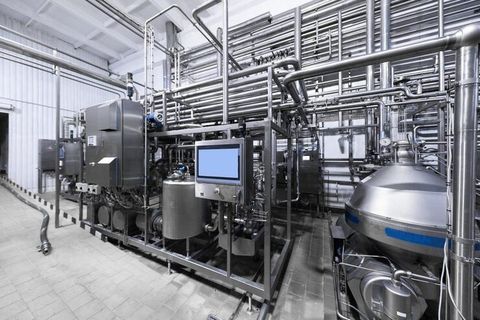
Industrial processing equipment includes the machinery, systems, and technologies used to transform raw materials into intermediate or finished products. These systems can perform operations such as mixing, grinding, heating, cooling, drying, separation, filtration, conveying, forming, and packaging.
Industrial processing equipment is used across food and beverage, chemicals, pharmaceuticals, plastics, minerals, agriculture, energy, water treatment, and many other manufacturing sectors.
What Is Industrial Processing Equipment?
Industrial processing equipment refers to machinery designed to perform controlled physical or chemical operations on materials during industrial production.
Depending on the application, a processing system may include:
Mixing equipment
Grinding and milling machines
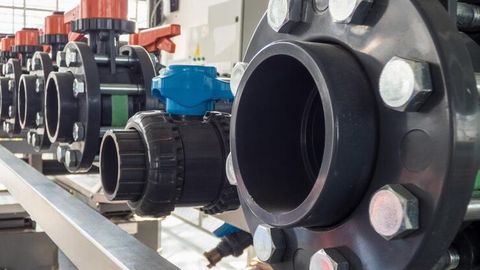
Pumps and compressors
Heat exchangers
Industrial dryers
Filtration systems
Separation equipment
Reactors
Conveyors
Storage tanks
Packaging machinery
Process-control systems
Equipment can operate independently or as part of an integrated processing line.
Major Processing Technologies
Mixing and Blending
Industrial mixers combine powders, liquids, pastes, or other materials to produce a consistent formulation. Ribbon blenders, paddle mixers, high-shear mixers, agitators, and continuous mixers are selected according to material properties.
Grinding and Size Reduction
Grinding and milling equipment reduces particle size to meet specific process requirements. Hammer mills, ball mills, roller mills, crushers, and pulverizers are used across different industries.
Heating and Cooling
Industrial heaters, furnaces, heat exchangers, boilers, chillers, and cooling systems regulate process temperatures.
Temperature control can be important for chemical reactions, food processing, drying, crystallization, and material conditioning.
Filtration and Separation
Filtration equipment removes suspended particles from liquids or gases. Separation systems can also use centrifugal, membrane, magnetic, gravitational, or other technologies.
Drying
Industrial dryers remove moisture from solids, slurries, pastes, or other materials. Common configurations include rotary dryers, fluidized-bed dryers, spray dryers, vacuum dryers, and tray dryers.
Types of Industrial Processing Equipment
| Equipment Type | Primary Function | Example Application |
|---|---|---|
| Industrial mixer | Blending materials | Food and chemical processing |
| Mill or grinder | Particle-size reduction | Minerals and food ingredients |
| Heat exchanger | Heat transfer | Chemical and process plants |
| Industrial dryer | Moisture removal | Food, chemicals, minerals |
| Filter system | Solid-liquid or gas filtration | Water and process industries |
| Centrifuge | Separation | Pharmaceutical and chemical processing |
| Reactor | Controlled chemical reaction | Chemical manufacturing |
| Pump | Fluid transfer | Process and utility systems |
| Conveyor | Material movement | Manufacturing and processing |
| Storage tank | Material storage | Liquid and bulk processing |
The appropriate equipment depends on material characteristics, process conditions, capacity, and required product specifications.
Industrial Processing Equipment Manufacturing
Manufacturing process equipment involves engineering, material selection, fabrication, machining, welding, assembly, surface finishing, inspection, and testing.
Engineering and Design
Engineers determine equipment dimensions, pressure ratings, thermal requirements, material compatibility, flow characteristics, power requirements, and safety considerations.
Material Selection
Carbon steel, stainless steel, aluminum, specialized alloys, and engineered polymers can be selected according to temperature, pressure, corrosion, abrasion, hygiene, and product-contact requirements.
Fabrication
Large process vessels, tanks, frames, ducts, housings, and structural components can be manufactured through cutting, forming, welding, machining, and assembly.
Precision Manufacturing
CNC machining, laser cutting, precision grinding, and automated fabrication can be used for components requiring controlled dimensions.
Inspection and Testing
Manufacturers may conduct dimensional checks, pressure testing, leak testing, weld inspection, electrical testing, and functional testing according to equipment requirements.
Automation and Process Control
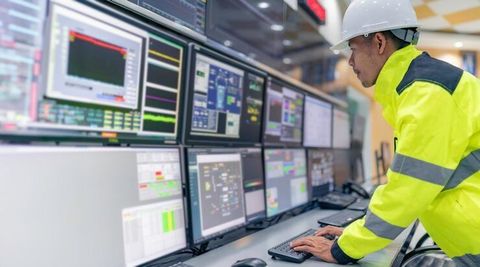
Modern industrial processing equipment increasingly incorporates automation.
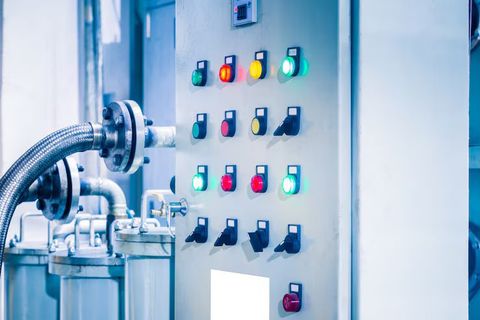
PLCs can coordinate motors, pumps, valves, heaters, conveyors, and other equipment. Sensors can monitor pressure, temperature, flow, level, speed, vibration, and other process variables.
SCADA and other supervisory systems can provide centralized monitoring and data visualization.
Automation can also support:
Recipe management
Batch control
Alarm monitoring
Process data recording
Equipment diagnostics
Production tracking
Automated material handling
Global Manufacturers and Suppliers
The industrial processing equipment sector includes equipment manufacturers, process-technology companies, engineering firms, automation providers, and specialized suppliers.
Companies such as GEA, Alfa Laval, ANDRITZ, Bühler, SPX FLOW, Sulzer, Flowserve, Emerson, Siemens, and Schneider Electric provide technologies or equipment used in different industrial processing environments.
Specialized suppliers may focus on individual equipment categories such as pumps, mixers, filtration systems, dryers, heat exchangers, reactors, conveyors, or automation systems.
When evaluating suppliers, manufacturers can consider equipment capacity, process compatibility, construction materials, operating conditions, automation capabilities, maintenance requirements, documentation, and system integration.
Industrial Applications
Food and Beverage Processing
Industrial processing equipment supports mixing, cooking, pasteurization, drying, filtration, filling, packaging, and material handling.
Chemical Manufacturing
Reactors, mixers, heat exchangers, pumps, filtration systems, tanks, and separation equipment support controlled chemical processing.
Pharmaceutical Manufacturing
Specialized mixers, granulators, dryers, filtration systems, reactors, and containment equipment can be used for pharmaceutical production.
Plastics and Polymer Processing
Extruders, mixers, dryers, pelletizers, cooling systems, and material-handling equipment support polymer processing.
Mineral Processing
Crushers, mills, screens, separators, conveyors, dryers, and material-handling systems are used to process mineral resources.
Water and Wastewater
Pumps, filtration systems, membrane equipment, dosing systems, clarifiers, and treatment technologies support water-processing operations.
How to Select Industrial Processing Equipment
Equipment selection should consider the complete process rather than an individual machine alone.
1. Define the material: Identify physical and chemical properties such as particle size, viscosity, density, moisture, corrosiveness, and temperature sensitivity.
2. Establish capacity: Determine batch size, continuous flow rate, throughput, and operating schedule.
3. Define process conditions: Establish pressure, temperature, residence time, flow, and other operating parameters.
4. Select suitable materials: Choose construction materials according to corrosion, abrasion, hygiene, and product-contact requirements.
5. Evaluate automation: Determine requirements for sensors, PLCs, SCADA, data collection, and automated control.
6. Review maintenance: Consider accessibility, wear components, inspection requirements, spare parts, and maintenance intervals.
7. Assess system integration: Confirm compatibility with upstream and downstream equipment.
Frequently Asked Questions
What is industrial processing equipment?
Industrial processing equipment is machinery used to perform controlled operations such as mixing, heating, cooling, grinding, drying, filtration, separation, and material handling during manufacturing.
What industries use industrial processing equipment?
Food and beverage, chemicals, pharmaceuticals, plastics, minerals, agriculture, energy, water treatment, and many other industries use process equipment.
What are common types of industrial processing machines?
Common categories include mixers, mills, dryers, pumps, heat exchangers, filtration systems, reactors, centrifuges, conveyors, tanks, and packaging equipment.
Can industrial processing equipment be automated?
Yes. PLCs, sensors, industrial networks, SCADA systems, robotics, and process software can be integrated to automate and monitor many processing operations.
How do manufacturers choose process equipment?
Selection typically considers material properties, capacity, pressure, temperature, process requirements, construction materials, automation, maintenance, and compatibility with the wider production system.
Conclusion
Industrial processing equipment provides the mechanical and technological foundation for transforming raw materials into usable products across numerous industries. Mixing, grinding, heating, cooling, drying, filtration, separation, pumping, conveying, and reaction technologies can be combined into customized production systems.
Modern process equipment increasingly integrates automation, sensors, digital controls, and production monitoring. Selecting appropriate machinery requires careful evaluation of material characteristics, process conditions, throughput, construction materials, maintenance requirements, and integration with other production equipment.