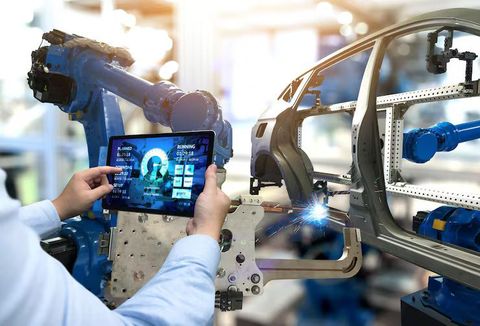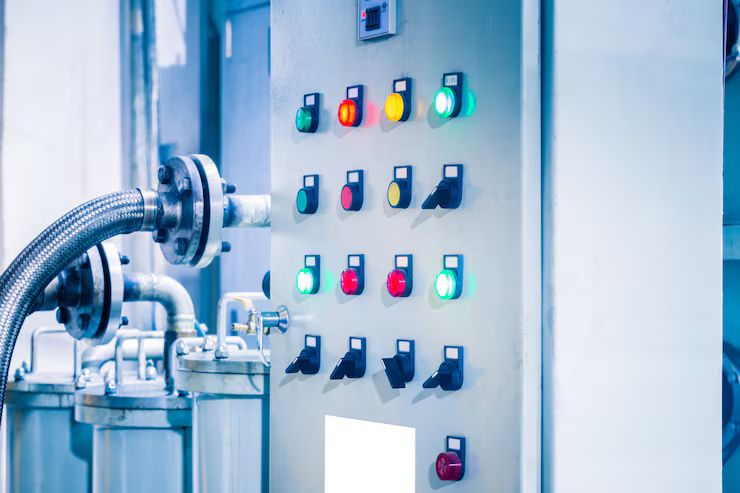
Industrial sensors are devices used to detect and measure physical conditions in machines, production lines, process plants, and automated systems. They can measure variables such as temperature, pressure, flow, level, position, vibration, proximity, force, light, and chemical conditions.
Sensors convert physical measurements into electrical or digital signals that can be monitored by programmable logic controllers (PLCs), distributed control systems (DCS), industrial computers, robots, and other automation platforms. They form an important part of industrial monitoring, control, safety, quality management, and predictive maintenance.
Why Industrial Sensors Matter
Industrial processes depend on accurate information about what is happening inside equipment and production environments. Sensors provide this information continuously or at defined intervals.
A typical automated system may use sensors to monitor:
- Temperature
- Pressure
- Flow
- Liquid or material level
- Position
- Speed
- Proximity
- Vibration
- Force
- Humidity
- Gas concentration
- Optical characteristics
Sensor data can be used to trigger control actions, identify process deviations, monitor equipment conditions, and support production decisions.
For example, a temperature sensor can transmit a measurement to a controller, which can then adjust a heating or cooling system according to programmed operating conditions.
Major Types of Industrial Sensors
Industrial sensors are categorized according to the physical variable they measure and the technology used to detect it.
| Sensor Type | Measures or Detects | Common Applications |
|---|---|---|
| Temperature Sensor | Temperature | Furnaces, tanks, HVAC, machinery |
| Pressure Sensor | Pressure | Pumps, pipelines, hydraulic systems |
| Flow Sensor | Fluid or gas flow | Process plants, water systems |
| Level Sensor | Liquid or solid level | Tanks, silos, vessels |
| Proximity Sensor | Object presence or distance | Automation, conveyors, robotics |
| Photoelectric Sensor | Objects using light | Packaging and assembly lines |
| Position Sensor | Linear or rotary position | Machines and actuators |
| Vibration Sensor | Mechanical vibration | Motors, pumps, rotating machinery |
| Force Sensor | Force or load | Robotics, weighing, assembly |
| Humidity Sensor | Moisture in air | Warehouses, process environments |
| Gas Sensor | Specific gases | Safety and process monitoring |
| Vision Sensor | Image or visual characteristics | Inspection and quality control |
Industrial Sensing Technologies
Different sensing technologies are selected according to the measurement requirement and operating environment.
Temperature Sensing
Temperature can be measured using technologies such as thermocouples, resistance temperature detectors (RTDs), thermistors, and infrared sensors.
Thermocouples are commonly used across broad temperature ranges and industrial environments.
RTDs can provide stable and accurate temperature measurements for many process applications.
Infrared sensors measure thermal radiation without requiring direct physical contact with the object.
Pressure Sensing
Pressure sensors convert pressure into an electrical signal that can be monitored by an automation or process-control system.
They can be used for hydraulic systems, pneumatic equipment, pipelines, tanks, compressors, pumps, and process vessels.
Differential-pressure sensors can measure the pressure difference between two points and are frequently used in flow measurement and filtration monitoring.
Flow Sensing
Flow sensors measure the movement of liquids or gases through pipes and process equipment.
Technologies can include:
- Magnetic flowmeters
- Coriolis flowmeters
- Ultrasonic flowmeters
- Vortex flowmeters
- Thermal mass flow sensors
- Differential-pressure flow measurement
The selection depends on fluid characteristics, flow range, pipe size, conductivity, temperature, pressure, and required measurement accuracy.
Level Sensing
Level sensors determine the quantity or height of liquid, powder, granules, or other materials in a container.
Common technologies include:
- Ultrasonic
- Radar
- Capacitive
- Conductive
- Float-based
- Differential-pressure
Continuous level measurement can provide a real-time indication, while point-level sensors can signal when material reaches a specified threshold.
Proximity and Position Sensing
Proximity sensors detect the presence or absence of objects without necessarily making physical contact.
Common technologies include:
- Inductive sensors
- Capacitive sensors
- Photoelectric sensors
- Magnetic sensors
- Ultrasonic sensors
Inductive proximity sensors are commonly used for detecting metallic objects in industrial automation.
Industrial Sensor Manufacturing Process
Industrial sensor manufacturing involves electronic, mechanical, materials, calibration, assembly, and testing operations.
A simplified manufacturing sequence can include:
Design → Material Selection → Component Manufacturing → Electronic Assembly → Sensor Element Integration → Housing Assembly → Wiring or Connector Installation → Calibration → Environmental Testing → Functional Testing → Quality Inspection → Packaging
The exact process depends on sensor type.
For example, pressure sensors require pressure-sensitive elements and calibration against known reference conditions, while temperature sensors require appropriate sensing elements and temperature calibration.
Sensor Materials and Construction
Industrial sensors may use combinations of metals, ceramics, polymers, glass, semiconductor materials, and electronic components.
Housing materials can include stainless steel, aluminum, engineered polymers, and other materials selected according to environmental requirements.
Important construction considerations include:
- Temperature resistance
- Pressure rating
- Chemical compatibility
- Corrosion resistance
- Vibration resistance
- Moisture protection
- Mechanical strength
- Electrical insulation
- Environmental sealing
Sensors used in harsh environments may require specialized enclosures and protection ratings.
Smart Industrial Sensors
Modern industrial sensors increasingly include onboard electronics and communication capabilities.
A smart sensor can perform functions such as:
- Signal conditioning
- Self-diagnostics
- Digital communication
- Parameter configuration
- Data logging
- Condition monitoring
- Device identification
Depending on the architecture, sensor data can be transmitted through industrial communication networks or connected to higher-level monitoring systems.
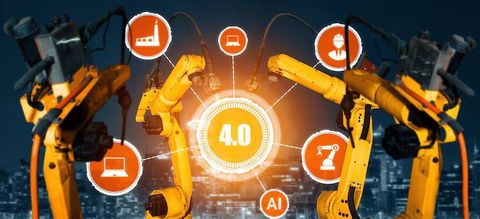
Smart sensors are particularly relevant to Industry 4.0, industrial IoT, predictive maintenance, and connected manufacturing systems.
Industrial Sensor Connectivity
Industrial sensors can communicate through different signal and networking methods.
Common interfaces include:
- Analog signals
- Digital switching outputs
- 4–20 mA
- IO-Link
- Modbus
- HART
- Industrial Ethernet
- Wireless communication
The appropriate interface depends on the control architecture, sensor type, required data, installation environment, and existing automation infrastructure.
Global Industrial Sensor Manufacturers and Suppliers
The global industrial sensor market includes manufacturers specializing in automation sensors, process instrumentation, measurement systems, and industrial control technologies.
Siemens provides industrial automation and sensor technologies covering process instrumentation, factory automation, motion, and digital industrial systems.
Honeywell supplies sensing, measurement, process-control, and industrial automation technologies across multiple industries.
Emerson provides process instrumentation and automation technologies, including measurement systems for pressure, temperature, flow, and other process variables.
SICK specializes in industrial sensors, identification systems, machine vision, safety technologies, and automation solutions.
KEYENCE develops sensors and measurement technologies for factory automation, inspection, positioning, and quality-control applications.
ifm electronic provides sensors and automation technologies for position detection, process measurement, condition monitoring, and industrial communication.
The appropriate supplier depends on measurement requirements, environmental conditions, communication standards, accuracy, installation method, certifications, and the automation architecture.
How to Select Industrial Sensors
1. Identify the Measurement
First determine exactly what needs to be detected or measured: temperature, pressure, flow, level, position, vibration, force, or another variable.
2. Define the Measurement Range
The sensor should cover the required operating range while providing appropriate resolution and accuracy.
3. Evaluate the Environment
Consider temperature, humidity, dust, chemicals, vibration, pressure, washdown conditions, and other environmental factors.
4. Select the Sensing Technology
Different technologies can produce different performance characteristics. The application should determine whether optical, inductive, capacitive, ultrasonic, radar, thermal, magnetic, or another technology is appropriate.
5. Check Output and Connectivity
Ensure the sensor's electrical output or communication protocol is compatible with the PLC, DCS, industrial computer, or other control system.
6. Consider Installation
Evaluate mounting space, connection type, cable routing, process connection, accessibility, and maintenance requirements.
7. Review Reliability and Calibration
For measurement-critical applications, consider calibration requirements, stability, repeatability, diagnostic features, and expected operating conditions.
Industrial Sensor Cost and Pricing Factors
The industrial sensor cost varies according to sensor technology, measurement range, accuracy, materials, environmental protection, connectivity, certifications, and application requirements.
Pricing can be influenced by:
- Sensor type
- Measurement range
- Accuracy
- Sensing technology
- Housing material
- Protection rating
- Communication interface
- Process connection
- Calibration requirements
- Smart features
- Certification requirements
- Installation accessories
A simple proximity sensor and a sophisticated process transmitter have substantially different technical configurations.
When comparing sensor prices, it is useful to consider the complete specification rather than selecting equipment based solely on the initial purchase amount.
Industrial Applications
Industrial sensors are used across virtually every major manufacturing and process sector.
Manufacturing
Sensors monitor machine position, temperature, pressure, speed, presence, and production conditions on automated lines.
Chemical Processing
Process sensors measure pressure, temperature, flow, level, and other variables in reactors, tanks, pipelines, and separation equipment.
Food and Beverage
Hygienic sensors can monitor temperature, pressure, flow, level, and other process variables in production and packaging systems.
Oil and Gas
Industrial instrumentation is used for pressure, temperature, flow, level, gas detection, and equipment monitoring.
Automotive Manufacturing
Sensors support robotics, assembly, material handling, quality inspection, position detection, and machine monitoring.
Pharmaceutical Manufacturing
Sensors can monitor critical process variables while supporting controlled production environments and quality requirements.
Water and Wastewater
Level, flow, pressure, turbidity, pH, conductivity, and other measurement technologies can support water-treatment operations.
Industrial Sensors and Predictive Maintenance
Sensors can provide continuous information about equipment condition.
Vibration, temperature, pressure, current, and other measurements can be analyzed to identify changes in machine behavior.
For example, a change in vibration levels in a rotating machine can provide an indication that further inspection may be appropriate. Combining sensor data with analytics software can support condition-monitoring and predictive-maintenance programs.
Best Practices for Industrial Sensor Deployment
Proper installation and maintenance are important for reliable measurements.
- Select sensors according to the actual measurement range.
- Verify compatibility with the process environment.
- Follow recommended mounting procedures.
- Protect wiring and connectors from mechanical damage.
- Calibrate measurement sensors according to applicable requirements.
- Inspect sensors periodically.
- Keep optical sensing surfaces clean where applicable.
- Verify communication signals after installation.
- Document sensor configuration and calibration information.
- Replace damaged or degraded components promptly.
Frequently Asked Questions
What are industrial sensors?
Industrial sensors are devices that detect or measure physical or chemical conditions in industrial processes, machines, and automation systems and convert those measurements into usable signals.
What are the main types of industrial sensors?
Common types include temperature, pressure, flow, level, proximity, position, vibration, force, humidity, gas, photoelectric, and vision sensors.
What are industrial sensors used for?
They are used for process monitoring, machine control, automation, quality inspection, safety systems, equipment condition monitoring, and data collection.
What is a smart industrial sensor?
A smart industrial sensor combines sensing with electronics that can provide functions such as signal processing, diagnostics, configuration, and digital communication.
How do I choose an industrial sensor?
Consider the variable being measured, measurement range, accuracy, environmental conditions, sensing technology, output signal, communication protocol, installation requirements, and calibration needs.
Conclusion
Industrial sensors provide the measurement layer that allows automated equipment and process-control systems to understand real-world operating conditions. From temperature and pressure to flow, level, proximity, vibration, and vision, different sensor technologies address different industrial requirements.
The appropriate sensor depends on the measurement variable, operating range, environment, accuracy, connectivity, installation method, and system architecture. Careful sensor selection and proper installation can support reliable process monitoring, automation, quality control, and equipment-condition monitoring.