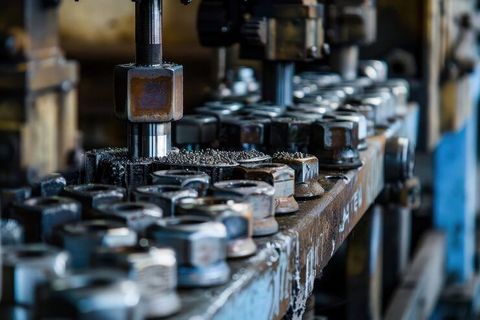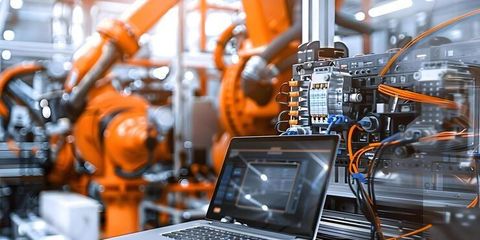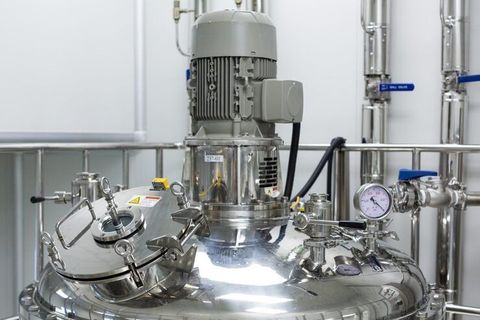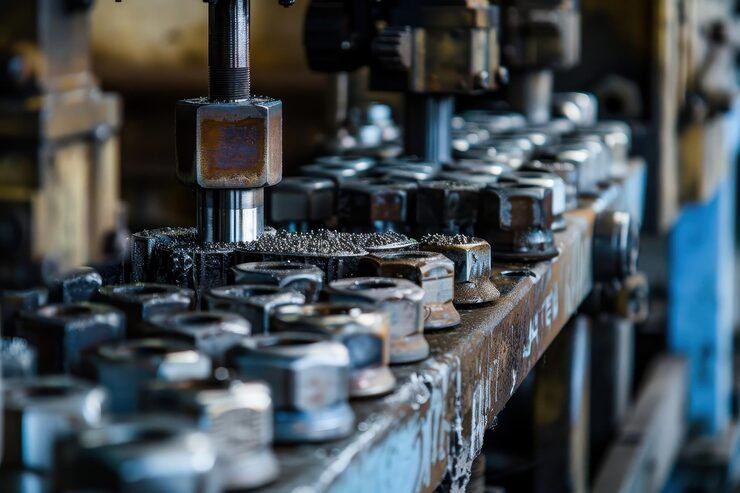
Mechanical fabrication and maintenance equipment includes machines, tools, lifting systems, inspection devices, welding equipment, machining technologies, alignment systems, and maintenance technologies used to manufacture, assemble, repair, inspect, and maintain industrial components and machinery. These technologies are used in fabrication workshops, manufacturing plants, construction operations, energy facilities, transportation industries, and heavy industrial environments.
Modern fabrication and maintenance operations increasingly combine CNC machinery, automated welding, hydraulic equipment, precision measurement, condition monitoring, robotics, and digital maintenance systems. Equipment selection depends on material type, component dimensions, production volume, precision requirements, load conditions, and maintenance objectives.
Why Mechanical Fabrication & Maintenance Equipment Matters
Mechanical fabrication creates or modifies components, structures, frames, vessels, machinery parts, and assemblies. Maintenance equipment helps keep those assets operational through inspection, adjustment, repair, lubrication, alignment, and component replacement.
These equipment categories support:
Metal cutting and forming
Welding and joining
CNC machining
Component assembly
Heavy equipment repair
Shaft and machine alignment
Inspection and testing
Lubrication
Equipment lifting
Condition monitoring
Preventive maintenance
Predictive maintenance
Fabrication and maintenance activities often operate together, particularly when industrial facilities manufacture replacement parts or repair machinery internally.
Types of Mechanical Fabrication Equipment
CNC Machining Equipment
CNC machines use programmed instructions to control cutting tools and produce components with consistent dimensions.
Common machines include:
CNC lathes
CNC milling machines
CNC machining centers
CNC grinders
CNC drilling machines
They can manufacture shafts, housings, brackets, gears, flanges, fixtures, and other mechanical components.
Cutting Equipment
Industrial cutting equipment separates raw material into required dimensions and shapes.
Common technologies include:
Laser cutting
Plasma cutting
Waterjet cutting
Oxy-fuel cutting
Mechanical shearing
Band sawing
Bending and Forming Equipment
Press brakes, plate rollers, tube benders, hydraulic presses, and forming machines shape metal components according to specified geometries.
Welding Equipment
Welding joins metal components using heat, pressure, or a combination of both.
Common industrial processes include:
MIG welding
TIG welding
Arc welding
Resistance welding
Submerged arc welding
Laser welding
Fabrication Presses
Hydraulic and mechanical presses perform forming, stamping, pressing, straightening, and assembly operations.
Drilling and Grinding Equipment
Industrial drilling machines create holes, while grinding equipment provides dimensional finishing and surface preparation.
Mechanical Maintenance Equipment
Hydraulic Maintenance Tools
Hydraulic pullers, presses, torque tools, jacks, and pumps provide controlled force for machinery assembly, disassembly, alignment, and component removal.
Lifting Equipment
Maintenance operations often require lifting and positioning of motors, gearboxes, pumps, valves, machinery components, and other heavy assemblies.
Equipment can include:
Hydraulic jacks
Chain hoists
Electric hoists
Portable cranes
Lifting tables
Machine skates
Alignment Equipment
Laser alignment systems can measure the relative position of shafts, couplings, and rotating machinery.
Proper alignment can help reduce unwanted vibration, coupling stress, and premature component wear.
Lubrication Equipment
Lubrication systems deliver oils and greases to bearings, gears, chains, hydraulic systems, and other moving components.
Automatic lubrication systems can deliver lubricant according to programmed schedules or operating conditions.
Inspection Equipment
Inspection technologies help identify wear, cracks, corrosion, dimensional variation, leakage, and other equipment conditions.
Examples include:
Borescopes
Ultrasonic testing instruments
Thickness gauges
Digital calipers
Micrometers
Thermal cameras
Vibration analyzers
Fabrication Technologies
CNC Manufacturing
CNC technology provides computer-controlled machining for repeatable component production.
Laser Fabrication
Laser systems can perform precision cutting, welding, marking, and selected surface-processing operations.
Additive Manufacturing
Additive manufacturing produces components layer by layer and can be used for prototypes, tooling, fixtures, specialized components, and selected replacement parts.
Robotic Fabrication
Industrial robots can perform welding, cutting, material handling, grinding, dispensing, and other repetitive fabrication operations.
Automated Material Handling
Conveyors, cranes, robotic arms, automated guided vehicles, and other handling systems move materials between fabrication stages.
Maintenance Systems and Technologies
Preventive Maintenance
Preventive maintenance uses scheduled inspection, lubrication, adjustment, cleaning, and component replacement based on time, operating hours, or production cycles.
Predictive Maintenance
Predictive maintenance uses equipment-condition information to identify developing problems.
Common monitoring methods include:
Vibration analysis
Thermal imaging
Oil analysis
Ultrasonic inspection
Motor current analysis
Pressure monitoring
Condition Monitoring
Sensors can continuously or periodically measure vibration, temperature, pressure, speed, current, and other machine parameters.
Computerized Maintenance Management
Computerized maintenance management systems can organize equipment records, inspection schedules, maintenance tasks, work orders, spare components, and maintenance histories.
Remote Monitoring
Connected industrial equipment can transmit operational information to centralized monitoring platforms, allowing maintenance teams to review machinery conditions remotely.
Manufacturing Processes for Fabrication & Maintenance Equipment
1. Engineering and Design
Manufacturers establish equipment dimensions, structural requirements, load capacity, operating conditions, safety requirements, and performance specifications.
Computer-aided design and engineering analysis are commonly used during development.
2. Material Selection
Equipment may use carbon steel, stainless steel, aluminum, alloy steel, engineering plastics, and specialized materials.
Material selection depends on strength, corrosion resistance, temperature, wear, and operating conditions.
3. Machining and Fabrication
Components can undergo cutting, turning, milling, drilling, grinding, bending, forming, and other manufacturing operations.
4. Welding and Assembly
Frames, housings, guards, worktables, machine structures, and other assemblies may be welded and mechanically fastened.
5. Hydraulic and Pneumatic Integration
Hydraulic cylinders, pumps, valves, hoses, regulators, and pneumatic actuators are integrated where controlled force or movement is required.
6. Electrical Integration
Motors, drives, sensors, control panels, safety devices, and programmable controllers can be installed in automated equipment.
7. Calibration and Testing
Equipment can undergo dimensional inspection, load testing, electrical testing, pressure testing, functional verification, vibration testing, and calibration.
8. Final Inspection
Completed equipment is checked against design specifications before deployment.
Industrial Applications
Manufacturing Plants
Fabrication and maintenance equipment is used for production machinery, tooling, fixtures, conveyors, pumps, motors, gearboxes, and structural components.
Construction
Construction operations use fabrication equipment for structural components, piping, supports, equipment frames, and machinery maintenance.
Oil and Gas
Fabrication and maintenance technologies support pipelines, pressure equipment, pumps, valves, structural systems, and rotating machinery.
Power Generation
Power facilities use maintenance equipment for turbines, generators, pumps, valves, heat exchangers, and auxiliary machinery.
Mining
Mining operations require heavy fabrication and maintenance equipment for crushers, conveyors, pumps, drilling equipment, and processing machinery.
Automotive Manufacturing
Automotive facilities use CNC machines, welding systems, presses, inspection equipment, robots, and maintenance tools throughout production operations.
Marine and Shipbuilding
Fabrication equipment supports structural assembly, plate processing, welding, piping, machinery installation, and maintenance.
Equipment Comparison
| Equipment Category | Primary Function | Typical Application |
|---|---|---|
| CNC machines | Precision machining | Component manufacturing |
| Laser cutters | Precision cutting | Sheet and plate fabrication |
| Press brakes | Metal bending | Structural components |
| Welding systems | Component joining | Fabrication |
| Hydraulic presses | Forming and force application | Assembly and repair |
| Lifting equipment | Heavy component movement | Maintenance |
| Alignment systems | Machine alignment | Rotating equipment |
| Lubrication equipment | Lubricant delivery | Bearings and gears |
| Inspection equipment | Condition assessment | Maintenance |
| Vibration analyzers | Machinery diagnostics | Predictive maintenance |
Factors to Consider When Selecting Equipment
Material Requirements
Equipment should match the materials being processed, including steel, aluminum, stainless steel, alloys, plastics, and composite materials.
Precision
Machining, inspection, and fabrication equipment should provide the dimensional accuracy required for the component or maintenance task.
Capacity
Equipment capacity should correspond to component dimensions, material thickness, machine loads, and expected production volume.
Automation
Facilities should determine whether manual, semi-automated, or fully automated equipment is appropriate.
Maintenance Requirements
Equipment itself requires inspection, lubrication, calibration, cleaning, and component replacement.
Safety
Machine guarding, emergency stops, electrical protection, lifting controls, pressure protection, and appropriate operating procedures are important considerations.
Integration
Modern equipment may need to connect with CNC controllers, PLCs, sensors, robotics, production software, and maintenance-management systems.
Future Trends
Mechanical fabrication is increasingly incorporating robotics, CNC automation, machine vision, additive manufacturing, and digital production monitoring.
Robotic welding and automated material handling can support repetitive fabrication operations, while machine vision can assist with inspection and dimensional verification.
Maintenance is also becoming increasingly data-driven. Industrial sensors can continuously monitor machine conditions, while analytics platforms can evaluate vibration, temperature, pressure, electrical current, and other parameters.
Digital twins can provide virtual representations of machines and fabrication systems, supporting simulation, monitoring, troubleshooting, and maintenance planning.
FAQs
What is mechanical fabrication equipment?
Mechanical fabrication equipment includes machines and tools used to cut, form, machine, weld, assemble, and finish mechanical components and structures.
What is mechanical maintenance equipment?
Mechanical maintenance equipment includes tools and systems used for machinery inspection, repair, alignment, lubrication, lifting, testing, and condition monitoring.
What equipment is commonly used for industrial fabrication?
Common equipment includes CNC machines, laser cutters, plasma cutters, press brakes, hydraulic presses, welding systems, grinders, drilling machines, and material-handling equipment.
What technologies are used for industrial maintenance?
Preventive maintenance, predictive maintenance, condition monitoring, vibration analysis, thermal imaging, ultrasonic inspection, lubrication systems, and computerized maintenance systems are widely used.
Where are fabrication and maintenance equipment used?
They are used in manufacturing, construction, automotive production, mining, oil and gas, power generation, marine industries, infrastructure projects, and other industrial sectors.
Conclusion
Mechanical fabrication and maintenance equipment provides the machinery, tools, inspection technologies, and support systems required to manufacture, repair, maintain, and modify industrial assets. CNC machining, cutting, forming, welding, hydraulic systems, lifting equipment, alignment tools, and inspection technologies form important parts of these operations.
The integration of robotics, automation, machine vision, connected sensors, predictive maintenance, and digital management systems is changing how fabrication and maintenance activities are performed. Selecting appropriate equipment requires consideration of materials, dimensions, capacity, precision, operating environment, safety, automation, and integration requirements.