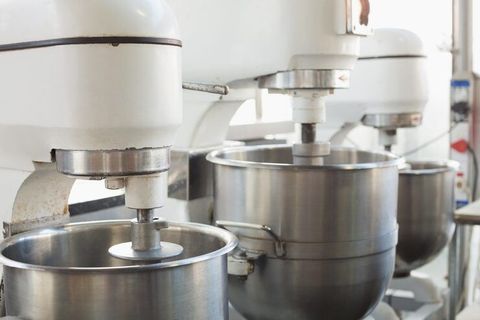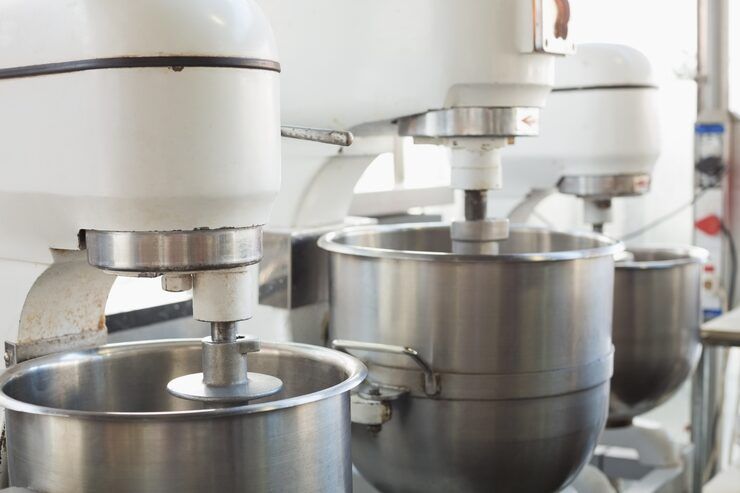
Industrial mixers are machines designed to combine two or more materials into a uniform or controlled mixture. They are used across industries such as food processing, pharmaceuticals, chemicals, cosmetics, construction materials, plastics, and water treatment.
The materials being mixed may include liquids, powders, granules, pastes, slurries, or combinations of different physical states. The required mixing method depends on material properties, production requirements, temperature sensitivity, viscosity, and the desired characteristics of the final mixture.
Industrial mixing equipment helps manufacturers maintain consistency, improve process control, and prepare materials for subsequent production stages. Different designs are available because mixing water-based liquids requires different mechanical action from blending powders, dispersing pigments, or processing thick industrial compounds.
Understanding Industrial Mixing Equipment
Industrial mixers use rotating blades, impellers, paddles, screws, or other mechanical components to move materials and promote mixing. Some systems operate in open vessels, while others use enclosed tanks, continuous processing chambers, or specialized containers.
The main objective is not always to create a completely uniform mixture. Some processes require dissolving a substance, dispersing fine particles, forming an emulsion, suspending solids, or controlling the temperature of a material during processing.
Common types of industrial mixers include:
Paddle mixers: Use paddles to blend powders, granules, and certain wet materials.
Ribbon blenders: Use helical ribbons to move bulk solids through a mixing chamber.
High-shear mixers: Generate intense mechanical action to disperse particles or combine difficult-to-mix materials.
Industrial agitators: Circulate liquids and help maintain uniformity in tanks.
Planetary mixers: Use rotating mixing tools for viscous materials, pastes, and specialized compounds.
Static mixers: Combine flowing materials through stationary internal elements without a separate rotating mixing shaft.
Drum mixers: Rotate containers to blend suitable powders or granular materials.
Selecting the correct mixer requires understanding the physical and chemical properties of the materials being processed.
How Industrial Mixing Works
Industrial mixing generally involves moving materials through mechanical force, fluid circulation, or repeated contact between particles.
In liquid applications, an impeller may generate circulation that distributes ingredients throughout a tank. In powder processing, blades or ribbons move particles through different regions of a chamber. High-shear systems create more intense local forces to break up agglomerates or disperse fine materials.
Several variables influence the final result:
Mixing speed and duration
Impeller or blade design
Vessel dimensions
Material viscosity
Particle size and density
Temperature
Ingredient proportions
Batch size and filling level
A process that works well for one formulation may not perform equally well with another. Testing and process validation help determine suitable operating conditions.
Why Industrial Mixers Matter
Industrial mixing equipment plays an important role in product consistency, manufacturing efficiency, and quality management.
Consistent Product Quality
Uneven mixing can create differences in color, texture, concentration, strength, or chemical composition. These variations can affect product performance and lead to rejected batches.
Appropriately selected mixing equipment helps distribute ingredients more consistently and supports repeatable production conditions.
Manufacturing Efficiency
Efficient mixing can reduce unnecessary processing time and support smoother transitions between production stages. However, excessive speed or unnecessarily long mixing cycles can increase energy consumption and sometimes damage temperature-sensitive materials.
Manufacturers therefore need to balance mixing performance with energy use, equipment wear, and production requirements.
Applications Across Industries
Industrial mixers are used in numerous sectors:
Food processing: Combining ingredients, sauces, doughs, and beverage components.
Pharmaceutical manufacturing: Blending powders and preparing suitable liquid formulations.
Chemical processing: Combining reagents, dispersing pigments, and preparing industrial formulations.
Cosmetics: Producing creams, lotions, gels, and emulsions.
Construction: Preparing cementitious mixtures, coatings, and selected building compounds.
Water treatment: Mixing chemicals into water streams under controlled conditions.
Plastics manufacturing: Blending polymer additives, pigments, and other processing ingredients.
Each application has specific requirements concerning material compatibility, contamination control, cleaning, and process repeatability.
Comparing Industrial Mixer Types
| Mixer Type | Typical Materials | Main Function |
|---|---|---|
| Ribbon blender | Powders and granules | Bulk solid blending |
| Paddle mixer | Solids and selected wet mixtures | Mechanical blending |
| High-shear mixer | Liquids, suspensions, and dispersions | Intensive mixing |
| Industrial agitator | Liquids and slurries | Circulation and suspension |
| Planetary mixer | Pastes and viscous compounds | Mixing thick materials |
| Static mixer | Flowing liquids and gases | Continuous inline mixing |
| Drum mixer | Powders and granules | Container-based blending |
The table provides general guidance. Actual suitability depends on material characteristics, equipment configuration, and the required production outcome.
Recent Developments in Industrial Mixing Technology
Industrial mixing technology continues to evolve through digital monitoring, automation, energy management, and improved process control. During 2025 and 2026, these areas remained important themes in manufacturing equipment development.
Automation and Digital Monitoring
Modern mixing systems increasingly incorporate programmable logic controllers, variable-frequency drives, sensors, and automated operating sequences.
These technologies can help monitor rotational speed, temperature, pressure, motor load, and mixing duration. Operators can use the recorded information to identify deviations and improve process repeatability.
Automated systems can also support recipe management, although the degree of automation varies by application and equipment configuration.
Energy Efficiency
Manufacturers continue to examine the relationship between mixing performance and energy consumption.
Impeller design, vessel geometry, motor efficiency, and operating speed can influence how much energy is required to achieve the desired mixing result.
Energy monitoring can help identify unnecessary operating time or inefficient settings. Any improvement should be verified under actual production conditions because changes in material viscosity and batch size can affect results.
Predictive Maintenance
Sensors and equipment monitoring systems can help detect changes in vibration, temperature, motor current, and bearing performance.
These measurements may reveal developing mechanical problems before they lead to an unexpected shutdown. Predictive maintenance depends on suitable sensors, reliable operating data, and appropriate analysis rather than automated monitoring alone.
Hygienic and Contamination-Controlled Design
Food and pharmaceutical manufacturers require particular attention to cleanability, material compatibility, and contamination prevention.
Modern equipment designs may incorporate accessible internal surfaces, specialized seals, clean-in-place arrangements, and controlled product-contact materials. The appropriate design depends on the applicable industry standards and the product being manufactured.
Laws, Regulations, and Industrial Safety
Industrial mixers are subject to workplace safety, machinery, electrical, environmental, and product-specific regulations. Requirements vary by country and by the materials being processed.
Machinery and Workplace Safety
In the United States, the Occupational Safety and Health Administration establishes workplace safety requirements relevant to industrial machinery.
Mixers may present hazards involving rotating shafts, blades, electrical systems, unexpected startup, hot surfaces, and pressurized equipment. Appropriate safeguards can include fixed guards, interlocks, emergency stops, isolation procedures, and documented maintenance practices.
Workers should never reach into a mixer while hazardous components are moving or while the equipment could restart unexpectedly.
Food and Pharmaceutical Manufacturing
Food and pharmaceutical mixing systems may need to comply with hygiene, sanitation, documentation, and manufacturing-quality requirements.
In the United States, the Food and Drug Administration regulates relevant food and pharmaceutical manufacturing activities under applicable federal rules. Equipment selection should reflect the product's contamination risks, cleaning requirements, and intended use.
Environmental and Chemical Safety
Facilities processing hazardous chemicals may need to follow regulations covering chemical storage, ventilation, exposure control, emissions, and waste management.
In India, manufacturers should review applicable requirements issued by the relevant State Pollution Control Board, workplace safety authorities, and other competent regulators.
Equipment used with flammable powders, solvents, or combustible dust may require additional protection based on a formal hazard assessment.
Tools and Resources for Industrial Mixer Selection
Choosing suitable mixing equipment requires technical information about both the material and the intended process.
Process Calculators and Engineering Data
Useful calculations include:
Batch volume: Determine the required vessel capacity.
Mixing time: Establish the time needed to reach a defined quality target through testing.
Power consumption: Estimate energy requirements using measured power and operating duration.
Throughput: Calculate production output per hour or shift.
Viscosity assessment: Determine how material flow characteristics influence mixing performance.
These calculations are starting points. Pilot testing and process validation may be necessary before applying settings to full-scale production.
Equipment Evaluation Checklist
| Evaluation Factor | Information Required |
|---|---|
| Material type | Liquid, powder, paste, or slurry |
| Viscosity | Flow characteristics at operating temperature |
| Batch size | Required working volume |
| Mixing objective | Blending, dispersion, suspension, or emulsification |
| Temperature | Operating and allowable temperature range |
| Hygiene | Cleaning and contamination-control requirements |
| Power | Motor rating and expected energy use |
| Safety | Guards, interlocks, and hazard controls |
| Maintenance | Inspection intervals and component requirements |
Technical datasheets, process engineering references, equipment manuals, and applicable regulatory guidance can help manufacturers compare alternative configurations.
Frequently Asked Questions
What are industrial mixers used for?
Industrial mixers combine liquids, powders, granules, pastes, and other materials to achieve a defined level of blending, dispersion, suspension, or emulsification. They are used in food processing, chemicals, pharmaceuticals, construction, cosmetics, and many other industries.
What is the difference between a high-shear mixer and a ribbon blender?
A high-shear mixer creates intense mechanical forces to disperse particles or combine difficult-to-mix materials. A ribbon blender uses helical mixing elements to blend bulk solids, such as powders and granules.
How is industrial mixer capacity determined?
Capacity depends on vessel volume, working fill level, material properties, mixing objective, and production requirements. The nominal vessel volume does not necessarily represent the usable batch volume.
How can manufacturers improve mixing efficiency?
Manufacturers can evaluate impeller design, rotational speed, mixing duration, batch size, material properties, and energy consumption. Controlled testing helps determine whether an adjustment improves uniformity without increasing energy use or damaging the material.
What safety precautions apply to industrial mixers?
Important precautions include machine guarding, emergency stops, electrical isolation during maintenance, appropriate personal protective equipment, and training on safe operating procedures. Additional safeguards may be required for hazardous chemicals, hot materials, or combustible dust.
Conclusion
Industrial mixers are essential equipment across manufacturing sectors because they help combine materials, maintain consistency, and prepare products for further processing. Different mixer designs address different requirements, from blending dry powders to dispersing particles in liquids and processing highly viscous compounds.
Recent technological developments emphasize automation, energy efficiency, predictive maintenance, and hygienic equipment design. These advances can support better process control when implemented alongside suitable operating procedures and quality checks.
Selecting the right industrial mixing equipment requires careful consideration of material properties, batch volume, mixing objectives, power requirements, cleaning needs, maintenance, and safety regulations. A systematic engineering assessment helps manufacturers establish reliable and repeatable mixing processes.