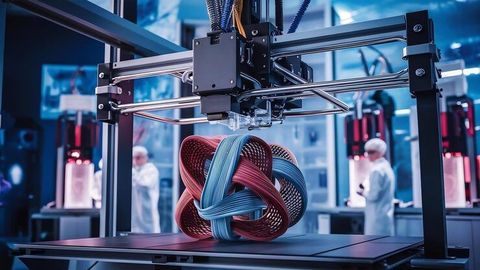
Predictive maintenance using artificial intelligence (AI) is an industrial approach that uses data analysis, machine learning, sensors, and monitoring systems to identify potential equipment failures before they happen. It helps manufacturers understand the condition of machines and plan maintenance activities based on actual equipment performance rather than fixed schedules.
Traditional maintenance approaches often depend on routine inspections or repairs after equipment stops working. Predictive maintenance takes a different approach by continuously examining machine conditions and identifying unusual patterns that may indicate developing problems.
Industrial equipment such as electric motors, pumps, compressors, turbines, conveyors, and production machinery generates valuable operational data. AI algorithms analyze this information to identify changes in temperature, vibration, pressure, sound, and energy consumption.
For example, an industrial motor may begin producing unusual vibration several weeks before a component fails. An AI-based monitoring system can recognize this pattern and notify maintenance teams to investigate the equipment.
How AI Predictive Maintenance Works
AI predictive maintenance combines connected hardware, data collection, and analytical software to monitor equipment health.
The typical process involves:
Data Collection: Sensors collect information about machine temperature, vibration, pressure, speed, and operating conditions.
Data Processing: Monitoring platforms organize equipment information and identify unusual readings.
Machine Learning Analysis: AI models compare current operating patterns with historical equipment data.
Failure Prediction: Algorithms estimate the likelihood of equipment problems and identify possible failure patterns.
Maintenance Planning: Technical teams use predictions to prioritize inspections and plan maintenance activities.
This process supports condition-based maintenance and helps organizations make decisions using operational evidence.
Why AI Predictive Maintenance Matters Today
Reducing Unexpected Industrial Downtime
Unexpected equipment failures can interrupt manufacturing operations, delay production schedules, and affect supply chains. Even a short interruption may create significant operational challenges in industries that depend on continuous production.
AI predictive maintenance helps identify warning signs before equipment reaches a critical condition. Maintenance teams can investigate potential problems during planned production breaks instead of responding only after a machine stops.
Industries that may benefit include:
Automotive and vehicle manufacturing
Oil and gas processing
Power generation and electricity distribution
Food and beverage production
Pharmaceutical manufacturing
Mining and heavy engineering
Chemical and petrochemical processing
Improving Equipment Reliability and Asset Performance
Industrial organizations depend on machinery that operates within specific performance limits. Gradual deterioration, excessive vibration, overheating, and component wear can reduce equipment reliability.
AI-powered condition monitoring helps identify these changes at an earlier stage. This allows organizations to examine machine health, understand recurring problems, and improve asset management strategies.
Another important application is remaining useful life (RUL) estimation. This approach uses equipment history and operating data to estimate how much longer a component may function under particular conditions.
Supporting Data-Driven Maintenance Decisions
Traditional maintenance schedules may require inspections even when equipment is operating normally. Conversely, problems can develop between scheduled inspections.
Predictive analytics provides additional information about equipment condition, helping maintenance planners prioritize attention based on observed risk.
It can also support:
Better maintenance scheduling
Improved spare-parts planning
Reduced unnecessary inspections
More consistent production planning
Improved industrial energy efficiency
Better equipment lifecycle management
Industries Using AI-Based Predictive Maintenance
Industry | Equipment monitored | Main application |
|---|---|---|
Manufacturing | Motors and production lines | Detecting mechanical wear |
Energy | Turbines and generators | Identifying performance changes |
Oil and Gas | Pumps and compressors | Monitoring pressure and vibration |
Transportation | Engines and rotating components | Predicting component deterioration |
Mining | Heavy machinery and conveyors | Preventing unexpected breakdowns |
Pharmaceuticals | Processing and packaging equipment | Maintaining consistent operations |
Recent Developments and Emerging Trends
Developments in AI Maintenance Technology (2025–2026)
AI predictive maintenance has continued to evolve through improvements in industrial IoT, machine learning, edge computing, and digital twin technology. These developments are making equipment monitoring more connected and data-driven.
Some important developments include:
1. Growth of Industrial AI and Smart Manufacturing
Manufacturers are increasingly exploring AI applications that combine equipment monitoring, production analytics, and automated data processing. These systems can examine large volumes of machine information and identify patterns that may be difficult to recognize through manual inspections.
2. Edge AI for Real-Time Equipment Monitoring
Edge computing allows industrial organizations to process equipment information closer to the machines generating it. This can reduce communication delays and support faster responses when abnormal operating conditions appear.
3. Digital Twins for Equipment Performance Analysis
Digital twins are virtual representations of physical equipment or industrial systems. They use operational data to simulate equipment behaviour, examine different operating conditions, and support maintenance planning.
4. Responsible AI Governance in India
On 5 November 2025, India released its AI Governance Guidelines. The framework promotes responsible AI development, transparency, privacy, security, and accountability. It provides guidance for organizations developing and deploying AI technologies across different sectors.
5. Industrial AI Regulation in Europe
The European Union's AI regulatory framework reached an important implementation milestone on 2 August 2026. The rules apply progressively, with certain high-risk AI requirements scheduled for 2027 and 2028. Industrial organizations should assess whether their particular AI applications fall within the relevant regulatory categories.
Emerging Trends to Watch
Several developments are expected to influence industrial maintenance strategies:
Generative AI: Supporting technical documentation analysis and maintenance knowledge management.
Explainable AI: Helping engineers understand why an algorithm identifies a particular failure risk.
Cloud-Based Monitoring: Connecting equipment information across multiple industrial facilities.
Automated Anomaly Detection: Identifying unusual machine behaviour without relying entirely on predefined thresholds.
Predictive Analytics: Combining historical and real-time information to improve failure forecasting.
These technologies are developing at different speeds, and their practical effectiveness depends on equipment quality, data availability, and implementation methods.
Laws, Regulations, and Industrial Policies
Regulatory Considerations for AI Predictive Maintenance
AI-powered industrial monitoring is influenced by several regulatory areas, including workplace safety, machinery standards, cybersecurity, data protection, and artificial intelligence governance.
The applicable requirements depend on the country, industry, equipment type, and intended use of the technology.
Regulations in India
Organizations implementing AI predictive maintenance in India should consider the following regulatory frameworks:
1. Machinery and Electrical Equipment Safety Regulations
The Machinery and Electrical Equipment Safety (Omnibus Technical Regulation) Order establishes conformity requirements for specified machinery and electrical equipment.
An amendment announced on 19 August 2025 stipulated that the regulation would apply from 1 September 2026 to the machines and equipment listed in its first schedule. Organizations should check the applicable Indian Standards and equipment categories before deployment.
2. Digital Personal Data Protection Framework
The Digital Personal Data Protection Act, 2023, establishes requirements concerning digital personal data. Industrial monitoring systems should consider these requirements when collecting or processing identifiable employee information, such as data associated with workforce monitoring.
3. India AI Governance Guidelines
The AI Governance Guidelines released in November 2025 provide a principle-based approach to responsible AI development and deployment. They emphasize transparency, accountability, privacy, security, and compliance with applicable Indian laws.
International Standards and Regulations
Industrial organizations operating internationally may also need to consider:
ISO 55000: Provides principles and guidance for asset management.
ISO 17359: Covers general guidelines for machine condition monitoring and diagnostics.
ISO 13374: Addresses condition monitoring and diagnostics data processing and presentation.
EU AI Act: Establishes requirements for applicable artificial intelligence systems.
Occupational Safety Regulations: Establish workplace safety expectations for industrial equipment and maintenance activities.
Compliance should be evaluated with qualified technical and regulatory professionals. AI predictions should not replace mandatory safety inspections or established equipment protection procedures.
Tools and Resources for AI Predictive Maintenance
Useful Industrial AI Platforms and Technologies
Several platforms and technical resources help organizations develop, monitor, and evaluate predictive maintenance systems.
Tool or platform | Main purpose |
|---|---|
IBM Maximo Application Suite | Asset performance and maintenance management |
Siemens Senseye | AI-powered predictive maintenance |
Microsoft Azure IoT | Industrial equipment connectivity and data analysis |
AWS IoT SiteWise | Industrial equipment data collection and monitoring |
TensorFlow | Developing machine learning models |
Edge Impulse | Developing and deploying edge AI applications |
MATLAB Predictive Maintenance Toolbox | Equipment diagnostics and predictive modelling |
Important Resources for Maintenance Planning
Organizations can also use the following resources to improve their maintenance strategies:
Equipment Health Monitoring Templates: Record machine conditions, inspection results, and maintenance history.
Vibration Analysis Tools: Examine vibration patterns and identify possible mechanical problems.
Thermal Imaging Systems: Identify unusual temperature changes in electrical and mechanical equipment.
Failure Mode and Effects Analysis (FMEA): Evaluate possible equipment failures and their consequences.
Predictive Maintenance Dashboards: Display equipment health indicators, alerts, and historical performance.
Remaining Useful Life Calculators: Estimate the expected operating life of selected machine components using suitable historical and operational data.
Key Performance Indicators to Monitor
Organizations should evaluate predictive maintenance systems using measurable performance indicators.
KPI | What it measures |
|---|---|
Mean Time Between Failures (MTBF) | Average operating time between equipment failures |
Mean Time to Repair (MTTR) | Average time required to restore equipment |
Overall Equipment Effectiveness (OEE) | Equipment availability, performance, and quality |
Unplanned Downtime | Production time lost through unexpected interruptions |
Prediction Accuracy | How accurately the system identifies potential failures |
Maintenance Compliance | Completion of planned maintenance activities |
These indicators help organizations understand whether AI monitoring is improving equipment reliability and industrial performance.
Frequently Asked Questions
1. What Is AI Predictive Maintenance in Manufacturing?
AI predictive maintenance uses machine learning, sensors, and equipment monitoring data to identify possible machinery failures before they occur. It helps manufacturers understand equipment conditions and plan maintenance based on operational information.
2. How Does AI Predict Industrial Equipment Failures?
AI algorithms examine historical and real-time machine information, including vibration, temperature, pressure, and operating speed. They identify unusual patterns and compare them with known failure indicators to estimate potential equipment problems.
3. What Is the Difference Between Preventive and Predictive Maintenance?
Preventive maintenance follows predefined schedules, such as inspecting equipment after a particular number of operating hours. Predictive maintenance uses equipment condition and analytical information to determine when maintenance attention may be necessary.
4. Which Industries Benefit Most From AI Predictive Maintenance?
Manufacturing, energy, oil and gas, mining, transportation, pharmaceuticals, and chemical processing are among the industries that can benefit. These sectors frequently depend on machinery where unexpected interruptions can affect production and operational reliability.
5. Can Small Manufacturing Facilities Implement AI Predictive Maintenance?
Yes. Smaller manufacturing facilities can begin with condition-monitoring sensors on critical equipment, basic data collection, and anomaly detection tools. Implementation can gradually expand as equipment data improves and maintenance teams become familiar with the technology.
Conclusion
Predictive maintenance using AI is becoming an important part of modern industrial operations. By combining machine learning, industrial IoT sensors, equipment monitoring, and predictive analytics, organizations can identify developing machinery problems and make more informed maintenance decisions.
Technologies such as edge AI, digital twins, cloud monitoring, and automated anomaly detection are expanding the possibilities for equipment health management. However, successful implementation depends on reliable data, appropriate monitoring systems, cybersecurity practices, and trained technical personnel.
As manufacturing and industrial operations continue to become more connected, AI predictive maintenance can support improved equipment reliability, more efficient maintenance planning, and reduced unexpected downtime. Its long-term value will depend on responsible implementation, continuous evaluation, and alignment with applicable industrial safety standards.