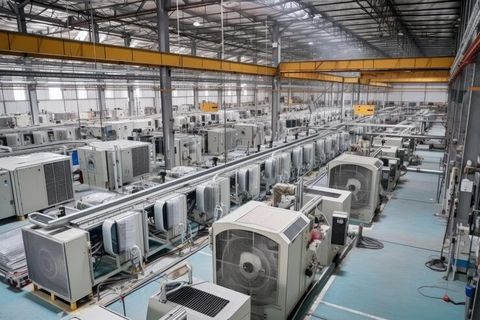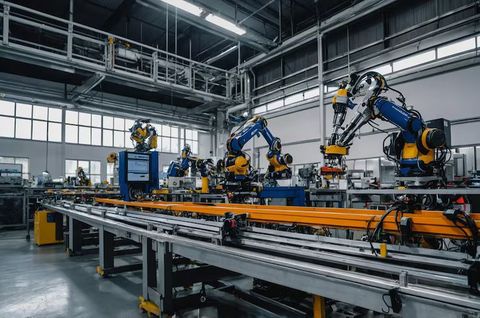
Manufacturing Execution Systems (MES) are industrial software platforms used to coordinate, monitor, document, and analyze manufacturing activities on the production floor. MES software connects production operations with business and planning systems, helping organizations manage production orders, materials, equipment, quality information, workforce activities, and manufacturing data.
MES has become an important component of smart factory software architectures. It can connect machines, sensors, operators, enterprise systems, and industrial databases, creating a digital layer between production equipment and higher-level business applications.

Context
What Is a Manufacturing Execution System?
A Manufacturing Execution System is software designed to manage and track manufacturing activities from production planning through completion. It provides information about what is being produced, how production is progressing, which materials and equipment are being used, and whether defined production requirements are being followed.
MES operates between enterprise-level systems such as Enterprise Resource Planning (ERP) and shop-floor control technologies such as PLCs, SCADA platforms, machines, and industrial sensors.
How MES Works
A typical MES architecture collects information from production equipment and combines it with production orders, specifications, workflows, and quality requirements.
A simplified process can involve:
- Production orders are received from an ERP or planning system.
- MES assigns or organizes production activities.
- Materials, equipment, and work instructions are associated with the production order.
- Operators and machines record production events.
- Quality information is captured.
- Production progress is monitored.
- Completed production information is stored electronically.
- Relevant data can be transferred back to enterprise systems.
Core MES Functions
MES platforms can include a range of manufacturing-management capabilities.
| MES Function | Purpose | Example |
|---|---|---|
| Production Tracking | Monitor production progress | Work-order status |
| Scheduling | Coordinate production activities | Machine allocation |
| Quality Management | Record production quality data | Inspection results |
| Material Tracking | Track material movement | Batch or lot records |
| Work Instructions | Guide production activities | Digital procedures |
| Equipment Monitoring | Collect machine information | Machine status |
| Genealogy | Track production history | Component-to-product records |
| Performance Analysis | Evaluate production data | Downtime analysis |
| Electronic Records | Maintain production information | Digital batch records |
The exact functionality differs between MES platforms and manufacturing environments.
MES and ERP
ERP systems generally manage enterprise-wide processes such as procurement, finance, inventory, sales, and resource planning.
MES focuses more directly on production execution. Integration between the two systems can allow production orders and material information to move between enterprise planning and shop-floor operations.
MES and SCADA
SCADA platforms primarily provide supervisory monitoring and control of industrial equipment and processes. MES operates at a higher manufacturing-management level.
For example, SCADA may display the temperature of a process vessel, while MES can associate the process data with a specific production order, batch, material, and manufacturing record.
Importance
Why MES Matters
Manufacturing environments generate large quantities of information from machines, operators, quality systems, materials, and production processes. MES provides a structured environment for organizing this information around manufacturing activities.
This can improve production visibility and provide a more consistent digital record of manufacturing events.
Production Management
MES software can provide information about active work orders, production stages, equipment status, material availability, and completed quantities.
Supervisors can use dashboards to understand production progress and identify activities requiring attention.
Digital Work Instructions
MES platforms can deliver electronic instructions for manufacturing activities. These may include process steps, equipment settings, inspection requirements, and safety information.
Digital instructions can be updated through controlled procedures and associated with particular products or production processes.
Material and Batch Tracking
Material tracking is particularly important in industries where product genealogy is required.
MES can associate raw materials, intermediate products, components, and finished products with specific production orders or batches.
Quality Management
MES can collect measurements from operators, inspection systems, and connected equipment.
Quality information can be associated with individual production orders, batches, lots, or manufacturing stages, depending on the system design.
Production Traceability
Manufacturing traceability involves maintaining information about what happened during production.
MES genealogy functions can record relationships between materials, components, equipment, operators, process steps, and finished products.
Smart Factory Software
MES as a Smart Factory Layer
Smart factories use connected equipment, industrial sensors, automation, software, and data analytics to create more integrated manufacturing environments.
MES can function as a central production-management layer connecting business planning with shop-floor activities.
Industrial IoT Integration
Industrial Internet of Things technologies allow machines and sensors to generate continuous operational data.
MES platforms can receive selected information from connected devices and use it for production tracking, equipment monitoring, quality analysis, and reporting.
Cloud and Hybrid MES
MES platforms can operate through on-premises, cloud, or hybrid architectures.
Cloud-based deployments can provide centralized access across multiple facilities, while local systems may be used where low latency, data control, or plant-network requirements are important.
Edge Computing
Edge computing allows production data to be processed close to the machines generating it.
An edge architecture can filter, aggregate, or analyze sensor information before selected data is transferred to MES, enterprise platforms, or cloud systems.
Manufacturing Applications
Automotive Manufacturing
Automotive plants use MES platforms to coordinate assembly operations, material tracking, quality inspections, production sequencing, and product genealogy.
MES can connect production orders with specific components and manufacturing stations.
Pharmaceutical Manufacturing
Pharmaceutical manufacturing often requires detailed batch records, process traceability, equipment records, and controlled production workflows.
MES platforms can support electronic batch records, material genealogy, production instructions, and integration with quality systems.
Food and Beverage
Food manufacturing can use MES for batch tracking, production monitoring, recipe management, quality records, and material traceability.
Integration with process-control systems can connect production data with specific batches.
Electronics Manufacturing
Electronics production involves detailed component tracking, assembly processes, testing, inspection, and configuration management.
MES can associate components and manufacturing operations with individual products or production batches.
Chemical Manufacturing
Chemical plants can use MES to manage batch production, recipes, material tracking, production records, and process information.
Integration with DCS or SCADA systems can provide a connection between process data and manufacturing activities.
Aerospace Manufacturing
Aerospace manufacturing often requires detailed records covering materials, components, production steps, inspections, and configuration information.
MES can support production traceability and controlled work instructions.
Recent Updates
AI-Enabled Manufacturing Analytics
Artificial intelligence is increasingly being incorporated into manufacturing analytics. MES data can provide historical information for identifying production patterns, detecting anomalies, forecasting equipment behavior, and analyzing quality trends.
AI outputs require appropriate validation and should be interpreted within the specific manufacturing context.
Digital Twins
Digital twins can combine real-world production information with software representations of machines, production lines, or manufacturing processes.
MES data can contribute production context to these models, while sensor and automation data can provide real-time operating information.
Low-Code Configuration
Some modern MES platforms incorporate configuration tools that allow organizations to create workflows, forms, dashboards, and production logic with reduced reliance on custom programming.
Governance and change control remain important when modifying regulated or production-critical workflows.
Connected Worker Technologies
MES platforms can increasingly connect operators with digital instructions, production information, quality checks, and equipment data.
Mobile devices and industrial terminals can provide workers with context-specific information at the production station.
Advanced Production Analytics
Manufacturers are using MES data to examine production throughput, downtime, cycle times, quality deviations, material consumption, and equipment utilization.
Historical data can help identify recurring patterns and support process-improvement activities.
Laws or Policies
Manufacturing Quality Requirements
MES implementation may need to align with industry-specific quality systems. Pharmaceutical, medical-device, aerospace, food, automotive, and other industries can have different documentation and traceability requirements.
Organizations should determine which regulations and standards apply to their specific products and production processes.
Electronic Records
Where MES is used to maintain regulated manufacturing records, organizations need appropriate controls for electronic data.
These can include user access, audit trails, data retention, record accuracy, change management, and system validation.
Cybersecurity
Connected manufacturing systems create cybersecurity considerations. MES platforms may exchange information with ERP, SCADA, PLC, cloud, and other industrial systems.
Network segmentation, identity management, access control, monitoring, secure configuration, and software-update procedures can contribute to an industrial cybersecurity program.
Data Governance
Manufacturing data may contain production specifications, equipment information, quality records, and operational information.
Organizations should establish policies for data ownership, retention, access, backup, integrity, and controlled modification.
Tools and Resources
ERP Integration
ERP integration connects enterprise planning information with manufacturing execution. Common data exchanges can include production orders, material information, inventory information, and completed production records.
SCADA and PLC Connectivity
MES platforms can obtain production information through industrial communication systems and middleware.
This connection allows shop-floor information to be associated with manufacturing activities.
Manufacturing Dashboards
MES dashboards can display production status, work-order progress, equipment states, quality information, and selected performance indicators.
OEE Analysis
Overall Equipment Effectiveness (OEE) is commonly used to evaluate equipment availability, performance, and quality.
MES platforms can collect the underlying production information used in OEE calculations.
Electronic Batch Records
Electronic batch records replace or reduce paper-based production documentation in applicable manufacturing environments.
They can record process steps, materials, equipment information, measurements, approvals, and deviations according to the configured workflow.
FAQs
What is a Manufacturing Execution System?
A Manufacturing Execution System is industrial software used to manage, monitor, document, and analyze production activities. It connects manufacturing operations with enterprise planning and shop-floor systems.
What is MES software used for?
MES software can support production tracking, scheduling, material genealogy, quality management, digital work instructions, equipment monitoring, electronic records, and manufacturing analytics.
How does MES support a smart factory?
MES can connect machines, sensors, operators, production orders, quality information, and enterprise systems. This creates a digital production layer within a smart factory architecture.
What is the difference between MES and ERP?
ERP generally manages enterprise-wide planning and business processes, while MES focuses on production execution and shop-floor manufacturing activities. The two systems can exchange information.
Can MES integrate with Industrial IoT?
Yes. MES platforms can receive selected data from connected machines, sensors, edge systems, SCADA platforms, and other industrial technologies.
Conclusion
Manufacturing Execution Systems provide a digital framework for coordinating and documenting production activities. MES software connects production orders, materials, equipment, operators, quality information, and manufacturing data, creating greater visibility across the production environment.
As smart factory architectures develop, MES platforms are increasingly connected with Industrial IoT, cloud systems, edge computing, AI analytics, digital twins, and connected-worker technologies. Successful implementation depends on clearly defined production processes, appropriate system integration, cybersecurity controls, data governance, user training, and alignment with applicable industry requirements.