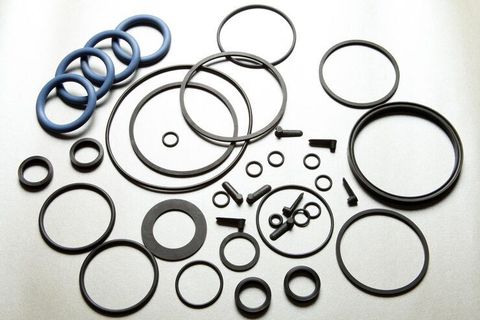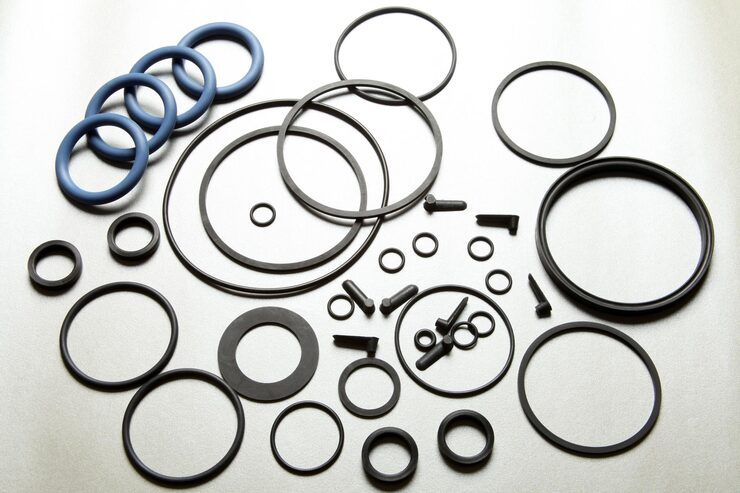
O-rings are circular sealing components designed to help prevent the movement of liquids or gases between two mating surfaces.
Their simple round shape allows them to fit into a groove and create a seal when compressed between parts. O-rings are used across hydraulic, pneumatic, automotive, industrial, aerospace, medical, and many other equipment applications.
Understanding O-ring materials, designs, sizes, temperature ranges, chemical compatibility, and installation requirements is important when selecting a suitable sealing component. This guide explains the basics of O-rings, common material choices, sizing systems, recent developments, relevant standards, and practical resources.
Context – Understanding O-Rings
An O-ring is a ring-shaped elastomeric component generally manufactured with a circular cross-section. When installed inside a correctly designed groove, the O-ring is compressed against mating surfaces. This deformation creates a barrier that can restrict the passage of fluids or gases.
O-rings can be used in both static and dynamic applications. Static applications involve parts that remain relatively stationary, while dynamic applications involve movement such as reciprocating, rotating, or oscillating motion.
The main purpose of an O-ring is to maintain sealing performance under the operating conditions of a particular system. These conditions can include pressure, temperature, fluid exposure, movement, surface finish, compression, and mechanical tolerances.
Common O-ring materials include:
| Material | General characteristics | Common applications |
|---|---|---|
| NBR | Good resistance to petroleum-based fluids | Hydraulic and pneumatic equipment |
| FKM | Good temperature and chemical resistance | Automotive and industrial equipment |
| EPDM | Good resistance to water, steam, and weathering | Water and fluid systems |
| Silicone | Wide temperature range and flexibility | Medical and food-related applications |
| FFKM | Very high chemical and temperature resistance | Specialized industrial equipment |
| PTFE | Strong chemical resistance and low friction | Chemical and demanding fluid applications |
Material selection should always consider the actual operating environment rather than relying only on a general material name.
Importance – Why O-Ring Selection Matters
O-rings are small components, but their performance can influence the reliability of larger systems. An unsuitable material or incorrect size can contribute to leakage, premature deterioration, extrusion, compression problems, or equipment downtime.
Several factors should be considered when evaluating an O-ring:
- Inside diameter and cross-section
- Operating temperature
- System pressure
- Fluid or chemical exposure
- Static or dynamic movement
- Groove dimensions
- Surface condition
- Expected operating life
- Compression and stretch requirements
O-ring size is commonly identified using inside diameter, cross-sectional diameter, and a corresponding size designation. ISO 3601-1 specifies inside diameters, cross-sections, tolerances, and designation codes for O-rings used in fluid power systems and related industrial and aerospace applications.
The groove is equally important. An O-ring that has the correct nominal dimensions can still perform poorly if the housing is incorrectly designed. ISO 3601-2:2025 addresses housing dimensions for general industrial applications and includes approaches for selecting O-rings according to standardized hardware dimensions.
Recent Updates – Standards and Design Developments
O-ring technology continues to develop through improvements in elastomer formulations, manufacturing processes, testing methods, and sealing-system design.
One significant standards development is ISO 3601-2:2025. This edition specifies housing dimensions for Class A O-rings for general industrial applications and Class B O-rings used with selected metric hardware. It also addresses applications involving hydraulic and pneumatic systems, including designs that use anti-extrusion rings.
Material standardization also remains important. ISO 3601-5:2015 covers specifications for selected elastomeric materials used for industrial O-rings and was reviewed and confirmed as current in 2026.
Another area of development is the use of backup rings. These components can help reduce O-ring extrusion under suitable pressure conditions. ISO 3601-4:2008 identifies several backup-ring configurations, including spiral, angle-cut, solid, and concave designs.
Modern design practices also increasingly consider application-specific requirements such as chemical exposure, temperature cycling, low emissions, equipment cleanliness, and longer operating intervals.
Laws or Policies – Standards and Regulatory Considerations
O-rings do not have one universal law that applies to every application. Requirements depend on the equipment, industry, material, country, and intended use.
ISO standards are generally technical standards rather than government laws. For example, ISO 3601-1 establishes dimensional and designation requirements, while ISO 3601-3 addresses quality acceptance criteria and surface imperfections for standardized O-rings.
For equipment used in regulated industries, additional requirements may apply. Food-contact applications can be subject to national or regional food-contact rules governing materials that may come into contact with food. Medical, pharmaceutical, aerospace, automotive, and other specialized applications may also have sector-specific requirements.
In the European Union, REACH is a major chemicals regulation concerning the registration, evaluation, authorization, and restriction of chemical substances. It places responsibilities on industry for managing chemical risks and providing relevant information.
Therefore, organizations selecting O-ring materials should review the regulations applicable to their particular application and location. A material being commonly used in one industry does not automatically mean it is appropriate for every regulated application.
Tools and Resources – Useful O-Ring Information
Several technical resources can help engineers, maintenance personnel, designers, and students understand O-ring selection.
Useful resources include:
- ISO 3601 standards for dimensions, housing design, quality, backup rings, and elastomer materials.
- Manufacturer technical datasheets for material properties and chemical compatibility.
- O-ring size charts for comparing standardized dimensions.
- Groove-design references for determining appropriate housing geometry.
- Chemical compatibility references for evaluating fluid and elastomer interaction.
- Temperature and pressure data for understanding operating limitations.
- Engineering calculators for estimating compression, stretch, and groove fill.
When using an online calculator, the results should be treated as engineering guidance rather than an automatic approval for a particular application. Actual sealing performance can depend on multiple interacting variables.
A practical selection process can begin by identifying the application type, followed by operating temperature, pressure, fluid exposure, movement, dimensions, and applicable standards. These factors can then be compared with technical documentation for the selected material and O-ring size.
FAQs – O-Ring Basics and Selection
What is an O-ring used for?
An O-ring is used to create a seal between mating components. It can help restrict the passage of liquids or gases in hydraulic, pneumatic, automotive, industrial, aerospace, and other systems.
How are O-ring sizes identified?
O-ring sizes are commonly described using the inside diameter and cross-sectional diameter along with a standardized size designation. ISO 3601-1 provides dimensional and designation requirements for applicable fluid-power O-rings.
Which O-ring material should be selected?
There is no single material suitable for every application. Selection depends on temperature, pressure, chemical exposure, movement, and other operating conditions. NBR, EPDM, FKM, silicone, FFKM, and PTFE are examples of materials used for different environments.
What causes an O-ring to fail?
Potential causes include incorrect sizing, excessive compression, insufficient compression, chemical incompatibility, temperature exposure, extrusion, surface damage, improper installation, and unsuitable groove dimensions.
What is an O-ring backup ring?
A backup ring, also called an anti-extrusion ring, can be installed with an O-ring to help limit extrusion under certain pressure conditions. ISO 3601-4 describes several backup-ring configurations.
Conclusion – Key Points to Remember
O-rings are simple but important sealing components used across many technical applications. Their performance depends on appropriate material selection, accurate dimensions, suitable groove design, operating conditions, and correct installation.
Understanding O-ring materials, designs, sizes, pressure conditions, temperature limits, and chemical compatibility can help users evaluate sealing requirements more systematically.
The current ISO 3601 family provides useful technical references for dimensions, housing design, quality criteria, backup rings, and elastomer materials.
For regulated applications, technical standards should be considered alongside the applicable national or regional requirements. Checking current technical documentation and regulatory information is important because requirements can differ according to the industry and application.