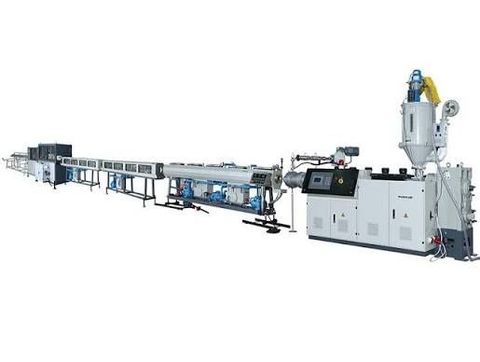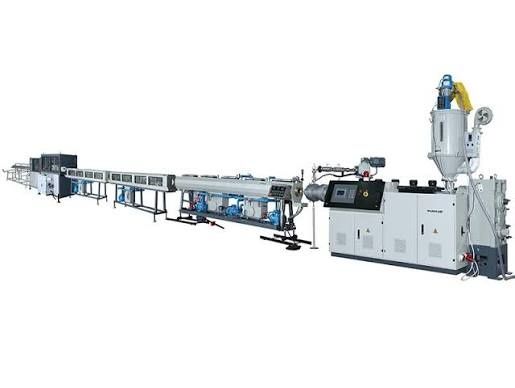
Pipe extrusion is a continuous manufacturing process used to produce pipes and tubes from thermoplastic materials. The process converts plastic resin into a controlled profile with a specific diameter, wall thickness, and length. Common materials include polyethylene (PE), polypropylene (PP), polyvinyl chloride (PVC), and other thermoplastics.
Modern pipe extrusion combines material preparation, heating, shaping, cooling, sizing, measurement, and cutting. Understanding these stages helps engineers, students, manufacturers, and general readers learn how modern pipe manufacturing works and why process control is important.
Context – Understanding Pipe Extrusion
Pipe extrusion is a manufacturing method in which plastic material is melted and pushed through a specially shaped die. The die creates the basic pipe profile, while downstream equipment determines its dimensions and final form.
The process normally begins with plastic pellets or granules. These materials enter an extruder through a hopper. A rotating screw moves the material through a heated barrel, where mechanical movement and controlled heat transform the solid material into a uniform melt.
The molten plastic then passes through a pipe extrusion die. The die determines the general shape of the pipe. After leaving the die, the hot pipe enters a calibration and cooling section.
Typical stages include:
- Material feeding
- Melting and mixing
- Extrusion through the die
- Diameter calibration
- Vacuum or pressure sizing
- Cooling
- Haul-off
- Cutting or coiling
- Inspection and measurement
Different pipe designs require different process settings. For example, a rigid PVC pipe and a flexible polyethylene pipe can require different temperatures, screw designs, cooling methods, and production speeds.
| Stage | Main Function | Important Control |
|---|---|---|
| Feeding | Moves raw material into the extruder | Feed rate |
| Melting | Converts pellets into a melt | Temperature |
| Die forming | Creates pipe geometry | Die dimensions |
| Calibration | Controls outside dimensions | Vacuum or sizing |
| Cooling | Solidifies the pipe | Water temperature |
| Haul-off | Maintains movement and speed | Line speed |
| Cutting | Creates required lengths | Cut timing |
| Inspection | Checks pipe characteristics | Measurement systems |
Importance – Why Pipe Extrusion Matters
Pipe extrusion is important because plastic pipes are used across many areas of infrastructure and manufacturing. Applications include water distribution, drainage, irrigation, electrical conduit, telecommunications protection, industrial processes, and building systems.
The process allows manufacturers to produce long, continuous pipe with controlled dimensions. Consistent wall thickness and outside diameter are particularly important because changes can affect installation, mechanical performance, joining, and pressure behavior.
Pipe extrusion also affects several groups:
- Engineers designing piping systems
- Manufacturers operating extrusion lines
- Construction and infrastructure planners
- Quality-control personnel
- Standards and regulatory organizations
- Students learning polymer processing
Material selection is another important factor. PE pipes are widely associated with water, gas, and industrial applications, while PVC is commonly used for drainage, conduit, and various piping systems. PP is used in applications where its chemical and temperature characteristics are appropriate.
The final pipe characteristics depend on material formulation, processing conditions, equipment design, cooling, and dimensional control.
Recent Updates – Trends in Modern Pipe Manufacturing
Modern pipe extrusion increasingly uses automated monitoring and digital control. Sensors can continuously measure parameters such as melt temperature, pressure, line speed, pipe diameter, and wall thickness.
Inline measurement systems can detect dimensional changes during production. When connected to control systems, measurement data can help maintain process consistency and identify deviations earlier.
Another development is the increased use of recycled or recycled-content polymers in suitable applications. Their use depends on material requirements, regulatory conditions, application standards, and the characteristics of the final pipe.
Energy management is also receiving greater attention. Extrusion lines use electrical energy for heating, screw rotation, cooling, pumps, and auxiliary equipment. Modern equipment can use improved temperature control, efficient drives, and optimized cooling systems to manage energy consumption.
Other developments include:
- Automated process monitoring
- Computer-based extrusion controls
- Inline dimensional measurement
- Multi-layer pipe extrusion
- Improved screw and die designs
- Digital production records
- Advanced cooling systems
- Greater use of material recycling where appropriate
Multi-layer extrusion is particularly useful when different material characteristics are needed within one pipe structure. Several extruders can feed separate layers into a specialized die, creating a composite pipe with defined functional properties.
Laws or Policies – Standards and Regulatory Considerations
Pipe extrusion is affected by regulations and technical standards that vary according to material, application, country, and intended use. There is no single worldwide rule covering every type of extruded pipe.
For example, drinking-water applications can have requirements concerning materials that come into contact with potable water. Gas distribution pipes can be subject to additional safety and performance requirements. Construction and drainage applications may follow separate standards.
Common standards organizations include ASTM International, ISO, EN standards bodies, and national standards organizations. In India, relevant requirements may involve the Bureau of Indian Standards (BIS), depending on the pipe type and application.
Regulatory considerations can include:
- Material composition
- Dimensional tolerances
- Pressure performance
- Mechanical properties
- Chemical resistance
- Marking and identification
- Testing procedures
- Environmental requirements
- Product application restrictions
Manufacturers and users should identify the standard applicable to the specific pipe and intended application rather than assuming that one standard applies to every product.
Environmental regulations may also address plastic waste, recycling, production emissions, and material handling. These requirements differ between jurisdictions and can change over time.
Tools and Resources – Learning Pipe Extrusion
Several technical resources can help readers understand pipe extrusion in greater detail. Standards organizations publish technical documents covering dimensions, testing, materials, and application requirements.
Useful resources include:
- ISO publications for international standards
- ASTM resources for material and testing standards
- BIS publications for applicable Indian standards
- Engineering handbooks covering polymer processing
- Extrusion equipment manuals
- Polymer material technical data sheets
- Pipe dimension calculators
- Wall-thickness and pressure-rating references
- University polymer-processing resources
Calculators can help explain relationships between pipe diameter, wall thickness, material density, extrusion rate, and line speed. However, calculated values should not replace applicable engineering standards or validated testing.
For technical projects, it is useful to record material type, extrusion temperature ranges, screw speed, die configuration, cooling conditions, haul-off speed, and dimensional measurements. Keeping these details organized can make process analysis easier.
FAQs – Pipe Extrusion Basics
What is pipe extrusion?
Pipe extrusion is a continuous process in which thermoplastic material is melted and pushed through a die to create a pipe profile. The pipe is then sized, cooled, measured, and cut or coiled.
Which materials are commonly used?
Common materials include polyethylene, polypropylene, PVC, and other thermoplastics. Material selection depends on mechanical, chemical, temperature, environmental, and application requirements.
How is pipe diameter controlled?
Diameter can be controlled through die design, calibration equipment, vacuum sizing, cooling conditions, haul-off speed, and automated measurement systems.
Why is cooling important?
Cooling solidifies the extruded material and helps maintain the required pipe dimensions. Uneven or poorly controlled cooling can contribute to dimensional variation or deformation.
What standards apply to extruded pipes?
The applicable standard depends on the pipe material, application, and jurisdiction. ISO, ASTM, EN, BIS, and other national or regional standards may apply to particular pipe categories.
Conclusion – Key Pipe Extrusion Insights
Pipe extrusion is a continuous manufacturing process that transforms thermoplastic materials into pipes with controlled dimensions. It involves several connected stages, including material preparation, melting, die forming, sizing, cooling, haul-off, cutting, and inspection.
Modern pipe manufacturing increasingly combines extrusion equipment with sensors, automated controls, digital measurement, and improved material-management practices. These developments support more consistent process monitoring while standards and regulations define requirements for particular applications.
Understanding the fundamentals of pipe extrusion provides a useful foundation for studying polymer processing and industrial manufacturing. The most important factors include material selection, equipment configuration, temperature control, dimensional accuracy, cooling, and applicable standards.
For a specific pipe application, technical requirements should always be checked against the relevant national or international standards. This is especially important for systems involving drinking water, gas distribution, pressure applications, or other regulated uses.