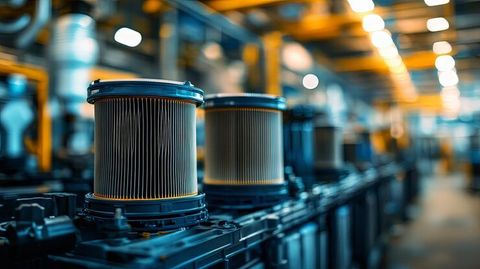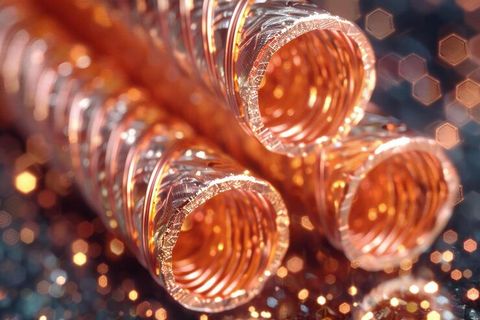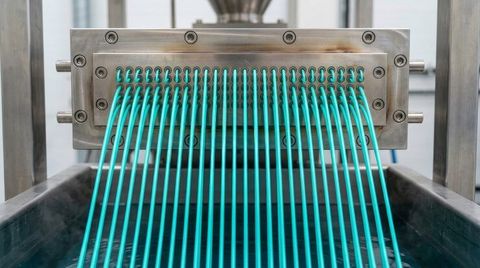
Copper cable granulators are industrial machines designed to separate copper from the insulation materials surrounding electrical wires and cables. They play an important role in metal recycling by recovering copper from discarded cables, electrical equipment, and industrial wiring. The recovered copper can then enter secondary metal processing and manufacturing.
Copper is widely used because it conducts electricity efficiently, resists corrosion, and can be recycled repeatedly without losing its fundamental properties. It is found in power transmission systems, household wiring, telecommunications infrastructure, electric motors, electronic equipment, and renewable energy installations.
When electrical cables reach the end of their useful life, their metal content remains valuable as a recyclable material. However, copper wires are often covered with plastic, rubber, or other insulating materials. Separating these materials safely and efficiently requires suitable processing equipment.
A copper cable granulator typically uses mechanical processes such as cutting, crushing, granulation, screening, and air separation. Depending on the machine design, additional separation technologies may be used to improve the purity of the recovered metal.
How Copper Cable Granulators Work
The recycling process generally involves several stages, although the exact sequence depends on the equipment and the type of cable being processed.
Cable preparation: Incoming cables are inspected and sorted according to their size, insulation, and material composition.
Initial shredding: Larger cables may pass through a cutting or shredding machine to reduce their dimensions.
Granulation: Rotating blades break the cables into smaller particles, separating the copper strands from much of the insulation.
Screening: Screens classify particles according to their size and help direct materials through the separation system.
Air separation: Controlled airflow separates lighter insulation fragments from heavier copper particles.
Metal collection: The recovered copper is collected for quality assessment and further processing when necessary.
The final output depends on cable composition, particle size, machine configuration, maintenance, and operating conditions.
Main Types of Copper Cable Granulators
Different copper wire recycling machines are designed for different processing volumes and cable characteristics.
Machine type | Main function | Typical application |
|---|---|---|
Compact granulator | Processes smaller batches of cable | Small recycling operations |
Integrated granulation system | Combines several processing stages | Medium and large facilities |
Industrial cable granulator | Handles higher processing volumes | Industrial recycling plants |
Dry separation system | Separates metal and insulation mechanically | General insulated cable recycling |
Cable stripping machine | Removes insulation from suitable cables | Thick or relatively uniform cables |
A granulator and a cable stripper are not identical. Stripping equipment removes insulation from selected cables, while granulators generally reduce cable material into smaller pieces and separate the metal mechanically. The most suitable approach depends on the cable feedstock and the required output quality.
Why Copper Cable Granulators Matter Today
Copper cable granulators support resource recovery, industrial waste management, and the circular economy. As electrical infrastructure expands, recycling can help recover metal from retired wiring instead of relying entirely on newly extracted copper.
Copper Recovery and Resource Efficiency
Copper is an important material in electricity networks, electric vehicles, electronics, telecommunications, and renewable energy systems. Recycling copper-bearing cables helps retain useful metal within the manufacturing cycle.
Recovered copper can be used as a secondary raw material after suitable quality checks and any necessary refining. The actual environmental benefit depends on the energy consumed during processing, transport requirements, contamination levels, and the alternative source of copper.
Waste Reduction and Material Separation
Discarded cables contain both metal and insulating materials. If mixed cable waste is handled improperly, recoverable copper may be lost, while uncontrolled burning can release harmful smoke and pollutants.
Mechanical cable granulation provides an alternative to open burning by separating materials through controlled processing. It can also make different waste streams easier to handle and document.
Key benefits include:
Recovery of copper from insulated electrical cables.
Separation of metal from plastic and rubber insulation.
Reduced dependence on manual processing for suitable cable streams.
Improved material sorting and recycling efficiency.
Better tracking of recovered metal and residual waste.
These benefits are not automatic. Appropriate equipment, trained operators, ventilation, dust control, and responsible management of the separated materials remain essential.
Industries That Use Copper Cable Recycling Equipment
Copper cable granulators are relevant to several industries and organizations.
Electrical contractors: Retired wiring and installation offcuts can enter established recycling channels.
Demolition companies: Building renovations and infrastructure removal can generate large volumes of insulated cables.
Electrical equipment recyclers: Motors, appliances, and other equipment may contain recoverable copper wiring.
Telecommunications operators: Network upgrades can generate obsolete cables and wiring components.
Manufacturing facilities: Production offcuts and rejected cable materials may be suitable for recovery.
Metal recycling plants: Granulation can help separate copper from insulation before further material processing.
Each organization needs to determine whether its materials are suitable for granulation or require a different recycling method.
Recent Updates and Industry Trends
Copper cable recycling is influenced by changing waste regulations, improvements in mechanical separation, and growing attention to the traceability of recycled materials.
International E-Waste Controls Since January 2025
On 1 January 2025, amendments to the Basel Convention expanded international controls on electrical and electronic waste shipments. The amendments cover relevant hazardous and non-hazardous e-waste streams, including certain materials produced during processing, and generally require prior informed consent for controlled transboundary movements. Their application depends on the waste classification and the countries involved.
This development matters to recycling operators handling electronic scrap or cable-containing waste across national borders. Businesses need to assess whether a particular shipment falls within the regulated categories rather than assuming that material intended for recycling is exempt.
European Waste Policy Developments in 2025
In July 2025, the European Commission published an evaluation of the Waste Electrical and Electronic Equipment (WEEE) Directive. The evaluation examined whether the existing framework remained suitable and whether changes or simplification might be needed. It was an evaluation of the policy framework, not a blanket new operating requirement for every cable granulator.
Equipment and Process Improvements
Current areas of technical development include better particle-size control, more consistent separation, improved monitoring, and more effective dust collection. Some facilities use sensors, automated feed controls, and integrated material-handling systems to maintain consistent processing conditions.
However, equipment capabilities vary. A higher advertised throughput does not necessarily mean greater copper recovery or better output purity. Operators should evaluate performance using representative cable samples and documented test results.
Laws and Policies Affecting Copper Cable Granulators
Copper cable recycling is affected by environmental protection rules, waste classification requirements, occupational safety standards, and restrictions on international waste shipments. The applicable rules depend on the country, the materials being processed, and whether the operation handles ordinary cable scrap or regulated electronic waste.
Environmental and Waste Management Requirements
Recycling facilities may need environmental permits, appropriate waste handling procedures, emissions controls, and compliant arrangements for storing and transporting discarded materials. Requirements can also cover workplace dust, noise, machinery guarding, and the disposal of residual insulation.
Operators should distinguish between clean, separately collected copper cable scrap and cables originating from electronic equipment or potentially hazardous waste streams. Their legal classifications may differ.
Important Regulations in India
In India, recycling operations should review applicable central and state environmental rules, including requirements administered by the Ministry of Environment, Forest and Climate Change and the relevant State Pollution Control Board.
The Hazardous and Other Wastes (Management and Transboundary Movement) Rules, 2016, as amended, may be relevant to particular waste streams and cross-border movements. India also has the E-Waste (Management) Rules, 2022, and subsequent amendments, which govern specified electronic waste categories.
A further development is India's 2025 amendment to the hazardous and other wastes framework, scheduled to take effect on 1 April 2026. It introduces extended producer responsibility provisions for scrap of non-ferrous metals, including copper, with obligations applying to specified stakeholders. Applicability should be checked against the final rules and the operator's role in the recycling chain.
International Shipping and Compliance
The Basel Convention regulates relevant international movements of hazardous waste and other controlled waste categories. Since January 2025, its expanded e-waste controls have made classification and shipment documentation particularly important for covered electronic waste and associated processing residues.
Before processing or transporting material, facilities should verify:
The classification of the incoming cables and resulting residues.
Applicable environmental authorizations and operating conditions.
Requirements for storage, transportation, and waste documentation.
Whether international shipment approvals are necessary.
Procedures for managing plastic insulation, dust, and contaminated fractions.
Regulatory requirements should be confirmed with the relevant authority because they vary by jurisdiction and material category.
Tools and Resources for Copper Cable Recycling
Several practical tools can help operators evaluate equipment performance, monitor environmental conditions, and maintain consistent recycling procedures.
Equipment Evaluation and Process Monitoring
1. Cable composition assessment
Inspect representative cable samples to identify conductor materials, insulation types, cable dimensions, and potential contaminants. This information helps determine whether a granulator can process the material effectively.
2. Copper recovery calculator
A basic spreadsheet can estimate potential copper recovery from known input weights and measured recovery rates.
For example, if a facility processes 1,000 kg of cable containing an estimated 60% copper, the theoretical copper content is 600 kg. If the measured recovery rate is 95% of that copper, the recovered quantity would be approximately 570 kg. These figures are illustrative, not guaranteed equipment performance.
3. Maintenance checklist
Record blade condition, screen wear, bearing temperature, unusual vibration, dust collector performance, and scheduled maintenance. Consistent records can help identify process deterioration before it causes major interruptions.
4. Material quality testing
Use appropriate weighing, sampling, and laboratory testing procedures to assess metal purity and insulation contamination. The required testing method depends on the intended application and the receiving facility's specifications.
5. Environmental and safety assessment
Evaluate dust extraction, noise levels, electrical protection, emergency stops, guarding, and worker exposure. Suitable controls depend on the installation and local safety requirements.
Performance Indicators to Track
Indicator | What it measures |
|---|---|
Throughput | Mass of cable processed per hour |
Copper recovery rate | Proportion of available copper recovered |
Copper purity | Copper content of the recovered metal |
Residual waste | Material remaining after separation |
Energy consumption | Electricity used per unit of material processed |
Equipment downtime | Time lost to maintenance or interruptions |
Tracking these indicators provides a clearer picture of operating performance than relying on machine capacity alone.
Frequently Asked Questions
What is a copper cable granulator used for?
A copper cable granulator separates copper conductors from insulating materials in suitable electrical cables. The recovered metal can then be evaluated and directed to further metal processing or manufacturing.
Which cables can be processed in a copper wire recycling machine?
Suitable materials may include insulated electrical wiring, telecommunications cables, and certain industrial cable offcuts. The machine's specifications determine acceptable cable dimensions, insulation types, and feed conditions. Cables containing hazardous substances or unsuitable components may require separate handling.
How is copper purity measured after granulation?
Purity is assessed through representative sampling and appropriate material analysis. Visual inspection alone cannot reliably establish the copper content of a batch. Separation settings, feed composition, and contamination can all affect the final result.
Are copper cable granulators environmentally friendly?
They can support responsible material recovery by separating copper mechanically rather than burning insulation. Their overall environmental impact depends on energy use, dust emissions, noise, transportation, and the management of plastic and other residual materials.
Which regulations apply to copper cable recycling equipment?
Applicable requirements depend on the country, the waste classification, and the facility's activities. They may include environmental permits, workplace safety standards, waste management rules, and international shipment controls. Operators should verify current requirements with the appropriate regulatory authorities.
Conclusion
Copper cable granulators are an important part of modern metal recovery systems. By separating copper from insulation, they help recycling facilities recover useful materials from discarded electrical cables and reduce avoidable material losses.
Effective recycling depends on more than equipment capacity. Cable composition, separation efficiency, recovered-metal purity, worker safety, environmental controls, and regulatory compliance all influence the quality of the operation.
As waste management frameworks evolve and recycling processes become more closely monitored, understanding copper cable granulation technology can help manufacturers, contractors, and recycling professionals make informed decisions about material recovery and responsible waste handling.