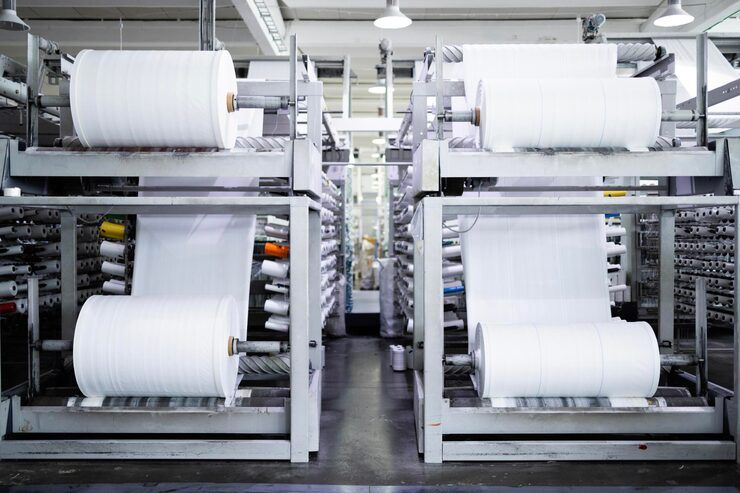
Tissue paper making machines are industrial systems used to convert pulp or suitable recycled fibre into lightweight paper products such as facial tissue, toilet tissue, kitchen towels, napkins, and other hygiene papers.
The production process involves several stages, including fibre preparation, pulp treatment, sheet formation, pressing, drying, creping, winding, converting, and packaging. The exact configuration depends on the type of tissue being produced, its basis weight, softness, absorbency, strength, and intended application.
Modern tissue paper production combines mechanical engineering with paper chemistry, automation, energy management, and quality control. A complete tissue paper manufacturing line can include stock preparation equipment, a tissue machine, drying systems, reels, converting machines, embossing equipment, folding units, and packaging equipment.
India is an important example of a growing paper and packaging market. Current industry data indicates that Indian paper and paperboard production maintained high capacity utilization during FY2025–26, while the broader packaging sector continues to expand.
Main Types of Tissue Paper Machines
Different machines are used at different stages of production.
Pulp preparation systems
Stock preparation systems
Tissue paper machines
Crescent former machines
Yankee drying systems
Rewinding machines
Embossing machines
Folding machines
Napkin machines
Toilet-roll converting machines
Facial-tissue converting machines
Automatic packaging systems
A large integrated tissue paper production line can combine several of these systems, while smaller manufacturing operations may use a more limited configuration.
How Tissue Paper Is Produced
The general production sequence can be summarized as:
Raw material → Pulp preparation → Stock preparation → Sheet formation → Pressing → Drying → Creping → Reeling → Converting → Quality inspection → Packaging
The drying stage is particularly important because tissue manufacturing requires substantial energy management. Yankee dryers and associated steam systems are commonly used to remove moisture while developing the required sheet characteristics.
Why Tissue Paper Making Machines Matter Today
Tissue products are used in homes, offices, hotels, restaurants, healthcare environments, airports, transportation facilities, and public buildings.
This broad usage creates continuing demand for efficient tissue production technology.
Growing Hygiene-Paper Demand
Modern consumers increasingly use disposable paper products for personal hygiene, cleaning, food-related applications, and public facilities.
This has encouraged manufacturers to focus on:
Higher production efficiency
Consistent paper quality
Lower energy consumption
Improved fibre utilization
Automation
Reduced material waste
Flexible production formats
Better process monitoring
For businesses researching paper manufacturing equipment, the important consideration is not simply machine speed. Production capacity must be balanced with paper quality, energy use, raw-material availability, maintenance requirements, and downstream converting capability.
Automation and Process Control
Automation has become an important part of modern tissue production.
Sensors and control systems can monitor variables such as:
Moisture
Basis weight
Machine speed
Steam pressure
Temperature
Tension
Fibre consistency
Reel diameter
Energy consumption
Automated controls can help operators maintain more consistent production conditions and identify process deviations earlier.
Machine Capacity and Production Planning
Production capacity is normally expressed in tonnes per day or tonnes per year, although actual output depends on operating hours, machine speed, paper basis weight, downtime, trim losses, product changes, and maintenance.
A simple planning formula is:
Annual production ≈ Machine output × Operating hours × Utilization rate
For example, a machine theoretically capable of producing 100 tonnes per day will not necessarily produce 36,500 tonnes in a year because maintenance, grade changes, shutdowns, and other interruptions affect actual output.
| Production factor | Effect on output |
|---|---|
| Machine speed | Raises potential throughput |
| Basis weight | Changes tonnes produced at a given sheet area |
| Operating hours | Determines available production time |
| Downtime | Reduces annual output |
| Grade changes | Affect machine availability |
| Raw material quality | Influences runnability |
| Drying capacity | Can limit production speed |
| Maintenance | Supports consistent operation |
Recent Developments in Tissue and Paper Manufacturing
The paper industry has continued to focus on automation, production efficiency, resource management, recycled fibre, and sustainability during 2025 and 2026.
Indian Paper Industry Maintains High Capacity Utilization
According to industry information updated in September 2026, Indian paper and paperboard manufacturers represented by IPMA member mills reported production of approximately 5.208 million tonnes against installed capacity of approximately 5.368 million tonnes during FY2025–26. This represents utilization of about 97% among those reported mills.
Although this figure covers paper and paperboard more broadly rather than tissue alone, it illustrates the high utilization environment in India's paper manufacturing sector.
Greater Focus on Recycled Fibre
Paper manufacturers are also paying greater attention to fibre recovery and circular-material systems.
CPCB guidance for pulp and paper industries emphasizes water recycling, pollution prevention, process standardization, and resource efficiency. Its recent Charter 3.0 includes measures involving water-flow monitoring, wastewater treatment, sludge management, and online environmental monitoring.
For tissue manufacturing, recycled fibre can be appropriate for some product categories, although fibre selection depends on hygiene requirements, softness, strength, brightness, and the intended application.
Automation and Digital Monitoring
Newer tissue production systems increasingly integrate digital controls and sensors.
Common areas for automation include:
Automatic basis-weight control
Moisture monitoring
Machine-speed control
Steam management
Reel control
Web-break detection
Production data collection
Preventive-maintenance monitoring
These technologies can help reduce process variability and provide manufacturers with more detailed production information.
Sustainability and Resource Efficiency
Water and energy management are becoming increasingly important in paper manufacturing.
Large pulp and paper facilities can have substantial water requirements, and environmental authorities in India have established specific wastewater standards and pollution-control expectations for the sector.
Consequently, modern machine selection increasingly considers energy consumption, water recycling, heat recovery, fibre efficiency, and wastewater treatment alongside production capacity.
Laws, Regulations and Policies in India
India provides a useful regulatory example because tissue paper manufacturing can involve industrial pollution controls, product-quality standards, factory requirements, water management, and waste regulations.
Environmental Compliance
The Central Pollution Control Board identifies pulp and paper manufacturing as a major industrial pollution category because of its potential effects on water and air quality.
CPCB guidance states that pulp and paper facilities need appropriate effluent-treatment systems and must comply with applicable environmental standards and conditions established by pollution-control authorities.
Applicable requirements can include:
Effluent treatment
Water-use monitoring
Air-emission controls
Waste management
Sludge management
Environmental monitoring
Consent conditions from the relevant pollution-control authority
The exact requirements depend on the facility's size, process, location, raw materials, and applicable approvals.
Water and Wastewater Requirements
CPCB's pulp and paper guidance includes standards for treated effluent and wastewater discharge. For example, the published standards specify parameters such as pH, total suspended solids, BOD, and COD for relevant categories of pulp and paper mills.
The sector's Charter 3.0 also identifies measures such as flow meters, improved effluent-treatment systems, sludge dewatering, green-belt development, and online continuous effluent monitoring for relevant facilities.
BIS Standards and Product Quality
The Bureau of Indian Standards provides a Know Your Standard platform where manufacturers can search Indian Standards by product name or standard number and review associated documents, amendments, testing information, and laboratory details. The platform was updated in May 2026.
Not every paper product automatically requires mandatory BIS certification. BIS explains that certification is generally voluntary unless the Central Government makes compliance compulsory through an applicable requirement or Quality Control Order.
Manufacturers should therefore identify the exact standard applicable to their finished product rather than assuming that every tissue product follows the same certification pathway.
Tools and Resources for Tissue Paper Manufacturing
Manufacturers, engineers, and researchers can use several technical resources when evaluating tissue production machinery.
Production Calculators
Useful calculations include:
Production capacity per day
Annual production estimates
Machine utilization
Fibre consumption
Basis-weight calculations
Moisture content
Energy consumption per tonne
Water consumption per tonne
Reel length
Converting yield
A production spreadsheet can combine machine speed, sheet width, basis weight, operating hours, and utilization to estimate theoretical and practical output.
Quality-Control Equipment
A tissue paper laboratory may use instruments for measuring:
Basis weight
Thickness
Moisture
Tensile strength
Tear strength
Absorbency
Brightness
Softness
Crepe characteristics
The exact test methods depend on the applicable product standard and intended tissue application.
Useful Online Resources
Manufacturers can consult:
Bureau of Indian Standards
CPCB publications
State Pollution Control Board resources
Industrial energy-efficiency resources
Paper-industry associations
Equipment technical manuals
Laboratory testing facilities
Industrial safety guidance
BIS also provides laboratory and standard-related information through its online systems, helping manufacturers identify testing capabilities associated with particular Indian Standards.
Machine Selection Checklist
Before selecting tissue manufacturing equipment, manufacturers can compare:
Rated production capacity
Machine width
Operating speed
Basis-weight range
Fibre compatibility
Drying technology
Energy requirements
Automation level
Water requirements
Maintenance requirements
Quality-control systems
Environmental-control equipment
This approach is more useful than comparing machines solely on headline production figures.
Frequently Asked Questions
What is a tissue paper making machine?
It is industrial equipment used to transform pulp or suitable fibre material into lightweight tissue paper. A complete production line may include pulp preparation, sheet formation, drying, creping, reeling, converting, and packaging equipment.
What raw materials are used in tissue paper production?
Virgin wood pulp and recycled fibre are common raw materials. The appropriate material depends on the desired softness, strength, absorbency, brightness, hygiene requirements, and final product.
What is a Yankee dryer?
A Yankee dryer is a large heated cylinder used to dry tissue paper and support the creping process. It is an important component in many conventional tissue paper machines.
Does a tissue paper factory need environmental approvals in India?
Industrial paper manufacturing can be subject to environmental requirements involving wastewater, air emissions, waste management, and pollution-control consent. The exact requirements depend on the facility and its location. CPCB identifies pulp and paper manufacturing as a significant industrial pollution category.
Is BIS certification mandatory for tissue paper?
Not necessarily. BIS explains that certification is generally voluntary unless a product has been brought under compulsory certification through an applicable government requirement. Manufacturers should check the current BIS database for the exact product and standard involved.
Conclusion
Tissue paper making machines combine mechanical engineering, paper science, automation, energy management, and quality control to produce lightweight hygiene papers at industrial scale.
Modern production systems are increasingly focused on automation, consistent quality, efficient drying, fibre utilization, water management, and environmental monitoring. These factors are important because tissue manufacturing operates within a broader paper industry that must manage both production efficiency and environmental responsibilities.
India's paper sector remained highly utilized during FY2025–26, while current CPCB guidance continues to emphasize water recycling, wastewater treatment, monitoring, and pollution prevention across pulp and paper manufacturing.
For manufacturers, selecting appropriate tissue machinery requires consideration of production capacity, fibre type, basis weight, drying technology, automation, energy consumption, water requirements, quality control, and regulatory obligations.
BIS resources can help manufacturers identify relevant Indian Standards and testing information, while CPCB and state pollution-control authorities provide important environmental guidance.
As tissue consumption and paper-sector modernization continue, machine development is likely to focus increasingly on automation, resource efficiency, digital monitoring, recycled-fibre utilization, and lower environmental impact. A well-planned production system must therefore balance output, paper quality, operational reliability, and responsible resource management.