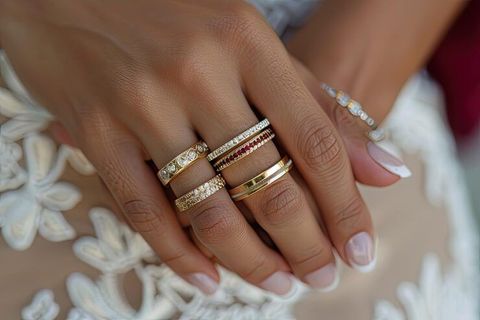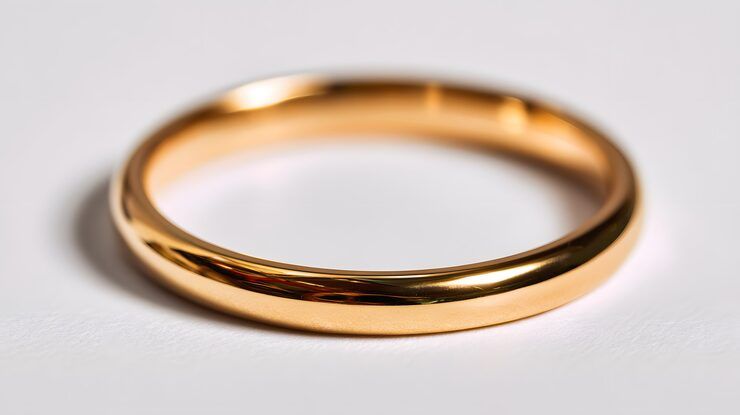
Plain gold bands are simple rings made primarily from gold, without prominent gemstones, elaborate engraving, or complex decorative settings. Their uncomplicated appearance makes them suitable for wedding rings, everyday jewelry, personal accessories, and traditional ceremonies across many cultures.
Although plain gold bands may look similar at first glance, they can differ considerably in gold purity, color, width, thickness, weight, manufacturing method, and surface finish. Understanding these differences helps explain how a ring's appearance, durability, and maintenance requirements are determined.
Gold has been valued for centuries because it is resistant to corrosion, can be shaped into intricate forms, and retains its characteristic metallic appearance. However, pure gold is relatively soft, so many rings contain additional metals to improve their hardness and practical performance.
Understanding Plain Gold Bands
A plain gold band generally has a continuous circular shape and a relatively uncomplicated surface. Its design may be flat, rounded, slightly curved, or gently beveled along the edges.
Some bands have a polished finish that reflects light, while others feature a brushed or satin finish with a softer appearance. The inside of the ring may also be rounded to improve comfort.
Plain gold bands are used for different purposes, including:
Wedding and commitment rings
Everyday jewelry
Traditional and cultural ceremonies
Minimalist personal accessories
Anniversary jewelry
Heirloom jewelry
Matching rings for couples
The absence of prominent decorative features does not mean that every band is identical. Small differences in proportions, finishing, and metal composition can substantially affect its appearance.
Gold Purity and Karat Ratings
Gold purity describes the proportion of gold in a metal alloy. The karat system expresses this proportion out of 24 parts.
For example, 18-karat gold contains 18 parts gold and six parts other metals. Those additional metals can influence hardness, color, and resistance to everyday wear.
| Gold Purity | Gold Content | General Characteristics |
|---|---|---|
| 24K | Approximately 99.9% | Very pure and relatively soft |
| 22K | Approximately 91.7% | High gold content; relatively soft |
| 18K | 75% | High gold content with added alloy metals |
| 14K | Approximately 58.3% | Lower gold content and generally greater hardness than higher-karat alloys |
| 10K | Approximately 41.7% | Lower gold content with a substantial proportion of other metals |
Actual composition depends on the applicable standard and the manufacturer's alloy formulation.
Gold Colors and Alloy Composition
Plain gold bands are available in several colors. Yellow gold retains the traditional gold appearance, while white and rose gold are created by combining gold with other metals.
Yellow gold commonly contains gold, silver, and copper in varying proportions. The resulting alloy maintains a warm golden color.
White gold uses metals such as palladium or nickel, depending on the formulation. Some white gold jewelry receives a rhodium coating to create a brighter white surface.
Rose gold contains a higher proportion of copper than many yellow gold alloys, producing a pink or reddish tone.
The color alone does not establish gold purity. Two rings with different colors may have the same karat rating but different alloy compositions.
Ring Width, Thickness, and Fit
The width and thickness of a plain gold band affect its appearance, weight, and structural characteristics.
Narrow bands generally create a subtle appearance, while wider bands provide a more prominent visual profile. Thickness also matters because very thin rings may be more vulnerable to bending or deformation under certain conditions.
Ring sizing is another important consideration. Finger dimensions can change temporarily with temperature, physical activity, and other factors.
A properly fitted ring should remain secure without causing persistent discomfort, restricting circulation, or becoming difficult to remove.
Why Plain Gold Bands Matter Today
Plain gold bands remain relevant because they combine a simple design with a long history of cultural, personal, and symbolic significance.
Minimalist Jewelry Trends
Minimalist jewelry emphasizes uncomplicated shapes, restrained decoration, and versatile designs. Plain gold bands fit this approach because they can be worn independently or alongside other rings.
Their relatively simple construction also makes them adaptable to different clothing styles and personal preferences.
Wedding and Cultural Traditions
Gold rings have symbolic meanings in many societies. They may represent commitment, family relationships, ceremonial traditions, or personal milestones.
The meaning of a ring depends on cultural and individual practices rather than the metal alone. In some traditions, the ring's gold content, design, or method of presentation carries additional significance.
Durability and Everyday Use
Gold does not rust in the way iron does, but gold jewelry can still become scratched, bent, or worn through repeated contact with hard surfaces.
The alloy composition, ring dimensions, and activities of the wearer influence its long-term condition.
People who frequently handle tools, exercise with weights, or work with abrasive materials may need to remove rings during certain activities to reduce damage or injury risks.
Recent Developments and Jewelry Trends
Gold jewelry trends during 2025 and 2026 have continued to reflect interest in understated designs, personal expression, material transparency, and responsible sourcing.
Minimalist and Unisex Designs
Simple gold bands remain part of the wider trend toward gender-neutral jewelry and designs that can be worn in different settings.
Contemporary styles include narrow polished bands, wider flat-profile rings, brushed finishes, and combinations of yellow, white, and rose gold.
These design variations allow plain bands to maintain a traditional appearance while accommodating different preferences.
Recycled Gold and Responsible Sourcing
Jewelry manufacturers have continued to discuss recycled gold and responsible sourcing as part of broader sustainability efforts.
Recycled gold is recovered from existing jewelry, electronic components, industrial materials, or other gold-bearing sources and refined for further use.
Its environmental impact depends on collection methods, refining processes, energy requirements, and the alternative source of the metal. The term alone does not guarantee that a product meets a particular environmental standard.
Digital Jewelry Information
Digital tools increasingly support jewelry research through product specifications, ring-size guides, material descriptions, and digital design previews.
These tools can help explain ring dimensions and appearance, but photographs and digital previews cannot always represent actual color, surface texture, weight, or fit accurately.
Because gold market prices and manufacturing conditions change over time, current product documentation is more useful than relying on old estimates or generalized online claims.
Laws, Regulations, and Gold Hallmarking
Gold jewelry regulations differ by country. Hallmarking systems, precious-metal purity requirements, consumer-protection laws, and rules governing product descriptions help establish greater transparency.
Gold Hallmarking in India
India operates a gold hallmarking framework administered by the Bureau of Indian Standards.
Hallmarking helps identify the purity of gold jewelry and provides information that can be checked against applicable standards. The system includes purity grades such as 22K916, 18K750, and 14K585.
India's hallmarking requirements have expanded through phased implementation, and applicable obligations can depend on the location, product, and relevant exemptions. Consumers should check current Bureau of Indian Standards guidance for the latest requirements.
Consumer Protection and Metal Descriptions
Jewelry descriptions should accurately represent gold purity and composition. A ring described as solid gold is different from gold-plated jewelry, which has a surface layer of gold over another material.
Consumers should review the stated karat rating, hallmark details, documentation, and applicable consumer-protection requirements in their country.
International Standards
Different countries use different hallmarking systems. Some jurisdictions require specific purity marks or independent assay procedures, while others rely on alternative regulatory arrangements.
When examining jewelry from another country, it is important to understand the marking system used there rather than assuming every stamp has the same legal meaning.
Tools and Resources for Understanding Gold Bands
Several resources can help consumers understand gold composition, ring measurements, and jewelry maintenance.
Gold Purity Calculator
A simple purity calculation can estimate the percentage of gold represented by a karat rating:
Gold percentage = Karat rating ÷ 24 × 100
For example, 18K gold contains 75% gold by this calculation.
This formula explains nominal purity but does not independently verify the composition of a particular ring.
Ring Size Guides
Ring-size charts can help compare measurements across different sizing systems. Measuring the inside diameter of a well-fitting ring may also provide a reference, although professional sizing is more reliable when precision matters.
Hallmark Verification Resources
Official hallmarking websites and databases can help consumers understand purity marks and relevant identification requirements.
In India, the Bureau of Indian Standards provides information about hallmarking and associated verification procedures.
Jewelry Care Resources
Basic maintenance guidance includes:
Cleaning jewelry with a suitable, gentle method
Avoiding harsh chemicals unless the manufacturer confirms compatibility
Storing rings separately to reduce scratches
Checking for deformation or deep surface damage
Removing rings during activities that create impact or entanglement risks
Seeking professional assessment when structural damage is suspected
Frequently Asked Questions
What is a plain gold band?
A plain gold band is a ring with a simple design and little or no prominent decoration. It may have a polished, brushed, rounded, or flat finish and is commonly used for wedding rings and everyday jewelry.
Which gold purity is suitable for an everyday ring?
The appropriate purity depends on personal preferences, design, and daily activities. Lower-karat alloys are generally harder than higher-karat gold alloys, while higher-karat options contain a greater proportion of gold. Ring thickness and construction also influence durability.
What is the difference between solid gold and gold-plated jewelry?
Solid gold jewelry is made from a gold alloy throughout its main structure. Gold-plated jewelry has a layer of gold applied to a different underlying material. The distinction affects composition, wear characteristics, and maintenance.
How can gold purity be checked?
Hallmarks provide an important indication of stated purity, but a stamp alone may not conclusively establish composition. Official verification methods or professional metal testing can provide additional confidence when needed.
Do plain gold bands require regular maintenance?
Yes. Although gold resists corrosion, rings can accumulate dirt, develop scratches, or become bent. Gentle cleaning, appropriate storage, and occasional inspection can help maintain their appearance and structural condition.
Conclusion
Plain gold bands combine a simple design with a long-standing role in jewelry traditions. Their appearance and practical characteristics depend on gold purity, alloy composition, ring dimensions, surface finishing, and manufacturing quality.
Recent interest in minimalist designs, recycled materials, and digital jewelry information has broadened the ways people evaluate gold bands. At the same time, hallmarking and consumer-protection frameworks remain important for understanding metal purity and product descriptions.
Knowing the difference between karat ratings, gold colors, ring construction, and maintenance requirements provides a useful foundation for evaluating plain gold jewelry. Official hallmarking information and accurate material documentation can further support informed decisions.