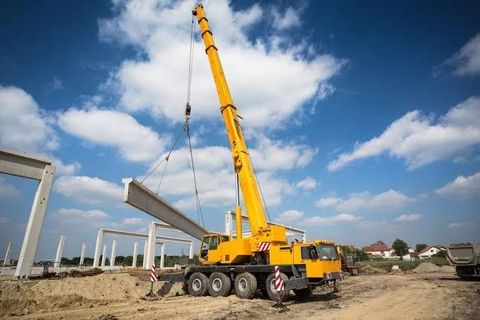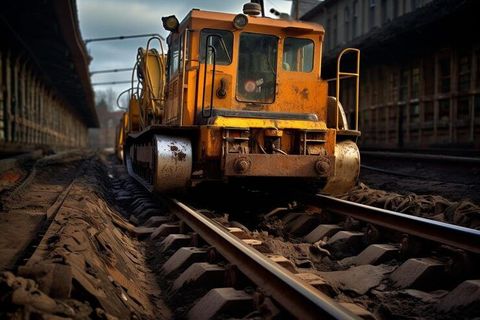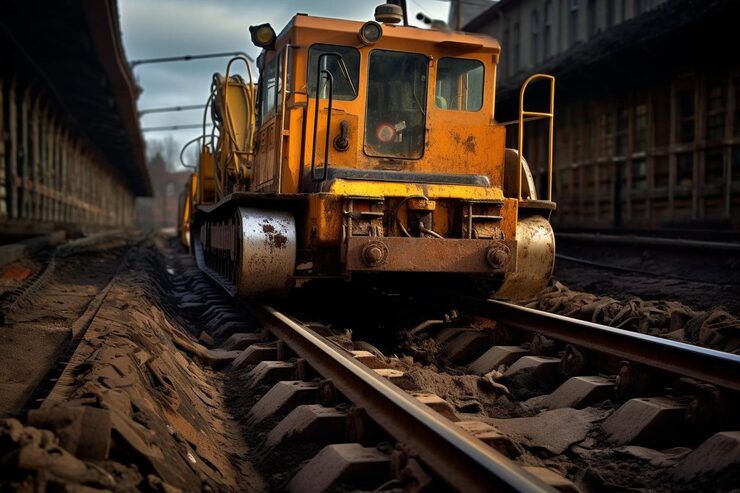
Rail track laying machines are specialized railway construction equipment used to place, renew, align, and support track components such as rails and sleepers. Modern mechanized systems can coordinate several activities that would otherwise require extensive manual handling and separate equipment.
Understanding rail track laying machines helps readers see how railway construction and renewal projects are planned, how different machines perform specific tasks, and why track geometry, safety procedures, and technical standards are important.
Context
Railway track construction involves preparing the formation, positioning sleepers, placing rails, fastening components, checking alignment, and establishing the required track geometry. During renewal projects, existing rails and sleepers may also need to be removed and replaced. Mechanized equipment helps coordinate these activities with greater consistency.
Indian Railways classifies mechanized track relaying systems into categories such as Track Laying Equipment (TLE), Track Relaying Trains (TRT), and Points and Crossing Changing/Laying Machines (PCCM). Its technical documentation also describes tamping, ballast cleaning, stabilization, and other machines used alongside track-laying equipment.
The exact machine selected depends on factors such as track gauge, track layout, renewal method, site conditions, available working time, and the type of railway infrastructure involved.
| Machine or system | Main purpose |
|---|---|
| Track Laying Equipment (TLE) | Mechanized track renewal and laying |
| Track Relaying Train (TRT) | Renewal of track components |
| Points and Crossing Machine | Turnout and crossing renewal |
| Tamping Machine | Packing ballast and correcting geometry |
| Ballast Cleaning Machine | Cleaning and processing ballast |
| Dynamic Track Stabilizer | Stabilizing newly worked track |
| Ballast Regulator | Shaping and distributing ballast |
A railway track laying operation therefore normally involves a group of complementary machines rather than one machine performing every task.
Importance
Rail track laying machines are important because railway infrastructure must maintain accurate alignment, stable support, and suitable geometry. Small deviations can affect wheel-rail interaction, ride quality, maintenance requirements, and operational safety.
Mechanization can also help coordinate work within planned railway possession or track-access periods. Indian Railways documentation identifies TLE and TRT as systems for mechanized track relaying and notes that tamping equipment may be used after renewal to achieve the required track geometry.
The subject is relevant to several groups:
- Railway infrastructure planners
- Track engineers and supervisors
- Construction and renewal teams
- Railway maintenance organizations
- Equipment operators and technical personnel
- Students studying railway engineering
Modern track work is also connected with surveying, measurement, digital records, inspection, welding, ballast management, and track geometry monitoring. This means machine selection is only one part of a larger engineering process.
Recent Updates
Recent developments in railway construction equipment have focused on higher levels of mechanization, measurement accuracy, operational efficiency, and machine integration.
Indian Railways continues to document different categories of track machines, including tamping machines, ballast cleaning machines, dynamic track stabilizers, track relaying trains, track laying equipment, point and crossing machines, ballast regulators, and rail grinding machines.
Current equipment development commonly emphasizes:
- Automated or computer-assisted track geometry measurement
- Improved machine positioning and control systems
- Better operator visibility and ergonomic controls
- Integrated monitoring of machine functions
- Improved handling of rails, sleepers, and ballast
- Reduced interruption between sequential track activities
- Compatibility with modern railway infrastructure requirements
Technical requirements are also becoming more detailed. For example, a recent Indian Railways/RDSO functional specification for heavy-duty track tampers includes requirements concerning dimensions, clearances, track spacing, operating controls, and applicable railway and electrical standards.
In Europe, technical specifications for interoperability also cover mobile railway infrastructure construction and maintenance equipment, including on-track machines.
Laws or Policies
Railway construction equipment does not operate under one universal set of rules. Requirements depend on the country, railway authority, infrastructure manager, track gauge, machine type, and intended operating environment.
In India, technical planning for mechanized track relaying refers to the Indian Railways Permanent Way Manual and Schedule of Dimensions. RDSO documentation states that surveys, longitudinal profiles, and alignment must be established according to applicable railway provisions before track-relaying activities are carried out.
Indian Railways also maintains technical handbooks and publications covering mechanized track laying and track-machine operation. The IRICEN library lists publications on mechanized track laying and handbooks for track-machine personnel.
In the European Union, infrastructure requirements are addressed through Technical Specifications for Interoperability. Commission Regulation (EU) No. 1299/2014 covers the infrastructure subsystem and applies to specified new, upgraded, or renewed railway infrastructure, subject to its scope and exclusions.
Railway operators must also consider rules governing track access, worksite protection, machine movement, electrical systems, signaling, personnel safety, and inspection. Because requirements vary by jurisdiction, project teams should consult the current rules issued by the relevant railway authority before work begins.
Tools and Resources
Reliable technical references are useful when studying rail track laying machines or planning railway construction activities.
Useful resources include:
- Indian Railways technical manuals and handbooks
- RDSO specifications and technical documents
- IRICEN railway engineering publications
- Railway infrastructure standards
- Track geometry measurement systems
- Manufacturer technical manuals
- Railway construction planning documents
- Applicable national occupational and railway safety requirements
A useful planning checklist can include:
- Identify the track type and gauge.
- Determine whether the work is new construction or renewal.
- Assess access, terrain, curves, turnouts, bridges, and tunnels.
- Select compatible machines for each work stage.
- Establish the required track alignment and geometry.
- Confirm worksite protection and movement procedures.
- Plan inspection and measurement activities.
- Verify the final track condition before normal railway operation.
Technical documentation should always be checked for its current revision because railway standards and machine specifications can change.
FAQs
What are rail track laying machines?
Rail track laying machines are specialized railway machines used for laying or renewing track components. They can handle activities involving rails, sleepers, alignment, ballast, and related track work.
What is a Track Relaying Train?
A Track Relaying Train, or TRT, is a mechanized railway system used for track renewal. Indian Railways identifies TRT as one of its systems for mechanized track relaying.
What does a tamping machine do?
A tamping machine packs ballast beneath and around sleepers and helps restore the required track geometry. Tamping may follow track renewal activities to establish suitable alignment and geometry.
Are track laying machines used only for new railways?
No. They are also widely associated with track renewal and maintenance activities. Indian Railways documentation specifically identifies track laying and relaying systems for mechanized renewal work.
Why are railway standards important for these machines?
Standards help establish requirements for machine operation, infrastructure compatibility, dimensions, safety, track geometry, and technical performance. The applicable requirements depend on the railway authority and jurisdiction.
Conclusion
Rail track laying machines are an important part of modern railway construction and renewal. Systems such as TLE, TRT, and points-and-crossing machines work alongside tampers, ballast equipment, stabilizers, and measurement systems to create and maintain railway track.
Understanding these machines requires more than knowing their names. Track gauge, alignment, geometry, worksite conditions, machine capabilities, operating procedures, and applicable railway standards all influence how mechanized track work is planned.
For accurate technical decisions, railway organizations should rely on current authority-issued specifications, engineering manuals, and project-specific requirements. Equipment documentation should also be reviewed alongside the applicable railway rules before implementation.