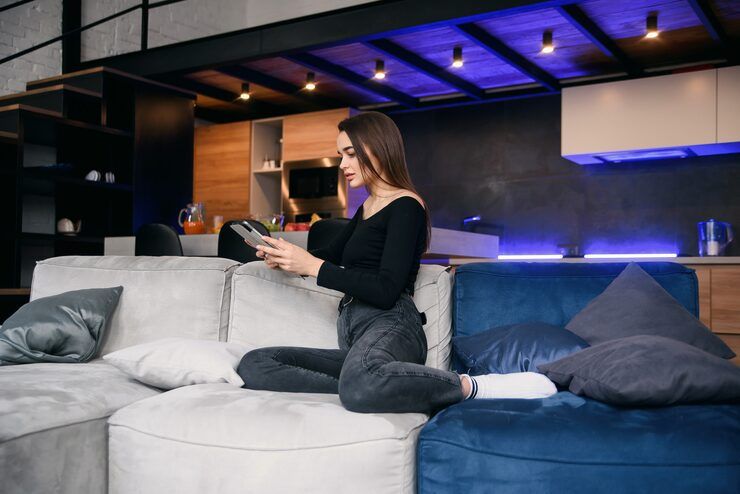
Smart sofa control systems combine electronic components, mechanical movement, and user controls to adjust the position and functions of modern sofas. These systems can operate reclining seats, adjustable headrests, lumbar supports, footrests, lighting, charging ports, and other integrated features.
Traditional sofas rely primarily on fixed structures and manually operated mechanisms. Smart sofas introduce powered adjustments and electronic controls, allowing users to change seating positions through buttons, remote controls, mobile applications, or compatible smart home systems.
The technology is part of a wider development in smart furniture and connected home environments. Its purpose is to improve seating flexibility, simplify operation, and integrate furniture functions with modern residential technology.
Understanding Smart Sofa Control Technology
A smart sofa control system typically combines a control unit, electric motors, power components, switches, sensors, and mechanical adjustment mechanisms. The exact configuration depends on the sofa's design and available features.
When a user presses a button, the control unit sends a signal to the relevant motor. The motor then moves a reclining backrest, footrest, or adjustable support into the selected position.
Some systems use wired controls built into the armrest, while others include wireless remotes or application-based interfaces.
Common components include:
Electric actuators: Convert electrical energy into controlled mechanical movement.
Control modules: Coordinate movement and respond to user commands.
Remote controls: Allow adjustments without reaching the sofa's built-in switches.
Position sensors: Help identify or regulate the movement of adjustable components.
Power supplies: Provide electricity to motors and electronic circuits.
USB charging ports: Support charging of compatible electronic devices.
Wireless communication modules: Enable selected connected functions.
Safety switches: Help prevent certain forms of unintended operation.
Not every smart sofa includes all these components. Basic powered recliners may use only motors and switches, while advanced designs may incorporate multiple adjustable zones and connected features.
How Smart Sofa Controls Work
The operation of a powered sofa begins when a user activates a control. The control module interprets the command and supplies the appropriate electrical signal to an actuator.
The actuator moves the connected mechanical assembly until the user releases the control or the system reaches a programmed limit.
Some systems support preset positions, allowing several adjustments to be coordinated through one command. More advanced configurations may use sensors to regulate movement or detect certain operating conditions.
A typical operating sequence includes:
The user selects an adjustment.
The control module receives the command.
The appropriate actuator activates.
The mechanical section moves.
The system stops when the command ends or a configured limit is reached.
The quality of this process depends on actuator capacity, mechanical design, electrical reliability, and the accuracy of the control system.
Types of Smart Sofa Control Systems
Different control arrangements serve different furniture designs and household requirements.
Wired controls: Buttons connected directly to the control unit. These are common in powered reclining furniture because they provide straightforward operation.
Wireless remote controls: Handheld devices communicate with a receiver, allowing adjustments without a fixed control cable.
Mobile application controls: Compatible systems use Bluetooth, Wi-Fi, or another supported connection to enable selected functions through a smartphone.
Preset-position controls: Users can select predefined seating configurations when the control system supports programmable positions.
Smart home integration: Some connected furniture can work with compatible home automation platforms, subject to manufacturer support and communication standards.
The availability of these functions varies by model. Wireless connectivity does not automatically mean that a sofa supports voice commands, remote operation over the internet, or integration with every smart home platform.
Why Smart Sofa Control Systems Matter
Smart sofa technology provides greater control over seating positions and can make daily furniture operation more convenient.
Seating Flexibility and Comfort
Powered adjustments allow users to change backrest angles, footrest positions, and headrest orientation with relatively little physical effort.
This can be useful in living rooms, media rooms, and other spaces where people use furniture for reading, watching television, or relaxing.
However, adjustable furniture is not a substitute for individualized medical advice or specialized seating equipment when a person has specific clinical needs.
Accessibility and Ease of Use
Electronic controls can reduce the physical effort required to adjust a sofa manually. Clearly labeled buttons and appropriately positioned controls may help people who have difficulty operating conventional reclining mechanisms.
The actual accessibility benefit depends on control placement, button force, movement speed, seat height, and the user's individual requirements.
Connected Home Environments
Smart sofas can form part of a wider connected home environment when compatible technology is available.
Possible functions include:
Coordinated lighting adjustments
Integration with entertainment settings
Control through compatible smart home platforms
Charging for personal electronic devices
Preset seating configurations
Selected automated adjustments
These features depend on the product's capabilities and should not be assumed to be present in every connected sofa.
Recent Developments in Smart Sofa Technology
Developments during 2025 and 2026 reflect broader trends in smart furniture, connected devices, and residential automation. Many changes involve improvements to existing technologies rather than entirely new sofa-specific control methods.
Matter and Smart Home Interoperability
The Matter smart home standard, maintained by the Connectivity Standards Alliance, continued evolving through updates to the connected-device ecosystem during 2025 and 2026.
Matter is intended to improve interoperability among compatible smart home products. However, support for Matter does not automatically mean that a sofa's motors or reclining controls can be operated through Matter. Furniture manufacturers must implement compatible functionality for such integration to work.
More Integrated Electronic Controls
Modern powered furniture increasingly combines multiple adjustment functions within compact control modules. Depending on the design, one system may coordinate reclining motors, headrests, USB charging, and other electronic features.
Manufacturers also continue to focus on reducing wiring complexity and making electronic components easier to inspect or replace.
Improved Safety and Movement Control
Electronic furniture design places increasing emphasis on controlled movement, reliable stopping behavior, electrical protection, and mechanical durability.
Position limits and obstruction-related safeguards may be included in particular systems, although the available protection differs between models.
Energy and Standby Consumption
As connected furniture incorporates more electronics, standby power consumption becomes another design consideration. Efficient power supplies and electronic components can help reduce unnecessary electricity use when the sofa is not actively moving.
Actual energy consumption depends on the design, frequency of adjustment, connected features, and standby behavior.
Laws, Regulations, and Product Safety
Smart sofa control systems combine electrical equipment with moving mechanical structures. Applicable requirements depend on the country where the product is manufactured, imported, or used.
Electrical Safety
Electrical components must be designed to reduce risks associated with electric shock, overheating, damaged wiring, and incorrect power connections.
In the United States, relevant requirements may include applicable electrical safety standards and certification arrangements. In the European Union, products may fall under applicable electrical safety, electromagnetic compatibility, and other product legislation, depending on their design and intended use.
A product's compliance status should be verified using its documentation rather than assumed from the presence of electronic controls.
Mechanical Safety
Powered reclining mechanisms can create pinch points between moving sections. Safe designs should consider unintended activation, moving-part clearances, stability, and appropriate stopping behavior.
Users should follow the manufacturer's instructions and keep children away from exposed mechanisms where necessary.
Wireless and Data Protection
Sofas with Bluetooth, Wi-Fi, or application-based controls may be subject to radio equipment and electromagnetic compatibility requirements.
If an application collects personal information, applicable privacy and data protection laws may also apply. Users should review permissions and understand whether the system communicates with external platforms.
Environmental Requirements
Electronic control modules, motors, cables, and batteries, where present, may require separate handling at the end of their useful life.
In the European Union, the Waste Electrical and Electronic Equipment framework establishes requirements for the collection and treatment of covered electrical and electronic equipment. The precise classification of a particular furniture product depends on the applicable rules.
Tools and Resources for Smart Sofa Systems
Several resources can help users understand product compatibility, operating requirements, and maintenance needs.
Manufacturer Documentation
Technical manuals provide information about control layouts, actuator limits, electrical ratings, reset procedures, and maintenance instructions.
Smart Home Compatibility Resources
Official documentation from smart home platform providers can help identify supported devices, connection requirements, and integration limitations.
Basic Energy Calculations
Electricity consumption can be estimated using the following formula:
Energy consumed (kWh) = Power (watts) × Operating time (hours) ÷ 1,000
For example, a 100-watt motor operating for a combined total of 10 minutes consumes approximately 0.0167 kWh. This is an illustrative calculation and excludes standby consumption or other connected components.
Maintenance Checklist
Regular inspection can help identify problems before they affect normal operation.
Check power cables for visible damage.
Keep moving mechanisms clear of loose objects.
Inspect accessible fasteners according to the manual.
Listen for unusual motor sounds.
Check remote-control batteries where applicable.
Keep electronic components dry.
Follow the manufacturer's cleaning and maintenance instructions.
Electrical repairs should be handled by appropriately qualified personnel when required.
Frequently Asked Questions
What is a smart sofa control system?
It is an electronic arrangement that controls powered sofa functions, such as reclining, headrest movement, footrest adjustment, or selected connected features.
Can a smart sofa connect to a smart home system?
Some models support integration with compatible smart home platforms. Compatibility depends on the sofa's communication technology, manufacturer implementation, and supported software.
Do all powered sofas use mobile applications?
No. Many powered sofas use built-in buttons or wired remotes. Mobile applications and wireless controls are additional features available only on compatible models.
Are smart sofa control systems energy-efficient?
Electric motors typically consume power mainly during movement, while connected electronics may also draw standby power. Actual consumption depends on the system's design and usage patterns.
What maintenance do smart sofa controls require?
Maintenance generally involves checking cables, controls, moving mechanisms, and power connections according to the manufacturer's instructions. Damaged electrical components and malfunctioning actuators should be inspected by qualified personnel when necessary.
Conclusion
Smart sofa control systems combine electric actuators, electronic controls, mechanical adjustment mechanisms, and, in some models, wireless connectivity. These technologies allow users to adjust seating positions and coordinate selected furniture functions with greater convenience.
Developments in smart home interoperability, electronic control design, movement safeguards, and energy management are shaping the wider connected furniture market. Nevertheless, features and compatibility vary considerably between products.
Understanding actuator specifications, control options, electrical safety, smart home requirements, and maintenance procedures helps users evaluate these systems more accurately. Properly designed and maintained controls can support reliable operation while helping furniture manufacturers integrate adjustable seating into modern residential environments.