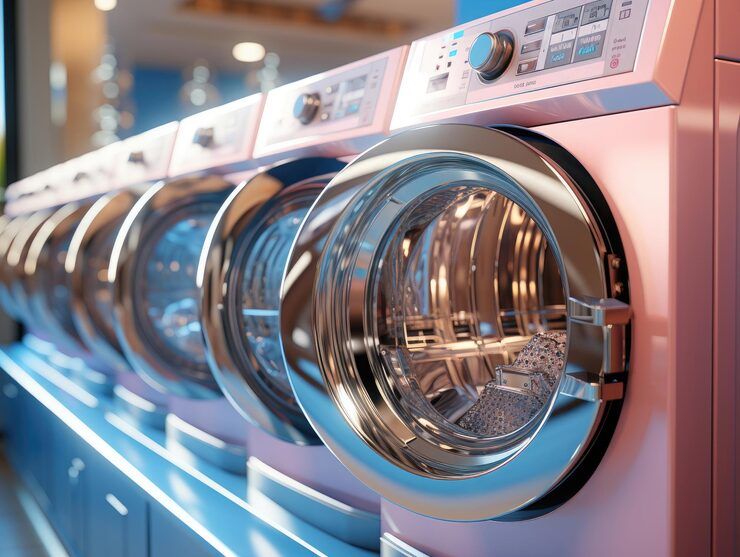
Ultrasonic washing machines use high-frequency sound waves to help remove dirt, oils, particles, and other contaminants from objects. Unlike conventional washing machines that primarily rely on mechanical movement, water flow, and detergents, ultrasonic cleaning systems create microscopic bubbles in a liquid. These bubbles form and collapse rapidly, helping loosen contamination from surfaces and small openings.
The technology is used in industrial manufacturing, laboratories, healthcare environments, electronics production, automotive maintenance, jewelry processing, and precision engineering. Depending on the design, an ultrasonic cleaning machine may be a small tabletop unit or a large industrial system with tanks, heating controls, filtration, and automated handling equipment.
Understanding Ultrasonic Cleaning Technology
The central process behind ultrasonic cleaning is called cavitation. A transducer converts electrical energy into high-frequency mechanical vibrations, which travel through the cleaning liquid.
These vibrations produce alternating pressure changes that form microscopic bubbles. When the bubbles collapse, they generate localized forces that help detach contaminants from immersed objects.
Ultrasonic cleaning commonly operates at frequencies ranging from approximately 20 kHz to several hundred kilohertz. Lower frequencies generally produce more energetic cavitation, while higher frequencies can be useful for cleaning smaller features and delicate surfaces. Actual performance depends on the equipment, liquid, temperature, frequency, and object being cleaned.
Main Components of an Ultrasonic Washing Machine
Most ultrasonic cleaning systems contain several essential components:
Cleaning tank: Holds the liquid and objects being cleaned.
Ultrasonic transducers: Generate vibrations that produce cavitation.
Generator: Supplies electrical power at the required frequency.
Control panel: Regulates cleaning time and operating conditions.
Heating system: Maintains a selected liquid temperature when required.
Basket or fixture: Positions objects inside the tank.
Filtration system: Removes suspended particles in suitable systems.
Larger industrial units may also include automatic loading, rinsing, drying, liquid-level monitoring, and programmable cleaning cycles.
Types of Ultrasonic Cleaning Equipment
Ultrasonic cleaning equipment is available in different configurations to suit the size, material, and cleanliness requirements of the objects being processed.
| Equipment Type | Typical Application | Main Consideration |
|---|---|---|
| Tabletop ultrasonic cleaner | Small components and laboratory items | Limited tank capacity |
| Industrial ultrasonic tank | Metal components and manufactured parts | Requires process control |
| Multi-tank cleaning system | Cleaning, rinsing, and drying stages | More complex operation |
| Precision ultrasonic cleaner | Small components with detailed surfaces | Frequency and material compatibility |
| Automated ultrasonic washing system | Repetitive production processes | Integration and maintenance |
Choosing a suitable configuration requires understanding the contamination, material, production volume, and required cleaning result.
Why Ultrasonic Washing Machines Matter Today
Ultrasonic cleaning is important wherever conventional wiping, brushing, or immersion alone cannot reliably remove contamination from complex surfaces.
Precision Cleaning in Manufacturing
Manufactured components often contain machining oils, polishing compounds, metal particles, and residues. These contaminants can affect assembly, coating adhesion, dimensional inspection, or the performance of precision parts.
Ultrasonic cleaning can help reach recessed areas, narrow channels, and complicated surface geometries that are difficult to clean manually. It is particularly useful when components must meet documented cleanliness requirements.
Electronics and Precision Components
Electronics manufacturing involves small components, connectors, circuit assemblies, and other parts that may be sensitive to contamination.
Ultrasonic cleaning can be suitable for certain components, but it is not universally safe for electronic assemblies. Cavitation can damage delicate structures, wire bonds, coatings, or components with trapped moisture. Material compatibility and manufacturer guidance should therefore determine the cleaning method.
Healthcare and Laboratory Applications
Ultrasonic baths are used in some healthcare and laboratory workflows to help remove debris from compatible reusable instruments and equipment.
However, ultrasonic cleaning is not the same as disinfection or sterilization. Medical instruments must undergo the complete cleaning, inspection, disinfection, and sterilization procedures required by applicable regulations and the instrument manufacturer.
Industrial Efficiency and Process Consistency
Automated cleaning systems can standardize liquid temperature, cleaning duration, and operating sequences. This can reduce variability between production batches and improve process documentation.
Potential advantages include:
Reduced dependence on manual brushing
Improved access to complex surfaces
Repeatable cleaning cycles
Compatibility with automated production lines
Reduced handling of certain contaminants
Better control of cleaning parameters
Results vary according to the cleaning chemistry, equipment configuration, and condition of the parts.
Recent Updates and Technology Trends
Ultrasonic cleaning continues to develop through improvements in process monitoring, automation, cleaning chemistry, and equipment design. However, developments in the wider ultrasonic industry do not necessarily mean that every consumer or industrial machine has changed.
Advances in Monitoring and Automation
Industrial cleaning systems increasingly use programmable controls to maintain repeatable operating conditions. Depending on the equipment, sensors can monitor liquid temperature, fill levels, operating time, and other process parameters.
Some production systems integrate ultrasonic tanks with robotic handling, rinsing, drying, and digital production records. These features can help manufacturers document cleaning cycles and identify deviations.
Developments in Standards During 2025–2026
In May 2025, the US Food and Drug Administration added the 2025 edition of IEC 62127-2, a standard concerning calibration of hydrophones used to measure ultrasonic fields, to its recognized consensus standards database. This is relevant to the broader measurement and calibration field, although it is not a universal certification requirement for ordinary ultrasonic washing machines. <Cite refs={["turn100163search7"]}/>
On February 2, 2026, the FDA's Quality Management System Regulation became effective, aligning US medical-device manufacturing quality requirements more closely with ISO 13485:2016. This matters to manufacturers of regulated medical devices and related equipment, rather than every general-purpose cleaning appliance. <Cite refs={["turn100163search10","turn100163search14"]}/>
Environmental Considerations
Ultrasonic cleaning can support the use of aqueous cleaning solutions in applications where appropriate, potentially reducing reliance on certain strong solvents. Nevertheless, environmental performance depends on the detergent, heating requirements, electricity use, water consumption, filtration, and wastewater treatment.
Manufacturers are therefore evaluating cleaning performance alongside chemical handling, waste management, and energy consumption.
Laws, Policies, and Safety Requirements
Regulatory requirements depend on where the equipment is manufactured and used, and whether it is intended for general industrial cleaning or a regulated application.
Electrical and Equipment Safety
Ultrasonic washing machines contain electrical generators and transducers, and many models also use heating elements. Equipment should meet the electrical safety and product requirements applicable in its market.
In the United States, workplace equipment may be subject to Occupational Safety and Health Administration requirements. In the European Union, applicable electrical safety, electromagnetic compatibility, and machinery legislation depends on the equipment's design and intended use.
Industrial users should verify the manufacturer's documentation, grounding requirements, enclosure protection, and instructions for safe operation.
Chemical Handling and Environmental Rules
Cleaning liquids may contain detergents, solvents, acids, alkaline compounds, or other chemicals. Their use and disposal can be governed by chemical safety and environmental regulations.
Important practices include:
Reviewing the safety data sheet for the cleaning liquid.
Using only chemicals compatible with the machine and materials.
Providing appropriate ventilation when required.
Wearing the protective equipment specified for the process.
Following local wastewater and hazardous-waste requirements.
Avoiding unapproved flammable liquids in ultrasonic tanks.
Ultrasonic agitation can increase the release of vapors from certain liquids, so chemical compatibility and ventilation are important safety considerations.
Medical Instrument Cleaning
In the United States, ultrasonic cleaners intended for medical instruments are addressed under 21 CFR 880.6150. The FDA classifies these devices as Class I medical devices, subject to the applicable regulatory provisions and limitations. <Cite refs={["turn100163search1","turn100163search3"]}/>
Cleaning is only one stage of reusable medical-device processing. The FDA emphasizes that reusable medical instruments require appropriate cleaning followed by disinfection or sterilization, as applicable to the device and its intended use. Ultrasonic cleaning alone does not establish sterility. <Cite refs={["turn100163search2"]}/>
Tools and Resources for Selecting and Operating Equipment
The following resources can help users understand ultrasonic cleaning performance and plan an appropriate process.
Equipment Selection Checklist
Before choosing a cleaning system, document:
The dimensions and number of objects to be cleaned.
The materials and surface finishes involved.
The type of contamination.
The required cleanliness level.
The appropriate frequency range.
Tank capacity and basket dimensions.
Heating and filtration requirements.
Available electrical supply.
Chemical compatibility and wastewater arrangements.
A written specification helps compare equipment based on actual process requirements rather than headline power ratings alone.
Process Monitoring Tools
Useful instruments and records can include temperature probes, timers, electrical power measurements, calibration records, and documented cleaning tests.
In precision manufacturing, cleanliness verification may also involve particle analysis, residue testing, or other methods appropriate to the component and its intended use.
Technical and Regulatory Resources
Manufacturer manuals: Explain compatible materials, approved liquids, operating procedures, and maintenance.
FDA medical-device resources: Provide regulatory information for medical instrument cleaning equipment and reusable-device processing.
IEC standards: Provide technical standards relevant to electrical safety, measurement, and specific equipment categories.
Safety data sheets: Explain chemical hazards, handling requirements, and disposal considerations.
Environmental authorities: Provide local guidance on wastewater, emissions, and hazardous waste.
These resources help establish a documented cleaning process and identify limitations before equipment is placed into regular operation.
Frequently Asked Questions
How does an ultrasonic washing machine work?
It uses high-frequency vibrations to create cavitation bubbles in a liquid. The formation and collapse of these bubbles help dislodge contamination from surfaces and small openings.
Can ultrasonic cleaning damage delicate objects?
Yes. Cavitation, temperature, liquid chemistry, and cleaning duration can damage some materials or components. Delicate electronics, soft stones, certain coatings, and fragile assemblies may require specialized procedures or alternative cleaning methods.
Does an ultrasonic cleaner sterilize objects?
No. Ultrasonic cleaning removes contamination but does not, by itself, establish disinfection or sterilization. Medical instruments require the complete validated processing procedure appropriate to their intended use.
Which frequency is appropriate for ultrasonic cleaning?
The appropriate frequency depends on the object, contamination, material, and required surface finish. Lower frequencies often produce more energetic cavitation, while higher frequencies may suit certain delicate or fine-featured applications. Equipment specifications and process testing should guide the selection.
Are ultrasonic washing machines environmentally friendly?
They can reduce reliance on certain solvents in suitable applications, but environmental performance varies. Electricity consumption, heating, cleaning chemicals, water use, and wastewater treatment all contribute to the overall environmental impact.
Conclusion
Ultrasonic washing machines use cavitation to remove contaminants from components with complex surfaces, narrow openings, and detailed geometries. Their applications range from industrial manufacturing and precision engineering to laboratory work and medical instrument processing.
Selecting an appropriate system requires more than comparing frequency or power. Material compatibility, cleaning chemistry, tank dimensions, operating conditions, safety controls, and verification methods all influence the result.
Recent developments in automation, process monitoring, and technical standards demonstrate the importance of repeatability and documented procedures. At the same time, chemical safety, environmental management, and applicable regulations remain essential considerations.
A well-defined cleaning process begins with identifying the contaminant and required cleanliness level, followed by equipment selection, controlled operation, and verification. This approach helps users evaluate ultrasonic cleaning technology realistically and determine where it fits within a wider manufacturing or cleaning workflow.