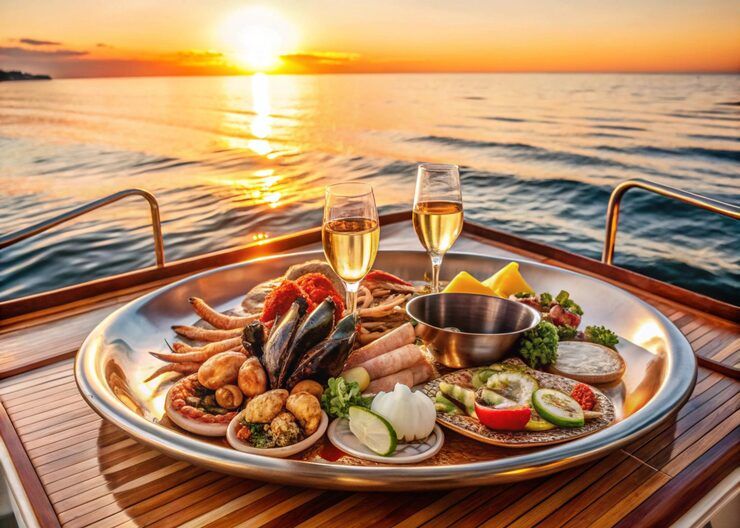
VIP cruise dining and cuisine combine culinary experiences with the distinctive environment of traveling by sea. On premium and luxury cruise ships, dining can include formal restaurants, chef-led tasting menus, regional specialties, seafood, international buffets, private dining areas, and menus inspired by destinations along the itinerary.
Cruise dining differs from conventional restaurant dining because kitchens operate within a moving vessel. Food preparation, ingredient storage, refrigeration, sanitation, menu planning, and passenger preferences must all be managed while the ship travels between ports.
The term VIP cruise dining generally refers to elevated dining arrangements associated with premium cabins, exclusive restaurants, specialty dining venues, or personalized culinary experiences. The precise meaning varies between cruise operators, and the available arrangements depend on the vessel and itinerary.
Understanding Luxury Cruise Dining
Luxury cruise dining includes a range of restaurant styles rather than one standardized experience. Some ships emphasize traditional multi-course meals, while others focus on contemporary international cuisine, regional dishes, open kitchens, or flexible dining schedules.
Common dining formats include:
Fine dining restaurants: Multi-course menus with carefully presented dishes.
Specialty restaurants: Venues focusing on particular cuisines, such as Italian, French, Japanese, or steakhouse cooking.
Destination-inspired dining: Menus influenced by the regions visited during a voyage.
Private dining: Designated dining arrangements for selected guests or occasions.
Chef-led experiences: Tastings, cooking demonstrations, or menus highlighting culinary techniques.
Casual premium dining: Relaxed restaurants featuring higher-quality ingredients and specialized menus.
Cruise operators use different terminology for these arrangements. Travelers should examine the actual restaurant options, dining schedules, and inclusions rather than assuming that every premium cabin provides the same privileges.
How Cruise Ship Kitchens Operate
A cruise ship kitchen must coordinate food production for hundreds or thousands of passengers while working within limited storage and preparation areas.
Large vessels may operate several kitchens, each serving a particular restaurant or dining format. Executive chefs, specialist cooks, pastry teams, food safety personnel, and inventory managers coordinate preparation and distribution.
Planning begins well before a voyage. Food quantities must account for passenger numbers, itinerary length, menu variety, expected consumption, and the availability of ingredients at different ports.
Refrigeration, temperature monitoring, safe storage, and waste management are particularly important because the vessel may spend several days at sea between destinations.
Cuisine and Menu Diversity
International cruise menus can include Mediterranean seafood, Asian-inspired dishes, European pastries, Middle Eastern flavors, regional American cuisine, and vegetarian or plant-based meals.
Some ships also incorporate ingredients associated with destinations on the itinerary. A Mediterranean voyage might feature regional olive oils, seafood, herbs, and seasonal vegetables, while an Asian itinerary could include local spices, rice dishes, and regional cooking styles.
The availability of particular ingredients depends on supply arrangements, food safety requirements, seasonality, and the ship's operational capabilities.
Why VIP Cruise Dining Matters
Dining is an important part of the overall cruise experience because passengers spend a substantial portion of their time onboard. Food quality, menu variety, scheduling, and dietary accommodation can influence comfort and satisfaction throughout a voyage.
Culinary Variety and Personal Preferences
Passengers may have different expectations based on cultural background, dietary requirements, and personal tastes. A varied dining program helps accommodate these differences.
Important considerations include:
Vegetarian and vegan meals
Gluten-free menu options
Food allergies and intolerances
Religious dietary requirements
Children's meals
Lower-sodium choices
Ingredient and allergen information
Cruise kitchens must coordinate these requirements with purchasing, food preparation, and serving procedures. Travelers with serious allergies should communicate their needs in advance and confirm the precautions available onboard.
Destination-Based Culinary Experiences
Food can provide a connection between a cruise itinerary and the places visited. Regional dishes introduce passengers to local ingredients, cooking traditions, and cultural influences.
Destination-inspired menus can also encourage travelers to learn about the agricultural and maritime history of different regions.
However, the extent of regional sourcing varies. A dish described as destination-inspired does not necessarily mean that all ingredients originate from that destination.
Dining Formats Compared
| Dining Format | Typical Features | Main Consideration |
|---|---|---|
| Main dining room | Multi-course meals and scheduled or flexible seating | Dining times and menu rotation |
| Specialty restaurant | Cuisine-specific menus | Reservations and availability |
| Chef's tasting menu | Several courses in a planned sequence | Duration and dietary compatibility |
| Private dining | More individualized arrangements | Eligibility and advance planning |
| Buffet dining | Multiple dishes and flexible meal timing | Ingredient labeling and cross-contact |
| Destination-themed dining | Regional recipes and ingredients | Seasonal availability |
Recent Developments in Cruise Dining
Cruise dining continues to evolve through menu innovation, plant-forward cooking, digital planning tools, and greater attention to food waste.
Plant-Based Menus and Dietary Variety
During 2025 and 2026, cruise operators continued emphasizing expanded vegetarian and plant-based selections across different restaurant formats. These developments reflect broader hospitality trends involving vegetable-focused cooking, alternative proteins, and varied dietary preferences.
The actual selection differs by ship and itinerary. Travelers should review current menus and confirm whether specialized dishes are available throughout the voyage.
Digital Dining Reservations
Cruise lines increasingly use mobile applications and onboard digital platforms to communicate dining schedules, display menus, manage reservations, and publish daily activity information.
These systems can help passengers organize meals around shore excursions, entertainment, and other onboard activities. Reservation rules still vary, and some restaurants may operate on a walk-in basis or use different arrangements.
Food Waste Reduction
Food waste remains an important operational issue for cruise ships because they must prepare meals for large numbers of people while maintaining sufficient provisions for the voyage.
During 2025 and 2026, waste reduction, inventory planning, food donation where permitted, and more efficient food preparation remained relevant areas of attention across the wider hospitality and maritime industries.
Cruise operators may use demand forecasting, portion planning, and food waste measurement to reduce unnecessary disposal. Outcomes depend on operational practices and the requirements of the ports and jurisdictions involved.
Regional Culinary Programming
Destination-focused cuisine continues to be part of cruise itinerary planning. Restaurants may feature regional dishes, seasonal menus, specialist ingredients, and culinary events connected with destinations.
These programs can vary between voyages, so a menu available on one sailing should not be assumed to remain identical on another.
Laws, Regulations, and Food Safety Policies
Cruise dining is affected by several layers of regulation, including the laws of the vessel's flag state, port-country requirements, public health rules, and international maritime standards.
International Food Safety Standards
The Codex Alimentarius, developed through the Food and Agriculture Organization of the United Nations and the World Health Organization, provides internationally recognized food safety standards and guidance.
Its principles address hygienic food handling, contamination prevention, safe preparation, storage, and food control systems.
Cruise operators may use food safety management procedures based on Hazard Analysis and Critical Control Point principles, commonly known as HACCP. These procedures identify food safety hazards and establish controls at important stages of preparation and storage.
United States Public Health Requirements
Cruise ships operating in United States waters may be subject to public health oversight by the Centers for Disease Control and Prevention.
The CDC's Vessel Sanitation Program conducts inspections of eligible passenger vessels operating in international voyages and visiting US ports. Its inspection framework addresses areas including food preparation, storage, potable water, sanitation, and other public health concerns.
Applicable requirements depend on the vessel and its operating circumstances.
Maritime and Port Regulations
Cruise vessels must comply with applicable maritime safety and environmental requirements. International frameworks administered by the International Maritime Organization address matters such as ship safety, pollution prevention, and waste management.
Food waste disposal, wastewater handling, and other environmental practices can be affected by international rules and local port restrictions.
Allergy Information and Passenger Safety
Food allergy procedures are particularly important in large kitchens where multiple menus and ingredients are prepared.
Passengers should provide accurate information about their dietary requirements before sailing and speak with appropriate dining personnel about ingredient identification and cross-contact prevention.
Menu descriptions alone may not provide sufficient information for a passenger with a severe allergy.
Tools and Resources for Cruise Dining Planning
A few practical resources can help passengers understand dining arrangements before departure.
Cruise Line Websites and Mobile Applications
Official cruise line platforms typically provide information about restaurant locations, operating hours, menus, dining reservations, and special dining arrangements.
Before traveling, review the information for the specific ship and sailing rather than relying exclusively on fleet-wide descriptions.
Dietary Planning Checklist
Passengers can prepare a simple checklist covering:
Food allergies and intolerances
Vegetarian or vegan preferences
Religious dietary requirements
Children's dining needs
Preferred dining times
Restaurant reservation requirements
Ingredient and allergen questions
Sharing these details early can help the dining team understand individual requirements.
Menu and Reservation Tools
Digital menus and reservation platforms can help passengers compare restaurant styles and plan meals around daily activities.
Useful details include restaurant opening times, menu availability, dress guidance, reservation conditions, and any additional charges associated with particular dining arrangements.
Food Safety Information
Public health resources from the CDC, World Health Organization, and national food safety authorities provide educational material on hygiene, safe food handling, foodborne illness prevention, and allergen awareness.
These resources can help travelers understand general food safety principles, although they do not replace a cruise operator's specific procedures.
Frequently Asked Questions
What is VIP cruise dining?
VIP cruise dining generally describes elevated culinary arrangements such as specialty restaurants, private dining, chef-led menus, or dining privileges associated with certain accommodations. The exact meaning varies by cruise operator.
What types of cuisine are available on luxury cruise ships?
Menus may include Mediterranean, Asian, European, American, seafood-focused, vegetarian, and destination-inspired dishes. The actual selection depends on the vessel, itinerary, restaurant, and season.
Can cruise ships accommodate dietary restrictions?
Many cruise operators accommodate selected dietary requirements when notified in advance. Passengers should confirm the available arrangements directly, particularly when dealing with severe food allergies or medically necessary restrictions.
Are specialty restaurants included in every cruise dining arrangement?
No. Dining inclusions vary between operators, ships, accommodations, and itineraries. Some specialty restaurants may require separate reservations or additional payment, so passengers should check the applicable terms.
How do cruise ships maintain food safety?
Cruise kitchens use food handling procedures, temperature controls, sanitation practices, safe storage, and staff training. Ships may also be subject to public health inspections and applicable maritime or national regulations.
Conclusion
VIP cruise dining and cuisine combine international cooking, specialized restaurants, destination-inspired menus, and coordinated food preparation within a maritime environment. The experience can range from traditional multi-course meals to contemporary tasting menus and flexible dining arrangements.
Recent hospitality trends highlight plant-based menu development, digital reservation tools, regional culinary programming, and efforts to reduce food waste. At the same time, food safety, dietary accommodation, maritime regulations, and environmental responsibilities remain important considerations.
Understanding restaurant formats, menu availability, reservation arrangements, and dietary procedures can help travelers make informed decisions about dining throughout a voyage. Reviewing the specific cruise itinerary and current onboard information provides the clearest understanding of what to expect.