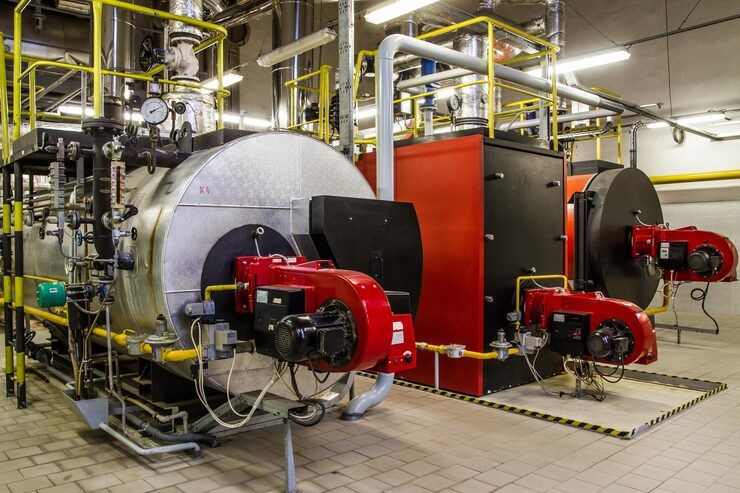
Steam boilers are important components of industrial heating and energy systems. They generate steam by transferring heat to water, producing pressurized vapor that can be used for manufacturing, heating, cleaning, sterilization, and mechanical processes.
Industries such as food processing, pharmaceuticals, textiles, chemicals, paper production, and power generation depend on reliable steam generation. The design of a steam boiler depends on factors such as operating pressure, steam output, fuel type, water quality, temperature requirements, and the intended application.
Understanding steam boiler technology helps businesses evaluate industrial heating requirements, energy efficiency, operational safety, and environmental performance.
How Steam Boilers Work
A steam boiler uses a heat source to convert water into steam. The heat may come from natural gas, oil, coal, biomass, electricity, or recovered industrial heat.
In a conventional fuel-fired boiler, combustion produces hot gases that transfer energy to water through metal heating surfaces. As the water absorbs heat, it reaches boiling conditions and generates steam.
The steam is then distributed through pipes to equipment that requires thermal energy. After releasing heat, the steam may condense into water, which can be returned to the boiler system.
Major components commonly include:
Boiler pressure vessel
Burner or heating element
Feedwater pump
Steam outlet and distribution piping
Pressure and temperature instruments
Water-level controls
Safety valves
Blowdown equipment
Feedwater treatment equipment
The exact arrangement varies according to boiler design, fuel source, operating conditions, and industrial requirements.
Common Types of Steam Boilers
Steam boilers are generally classified by construction, heat source, pressure range, and intended use.
Fire-tube boilers pass hot combustion gases through tubes surrounded by water. They are commonly used for applications requiring moderate steam output and relatively straightforward operation.
Water-tube boilers circulate water through tubes exposed to hot gases. Their design can support higher pressures and large steam-generation capacities, making them suitable for many power generation and heavy industrial applications.
Electric steam boilers use electrical heating elements to produce steam. They avoid on-site fuel combustion, although their overall environmental impact depends on how the electricity is generated.
Biomass boilers use organic materials such as wood residues or agricultural by-products. Their performance depends on fuel quality, moisture content, combustion control, and emissions management.
Waste-heat boilers recover heat from industrial exhaust gases or other hot process streams. They can reduce the amount of additional energy required to generate steam.
Important Boiler Performance Measurements
Selecting or evaluating an industrial steam boiler requires more than examining its rated output.
| Measurement | Meaning | Why It Matters |
|---|---|---|
| Steam capacity | Mass of steam produced per hour | Determines production capability |
| Operating pressure | Pressure at which the system operates | Affects process requirements and safety |
| Thermal efficiency | Proportion of input energy converted into useful heat | Indicates energy performance |
| Fuel consumption | Amount of fuel used during operation | Helps assess operating performance |
| Blowdown rate | Water discharged to control dissolved solids | Affects water and energy use |
| Feedwater temperature | Temperature of water entering the boiler | Influences heat demand |
These measurements should be assessed together because operating conditions and steam quality requirements can affect overall performance.
Why Steam Boilers Matter Today
Steam remains essential in industries that need consistent and controllable heat. Unlike many direct-heating systems, steam can distribute thermal energy through a network of pipes and release it where required.
Food manufacturers use steam for cooking, heating, and certain cleaning processes. Pharmaceutical facilities use controlled steam systems for equipment sterilization and other regulated operations. Textile manufacturers use steam in dyeing, finishing, and fabric treatment.
Chemical plants and paper mills may require continuous steam supplies for large-scale production processes.
Reliable steam generation helps maintain production temperatures, support process consistency, and reduce interruptions caused by inadequate heating capacity.
Energy Efficiency and Industrial Sustainability
Boiler efficiency has become increasingly important because fuel consumption influences operating expenses and greenhouse gas emissions.
Several improvements can help reduce avoidable energy losses:
Recovering heat from boiler exhaust gases
Installing or maintaining economizers
Insulating steam pipes and condensate return lines
Repairing steam leaks
Optimizing combustion controls
Improving feedwater treatment
Returning suitable condensate to the boiler
Monitoring steam demand and operating pressure
An economizer transfers heat from exhaust gases to incoming feedwater. This reduces the additional energy needed to raise the water temperature inside the boiler.
Condensate recovery can also conserve water and energy because returned condensate is generally warmer than fresh makeup water.
The effectiveness of each measure depends on the existing system, operating schedule, fuel characteristics, and maintenance condition.
Recent Developments in Steam Boiler Technology
During 2025 and 2026, industrial heating has continued to evolve around electrification, emissions reduction, automation, and improved energy monitoring.
Industrial electrification: Electric boilers and electrode boilers are receiving attention in applications where suitable electrical infrastructure and low-emissions electricity are available. They can reduce direct combustion emissions at the installation, although electricity generation and system-level efficiency must also be considered.
Waste-heat recovery: Industrial operators continue to investigate ways to capture energy from exhaust streams and other process sources. Recovered heat can reduce fuel requirements when the available temperature and operating conditions are suitable.
Digital monitoring: Sensors and industrial control systems can monitor pressure, temperature, water level, combustion conditions, and other operating variables. Data analysis can help identify unusual patterns and support preventive maintenance.
Predictive maintenance: Condition monitoring can help identify developing problems before they cause equipment failure. However, predictive systems complement rather than replace required inspections, safety devices, and qualified maintenance.
Hydrogen-related research: Hydrogen combustion and hydrogen-ready heating equipment remain areas of industrial development. Practical deployment depends on burner compatibility, fuel availability, emissions characteristics, safety requirements, and infrastructure. Hydrogen should not be treated as a universal replacement for existing boiler fuels.
Specific technologies and regulations vary by country, and operators should verify current requirements with the relevant authorities and equipment manufacturers.
Laws, Regulations, and Boiler Safety
Steam boilers operate under pressure and can create serious hazards if improperly designed, installed, operated, or maintained. Applicable regulations therefore address pressure-vessel integrity, safe operation, inspections, and operator competence.
In India, the Boilers Act, 2025, and the applicable rules and regulations provide the legislative framework for boiler safety. Implementation details, commencement provisions, and applicable requirements should be checked through the relevant central and state authorities.
The Indian Boiler Regulations and applicable state boiler departments are important references for technical requirements, inspection procedures, registration, and certification where applicable.
Other jurisdictions use different frameworks. In the United States, requirements can involve the Occupational Safety and Health Administration (OSHA), state boiler authorities, and applicable boiler and pressure-vessel codes. In the United Kingdom, the Pressure Systems Safety Regulations 2000 establish requirements for relevant pressure systems.
Essential Safety Practices
Safe operation requires suitable equipment, trained personnel, documented procedures, and regular examination.
Important practices include:
Monitoring boiler pressure and water levels
Maintaining safety valves and protective controls
Inspecting pressure-retaining components
Testing alarms and shutdown mechanisms
Maintaining appropriate feedwater chemistry
Checking burners and combustion systems
Keeping accurate inspection and maintenance records
Following emergency shutdown procedures
Safety valves and other protective devices must not be bypassed or adjusted outside authorized procedures. Boiler inspections and repairs should be performed by appropriately qualified personnel in accordance with applicable regulations.
Tools and Resources for Boiler Evaluation
Several technical resources can support boiler planning, monitoring, and maintenance.
Official regulatory websites: National and state boiler authorities provide legislation, inspection guidance, registration information, and technical requirements.
Manufacturer documentation: Boiler manuals contain rated capacity, operating pressure, water-quality limits, maintenance schedules, and safety instructions for specific equipment.
Energy assessment tools: Fuel-use records, steam-flow measurements, combustion analysis, and boiler-efficiency calculations can help identify energy losses.
Digital monitoring platforms: Industrial control systems and data dashboards can track operating conditions, alarms, and performance trends.
Maintenance checklists: Structured records can help teams document inspections, water treatment, safety-device testing, repairs, and recurring faults.
Useful technical references include:
India's Ministry of Labour and Employment and relevant boiler authorities
The Bureau of Energy Efficiency in India
The American Society of Mechanical Engineers (ASME)
The International Organization for Standardization (ISO)
The U.S. Department of Energy's industrial energy-efficiency resources
The correct reference depends on the country, boiler classification, pressure range, and intended application.
Frequently Asked Questions
What is the main purpose of a steam boiler?
A steam boiler converts water into steam using an external heat source. The steam supplies thermal energy for industrial processes, building heating, sterilization, and other applications.
What is the difference between fire-tube and water-tube boilers?
Fire-tube boilers carry hot gases through tubes surrounded by water. Water-tube boilers circulate water through tubes heated externally by combustion gases. Water-tube designs are commonly used where higher pressures or large steam outputs are required.
How can industrial boiler efficiency be improved?
Common measures include heat recovery, insulation, condensate return, combustion optimization, leak prevention, appropriate water treatment, and monitoring steam demand. Results depend on system design and operating conditions.
How often should a steam boiler be inspected?
Inspection frequency depends on the applicable regulations, boiler classification, operating conditions, and inspection findings. Operators should follow the legally required schedule and the equipment manufacturer's instructions.
Are electric steam boilers more environmentally friendly?
They produce no direct combustion emissions at the installation, but their overall environmental impact depends on electricity generation, efficiency, and the wider energy system. They may be particularly beneficial where low-carbon electricity is available.
Conclusion
Steam boilers remain essential to industrial heating, manufacturing, sterilization, and energy systems. Their performance depends on appropriate design, operating conditions, water quality, maintenance, and effective safety controls.
Recent developments in electrification, heat recovery, digital monitoring, and predictive maintenance provide additional ways to improve energy performance and operational reliability. However, each technology must be evaluated against the facility's actual steam demand, infrastructure, emissions requirements, and technical constraints.
Understanding boiler capacity, pressure, efficiency, regulatory obligations, and maintenance requirements helps organizations make informed decisions while protecting workers, equipment, and surrounding environments.