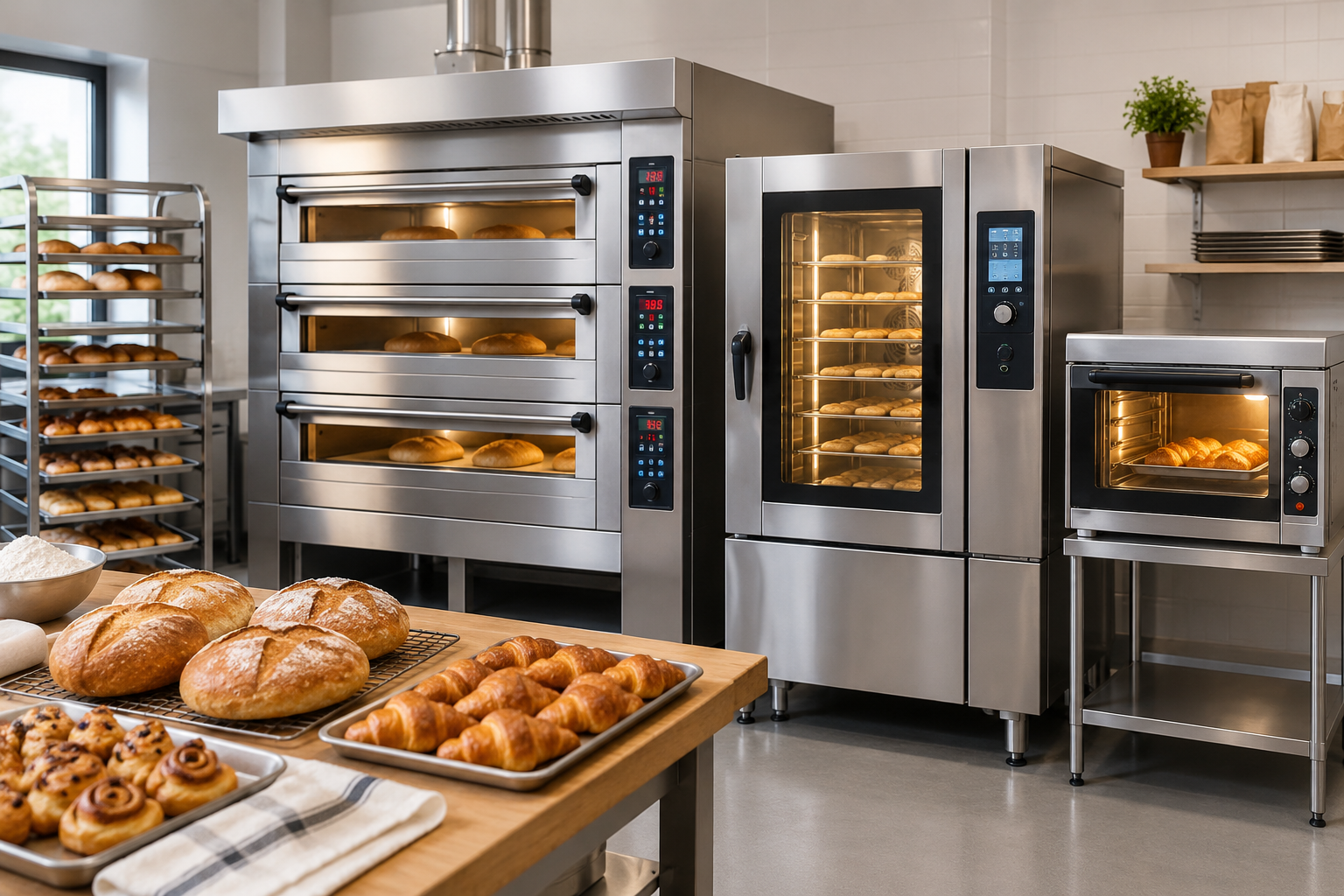
Bakery ovens are the heart of every baking operation, from small neighborhood bakeries to large commercial food production facilities. Whether baking artisan bread, cakes, cookies, pastries, or pizzas, the oven plays a crucial role in determining texture, color, moisture, and overall product quality. Modern bakery ovens are designed to provide consistent heat, precise temperature control, and energy-efficient performance, making them an essential investment for professional baking environments.
As baking techniques and consumer preferences continue to evolve, bakery ovens have also become more advanced. New technologies now offer programmable baking cycles, steam injection, digital controls, and improved insulation that help bakers produce consistent results while reducing energy consumption. Understanding how bakery ovens work and which type suits different baking applications is important for anyone involved in baking, food production, hospitality, or bakery business planning.
This guide explains bakery ovens in a simple and practical way, covering their types, working principles, applications, benefits, maintenance, and recent developments in baking technology.
What Are Bakery Ovens and Why Are They Important?
A bakery oven is a specialized heating appliance designed for baking food products under controlled temperature and airflow conditions. Unlike conventional household ovens, bakery ovens are engineered for consistent heat distribution, larger production capacity, and precise baking performance across multiple batches.
The baking process involves applying dry heat that transforms dough or batter into finished baked goods. During baking, heat activates yeast, caramelizes sugars, evaporates moisture, develops crust color, and creates the desired texture. The quality of these transformations depends heavily on the oven's heating method and temperature consistency.
Bakery ovens are used across many industries, including retail bakeries, restaurants, hotels, cafes, industrial food manufacturing, educational culinary institutions, and home-based baking businesses. Different products require different baking environments, making oven selection an important part of production planning.
Modern bakery ovens are designed to improve productivity while maintaining food safety and baking consistency, helping businesses meet growing consumer demand for fresh and high-quality baked goods.
How Bakery Ovens Work
Bakery ovens operate by generating controlled heat and circulating it throughout the baking chamber. The heating source may be electricity, natural gas, diesel, biomass, or other industrial fuels depending on the oven design and production requirements.
The baking chamber is insulated to retain heat and maintain stable temperatures. Heating elements or burners raise the chamber temperature to a preset level, while thermostats and digital controllers continuously monitor and regulate heat during the baking cycle.
Heat reaches the food through three primary mechanisms. Radiant heat transfers energy directly from hot surfaces to the product. Convection heat circulates hot air around the baking chamber using fans, creating even baking conditions. Conductive heat transfers heat from baking trays or oven decks directly into dough or batter.
Many commercial bakery ovens also include steam injection systems. Steam increases humidity during the early stages of baking, allowing bread dough to expand before crust formation. This creates crisp crusts, glossy finishes, and improved loaf volume.
Advanced ovens allow bakers to program multiple baking stages with different temperatures, airflow settings, humidity levels, and baking durations for consistent production.
Different Types of Bakery Ovens
Bakery ovens come in several designs, each suited to particular baking methods and production volumes.
Deck Ovens
Deck ovens bake products directly on stone or metal decks using radiant heat from the top and bottom heating elements. They are widely used for artisan bread, baguettes, pizzas, and rustic loaves because they produce crispy crusts and even browning.
Deck ovens often include multiple baking chambers that operate independently, allowing different products to bake simultaneously at different temperatures.
Convection Ovens
Convection ovens use powerful fans to circulate hot air throughout the baking chamber. This airflow creates uniform baking temperatures across multiple trays and reduces baking time.
These ovens are commonly used for cookies, cakes, muffins, pastries, biscuits, and cupcakes where even color and texture are essential.
Rack Ovens
Rack ovens are designed for high-volume commercial production. Entire racks filled with baking trays are rolled into the oven, and rotating mechanisms expose products evenly to circulating heat.
Rack ovens are popular in supermarkets, commercial bakeries, and food manufacturing facilities because they increase production efficiency and reduce manual handling.
Rotary Ovens
Rotary ovens rotate trays continuously during baking, ensuring equal heat exposure across every shelf. They are suitable for bread, buns, rolls, cookies, and large-scale bakery production.
Rotary systems provide excellent consistency for businesses producing thousands of baked products daily.
Tunnel Ovens
Tunnel ovens use conveyor belts that transport products through different temperature zones automatically. Products enter raw and exit fully baked without stopping production.
Tunnel ovens are commonly used in industrial food processing plants producing packaged bread, biscuits, crackers, and snack foods.
Combination Bakery Ovens
Combination ovens combine convection heat, steam, and programmable cooking modes in one machine. They can bake, roast, steam, and reheat various food products.
These versatile ovens are increasingly used in hotels, restaurants, and multi-purpose commercial kitchens.
Choosing the Right Bakery Oven
Selecting the right bakery oven depends on production goals, available space, energy source, and the types of baked goods being produced.
Production capacity is one of the first considerations. Small bakeries may require compact deck or convection ovens, while industrial facilities benefit from rack or tunnel ovens capable of continuous production.
The variety of baked products also matters. Bread production often benefits from steam-enabled deck or rack ovens, while pastries and cakes generally perform well in convection ovens with even airflow.
Temperature range, baking chamber size, tray compatibility, insulation quality, programmable controls, and cleaning accessibility also influence oven selection.
Energy availability is another important factor. Some bakeries prefer electric ovens for precise control, while others choose gas ovens for faster heating and lower operating costs depending on local infrastructure.
Future production expansion should also be considered when selecting an oven to avoid replacing equipment as demand grows.
Bakery Ovens for Different Baking Applications
Different baked products require unique temperature profiles and baking environments. Understanding these differences helps improve baking consistency.
Bread baking often requires steam during the initial baking stage followed by dry heat to create a crisp crust and soft interior.
Cakes require stable temperatures and gentle airflow to prevent uneven rising or cracking.
Cookies benefit from consistent convection heat that produces uniform browning across baking trays.
Croissants and puff pastries require controlled heat that allows laminated dough layers to expand while maintaining flaky texture.
Pizza baking typically uses high-temperature deck ovens with stone surfaces that create crisp bases and evenly baked toppings.
Industrial biscuits and crackers require conveyor ovens capable of maintaining consistent temperature zones throughout continuous production.
Each product has unique baking characteristics, making oven programming increasingly valuable for commercial bakeries.
Features of Modern Bakery Ovens
Bakery oven technology has improved significantly over recent years, making baking more efficient and consistent.
Digital temperature controllers allow precise adjustments and reduce temperature fluctuations during production.
Touchscreen interfaces enable operators to save recipes, monitor baking cycles, and manage multiple baking programs.
Steam injection systems improve bread quality and crust development.
Programmable baking stages automatically change temperature, humidity, and fan speed during baking.
Improved insulation reduces heat loss and increases energy efficiency.
Double-glazed viewing windows help monitor products without opening oven doors and disturbing internal temperatures.
Automatic timers and alarms reduce human error and improve production consistency.
Some advanced bakery ovens also include remote monitoring, production analytics, and maintenance alerts for commercial operations.
Energy Efficiency in Bakery Ovens
Energy consumption is a major consideration in bakery operations because ovens operate for long hours each day.
Modern bakery ovens improve efficiency through better insulation materials that retain heat for longer periods.
High-efficiency burners and electric heating systems convert more energy into usable baking heat.
Heat recovery systems reuse waste heat to preheat incoming air, reducing overall energy demand.
Programmable schedules prevent ovens from operating unnecessarily during idle periods.
Proper loading practices also improve efficiency by maximizing baking capacity without overcrowding trays.
Regular maintenance helps maintain burner efficiency, airflow performance, and temperature accuracy, further reducing unnecessary energy use.
Energy-efficient bakery ovens support sustainable bakery operations while lowering operational costs over time.
Bakery Oven Maintenance and Cleaning
Routine maintenance is essential for maintaining baking quality, food safety, and equipment lifespan.
Daily cleaning removes crumbs, flour, grease, and food residues from baking chambers and trays. Keeping the interior clean prevents smoke generation and unwanted flavors.
Door seals should be inspected regularly because damaged seals allow heat to escape and increase energy consumption.
Heating elements, burners, and fans require periodic inspection to ensure even heat distribution.
Steam injection systems should be cleaned to prevent mineral buildup that affects humidity performance.
Temperature sensors and thermostats should be calibrated regularly to maintain baking accuracy.
Ventilation ducts and exhaust systems also require cleaning to maintain proper airflow and reduce fire hazards in commercial kitchens.
Preventive maintenance reduces unexpected downtime and helps ensure consistent baking performance throughout the year.
Common Baking Problems Related to Bakery Ovens
Many baking issues originate from incorrect oven settings rather than recipe problems.
Uneven browning often results from poor airflow, overloaded trays, or incorrect tray placement.
Burnt bottoms may occur when deck temperatures are too high or baking trays conduct excessive heat.
Dense bread can result from insufficient steam or incorrect baking temperature during oven spring.
Dry cakes may develop if baking temperatures are too high or baking time exceeds recommended limits.
Collapsed pastries often indicate unstable temperatures or excessive door opening during baking.
Regular calibration and proper oven operation help minimize these problems and improve product consistency.
Understanding oven behavior allows bakers to make adjustments based on product characteristics rather than relying solely on recipes.
Safety Practices When Using Bakery Ovens
Bakery ovens operate at high temperatures and require proper safety procedures in commercial kitchens and production facilities.
Operators should use heat-resistant gloves and baking tools when handling trays and racks.
Oven doors should be opened carefully to avoid exposure to hot steam and escaping heat.
Work areas around ovens should remain clean and free from combustible materials.
Proper ventilation helps remove heat and combustion gases from the baking environment.
Electrical ovens should undergo regular wiring inspections, while gas ovens require periodic burner and gas line inspections.
Emergency shut-off systems and fire safety equipment should be accessible in commercial bakery environments.
Following safety procedures helps reduce workplace injuries and equipment-related incidents.
Recent Trends in Bakery Oven Technology in 2025 and 2026
The bakery industry continues adopting smarter and more sustainable oven technologies.
Manufacturers are introducing AI-assisted baking controls that automatically adjust temperature and humidity based on selected recipes and baking conditions.
IoT-enabled bakery ovens allow operators to monitor baking cycles remotely using connected production management systems.
Energy-efficient insulation and heat recovery technologies are becoming increasingly common as bakeries focus on reducing operational energy consumption.
Electric commercial ovens are gaining popularity in regions transitioning toward lower-emission food production equipment.
Improved steam generation systems now provide better humidity control while using less water and energy.
Modular bakery ovens are also becoming more common, allowing businesses to expand production capacity without replacing existing equipment.
These innovations help bakeries improve consistency, reduce waste, and increase operational efficiency.
The Future of Bakery Ovens
Bakery ovens are evolving from simple heating equipment into intelligent baking systems capable of delivering highly consistent production with minimal manual adjustment. As automation, digital controls, and energy-efficient technologies continue advancing, ovens will become increasingly adaptable to different recipes and production volumes.
Future bakery ovens are expected to integrate predictive maintenance, automated recipe optimization, advanced humidity control, and real-time performance monitoring. These developments will support both artisan baking and large-scale food manufacturing while improving sustainability and production efficiency.
Whether used in a small bakery or an industrial production facility, bakery ovens remain one of the most important tools for producing high-quality baked goods. Understanding their working principles, selecting the appropriate type, maintaining equipment properly, and adopting modern baking practices can significantly improve baking consistency, product quality, and long-term operational performance.