Digital printing machines have transformed the printing industry by making printing faster, more flexible, and more efficient than many traditional printing methods. From personalized marketing materials and custom packaging to textiles and industrial labels, digital printing technology is now used across a wide range of industries. Businesses, educational institutions, manufacturers, designers, and printing professionals rely on digital printing to produce high-quality prints with shorter turnaround times and greater customization.
Unlike conventional printing methods that require printing plates, digital printing transfers digital files directly onto the printing surface. This process reduces setup time, supports variable data printing, and allows small production runs without significant preparation. As printing technology continues to evolve, digital printing machines are becoming smarter, more sustainable, and capable of producing increasingly detailed results on different materials.
This guide explains what digital printing machines are, how they work, their major types, applications, advantages, maintenance practices, and the latest developments shaping the industry in 2026.
What Are Digital Printing Machines?
Digital printing machines are printing systems that reproduce images, text, or graphics directly from digital files onto various materials. Instead of creating physical printing plates, these machines interpret digital artwork and print it using advanced printheads and specialized inks or toners.
The technology supports printing on paper, fabric, vinyl, plastic, metal, glass, wood, ceramics, and many other substrates. Because designs are stored digitally, changing artwork between print jobs is quick and simple, making digital printing ideal for customized or on-demand production.
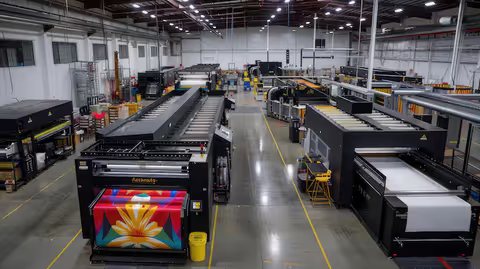
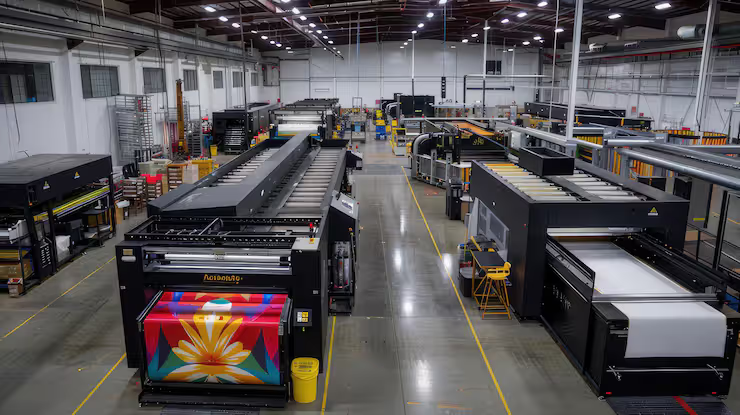
Modern digital printing machines are available in different sizes, ranging from compact office printers to large industrial systems capable of printing banners, packaging materials, textiles, and decorative surfaces.
Why Digital Printing Machines Matter Today
The demand for personalized products and shorter production cycles has increased the importance of digital printing technology. Businesses increasingly need customized labels, promotional materials, product packaging, and textiles in smaller quantities without sacrificing quality.
Digital printing also supports industries that require frequent design changes, including fashion, advertising, publishing, interior decoration, and product manufacturing. Since files can be edited instantly, businesses can update branding, product information, or marketing campaigns without creating new printing plates.
Another reason digital printing has become essential is its ability to reduce material waste. Traditional printing often requires lengthy setup procedures and test prints, while digital printing generally produces less waste during preparation.
As consumer expectations continue shifting toward customization and faster delivery, digital printing provides an efficient solution for producing unique designs with consistent quality.
How Digital Printing Machines Work
The digital printing process begins with a digital design created using graphic design or publishing software. The file is processed by printing software, which converts the artwork into printable instructions for the machine.
The printing system controls microscopic droplets of ink or toner and places them accurately on the printing surface. Depending on the machine, the ink may dry naturally, be cured using ultraviolet light, or be fixed through heat.
Several components work together during printing. The printhead controls ink placement, the feeding system moves the material through the machine, sensors monitor alignment, and software ensures accurate color reproduction.
After printing, some products undergo additional finishing processes such as cutting, laminating, coating, folding, or binding, depending on the application.
The ability to print directly from digital files makes this workflow faster than many conventional printing techniques, especially for small and medium production volumes.
Main Types of Digital Printing Machines
Digital printing technology includes several machine categories designed for different materials and production requirements.
Inkjet Digital Printing Machines
Inkjet printing machines spray tiny droplets of liquid ink onto the printing surface. They are widely used for posters, brochures, photographs, signage, packaging, and textile printing because they produce detailed images with vibrant colors.
Laser Digital Printing Machines
Laser printers use toner powder and heat to create prints. They are commonly used for office documents, books, catalogs, manuals, business stationery, and commercial printing where speed and text clarity are important.
UV Digital Printing Machines
UV printing machines use ultraviolet light to instantly cure specially formulated inks after they are applied. This technology allows printing on rigid and flexible materials such as acrylic, glass, wood, plastic, leather, and metal.
Textile Digital Printing Machines
These machines print directly onto fabrics using specialized textile inks. They are widely used for fashion garments, home furnishings, sportswear, promotional clothing, and customized fabric products.
Large Format Digital Printing Machines
Large format printers produce oversized graphics including banners, vehicle wraps, wallpapers, exhibition displays, retail signage, architectural graphics, and outdoor advertising materials.
Each machine type is designed to meet different production needs, materials, and quality expectations.
Common Materials Used in Digital Printing
One of the biggest advantages of digital printing is compatibility with numerous printing surfaces.
Paper remains the most common substrate for books, magazines, brochures, business cards, labels, and packaging inserts.
Textiles such as cotton, polyester, silk, canvas, and blended fabrics are widely used for apparel and decorative products.
Rigid materials including acrylic sheets, glass panels, ceramic tiles, aluminum, stainless steel, and wooden boards support decorative and industrial printing.
Flexible materials such as vinyl films, PVC sheets, synthetic paper, and adhesive labels are commonly used for advertising and packaging applications.
Advances in ink technology continue expanding the range of materials suitable for digital printing.
Applications Across Different Industries
Digital printing machines support a broad variety of industries because they combine flexibility with high-quality output.
The packaging industry uses digital printing for customized labels, cartons, flexible packaging, product branding, and short-run packaging prototypes.
The textile industry produces personalized garments, fashion collections, sports uniforms, home décor fabrics, and promotional merchandise.
Advertising companies print banners, posters, window graphics, display boards, exhibition materials, and vehicle graphics.
Publishing companies use digital printing for books, educational materials, catalogs, magazines, manuals, and print-on-demand publishing.
Manufacturing industries create product labels, barcode labels, industrial markings, safety labels, decorative panels, and identification tags.
Interior designers use digital printing for wallpapers, decorative glass, furniture surfaces, flooring graphics, and customized home décor products.
Healthcare organizations print medical labels, patient identification materials, educational graphics, and packaging for pharmaceutical products.
The ability to print customized designs efficiently makes digital printing valuable in both commercial and industrial environments.
Advantages of Digital Printing Machines
Digital printing offers several practical advantages that make it suitable for modern production environments.
The first advantage is flexibility. Businesses can print one copy or thousands without changing printing plates, allowing customized production with minimal preparation.
Another important advantage is speed. Since setup is digital, production can begin shortly after artwork is finalized, reducing turnaround times for many print jobs.
Digital printing also delivers consistent image quality through advanced color management systems and precise printhead technology.
Personalization is another major benefit. Variable data printing allows each printed item to contain different names, addresses, serial numbers, QR codes, or promotional messages within the same production run.
Digital printing also helps reduce waste because fewer setup prints are required before production begins.
Improved workflow automation, easier file management, and compatibility with modern design software further increase operational efficiency.
Factors That Affect Print Quality
Print quality depends on several technical and operational factors working together.
Image resolution influences the sharpness of graphics and photographs. High-resolution artwork generally produces clearer printed results.
Color management ensures consistent reproduction of colors across different print jobs and materials.
Ink quality plays an important role in durability, color accuracy, and resistance to fading or environmental conditions.
The condition of the printhead affects droplet placement and overall image clarity. Dirty or damaged printheads may create streaks or uneven colors.
Material quality also impacts the final appearance because different substrates absorb or reflect ink differently.
Machine calibration, environmental temperature, humidity, and operator settings all contribute to achieving reliable printing performance.
Maintenance and Care for Digital Printing Machines
Regular maintenance helps digital printing machines produce consistent results while reducing downtime.
Cleaning printheads is essential because dried ink or dust can block nozzles and affect print quality. Most machines include automated cleaning functions, but periodic manual inspection is also important.
Keeping the machine free from dust and debris protects sensors, rollers, and internal components.
Using compatible inks and approved printing materials helps maintain reliable performance and reduces the risk of clogging or color inconsistencies.
Routine calibration ensures accurate color output and proper alignment between printheads and printing surfaces.
Software updates improve machine functionality, compatibility, and workflow efficiency.
Preventive maintenance schedules also include inspecting belts, rollers, feeding systems, filters, and ink delivery components to reduce unexpected production interruptions.
Recent Trends and Updates in 2025–2026
The digital printing industry has continued evolving rapidly throughout 2025 and into 2026.
Artificial intelligence is increasingly integrated into printing software for automated color correction, predictive maintenance, print quality monitoring, and workflow optimization.
Cloud-connected printing systems allow remote job management, production monitoring, and easier collaboration between designers and printing facilities.
UV LED curing technology continues improving energy efficiency while reducing heat generation and supporting more environmentally friendly production processes.
Textile digital printing is expanding as fashion brands adopt on-demand manufacturing to reduce inventory waste and enable customized clothing collections.
Industrial digital printing is also growing in packaging, electronics, decorative materials, and product manufacturing, where manufacturers increasingly use digital printing for short production cycles and personalized products.
Automation, robotics, and intelligent inspection systems are becoming more common in high-volume digital printing environments.
Sustainability in Digital Printing
Environmental sustainability has become an important focus for printing manufacturers and businesses.
Digital printing generally reduces material waste because production begins directly from digital files without printing plates or lengthy setup processes.
Many printing systems now support water-based, eco-solvent, UV LED, and low-emission ink technologies that help reduce environmental impact depending on the application.
On-demand printing reduces excess inventory because products are printed only when needed, minimizing unsold printed materials.
Energy-efficient curing systems and recyclable printing materials are also becoming increasingly common across commercial printing operations.
Sustainable production practices continue encouraging manufacturers to develop machines that consume less energy while maintaining high print quality.
Choosing the Right Digital Printing Machine
Selecting a digital printing machine depends on production goals, printing materials, quality expectations, and workflow requirements.
The type of material being printed is one of the most important considerations because different machines are designed for paper, textiles, rigid materials, or flexible media.
Production volume helps determine whether a compact commercial printer or an industrial production system is more appropriate.
Print size requirements influence whether standard or large-format equipment is needed.
Color accuracy, resolution, drying technology, software compatibility, automation features, and maintenance requirements also play important roles during selection.
Evaluating future production needs alongside current requirements helps businesses choose equipment that supports long-term growth.
The Future of Digital Printing Machines
Digital printing technology is expected to become even more intelligent, automated, and versatile in the coming years. AI-powered workflow management, faster printheads, advanced ink chemistry, and improved color consistency are making printing systems more efficient across industries.
Personalized manufacturing is likely to continue expanding as businesses increasingly produce customized packaging, apparel, labels, and promotional materials on demand. Industrial printing is also moving beyond traditional graphics into electronics, decorative surfaces, functional coatings, and specialized manufacturing applications.
Sustainability will remain a major development area, with continued improvements in recyclable materials, energy-efficient curing systems, reduced ink waste, and environmentally conscious production methods.
As industries adopt smarter manufacturing practices, digital printing machines are becoming an essential part of modern production ecosystems.
Frequently Asked Questions
What is a digital printing machine used for?
A digital printing machine is used to print text, graphics, photographs, labels, packaging, textiles, signage, books, promotional materials, and decorative products directly from digital files onto different materials.
How is digital printing different from traditional printing?
Digital printing transfers artwork directly from a digital file without using printing plates, making it suitable for faster setup, shorter print runs, and customized printing.
Which industries use digital printing machines?
Industries including packaging, textile manufacturing, advertising, publishing, healthcare, education, retail, interior decoration, and industrial manufacturing use digital printing technology.
Can digital printing machines print on materials other than paper?
Yes. Many digital printing machines can print on fabric, vinyl, plastic, acrylic, glass, wood, ceramic, leather, and metal, depending on the machine type and ink technology.
Why is regular maintenance important for digital printing machines?
Routine maintenance helps prevent printhead clogging, maintains color accuracy, improves machine reliability, reduces downtime, and extends the lifespan of printing equipment.
Conclusion
Digital printing machines have become an essential technology for businesses and industries that require speed, flexibility, customization, and consistent print quality. By eliminating traditional printing plates and enabling direct printing from digital files, these machines simplify production while supporting a wide range of materials and applications.
From commercial printing and packaging to textiles, signage, publishing, and industrial manufacturing, digital printing continues expanding into new markets with smarter automation and improved sustainability. Understanding how digital printing machines work, their different types, maintenance requirements, and emerging trends helps users make informed decisions about printing technology and production workflows in 2026 and beyond.