Industrial automation equipment has become one of the most important foundations of modern manufacturing and industrial operations. From automotive factories and food processing plants to pharmaceutical production and energy facilities, automation equipment helps industries perform tasks with greater consistency, speed, and accuracy. Instead of relying entirely on manual labor for repetitive or complex operations, businesses use automated systems that combine machines, sensors, controllers, software, and communication technologies to complete industrial processes efficiently.
As industries continue to embrace digital transformation, automation equipment is evolving beyond simple machine control. Modern systems collect real-time information, communicate across production lines, and support intelligent decision-making through connected technologies. This shift is changing how products are manufactured, how facilities are monitored, and how maintenance is planned.
Understanding industrial automation equipment helps business owners, students, engineers, technicians, and anyone interested in modern industry learn how today's production environments operate and why automation has become a key part of industrial growth.
What Is Industrial Automation Equipment?
Industrial automation equipment refers to machines, devices, and control systems designed to operate industrial processes with minimal human intervention. These systems automate repetitive tasks, monitor equipment performance, control production processes, and improve operational efficiency across manufacturing and industrial facilities.
Automation equipment works by collecting information from sensors, processing that information through controllers, and sending commands to machines or actuators that perform physical actions. This creates a continuous cycle of monitoring, decision-making, and execution that helps maintain consistent production quality.
Unlike traditional manual operations, automated equipment can perform the same task repeatedly with high precision while reducing the possibility of human error. Depending on the industry, automation systems may operate continuously, follow scheduled production sequences, or adapt to changing production conditions.
Industrial automation is not limited to large factories. It is also used in warehouses, packaging facilities, water treatment plants, logistics centers, chemical processing units, and renewable energy systems.
Why Industrial Automation Equipment Matters Today
Modern industries face increasing demand for higher productivity, better product quality, workplace safety, and efficient resource management. Industrial automation equipment helps address these challenges by improving how industrial operations are planned and executed.
One major reason automation has become important is the growing need for consistent production quality. Automated systems follow programmed instructions with minimal variation, helping manufacturers maintain uniform standards across thousands of products.
Automation also supports safer working environments. Equipment can perform hazardous or physically demanding tasks, reducing direct human exposure to dangerous machinery, high temperatures, chemicals, or repetitive movements.
Another important benefit is operational visibility. Connected automation equipment continuously generates production and performance data, allowing operators and engineers to monitor equipment health, identify inefficiencies, and respond to issues before they become major disruptions.
As industries adopt smart manufacturing practices, automation equipment is becoming an essential component of competitive industrial operations.
How Industrial Automation Equipment Works
Industrial automation equipment operates through an integrated network of hardware and software components. Each component has a specific role in controlling industrial processes.
Sensors detect physical conditions such as temperature, pressure, position, speed, vibration, flow rate, or proximity. These sensors collect information from machines and the surrounding environment.
Programmable controllers receive sensor information and process it according to predefined logic or operating instructions. Based on this information, controllers determine what actions should happen next.
Actuators perform physical actions such as opening valves, moving robotic arms, starting motors, adjusting conveyor speeds, or activating pneumatic systems.
Human-machine interfaces allow operators to monitor equipment status, adjust operating parameters, receive alerts, and visualize production performance through digital dashboards.
Communication networks connect machines, controllers, sensors, and software platforms, enabling real-time information exchange throughout an industrial facility.
Together, these technologies create automated workflows that improve production efficiency while maintaining continuous monitoring and control.
Main Types of Industrial Automation Equipment
Industrial automation equipment includes a wide variety of technologies that work together in manufacturing and industrial environments.
Programmable Logic Controllers, commonly called PLCs, are among the most widely used automation devices. They control machines, conveyor systems, motors, pumps, and industrial equipment by executing programmed control logic.
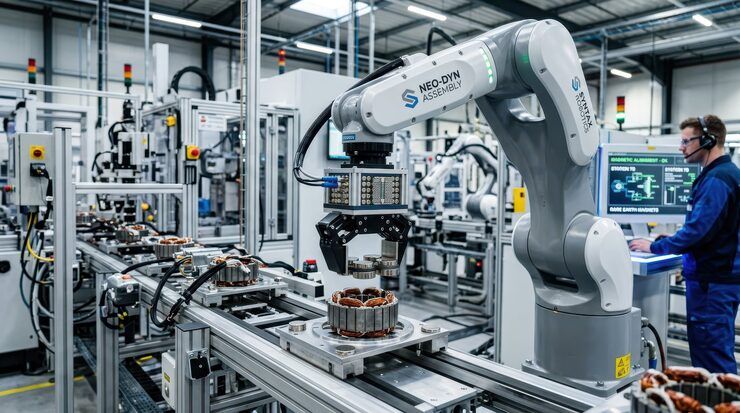
Industrial robots perform tasks such as welding, assembly, painting, material handling, packaging, and inspection. Robotic systems improve precision while operating continuously in demanding environments.
Variable Frequency Drives regulate motor speed and energy consumption by adjusting electrical frequency supplied to industrial motors. This improves efficiency and equipment control.
Industrial sensors provide continuous measurements that help automated systems monitor operating conditions and production quality.
Supervisory Control and Data Acquisition systems collect operational data from multiple machines and allow centralized monitoring of industrial facilities.
Distributed Control Systems manage large-scale industrial processes in industries such as oil and gas, chemicals, utilities, and power generation by coordinating multiple control units across a facility.
Each type of automation equipment serves a different purpose, but together they create integrated industrial automation systems.
Common Applications Across Industries
Industrial automation equipment supports many industries by automating production, inspection, transportation, and monitoring processes.
Manufacturing facilities use automation equipment for assembly lines, machining operations, packaging, labeling, quality inspection, and material handling.
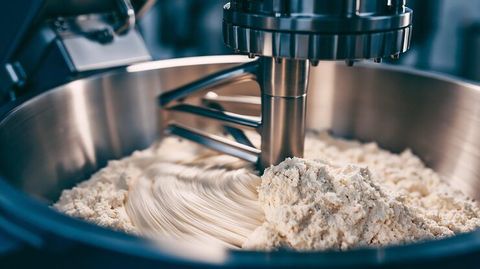
Food and beverage industries rely on automation for mixing, filling, bottling, packaging, temperature monitoring, sanitation processes, and inventory movement.
Pharmaceutical manufacturing uses automation to maintain precision during production, ensure traceability, monitor environmental conditions, and support quality control.
Automotive manufacturing depends heavily on robotic welding, painting, component assembly, testing, and conveyor automation.
Chemical and petrochemical industries use automated control systems to monitor pressure, temperature, flow rates, and safety systems throughout complex production facilities.
Warehousing and logistics operations increasingly use automated sorting systems, conveyor belts, robotic picking equipment, barcode scanners, and inventory tracking technologies.
These applications demonstrate how automation equipment adapts to different operational environments while improving productivity and consistency.
Benefits of Industrial Automation Equipment
Industrial automation equipment provides multiple long-term operational benefits beyond simply reducing manual work.
One significant advantage is improved productivity. Automated systems operate continuously, perform repetitive tasks consistently, and reduce delays caused by manual intervention.
Automation also improves product quality by maintaining consistent production parameters throughout manufacturing processes. This helps reduce variation and improves reliability.
Another important benefit is operational efficiency. Automated monitoring allows facilities to optimize machine performance, reduce unnecessary downtime, and improve production scheduling.
Workplace safety improves because automation equipment handles hazardous, repetitive, or physically demanding operations that may expose workers to unnecessary risks.
Automation also supports better resource management. Equipment can monitor energy usage, material consumption, production output, and machine performance, helping industries identify opportunities for efficiency improvements.
Real-time production information helps managers make informed operational decisions based on measurable performance rather than estimates.
Recent Trends in Industrial Automation Equipment
Industrial automation has evolved rapidly over the past year as manufacturers continue adopting smarter and more connected technologies.
Artificial intelligence is becoming increasingly integrated into automation equipment. AI-powered systems analyze production information, detect equipment anomalies, improve inspection accuracy, and support predictive maintenance strategies.
Industrial Internet of Things technology connects machines, sensors, controllers, and cloud platforms, allowing production equipment to share information in real time across facilities.
Collaborative robots continue expanding into manufacturing environments where robots safely work alongside human operators during assembly, inspection, and packaging tasks.
Edge computing is gaining popularity because it processes industrial information closer to equipment instead of relying entirely on centralized computing systems. This reduces response times for time-sensitive operations.
Digital twin technology allows industries to create virtual models of production equipment and manufacturing systems for monitoring, testing, and optimization before implementing physical changes.
These developments reflect the growing focus on intelligent, connected, and data-driven industrial automation.
Challenges Industries Should Understand
While industrial automation equipment offers many advantages, implementing automation requires careful planning and ongoing management.
System integration can be complex because equipment from different manufacturers must communicate effectively across production environments.
Workforce training is another important consideration. Operators, technicians, and maintenance teams need skills to monitor, troubleshoot, and maintain automated equipment safely.
Cybersecurity has become increasingly important as connected industrial systems exchange operational information through digital networks. Protecting industrial control systems helps reduce operational risks.
Maintenance requirements also change with automation. Instead of focusing only on mechanical repairs, facilities increasingly monitor sensors, controllers, communication systems, and software performance.
Another challenge involves upgrading legacy equipment. Older industrial machines may require modernization or integration technologies before connecting with newer automation systems.
Understanding these challenges helps organizations plan automation projects more effectively.
Choosing the Right Industrial Automation Equipment
Selecting industrial automation equipment depends on production goals, operational requirements, and long-term scalability rather than a single technology choice.
Industries typically evaluate production volume, process complexity, environmental conditions, machine compatibility, communication protocols, safety requirements, and future expansion plans before implementing automation equipment.
Reliable automation systems should integrate smoothly with existing production processes while allowing future upgrades as operational needs evolve.
Scalable equipment helps facilities expand production capacity without replacing entire automation systems, making long-term modernization more manageable.
Compatibility between controllers, sensors, communication networks, and industrial software also plays an important role in maintaining efficient operations across connected production environments.
The Future of Industrial Automation Equipment
The future of industrial automation equipment is moving toward intelligent, connected, and adaptive manufacturing systems. Smart factories increasingly combine automation with artificial intelligence, cloud computing, robotics, machine vision, and advanced analytics to create more responsive production environments.
Predictive maintenance will continue reducing unexpected equipment failures by identifying potential issues before they affect production. Autonomous mobile robots are expected to expand warehouse automation and material transportation across industrial facilities.
Machine vision systems will become more accurate in detecting product defects, measuring dimensions, and supporting automated quality inspection processes.
Sustainability is also influencing automation development. Energy-efficient motors, intelligent power management systems, automated resource monitoring, and waste reduction technologies are becoming important features of modern industrial equipment.
As Industry 4.0 continues evolving into more connected manufacturing ecosystems, industrial automation equipment will play an increasingly important role in improving productivity, operational visibility, safety, and environmental performance.
Conclusion
Industrial automation equipment has transformed the way industries manufacture products, manage operations, and maintain production quality. By combining sensors, controllers, robotics, software, and communication technologies, automation systems create efficient industrial environments capable of operating with greater precision and consistency.
Today's automation equipment goes beyond simple machine control by providing real-time monitoring, intelligent data analysis, predictive maintenance capabilities, and seamless communication across production systems. These technologies help industries improve productivity while supporting safer workplaces and better resource management.
As manufacturing continues embracing smart technologies, industrial automation equipment will remain a critical part of modern industrial infrastructure. Understanding how these systems work, where they are used, and how they continue evolving provides valuable knowledge for anyone interested in the future of manufacturing, engineering, and industrial technology.