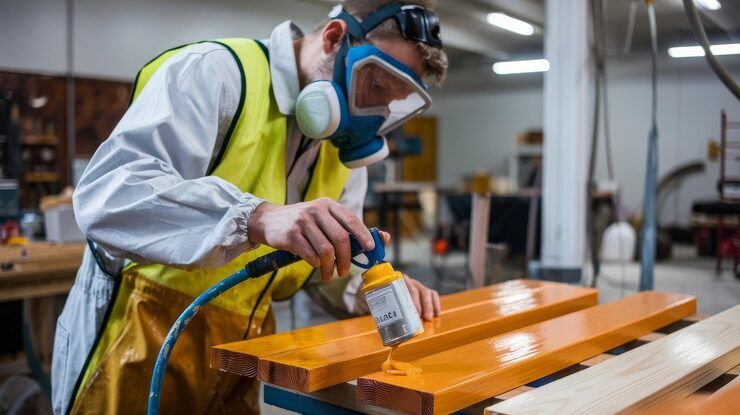
Varnishing units are industrial systems designed to apply protective or decorative varnish coatings to surfaces such as wood, metal, furniture components, printed materials, and manufactured products. These systems help create a consistent finish while controlling coating thickness, surface appearance, drying conditions, and material usage.
Varnishing technology is used in furniture manufacturing, woodworking, printing, packaging, automotive component production, electronics, and other industries where surface protection and appearance are important. Depending on the application, a varnishing unit may use rollers, spray guns, curtains, brushes, or automated coating heads.
The equipment can range from a compact manual workstation to a fully automated production line that includes surface preparation, coating application, drying, curing, inspection, and material handling.
Understanding Industrial Varnishing Units
A varnishing unit generally combines coating application equipment with controls that regulate how varnish is distributed across a surface. Some systems are designed for flat panels, while others accommodate shaped components or products moving along a conveyor.
The choice of equipment depends on the material being coated, the varnish formulation, the required finish, production volume, and drying method.
Common types include:
Roller coating units: Apply varnish to flat surfaces using rotating rollers.
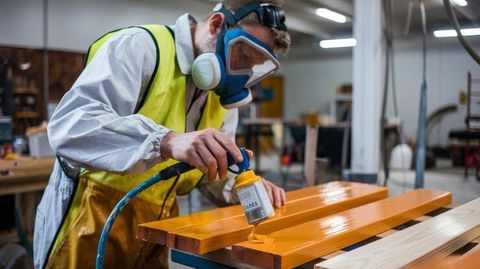
Spray varnishing systems: Use spray equipment to distribute coating across complex shapes or larger surfaces.
Curtain coating machines: Create a continuous sheet of liquid coating through which suitable products pass.
Automatic coating lines: Integrate feeding, application, drying, inspection, and unloading.
UV varnishing units: Apply compatible coatings that cure under ultraviolet light.
Hot-air drying systems: Use heated air to accelerate drying for suitable formulations.
Manual varnishing stations: Support smaller production runs and specialized finishing tasks.
Each system has different operating requirements. For example, roller coating is commonly used for flat panels, whereas spray application may be better suited to products with curves, edges, or complex geometries.
How a Varnishing Unit Works
Although designs differ, many industrial varnishing systems follow a similar sequence.
Surface preparation: Dust, grease, moisture, and other contaminants are removed to improve coating adhesion.
Coating preparation: The varnish is checked for viscosity, compatibility, and application requirements. Some formulations require mixing or temperature control.
Application: Rollers, spray equipment, curtains, or other mechanisms distribute the varnish across the surface.
Leveling and drying: The coating spreads across the substrate and begins to dry. Depending on the formulation, this may involve evaporation, oxidation, chemical reaction, or another curing mechanism.
Curing: Some coatings require additional time, heat, or ultraviolet exposure to develop their intended properties.
Inspection: The finished surface is checked for defects such as bubbles, streaks, uneven coverage, dust particles, or insufficient curing.
Not every varnish requires the same process. Water-based, solvent-based, and UV-curable formulations have different application and curing characteristics.
Why Varnishing Units Matter in Manufacturing
Varnishing units help manufacturers improve surface consistency, protect materials, and maintain repeatable finishing quality across production batches.
Surface Protection and Product Quality
A suitable varnish coating can improve resistance to scratches, moisture, stains, abrasion, and everyday wear, depending on the formulation and substrate. It can also enhance color depth, gloss, or surface texture.
In furniture manufacturing, varnishing helps protect wooden panels, doors, cabinets, and decorative components. In printing and packaging, specialized varnishes can provide gloss, matte finishes, or additional surface protection.
Production Efficiency
Automated varnishing equipment can reduce variation between products by controlling application speed, coating quantity, and operating conditions.
Potential operational benefits include:
More consistent coating coverage
Reduced manual handling
Repeatable finishing processes
Better control over material consumption
Integration with automated production lines
Improved tracking of quality defects
Actual performance depends on equipment design, operator training, maintenance, and coating compatibility.
Choosing the Appropriate Technology
Equipment selection should reflect the product's dimensions, material, surface geometry, required finish, and production volume.
Requirement | Suitable Technology to Consider |
|---|---|
Flat wooden panels | Roller coating |
Complex surface shapes | Spray varnishing |
Continuous flat substrates | Curtain coating |
Rapid curing of compatible coatings | UV varnishing |
Small or varied production batches | Manual or semi-automatic systems |
High-volume manufacturing | Integrated automatic coating lines |
A trial using the intended substrate and varnish can help determine whether the selected system achieves the required finish.
Recent Developments in Varnishing Technology
During 2025 and 2026, industrial finishing technology continued to emphasize automation, lower-emission coatings, energy efficiency, and improved process monitoring. These developments reflect broader manufacturing priorities rather than a single change affecting every varnishing unit.
Water-Based Coating Systems
Water-based varnishes are increasingly relevant in applications where manufacturers seek to reduce volatile organic compound emissions compared with suitable conventional solvent-based alternatives.
Their performance depends on formulation, humidity, temperature, surface preparation, and drying conditions. Some applications may require different equipment settings or longer drying periods.
UV and LED Curing
Ultraviolet curing systems allow compatible coatings to harden rapidly when exposed to the required radiation. LED-based UV systems can provide more targeted energy delivery and may reduce certain energy and maintenance requirements compared with some conventional UV configurations.
However, results depend on coating chemistry, lamp wavelength, product geometry, and exposure conditions. UV curing is not suitable for every varnish formulation.
Automation and Process Monitoring
Modern coating lines increasingly use sensors, programmable logic controllers, and automated inspection systems to monitor production conditions.
These technologies can help manufacturers track coating speed, temperature, material flow, curing conditions, and defects. Automated monitoring can improve repeatability, but regular calibration and quality checks remain necessary.
Energy and Material Efficiency
Manufacturers are also examining coating transfer efficiency, overspray reduction, drying energy, and waste management.
Approaches such as controlled spray application, optimized airflow, accurate material dosing, and preventive maintenance can help reduce unnecessary material consumption. The results depend on the coating process and production environment.
Laws, Regulations, and Workplace Safety
Varnishing operations may involve chemical exposure, combustible liquids, airborne particles, ultraviolet radiation, and industrial machinery. Applicable requirements depend on the country, facility, coating formulation, and production process.
Chemical Safety and Air Emissions
Solvent-based varnishes can release volatile organic compounds, or VOCs, during application and drying. Industrial facilities may therefore be subject to air-emission limits, ventilation requirements, chemical-storage rules, and hazardous-waste controls.
In the United States, the Environmental Protection Agency regulates air pollution under the Clean Air Act, including certain industrial coating operations. Specific requirements depend on the process, facility category, and applicable federal, state, and local rules.
In India, industrial coating facilities may need to comply with environmental permissions and applicable emission standards administered through the Central Pollution Control Board and State Pollution Control Boards.
Worker Protection
Varnishing equipment should be operated according to its technical documentation and applicable occupational safety requirements.
Important precautions include:
Providing appropriate local exhaust ventilation
Using suitable gloves and protective eyewear
Selecting respiratory protection when required by the risk assessment
Keeping ignition sources away from flammable vapors
Maintaining machine guards and emergency stops
Following chemical handling and storage instructions
Providing appropriate fire detection and suppression arrangements
Training personnel in spill response and emergency procedures
Spray booths and solvent-handling areas may require additional ventilation, electrical protection, and fire-safety measures.
UV Curing Safety
UV curing equipment can expose workers to potentially harmful ultraviolet radiation. Systems should incorporate suitable shielding, interlocks, and operating procedures to limit exposure.
Personnel should also follow the manufacturer's guidance for lamp maintenance, electrical safety, and handling of uncured coating materials.
Tools and Resources for Equipment Selection
Reliable technical information helps manufacturers evaluate varnishing units and determine whether a system suits their production requirements.
Technical Documentation
Review equipment manuals, coating technical data sheets, and safety data sheets. These documents can explain operating temperatures, recommended film thickness, viscosity requirements, curing conditions, chemical hazards, and maintenance procedures.
Production Planning Tools
Spreadsheets can help estimate material requirements and compare operating conditions.
Useful measurements include:
Surface area processed per hour
Coating consumption per square metre
Percentage of coating transferred to the product
Drying or curing time
Electricity consumption
Defect and rework rates
Scheduled maintenance intervals
For example, coating consumption can be estimated by multiplying the surface area processed by the measured coating usage per unit of area. Actual consumption should account for overspray, equipment losses, and rejected products.
Equipment Evaluation Checklist
Before selecting a varnishing unit, document:
Substrate material and dimensions
Varnish formulation and viscosity
Required finish and film thickness
Production speed and capacity
Drying or curing requirements
Ventilation and environmental controls
Available floor space and utilities
Maintenance and operator training needs
These details help ensure that equipment specifications align with the intended manufacturing process.
Frequently Asked Questions
What is a varnishing unit used for?
A varnishing unit applies protective or decorative coatings to materials such as wood, metal, printed substrates, and manufactured components. It can improve surface appearance and provide protection appropriate to the coating formulation.
What is the difference between roller and spray varnishing?
Roller varnishing is generally suited to flat, regular surfaces. Spray varnishing can accommodate more complex shapes, edges, and curved components, although coating transfer efficiency and ventilation requirements differ.
Are UV varnishing units suitable for every coating?
No. UV systems require formulations designed to cure under the equipment's specific ultraviolet output. Coating thickness, substrate characteristics, and exposure conditions also affect curing performance.
How can manufacturers reduce varnishing defects?
Consistent surface preparation, correct viscosity, controlled application settings, suitable drying conditions, regular equipment maintenance, and systematic inspection can reduce common defects. The exact corrective measures depend on the defect and coating system.
What safety measures are important when operating varnishing equipment?
Important measures include suitable ventilation, chemical handling procedures, fire prevention, protective equipment, machine guarding, and compliance with applicable environmental and occupational safety regulations.
Conclusion
Varnishing units play an important role in industrial surface finishing by helping manufacturers apply protective and decorative coatings consistently. Roller coaters, spray systems, curtain coaters, and UV curing equipment each serve different production needs.
Developments in automation, water-based formulations, UV curing, and process monitoring are influencing how manufacturers approach coating quality, emissions, and production efficiency. Selecting suitable equipment requires careful consideration of the substrate, varnish chemistry, output requirements, energy consumption, and workplace safety.
A well-planned varnishing process combines appropriate machinery with effective ventilation, quality control, maintenance, and regulatory compliance. This approach supports reliable finishing while helping manufacturers manage material use, worker protection, and environmental impacts.