Handling equipment plays an important role in warehouses, factories, construction sites, distribution centers, workshops, ports, and many other working environments. It helps people move, lift, position, store, and organize materials without relying entirely on manual effort.
The term handling equipment covers a wide range of machines and tools. Some equipment is designed for lifting heavy loads, while other systems are intended for horizontal movement, positioning, loading, unloading, or storage. Choosing the appropriate equipment depends on the type of material, load size, workplace layout, movement distance, operating frequency, and safety requirements.
Understanding the different categories of handling equipment can help businesses and workers make better decisions about material movement and workplace organization.
What Is Handling Equipment?
Handling equipment refers to machines, devices, and mechanical systems used to move or manage materials within a working environment. The materials may include raw materials, finished products, containers, components, packaged goods, machinery parts, or construction materials.
The basic purpose is to make material movement more controlled and efficient. Instead of depending entirely on workers to lift or carry heavy objects, mechanical equipment can perform tasks that require greater capacity, reach, precision, or repeated movement.
Handling equipment can be manually operated, electrically powered, hydraulically operated, or powered through other mechanical systems. Some equipment moves with the load, while other systems remain installed in a fixed location.
Why Handling Equipment Matters
Material movement is often one of the most repetitive activities in industrial and commercial environments. Poorly planned handling can create unnecessary movement, workplace congestion, equipment damage, and increased physical strain.
Appropriate equipment helps organize the movement of materials from one location to another. It can also improve workflow by connecting different stages of an operation. For example, materials may need to move from receiving areas to storage, from storage to production, and from production to dispatch.
Another important consideration is workplace safety. Equipment designed for lifting or transporting loads provides controlled methods of movement when used within its specified operating limits. Proper selection, training, inspection, and maintenance are therefore important parts of any handling system.
Major Types of Handling Equipment
Handling equipment can generally be divided according to the type of movement it performs and the environment in which it operates.
Lifting Equipment
Lifting equipment is designed to raise, lower, or position loads. Cranes, hoists, lifting tables, and various lifting devices are common examples.
Cranes are frequently used in manufacturing facilities, workshops, construction environments, and industrial plants where heavy materials need to be moved vertically and horizontally. Hoists are commonly integrated into lifting systems and can provide controlled movement for suspended loads.
The selection of lifting equipment depends on factors such as load capacity, lifting height, movement frequency, available space, and the nature of the material being handled.
Conveying Equipment
Conveyors move materials along a defined path. They are widely used in warehouses, production facilities, distribution operations, food processing environments, and packaging areas.
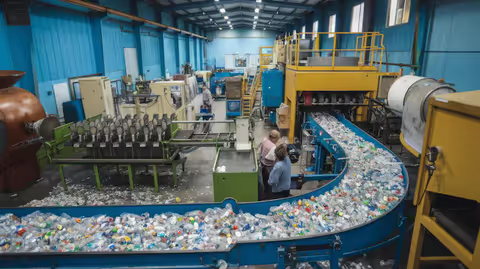
Belt conveyors, roller conveyors, chain conveyors, and other specialized conveyor systems can be designed for different materials and operating conditions. Conveyor systems are particularly useful when materials need to travel repeatedly between fixed locations.
The layout of a conveyor system is important because it affects workflow, accessibility, maintenance, and the movement of workers around the equipment.
Industrial Trucks
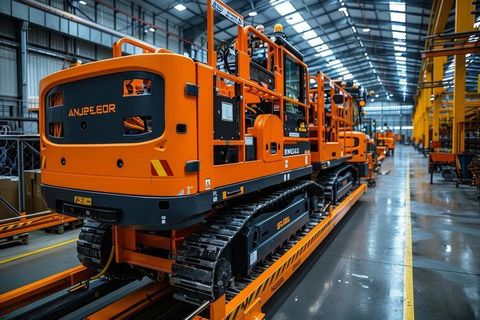
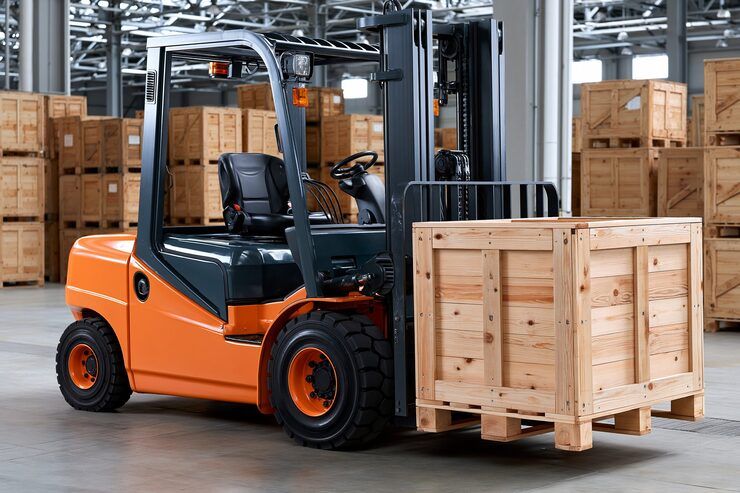
Industrial trucks are mobile handling machines used to transport materials across a facility. Forklifts are one of the most recognizable examples.
Forklifts can move palletized materials and other loads over relatively short distances. Different configurations are designed for different working conditions, including narrow aisles, storage areas, loading zones, and outdoor environments.
Other industrial trucks include pallet trucks, reach trucks, stackers, and specialized material transport vehicles. Their suitability depends on load characteristics, floor conditions, aisle width, lifting requirements, and operating environment.
Storage and Positioning Equipment
Some handling systems are closely connected with storage and positioning. Racks, shelving systems, lift tables, platforms, and other devices can help organize materials while making them easier to access.
Storage design has a direct relationship with material handling efficiency. A poorly arranged storage area can increase travel distance and create unnecessary movement. A well-planned layout can make materials easier to locate and transfer between operational areas.
Automated Handling Systems
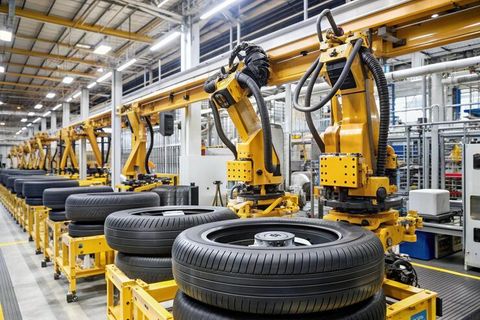
Automation has become increasingly important in modern warehouses and manufacturing facilities. Automated guided vehicles, autonomous mobile robots, automated storage and retrieval systems, and conveyor networks can perform specific material movement tasks with limited human intervention.
Automated systems can be useful where material movement is repetitive and predictable. However, they require careful planning because factors such as facility layout, software integration, navigation, load characteristics, and human interaction affect system performance.
How to Select Handling Equipment
Selecting handling equipment should begin with a clear understanding of the material movement requirement rather than the equipment itself.
Load characteristics are among the first factors to consider. Weight, dimensions, shape, stability, surface condition, and packaging can influence the type of equipment required. A machine suitable for palletized goods may not be appropriate for irregular or fragile materials.
The operating environment is equally important. Indoor warehouses, outdoor yards, construction sites, cold environments, clean production areas, and hazardous locations can have very different equipment requirements.
The distance and frequency of movement should also be evaluated. Equipment used continuously throughout a shift may require different specifications from equipment used occasionally. Facility layout, aisle width, floor condition, ceiling height, turning space, and loading areas should also be considered.
Safety requirements must remain central to the selection process. Equipment should be operated within its rated capacity and according to the manufacturer's instructions. Operators should receive appropriate training, and equipment should be inspected and maintained according to established procedures.
Handling Equipment and Workplace Efficiency
Efficient material handling is not simply about moving materials faster. It is about creating a logical flow that reduces unnecessary movement while maintaining safety and accessibility.
For example, placing frequently used materials closer to production areas can reduce travel requirements. Designing storage locations around the movement capabilities of available equipment can also improve workflow.
Data can help organizations identify bottlenecks. Movement frequency, equipment utilization, waiting time, travel distance, and handling delays can provide useful information when reviewing an existing system.
The most effective approach is usually one that considers the complete material flow rather than focusing on a single machine.
Maintenance and Inspection
Regular maintenance is an essential part of handling equipment management. Mechanical components, wheels, brakes, lifting mechanisms, chains, cables, hydraulic systems, batteries, controls, and safety devices can experience wear through normal operation.
Inspection procedures should identify visible damage, unusual operation, leaks, loose components, worn parts, or other conditions that could affect safe operation. Maintenance schedules should follow the equipment manufacturer's requirements and applicable workplace rules.
Keeping maintenance records can also help organizations identify recurring problems and plan equipment downtime more effectively.
Future Trends in Material Handling
Material handling is increasingly influenced by automation, sensors, data systems, robotics, and connected equipment. Modern facilities can use tracking technologies to monitor the location and movement of materials while software can help coordinate different stages of an operation.
Artificial intelligence and machine learning may also contribute to areas such as route optimization, demand forecasting, equipment monitoring, and warehouse planning. At the same time, human operators remain important for supervision, maintenance, exception handling, and tasks that require judgment.
The future of handling equipment is therefore likely to involve greater integration between mechanical systems, digital technologies, workers, and facility management.
Conclusion
Handling equipment provides the physical infrastructure needed to move, lift, position, transport, and organize materials across many industries. From basic pallet trucks and conveyors to cranes, forklifts, automated vehicles, and integrated warehouse systems, each type serves a different operational purpose.
Choosing the right equipment requires consideration of load characteristics, movement requirements, workplace layout, operating conditions, safety, maintenance, and future needs. A well-planned handling system can create a more organized material flow while reducing unnecessary movement and supporting safer working practices.
Understanding these fundamentals provides a useful starting point for evaluating handling equipment and designing material movement systems that match the practical requirements of a workplace.