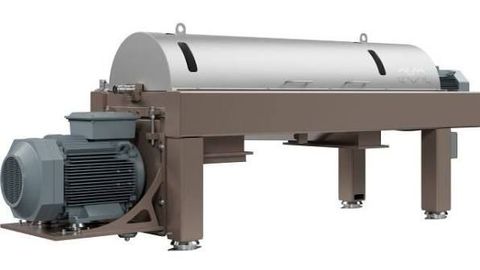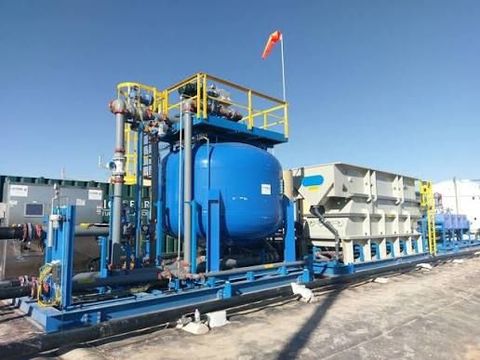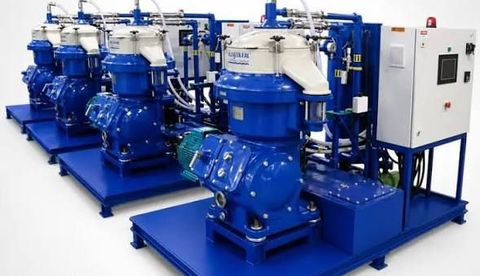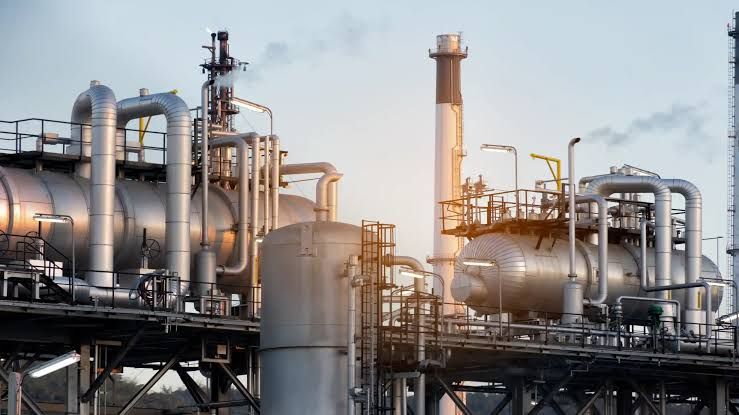
Industrial distillation systems are process equipment used to separate components in a liquid mixture by using differences in boiling points.
The basic principle has been used for centuries, while modern industrial systems have developed into carefully controlled arrangements involving columns, heaters, condensers, trays, packing, sensors, and control systems.
The process generally begins by heating a liquid mixture. Components with lower boiling points tend to vaporize more readily, while components with higher boiling points remain concentrated in the liquid phase. Through repeated vaporization and condensation inside a distillation column, different components can be separated into distinct streams.
Industrial distillation systems are found in chemical processing, petroleum refining, food production, pharmaceutical manufacturing, and other industries. Their design varies according to the materials being separated, required purity, operating temperature, pressure, and production scale.
How the Separation Process Works
A typical system contains several connected stages. A reboiler supplies heat at the bottom of the column, causing part of the liquid mixture to vaporize. The vapor rises through the column and comes into contact with descending liquid.
Trays or packing create repeated contact between the vapor and liquid phases. A condenser at the top then cools the vapor, producing a liquid stream called distillate. Another stream, known as bottoms, leaves from the lower part of the column.
| Component | Main Function |
|---|---|
| Distillation column | Provides separation space |
| Reboiler | Supplies heat to the mixture |
| Condenser | Changes vapor into liquid |
| Trays or packing | Improve vapor-liquid contact |
| Sensors | Monitor operating conditions |
| Control system | Adjusts process parameters |
Importance
Industrial distillation systems matter because many manufacturing processes begin with mixtures that must be separated before further processing. Separation can influence product composition, process efficiency, material recovery, and the consistency of downstream operations.
The systems also need to handle different operating conditions. Some mixtures require high temperatures, while others are processed under reduced pressure to lower their boiling temperatures. The choice of equipment depends on chemical properties, heat sensitivity, desired separation, and operating requirements.
Where Industrial Distillation Is Used
Common applications include:
- Petroleum refining, where hydrocarbon mixtures are separated into different fractions.
- Chemical processing, where solvents and chemical components are separated.
- Food processing, where certain liquid mixtures can be concentrated or purified.
- Pharmaceutical manufacturing, where controlled separation processes may be part of production.
- Industrial solvent recovery, where useful liquid components can be separated from mixtures.
Energy use is another important consideration. Heating and cooling are central to distillation, so modern systems may incorporate heat integration, improved insulation, process monitoring, and automated controls to manage energy requirements.
Factors That Influence System Design
Several factors determine how an industrial distillation system is configured. The boiling-point difference between components is particularly important because mixtures with similar boiling points can require more separation stages.
Pressure, feed composition, desired purity, throughput, temperature limits, and material compatibility also influence equipment selection. Engineers may use process simulations to evaluate different configurations before equipment is installed.
Tools and Resources
Several technical tools can help readers understand or evaluate industrial distillation systems. Process simulation platforms can model temperature, pressure, flow rates, compositions, and energy balances under different operating conditions.
Engineering calculators and reference tables can help explain boiling points, vapor-liquid relationships, heat requirements, and pressure effects. Equipment diagrams and educational process-flow templates can also make complex systems easier to understand.
Useful resources include:
- Process simulation software for studying separation behavior.
- Engineering calculators for heat and mass-balance exercises.
- Chemical property databases for reviewing boiling points and related properties.
- Process-flow diagrams for understanding equipment connections.
- Industrial engineering textbooks for learning distillation principles and terminology.
These resources are particularly useful for comparing theoretical calculations with practical process arrangements.
FAQs
What are industrial distillation systems?
Industrial distillation systems are equipment arrangements that separate components in liquid mixtures based mainly on differences in volatility and boiling point. They commonly use a column, reboiler, condenser, trays, or packing.
How do industrial distillation systems work?
A mixture is heated so that part of it becomes vapor. The vapor moves through a column while contacting descending liquid, allowing repeated separation before the resulting streams are collected.
What industries use industrial distillation systems?
Petroleum refining, chemical processing, food production, pharmaceutical manufacturing, and solvent recovery are among the industries where distillation processes are used.
Why is pressure important in industrial distillation systems?
Pressure affects boiling temperatures and vapor-liquid behavior. Lower pressure can allow some mixtures to boil at lower temperatures, which can be useful when temperature-sensitive materials are involved.
What tools are used to study distillation systems?
Process simulation software, engineering calculators, chemical property databases, process-flow diagrams, and technical reference materials are commonly used to study distillation processes.
Conclusion
Industrial distillation systems use controlled heating, vaporization, condensation, and vapor-liquid contact to separate components from mixtures. Their configuration depends on factors such as boiling points, pressure, composition, temperature limits, and required separation. Modern systems can incorporate sensors, automated controls, simulations, and energy-management techniques to monitor process conditions. Understanding these fundamentals provides a clearer view of how industrial separation processes function across different sectors.