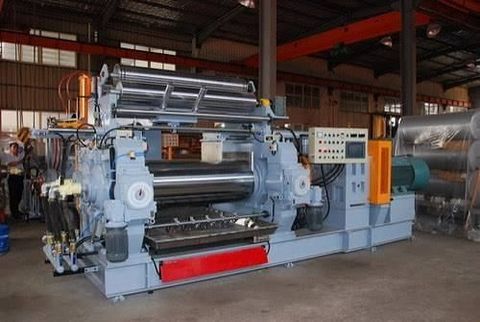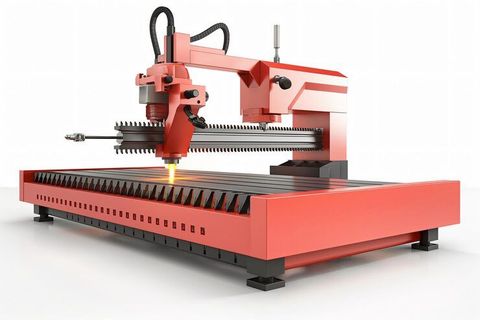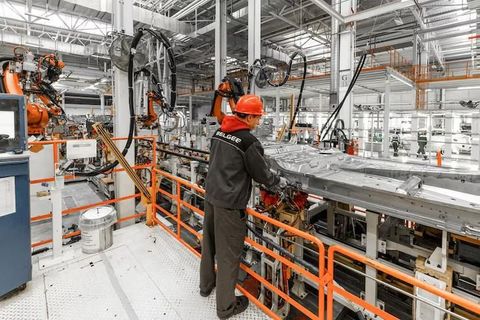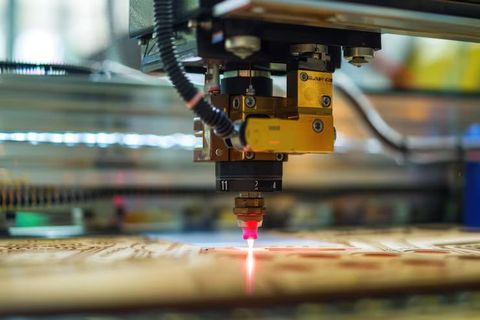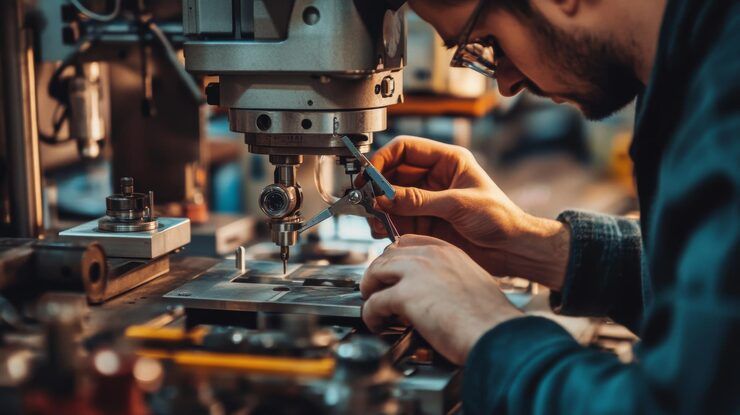
Industrial machine tools are mechanical and computer-controlled systems used to cut, shape, drill, grind, form, or finish materials with controlled movement. They are widely used in manufacturing environments where dimensional accuracy, repeatability, and consistent production processes are important.
Modern machining equipment combines mechanical components, cutting tools, motors, sensors, control systems, and software. Computer numerical control (CNC) technology allows many machines to follow programmed instructions, while automation and digital monitoring are increasingly being integrated into machining processes.
Context – Understanding Industrial Machine Tools
Industrial machine tools have developed from manually operated equipment into highly automated machining systems. Traditional machines such as lathes, milling machines, drills, and grinders are still used, while CNC machining centers and multifunctional systems can perform several operations with limited manual intervention.
The main purpose of a machine tool is to control the relative movement between a workpiece and a cutting or forming tool. Depending on the machine type, material can be removed through cutting, grinding, drilling, boring, turning, or other machining processes.
Common categories include:
| Machine type | Main operation | Typical application |
|---|---|---|
| Lathe | Turning | Cylindrical components |
| Milling machine | Cutting and shaping | Slots, surfaces, contours |
| Drilling machine | Hole making | Holes and bores |
| Grinding machine | Precision finishing | Surface and dimensional finishing |
| CNC machining center | Multiple operations | Complex components |
| Gear machine | Gear cutting | Gears and transmission parts |
A CNC system normally uses programmed coordinates and machining instructions to control axes, spindle movement, cutting parameters, and other machine functions. The exact control method varies according to the machine and controller.
Importance – Why Industrial Machine Tools Matter
Industrial machine tools are important because many manufactured components require controlled dimensions and repeatable processes. Industries such as automotive manufacturing, aerospace, electronics, medical equipment, energy, construction equipment, and general engineering depend on machining technologies.
The equipment can affect several areas:
- Dimensional accuracy of components
- Repeatability between production cycles
- Material utilization
- Manufacturing workflow
- Workplace safety
- Inspection and quality control
- Production flexibility
CNC equipment can also reduce the amount of manual positioning required for complex machining operations. However, programming, tooling, setup, inspection, and maintenance remain important parts of the overall process.
The appropriate machine depends on factors such as material type, component geometry, required tolerance, surface finish, production quantity, tooling requirements, and available workspace.
Recent Updates – Trends in Modern Machining
Modern machine tools are increasingly connected to digital manufacturing systems. CNC machines can exchange operational information with production software, monitoring platforms, and factory networks. This can help organizations analyze machine conditions and production data.
Automation is another significant development. Robotic loading, automatic tool changers, pallet systems, probing systems, and automated inspection can reduce repetitive manual activities and create more consistent workflows.
Digital technologies are also becoming more important. Digital twins, simulation software, machine monitoring, and data analysis can be used to study machining processes before or during physical production.
Current developments commonly include:
- Multi-axis CNC machining
- Automated workpiece handling
- In-process measurement
- Tool condition monitoring
- Connected manufacturing systems
- Simulation and digital machining models
- Energy monitoring
- Data-based process analysis
These technologies do not eliminate the need for skilled technical knowledge. Operators, programmers, engineers, and maintenance personnel still need to understand machine behavior, tooling, materials, safety procedures, and process limitations.
Laws or Policies – Safety and Regulatory Considerations
Machine tool regulations depend on the country, workplace, machine category, and operating environment. Organizations should therefore identify the regulations that apply to their specific location and equipment.
In the United States, OSHA's general industry rules include 29 CFR 1910.212, which addresses machine guarding. The regulation requires appropriate guarding where workers may be exposed to hazards such as rotating parts, flying chips, sparks, and points of operation.
OSHA also addresses hazardous energy through its lockout/tagout requirements. Employers must establish energy-control procedures, provide training, and conduct periodic inspections for applicable maintenance activities.
Internationally, ISO 12100:2010 provides principles and a methodology for machinery risk assessment and risk reduction. ISO states that the standard remains current following its 2022 review, while a revised version is under development.
Machine-tool safety can also involve national standards, electrical requirements, workplace rules, environmental regulations, and manufacturer instructions. Requirements should always be checked against the actual machine and jurisdiction.
Tools and Resources – Learning About Machining Equipment
Several resources can help readers understand industrial machine tools and machining processes.
Useful resources include:
- CNC programming references for understanding machine instructions
- Manufacturer manuals for machine-specific operating information
- CAD/CAM software documentation for design and machining workflows
- Tooling catalogs and technical data sheets for cutting-tool information
- OSHA machine-guarding resources for workplace safety information
- ISO machinery-safety documentation for risk-assessment concepts
- Machining handbooks for cutting, tooling, materials, and process fundamentals
- Engineering calculators for feeds, speeds, tolerances, and machining parameters
For beginners, learning the basic functions of a lathe, milling machine, drill press, grinder, and CNC machining center provides a useful foundation. From there, topics such as coordinate systems, cutting tools, feeds and speeds, workholding, inspection, and CNC programming can be studied progressively.
FAQs – Industrial Machine Tools
What are industrial machine tools?
Industrial machine tools are machines designed to shape, cut, drill, grind, or otherwise process materials. Examples include lathes, milling machines, grinders, drilling machines, and CNC machining centers.
How does a CNC machine work?
A CNC machine receives programmed instructions and converts them into controlled movements. Motors and drive systems move machine axes while the spindle and cutting tool perform the programmed machining operation.
What is the difference between CNC and conventional machines?
Conventional machines generally require more direct manual control of movements and settings. CNC machines use computer-based instructions to control programmed movements, which can improve repeatability for suitable applications.
Why are machine guards important?
Machine guards help prevent workers from contacting hazardous moving parts and other dangerous areas. OSHA identifies hazards such as rotating components, points of operation, flying chips, and sparks as areas requiring appropriate protection.
What skills are useful for understanding modern machining?
Basic mechanical knowledge, measurement, engineering drawings, materials knowledge, cutting-tool principles, CNC concepts, workplace safety, and computer-aided manufacturing fundamentals are useful areas of knowledge.
Conclusion – Industrial Machine Tools Overview
Industrial machine tools provide controlled methods for shaping and finishing materials across many manufacturing sectors. Modern systems increasingly combine CNC controls, automation, sensors, software, and inspection technologies to support accurate and repeatable machining processes.
Understanding how machine tools work begins with learning their basic mechanical functions and machining operations. Knowledge of safety requirements, tooling, programming, measurement, and digital manufacturing can then provide a broader understanding of modern machining equipment.