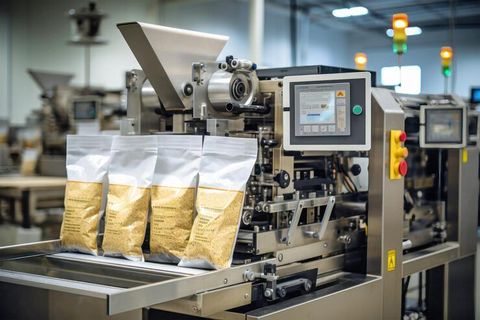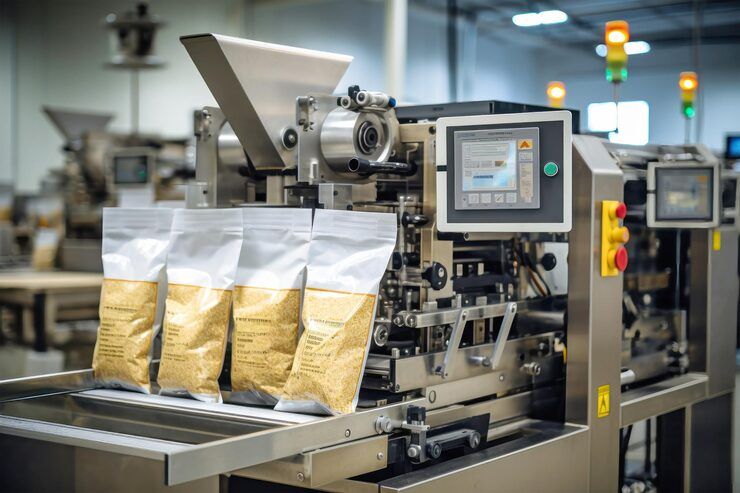
Sachet filling machines are automated systems designed to measure, dispense, and seal materials into small flexible packets called sachets. They are used across food, pharmaceutical, personal care, household, agricultural, and other industries where controlled portions and compact packaging are needed.
Modern filling technology combines mechanical systems, sensors, programmable controls, and sealing mechanisms. The machine configuration depends on factors such as material characteristics, sachet dimensions, filling accuracy, production requirements, and applicable packaging regulations.
Context
A sachet filling machine generally performs several connected operations. Depending on the machine design, these can include forming packaging film, creating individual sachet compartments, measuring the material, filling each compartment, sealing the package, cutting the sachets, and checking selected quality parameters.
Sachets can contain powders, granules, liquids, pastes, or other flowable materials. Different products require different filling mechanisms because their physical properties can vary significantly.
For example, powder filling may use an auger or other metering mechanism, while liquid products may use pumps. Granular products can be handled with volumetric or weighing systems depending on the required accuracy and material characteristics.
Common machine configurations include:
| Filling type | Typical mechanism | Example materials |
|---|---|---|
| Powder | Auger or dosing system | Spices, powdered ingredients |
| Liquid | Pump or liquid doser | Beverages, lotions |
| Paste | Pump or piston system | Sauces, creams |
| Granules | Volumetric or weighing system | Seeds, grains, granulated products |
| Small solids | Counting or dosing mechanism | Tablets, capsules |
Sachet packaging can use different film structures, including laminated films and other multilayer materials. The appropriate material depends on moisture protection, oxygen sensitivity, light exposure, sealing requirements, and product compatibility.
Importance
Sachet filling machines matter because packaging performance can influence portion consistency, product protection, production efficiency, and workplace processes. Accurate filling helps maintain consistent quantities within the tolerances established for a particular product.
For pharmaceutical applications, filling accuracy and process controls can be especially important because packaging is connected with product quality and regulatory requirements.
Food manufacturers may consider factors such as:
- Product-contact materials
- Hygiene and cleanability
- Filling accuracy
- Seal integrity
- Film compatibility
- Product contamination risks
- Production monitoring
Machine selection also affects the type of sachet that can be produced. Width, length, number of lanes, filling range, sealing arrangement, and film characteristics can all influence the final package format.
The people affected by these systems include machine operators, packaging engineers, quality personnel, maintenance teams, manufacturers, and consumers. Proper machine setup and documented operating procedures can help reduce packaging inconsistencies.
Recent Updates
Modern filling technology increasingly incorporates electronic controls, automated monitoring, and improved sensor systems. Human-machine interfaces can provide information about operating conditions and allow authorized personnel to adjust defined machine parameters.
Vision and inspection technologies are also being incorporated into some packaging lines. Depending on the configuration, cameras and sensors can identify issues such as incorrect positioning, missing components, printing problems, or visible sealing defects.
Another development is the use of servo-driven motion systems. Servo motors can provide controlled movement for filling, film transport, cutting, and sealing operations. Their use can support precise synchronization between different machine functions.
Digital data collection is another important development. Packaging equipment may record operational information such as production counts, machine status, alarms, and selected process parameters.
Sustainability has also become an important consideration in packaging technology. Manufacturers are examining thinner films, recyclable structures, material reduction, and packaging designs that can reduce material consumption while maintaining required barrier and sealing performance.
However, packaging sustainability depends on the complete material system and local waste-management infrastructure. A material described as recyclable does not necessarily mean that appropriate collection and recycling systems exist in every location.
Laws or Policies
Sachet packaging can be subject to different regulations depending on the product, country, and intended market. Food, pharmaceutical, cosmetic, chemical, and agricultural products can have different regulatory requirements.
For food packaging, authorities may establish requirements concerning materials that come into contact with food, labeling, hygiene, and product information. Pharmaceutical packaging can involve additional requirements for product identification, traceability, packaging integrity, and manufacturing controls.
In the United States, relevant food and pharmaceutical requirements are administered by the U.S. Food and Drug Administration (FDA). In the European Union, food-contact materials are governed through EU legislation, while pharmaceutical manufacturing and packaging are subject to broader medicinal-product requirements.
Packaging labels can also be regulated. Depending on the jurisdiction and product category, information may include product identity, quantity, ingredients, manufacturer information, batch information, dates, warnings, or usage instructions.
Environmental packaging rules are also developing in many markets. Extended producer responsibility, waste reduction policies, recycling requirements, and packaging-material restrictions can affect packaging decisions.
Because regulations vary by jurisdiction, businesses should consult the applicable national or regional regulatory authority and the requirements specific to their product category.
Tools and Resources
Several resources can help readers understand sachet filling machines and packaging processes.
Useful resources include:
- Machine manuals and technical documentation for operating principles
- Packaging-film technical data sheets for material properties
- Regulatory authority websites for current packaging requirements
- Measurement and calibration documentation for filling systems
- Preventive-maintenance checklists for equipment inspection
- Quality-control records for monitoring package consistency
A basic equipment evaluation can consider the following factors:
| Factor | Question to consider |
|---|---|
| Product | Is it powder, liquid, paste, granule, or solid? |
| Fill range | What quantity must each sachet contain? |
| Film | What packaging material and thickness are appropriate? |
| Sealing | What seal structure and temperature range are required? |
| Accuracy | What filling tolerance is acceptable? |
| Format | What sachet dimensions and lane arrangement are needed? |
| Hygiene | What cleaning and product-contact requirements apply? |
| Regulation | Which packaging and labeling rules apply? |
Calibration is another important consideration. Measuring equipment should be checked according to an appropriate documented procedure, particularly when filling accuracy is critical.
FAQs
What is a sachet filling machine?
A sachet filling machine is an automated packaging system that measures and places a product into small flexible packets before sealing them. Machine configurations vary according to the material and package design.
What products can sachet filling machines handle?
They can be configured for powders, liquids, pastes, granules, and certain small solid products. The filling mechanism must be matched to the physical characteristics of the material.
How does a sachet machine maintain filling accuracy?
Accuracy can depend on the dosing mechanism, product properties, machine settings, calibration, and process monitoring. Different materials may require different measurement methods.
What factors affect sachet seal quality?
Film properties, sealing temperature, pressure, dwell time, machine alignment, and contamination around the sealing area can affect seal integrity. These parameters should be controlled according to the packaging material and machine design.
Why are sensors used in modern filling machines?
Sensors can monitor machine position, product flow, film movement, package formation, and other operating conditions. Some systems also use inspection technologies to identify selected packaging defects.
Conclusion
Sachet filling machines combine material dosing, packaging-film handling, sealing, cutting, and control technologies to create small portion packages. Their design varies according to the product, packaging material, filling range, accuracy requirements, and regulatory environment.
Modern systems increasingly incorporate sensors, electronic controls, servo mechanisms, inspection technologies, and data monitoring. Understanding these technologies can help readers evaluate how sachet filling equipment works and which technical factors influence packaging performance.
Packaging requirements should always be considered alongside applicable food, pharmaceutical, environmental, and labeling regulations. Technical documentation, calibration procedures, material specifications, and quality-control practices provide useful resources for understanding and managing the packaging process.